
Elder-Care Disaster Supplies: Can Staff Use Them When Needed?
Distinguish reports from Kumamoto, financial survey figures and BCP guidance to examine usable supplies, renewal funding and changes after exercises.
How can residential elder care continue through water outages and supply shortages? Distinguish financial survey results from cash and inventory, and connect BCPs, stock renewal, exercises and recovery support.

TL;DR
- BCPs address the resources and arrangements needed to continue care after immediate safety is secured.
- Annual financial results do not measure emergency cash or establish the causes of shortages at affected facilities.
- Connect stock renewal, usable arrangements and exercise findings with decisions about funding and roles.
The illustration is an AI-generated fictional care facility supply room, not a photograph of a real affected facility.
This analysis uses sources checked on November 4, 2026 and official publication pages rechecked on November 5. It does not cover subsequent updates or establish any individual facility’s current safety or reception status.
What Is Happening
BCPs connect usable resources and operational arrangements after immediate safety is secured.
A building can remain standing while the care provided inside it becomes difficult to sustain. Interrupted water supplies affect food preparation and personal care; unavailable supplies can disrupt established routines. Disaster preparedness in residential elder care therefore includes the practical conditions for continuing daily support after immediate safety has been addressed.
The reported an earthquake in the Kumamoto region at around 16:27 on July 28, 2026. Uki City and Hikawa Town recorded maximum seismic intensity 7. This is an observation from the event, not a description of the current outlook for earthquake activity.
The publicly accessible introduction to described continued water outages and dwindling food stocks at a special nursing home in Yatsushiro. A separate report about Uki(外部サイト、新しいタブで開きます) described shortages of diapers and other supplies at an elder care facility. The available introductions do not establish the facilities’ finances, their stocks before the earthquake, the full replenishment process, or their subsequent recovery.
It would require additional evidence to attribute these shortages to inadequate care reimbursement. A purchasing constraint, damage to suppliers, unexpectedly high consumption and inaccessible storage are different possibilities that need actual records. A reported shortage does not establish its cause or assign responsibility to a facility’s staff. The policy question is how planning, physical resources and spending decisions can be connected while that causal question remains open.
Background & Context
Annual margins differ from emergency cash and the causes of individual shortages.
A continuity plan extends beyond evacuation
A business continuity plan, or BCP, sets out how important work can continue during disruption and how interrupted work can resume. The include a natural disaster guideline that treats protection of life and reduction of physical damage as foundations for continuing priority services. Possessing a plan is therefore one stage in preparedness; it does not demonstrate that necessary care has continued.
The ministry’s asks facilities to prioritize work when staff or equipment are limited. For electricity, it considers how a generator can be operated, the duration and coverage of its output, and fuel availability. It distinguishes drinking water from water used for other purposes. Owning equipment and being able to use it where needed are different conditions.
These distinctions help explain why a generic shopping list is insufficient. Facilities need to connect resources to the support required by their residents and the characteristics of their building. An alternative procedure must still respect individual needs and professional judgment. Examples in a preparedness document should not be turned into universal medical or care instructions.
Stocks require maintenance and usable arrangements
The guideline covers inventories, required quantities, expiry dates and responsibility for replacement. Its sanitation section considers toilet arrangements for both residents and staff, alongside storage of waste and used diapers. Purchasing supplies is consequently only part of the work: inspection, renewal, access and handling after use also need time and space.
A photograph of stocked shelves establishes that items were present at that moment. It cannot establish whether staff can enter the room during a power outage, locate suitable items when the usual manager is absent, or provide the support a particular resident needs. Comparing the written inventory with the actual stock can identify which items need renewal and connect that work to budget decisions. These are proposed checks, not findings that every facility currently performs them.
Resources prepared
- Stock
- Quantity, expiry and location
- Equipment
- Power and water alternatives
- Plan
- Priority work and roles
Conditions for use
- Access
- Night, outage, staff absence
- Support
- Residents’ individual needs
- Continuity
- Replenishment and waste handling
Editorial organization of the ministry’s guideline. This is not evidence of implementation or measured effectiveness at particular facilities.
Annual financial results do not measure emergency cash
Annual financial statistics do not establish the cause of a stock shortage.
In the ministry’s , welfare facilities for older people had a pretax margin of income minus expenditure of 1.4% for FY2024, in the category excluding subsidies related to rising prices. This describes the difference between care service income and expenditure relative to income. It is neither the share of money held as cash nor an emergency preparedness budget.
The summary’s deficit chart reports 44.3% for welfare facilities for older people. This category needs to be distinguished from the wider facility service group, which also includes other facility types. A positive aggregate margin and deficits at individual facilities can coexist; neither result describes how much stock an individual facility holds.
The survey received 1,096 valid responses from welfare facilities for older people. It used sampled targets and responding facilities rather than inspecting every facility nationwide. These financial results provide context for discussing resources, but they do not measure the finances of the facilities mentioned in July’s news reports or prove a causal link between deficits and shortages.
Reading the Structure
Connect usable stock and exercise findings with funding and operational roles.
Start with necessary support, then identify purchases and payments
A practical budget discussion can begin with the work that must continue, the staff and equipment it needs, and the supplies those tasks consume. The next step is to distinguish existing items, replacements and purchases with long lead times. This turns an undifferentiated preparedness allowance into specific decisions about purchase, inspection and renewal.
The natural disaster guideline also includes financial arrangements, such as insurance, and cash available for emergencies. Annual results, payment dates and restrictions on the use of funds answer different questions. This article proposes connecting renewal costs and emergency purchasing arrangements to ordinary budget planning. It does not prescribe a single cash reserve level for every care facility.
Nor should emergency spending depend on staff personally advancing money. Facilities can examine who may authorize a purchase, what scope that authority has, and who can be contacted when the usual decision maker is absent. The proposal is to create a route from a shortage identified by staff to a decision about the budget or a contract. Whether that route works needs to be checked in the organization concerned.
Connect compliance checks with changes to actual resources
The ministry’s ask local authorities to examine awareness, training, exercises and regular review alongside BCP preparation. They also discuss the stock of water, food and protective supplies required under those plans. Describing the system as requiring no preparation would overlook these provisions.
A requirement does not establish universal implementation. One possibility is to connect a document review with discussion of shortages found in an exercise and the cost of correcting them. Recording when a stock item or contact arrangement was changed would distinguish an updated document from an implemented change. This is an operational proposal, not a nationally validated intervention.
Recovery assistance has a defined purpose
The ministry’s describes national subsidies for restoring damaged facilities and equipment needed to restart services. It also lists special measures for the Kumamoto earthquake and September 9 implementing documents. Public recovery assistance exists and needs to be considered in the discussion.
The presence of that guidance does not establish that all routine stock renewal is eligible or that cash arrives before a purchase. Eligibility, procedures and payment timing need to be checked for the relevant scheme. Distinguishing restoration after damage from maintaining preparedness before a disaster helps identify what the scheme supports and what arrangements the facility still needs to make.
What the survey describes
- Accounts
- Annual income and expenditure
- Scope
- Aggregated survey responses
- Limit
- Causes of a shortage unknown
What the facility checks
- Payments
- Renewal, checks, emergency buying
- Timing
- Expected receipts and spending
- Authority
- Permitted use and approval
Based on the management survey and continuity guideline. The diagram does not claim that deficits caused inadequate stock.
Follow exercises through to the next correction
In its June 1 account, describes a joint exercise with a neighboring care facility and local participants. Activities included adding water to portable toilets and warming emergency food with the lights switched off. Such tasks can reveal the practical questions behind an inventory, including reading instructions in darkness and handling waste after use.
The operator’s account establishes that these activities were reported; it does not demonstrate continued care during an actual disaster. Evaluation can follow the exercise to the changes made afterward. Proposed could examine whether priority work was performed under the stated exercise conditions and whether identified problems received an assigned person and a budget. Exercise findings and results in an actual disaster should remain separate.
The guideline also covers cooperation between facilities, including supplies, staff, mutual acceptance of residents and cost sharing. An agreement alone cannot show that assistance will be available when both parties are affected. Discussing failed contact and limited capacity on both sides makes the arrangements more specific. Responsibility for residents’ daily lives extends across the facility, its operator and public support systems.
Carry exercise findings into the next decision
Similar-looking shortages can require different corrections.
Imagine a fictional facility running an exercise under nighttime conditions. Staff cannot retrieve an item that appears on the inventory because the person who knows its storage location is absent. This example describes neither an actual facility nor a worker's failure. It separates possession of an item from the conditions for using it, so that a review can identify what needs to change.
Buying more stock might leave the same difficulty unresolved if access arrangements remain unclear. Conversely, a known storage location does not solve an inadequate quantity. A discussion after the exercise could distinguish items that were unavailable from items that existed but could not be used. That distinction would help direct the issue toward purchasing, storage or responsibilities. Decisions about changes would still require the facility's responsible people and relevant professionals to consider residents' support and staff safety. The example does not prescribe an alternative care procedure.
Where a correction costs money, obtaining an estimate and approving a payment are separate stages. Even an approved budget leaves work between the decision, delivery and usable arrangements. If immediate correction is difficult, the organization could identify the condition that remains unresolved and who needs to examine it next. Purchasing and approval constraints deserve examination before a delay is attributed to a worker's motivation.
This proposal establishes neither a common mandatory form nor a spending target for all facilities. Its focus is the route from participation in an exercise to decisions and implemented changes. After a reported correction, could another appropriate check examine its use under the stated conditions? A document's revision date alone cannot establish that the arrangements have become usable, and exercise findings still do not demonstrate results in an actual disaster.
Related guide and reading
Amazon links are advertising links.
The NPO cashflow guide(このサイトの記事) offers a way to distinguish results for an accounting period from cash movements. Its funding and reserve benchmarks should not be transferred into legal requirements for care facilities. Its useful connection here is the practice of examining payment timing and permitted uses.
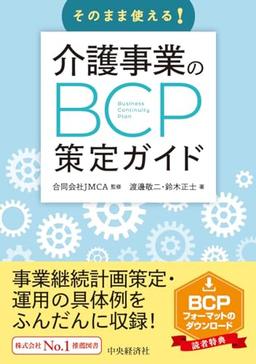
Keiji Watanabe and Masashi Suzuki’s そのまま使える!介護事業のBCP策定ガイド(外部サイト、新しいタブで開きます), under JMCA supervision (an explanatory translation: A Ready-to-Use Guide to Business Continuity Plans for Care Services), is related reading. The publisher-supplied public introduction(外部サイト、新しいタブで開きます) describes basic concepts, operation and review. This suggestion is limited to that public description; the full book has not been read. Published in 2024, it does not substantiate current rules or statistics, or individual facilities’ supplies and finances.
Remaining Questions
Examine spending decisions, residents and staff, and how the system is evaluated.
Renewal costs recur even when the day supplies will be needed is unknown. Who can weigh routine care expenditure against preparedness maintenance, using information about payment dates and restrictions as well as annual results? A useful discussion needs to identify whether a problem concerns purchasing, storage, inspection, staffing or cash. Attributing every shortage to staff awareness or every constraint to national policy would obscure the specific decisions that could change the situation.
Prioritizing work also raises questions about residents’ needs and staff members’ own safety and households. If fewer staff arrive than expected, which tasks can continue, which must change, and where can help be requested? A plan should not depend on treating all residents identically or assuming that workers will absorb unlimited demands. Difficulties in an exercise need a route back to decisions about roles, equipment and budgets, beyond judgments about an individual’s ability to cope.
Finally, what would establish that the system worked? A completed plan, a reported exercise and an available grant represent different stages; they do not automatically establish uninterrupted support. Facilities and authorities need a feasible way to review priority services, shortages and the time needed to connect with assistance without collecting unnecessary personal details. Connecting records that staff can maintain with support that organizations can provide would move the discussion from completing a document toward sustaining daily life.
References
Earthquake in the Kumamoto Region at Around 16:27 on July 28, 2026 — Japan Meteorological Agency (2026). Public text; accessed November 4, 2026
熊本地震 八代 高齢者施設の食料備蓄はわずか — NHK (2026). Public introduction only
【熊本 地震 30日】震度7の熊本 宇城 高齢者施設でおむつなど不足 対応に苦慮 — NHK (2026). Public introduction only
FY2025 Survey of Care Business Management: Summary — Ministry of Health, Labour and Welfare (2025). Full six-page text; tables pp.2,3,6 viewed
介護施設・事業所における業務継続計画(BCP)作成支援に関する研修資料・動画 — Ministry of Health, Labour and Welfare (Current public version; accessed November 2026). Public text; accessed November 4, 2026
Natural Disaster Business Continuity Guideline for Care Facilities and Services — Ministry of Health, Labour and Welfare (Current public version; accessed November 2026). Selected printed pp.1–4,7,13,15–16,25
National Departmental Meeting Materials: Division of Support for Older People — MHLW Division of Support for Older People (2025). March 2025; selected printed pp.21,24
Recovery of Care Facilities from Natural Disasters — Ministry of Health, Labour and Welfare (Current public version; accessed November 2026). Public text; accessed November 4, 2026
地域の方を交えた「BCP研修会」を開催しました — Mizunoki social welfare corporation, Tomitou-so (2026). Public text; accessed November 4, 2026
Statistics cited in this article
- 1Japan Meteorological Agency, July 28, 2026 press release(Observations on July 28, 2026) Open source
- 2MHLW FY2025 Survey of Care Business Management, summary p.2(FY2024 accounts; FY2025 survey) Open source
- 3MHLW FY2025 Survey of Care Business Management, summary p.3(FY2024 accounts; FY2025 survey) Open source
- 4MHLW FY2025 Survey of Care Business Management, summary p.6(FY2025 survey) Open source
Questions to Reflect On
- What records help establish the causes of a shortage?
- Who connects exercise findings to budget decisions?
- How can completion of a plan be distinguished from continuity of care?
Key Terms in This Article
- Outcome Indicator
- A measure intended to examine changes or benefits relevant to the problem a program seeks to address. Its design distinguishes outcomes from immediate activity outputs; improvement in a measure alone does not establish the program's causal effect.
Related Content
424 of the 449 Disaster-Related Deaths in Noto Were Aged 70 or Over — Individual Evacuation Plans Cover 15.1% of the Registers, and 40°C Has Now Settled Over Kumamoto's Shelters
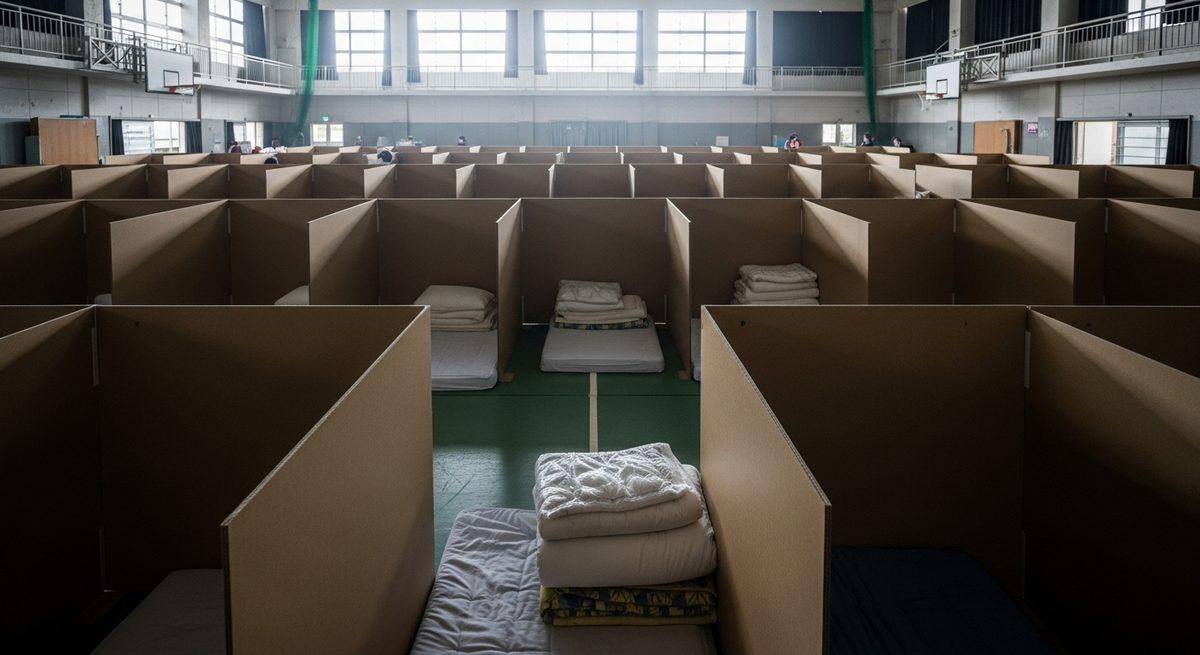
After the earthquake that struck Kumamoto on 28 July 2026, the death toll stood at 38 on 3 August, more than 8,200 people remained in shelters, and Kumamoto City passed 40°C. In the 2016 Kumamoto earthquake, only 50 of the 273 deaths were confirmed by police post-mortem. Among the 449 disaster-related deaths from the Noto Peninsula earthquake, 424 were aged 70 or over. Every one of Japan's 1,741 municipalities keeps a register of residents requiring evacuation assistance, yet individual plans cover 15.1% of those listed. This piece reads where the gap between a duty and a duty of effort shows up.

The Emergency Revision of Long-Term Care Reimbursement Rates and Its Structural Limits: The Government's Own Confession That the Ordinary System Can No Longer Keep Up
In June 2026, the government will revise long-term care reimbursement rates one year ahead of the normal three-year cycle — at +2.03% and 51.8 billion yen in national spending. But this "mid-cycle emergency revision" is itself an admission that the ordinary system can no longer keep pace with the crisis. The backdrop is a collapsing labor market: 176 care provider bankruptcies, a +45% surge in staffing-shortage-driven insolvencies, and an effective job-offer ratio of 14 to 1 for home-care workers. Even more striking, a monthly wage increase of 13,960 yen through the FY2024 treatment improvement allowance left care workers at 338,200 yen — still below the nurses (384,620 yen) and therapists (362,800 yen) working in the same facilities. The indirect route of "regulated reimbursement → provider → wages" cannot keep pace with free-market wage competition in other sectors. A monthly add-on of 10,000 yen is symptomatic treatment, not structural reform. Germany's sector-specific minimum wage model and full-scale foreign worker mobilization both have their limits. The emergency revision is a starting point, not a destination.

Pension Intergenerational Inequality — A ¥60 Million Structural Fault Line
The benefit-contribution gap between those born in 1940 and 2010 reaches ¥40 million. Analyzing intergenerational inequality in Japan's pension system.

The Structure of Japan's Care Worker Crisis — The 'Invisible Roadmap' to 2040
Japan faces a projected shortage of 570,000 care workers by 2040. With a job-to-applicant ratio of 3.9x, the crisis is already underway.
Get new columns by email
1-2 social structure analysis columns per week. Free to subscribe.
Join our activities
Sign up to receive the latest research and activity reports. Feel free to reach out about collaboration or project participation.
Support our research and activities
Support our research and publications with JPY5,000 per year. There is no automatic renewal.