
Arts Grants and Political Promotion: How Were the Exclusions Explained?
An examination of the ended AFF2 programme and a 2023 review-board opinion, focusing on exclusion criteria, reasons and routes to challenge.
Read historical AFF2 programme documents and a 2023 administrative-review opinion. Two diagrams examine criteria, individual reasons, advisory opinions and determinations, review responsibilities and applicants’ time.

TL;DR
- Connect published criteria with individual reasons
- Separate applicant, authority and board positions
- Distinguish decision stages and examine applicants’ time
This article provides general information, not legal or tax advice for an individual case. Consult a qualified lawyer or tax adviser for specific decisions.
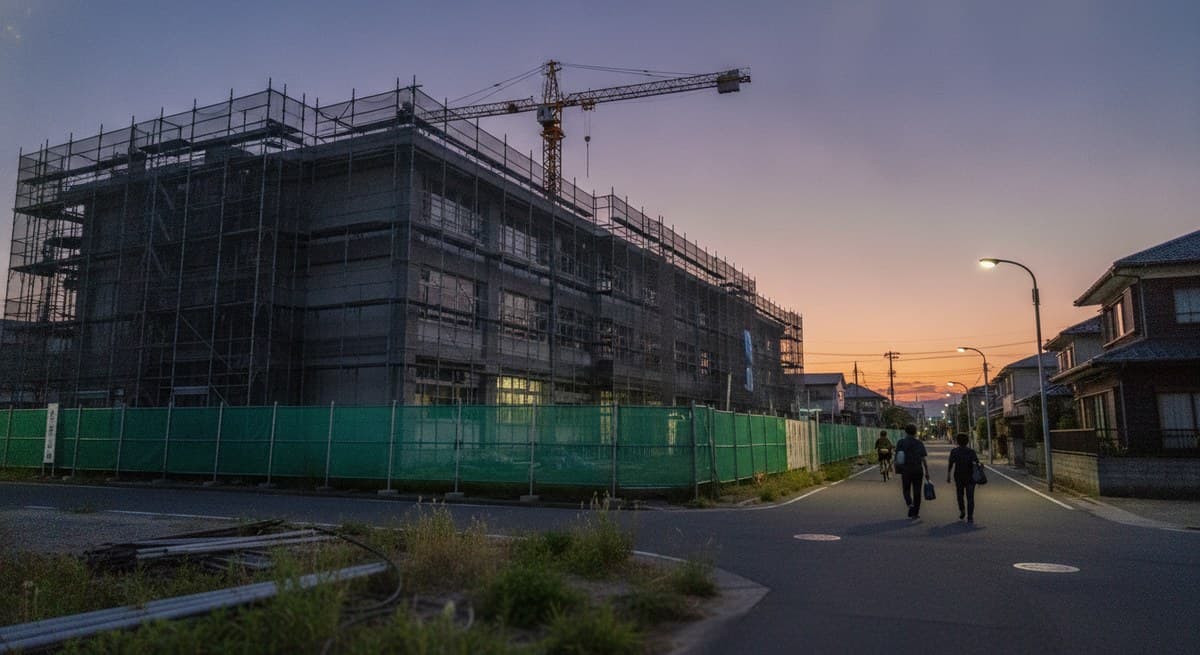
The AI-generated image depicts an invented small theatre. It is not a documentary photograph of an applicant, an actual venue or an administrative review.
What Is Happening
Read the AFF2 programme and the 2023 opinion separately
When an arts organisation is excluded from a grant because its activity is considered political promotion, what would allow it to understand the decision? A funding guide may name excluded activities without explaining which parts of a particular performance meet that description. The difference between an accepted performance and an excluded one may remain unclear. Assessing public funding therefore requires attention both to the reasons offered by the allocating authority and to the process through which applicants can challenge them.
One source is ARTS for the future!2, described by Japan’s . Another is an opinion issued by the on 21 December 2023. This opinion responds to a referral from the authority considering an administrative appeal. It is distinct from a court judgment, a final administrative determination or a decision to pay an applicant.
The programme supported the revival of cultural activity affected by the pandemic. Its official page states that it ended on 31 March 2023, with no further applications to be invited. These historical documents do not describe funding currently open to applicants. They remain useful for examining how allocation criteria and responses to objections can be explained.
The opinion describes an application in which three of five activities were excluded as activities intended for political or religious promotion. The reviewing authority proposed dismissing the appeal. The board concluded that this proposed assessment was not appropriate. Reading the applicant’s arguments, the authority’s position and the board’s assessment separately shifts attention from general support or opposition to the actual reasons for deciding.
Connect the named exclusion with the reasons for excluding the particular activity. That connection allows a disagreement over arts funding to be examined through what an applicant can understand and challenge.
Background & Context
Compare purposes, exclusion criteria and activity content
Programme purposes and exclusion criteria
The official describe support for organisations presenting performances with infection precautions, helping cultural activity develop and recover. The accompanying subsidy provisions describe activities such as paid public performances, exhibitions and film production, together with their organisers. Explaining an allocation requires relating the programme purpose to the submitted activity.
The application guide linked by the agency when checked on 4 November 2026 was the historical version 1.2 dated 25 August 2022. Its section on eligible activities excludes activities intended for political or religious promotion. Beyond finding the phrase, a reader needs to understand what content falls within it and what evidence supports that assessment.
The board questioned whether an important exclusion condition should have appeared in the grant rules or subsidy provisions. It then considered the wording vague and the selection criteria unclear. These are findings attributed to this opinion. They do not establish that conditions in application guides are always ineffective, or that every cultural activity containing political content must receive funding.
Applicants may also need to know which version of each document governed their application. Differences in what applicants and reviewers know can be examined through . Applying this analytical idea means comparing the explanations available at application time with those used in the individual decision. It does not imply that a knowledge gap alone establishes misconduct. The practical question is how applicants can check the conditions used by officials.
Titles, content and comparisons
According to the opinion, the authority relied on event titles and statements on ticket websites when explaining its assessment of promotional intent. The applicant offered arguments about the content and similarities with accepted activities. Neither every applicant assertion nor the authority’s characterisation should be treated as an independently established fact simply because it appears in the document.
The board stated that including a particular politician’s name in an event title did not by itself decide whether political promotional intent existed. The activity’s content required consideration. It questioned which parts of the submitted purposes and descriptions explained the distinction between accepted and excluded activities. This concerns the relationship between different outcomes and reasons that can be compared.
The board also warned that excluding political or religious promotion without a clear definition could discourage cultural expression. That is its assessment of a possible consequence of ambiguous criteria. It is not a survey establishing how many organisations abandoned performances. Keeping these forms of evidence separate makes the discussion more precise.
Questions for published documents
- Programme purpose and eligible activities
- Where exclusions appear and which version applied
- Routes to challenge and documents applicants can provide
Questions for submitted activities
- How the title and performance content were assessed
- Differences from accepted activities
- Which facts were matched to which conditions
The author’s synthesis of questions arising from the AFF2 documents and the board opinion. This is not a universal statutory assessment procedure or a determination of grant eligibility.
Reading the Structure
Examine review roles, time and explanations in notices
An advisory opinion and a subsequent determination
The describes administrative appeals as processes in which an administrative authority examines whether a disposition is unlawful or inappropriate. In principle, a review officer is selected from staff meeting conditions that include non-involvement in the original disposition. Following the officer’s opinion, referral to a third-party body is generally required, subject to exceptions. Document names help distinguish the roles of examining arguments and making the administrative determination.
An opinion favourable to an applicant does not establish that a determination has been made or that payment has followed. Further evidence is needed about what the authority considered and why it reached its subsequent conclusion. If litigation follows, readers must check the challenged decision, the questions the court resolved and subsequent procedural developments through the judgment and other relevant records.
The agency's programme page also states that subsidy payments to all organisations have been completed. This programme-wide statement does not identify whether the three disputed activities were subsequently brought within the award. Where some activities of one organisation were funded and others excluded, payment to the organisation and a decision about the disputed activities are different matters. An account of the individual outcome would need records explaining how those activities were treated, rather than an inference from the general payment notice.
Collapsing these stages can turn an assessment of unlawfulness at one stage into a claim that the same outcome was settled at another. Conversely, an unchanged funding outcome does not by itself establish that concerns about reasons or procedure have been resolved. Identifying who answered which question is part of explaining the conclusion.
Review responsibilities and applicants’ time
MIC also explains that the original authority can be the appeal recipient in circumstances such as the absence of a superior administrative authority. The system nevertheless provides, in principle, for examination by a review officer who was not involved in the original disposition. Whether institutional names match cannot alone decide the fairness of a particular review.
To examine practice, it is useful to ask what can be checked by the person explaining the original decision, the person reading the applicant’s submissions and the person drafting the determination. These are the author’s proposed questions. They are not findings in this opinion about who drafted a subsequent determination. Third-party referral also should not be presented as proof that every later step was independently conducted.
The board criticised the lengthy interval between the review officer’s opinion and the referral, calling for measures to proceed promptly. It also stated that, apart from the point it identified, it found no particular illegality or inappropriateness in the process from appeal submission to referral. That bounded assessment must be distinguished from later drafting or decision-making.
Examine both the review outcome and the time needed to reach a remedy. Performances and exhibitions have scheduled dates. Reasons provided later may not allow an organisation to restore its original plans. Knowing when an explanation, an opportunity to object and a response become available helps explain how the process works for an applicant.
Notice, objections and future explanations
The opinion’s final observations identify the absence of written guidance about the ability to appeal the partial non-award. MIC’s general explanation likewise describes informing the recipient of an appealable disposition or determination about available avenues and the appropriate authority. A result notice has a practical job: helping its recipient understand where and how an objection can be raised.
Specific reasons may be difficult to challenge if the route is unclear. A named appeal recipient may be insufficient if the applicant cannot identify what was excluded or select relevant supporting documents. Reasons and procedural information need to be understandable together in the notice an applicant receives.
What applicants want to check
- Conditions applied and facts identified
- Recipient and method for raising objections
- Procedural options after a response
Questions for examining administration
- Who compared objections with the original reasons
- Waiting time and remaining disadvantage
- Changes to explanations or criteria after criticism
The author’s proposed approach to evaluation. It does not show a completed remedy, a final court or administrative decision, or nationwide practice.
Making reasons more accessible need not involve publishing every confidential proposal or personal detail. Disclosure can be considered document by document, distinguishing the facts and conditions needed to explain a decision from information that should be protected. Anonymisation alone may not prevent an organisation from being identified.
Follow how criticism changes the explanation available at the next application. Revised wording offers limited evidence of improvement if applicants cannot find it or decisions retain the same ambiguity. The changed content, its applicability and the explanation given to existing applicants should be considered together.
Related Guide
Designing outcome indicators(このサイトの記事) distinguishes work undertaken from changes experienced by people. It provides related questions for distinguishing revised notices or guides from improvements in applicants’ ability to understand and challenge a reason.
Related Reading
For related reading on accountability in cultural policy, see 公立文化施設のガバナンス論:自治体によるアカウンタビリティの実践と変容(外部サイト、新しいタブで開きます) (editorial translation: Governance of Public Cultural Facilities) by Haruka Watanabe. The publisher’s introduction and contents(外部サイト、新しいタブで開きます) describe analysis of local-government explanations using council records. Its subject is public facilities, so it does not establish the final decision or payment in this grant case. Public bibliography, introduction and contents were checked; the full book is unread. The Amazon link is an advertising link.
Remaining Questions
Ask whether criteria and avenues to a remedy are usable
How clearly can applicants understand a condition concerning political or religious promotional intent before applying? If titles alone are insufficient, reviewers must explain how they examined content and why comparable activities received different outcomes. More examples could help, but treating every unlisted form of expression as excluded could create an excessively broad condition. The question is how reasons can respect programme purposes while addressing the variety of cultural activity.
Does the opportunity to object operate within the time available to applicants? Careful examination requires time to read documents, yet scheduled performances and payment dates matter too. Dates of explanations and responses, together with unresolved disadvantages, help show whether the process is usable. Publishing an opinion or determination may inform future applicants while serving the current applicant differently; these effects need separate examination.
Finally, how far can one dispute improve explanations in another funding round? Lessons from an ended programme can inform the drafting of criteria and appeal guidance, but conclusions cannot automatically be transferred to grants with different purposes. Each programme requires examination of accessible criteria, relevant facts, reasons and review responsibilities. Confidence in public allocation can be tested through whether applicants can actually see and understand that work.
References
ARTS for the future! 2(コロナ禍からの文化芸術活動の再興支援事業) — Agency for Cultural Affairs (2023). Official programme page; ARTS for the future!2: programme overview, closure and documents
ARTS for the future!2(コロナ禍からの文化芸術活動の再興支援事業)募集要項 — ARTS for the future!2 Secretariat (2022). Official agency publication; eligibility and other stated reading scope; Application Guide version 1.2, 25 August 2022
文化芸術振興費補助金(コロナ禍からの文化芸術活動の再興支援事業)交付要綱 — Agency for Cultural Affairs (2022). Purpose, eligibility, decisions and other-matters provisions examined; Grant rules for pandemic cultural-activity revival support
文化芸術振興費補助金(コロナ禍からの文化芸術活動の再興支援事業)補助要項 — Agency for Cultural Affairs (2022). Relevant purpose, eligible-activity and organiser provisions examined; Subsidy provisions for pandemic cultural-activity revival support
令和5年度答申第55号 — Administrative Complaint Review Board (2023). 21 December 2023; complete opinion text examined; FY2023 Opinion 55: cultural grant decision
行政不服審査法の概要 — Ministry of Internal Affairs and Communications (accessed 2026). Official explanation; not the complete statute; Overview of the Administrative Complaint Review Act

公立文化施設のガバナンス論:自治体によるアカウンタビリティの実践と変容 — 早稲田大学出版部 (2023). 早稲田大学出版部
Statistics cited in this article
- 1Administrative Complaint Review Board FY2023 Opinion 55(2023) Open source
- 2Agency for Cultural Affairs ARTS for the future!2 programme page(2023) Open source
- 3Administrative Complaint Review Board FY2023 Opinion 55, account of the application(2023) Open source
Questions to Reflect On
- Which documents explain the exclusion?
- What can the person reviewing objections check?
- How did explanations change after criticism?
Key Terms in This Article
- Information Asymmetry
- A state in which two parties to a transaction hold different amounts or qualities of information. The gap grows when the seller does this every day while the buyer does it a handful of times in a lifetime. The wider it is, the more the better-informed side can set price and terms in its favour. Fraud and inflated quotes work by exploiting that gap.
Related Content

Dormant Deposits Utilization System Application Practical Guide (2026 Edition): Requirements and Preparation from the Public Offering Guidelines
Based on the 2026 public offering guidelines for fund distribution organizations (regular category), this guide covers eligibility, the composition of grant funds, the self-funding ratio, what the review looks at, and the support program for first-time applicants. All figures are drawn from the guidelines.
Series: Funding & Grants

Five Ways to Participate in the Dormant Deposits Scheme: Comparing Requirements
The dormant deposits scheme has five positions: fund distribution organization by grant, fund distribution organization by investment, implementing organization, activity support organization, and supported organization. Each applies to a different call, faces different requirements, and moves a different amount of money. Compare the work and conditions of each role to find calls suited to your organisation’s objectives.
Series: Funding & Grants
Can Dormant Deposit Funds Pay for Buildings? The Four Conditions in the Call Guidelines
Whether dormant deposit funds can cover the cost of a building is answered by the text of the FY2026 call guidelines. Land purchase is not eligible, buildings are leased as a rule, and new construction is an exception capped at 80% of appraised value. This guide also covers why the phrase "no alternative means exists" is narrower for some applicants than others.
Series: Funding & Grants

Comment by ISVD's Representative Director Naoya Yokota Published in the Tokyo Shimbun's Kochira Tokuhobu Section
The Tokyo Shimbun's morning edition of 25 September 2026 carried a comment by Naoya Yokota, representative director of ISVD, in its Kochira Tokuhobu section. The article covers the fee rise at Japan's national art museums and the government's call for exhibitions that earn money. The interview related to a column ISVD published in March.
Get new columns by email
1-2 social structure analysis columns per week. Free to subscribe.
Join our activities
Sign up to receive the latest research and activity reports. Feel free to reach out about collaboration or project participation.
Support our research and activities
Support our research and publications with JPY5,000 per year. There is no automatic renewal.