
Before moving dolphins to the sea: aftercare and sanctuary design
Animal care after captivity, examined through Japanese standards, French restrictions, US rehabilitation rules and a delayed beluga transfer. Release, lifetime care, funding and responsibility require separate decisions.
TL;DR
- Transfer to a marine sanctuary and release into the wild are different decisions
- Read Japan’s forthcoming rules and France’s restrictions with their scope and exceptions
- Assess individual needs, emergency arrangements and funds for continuing care together
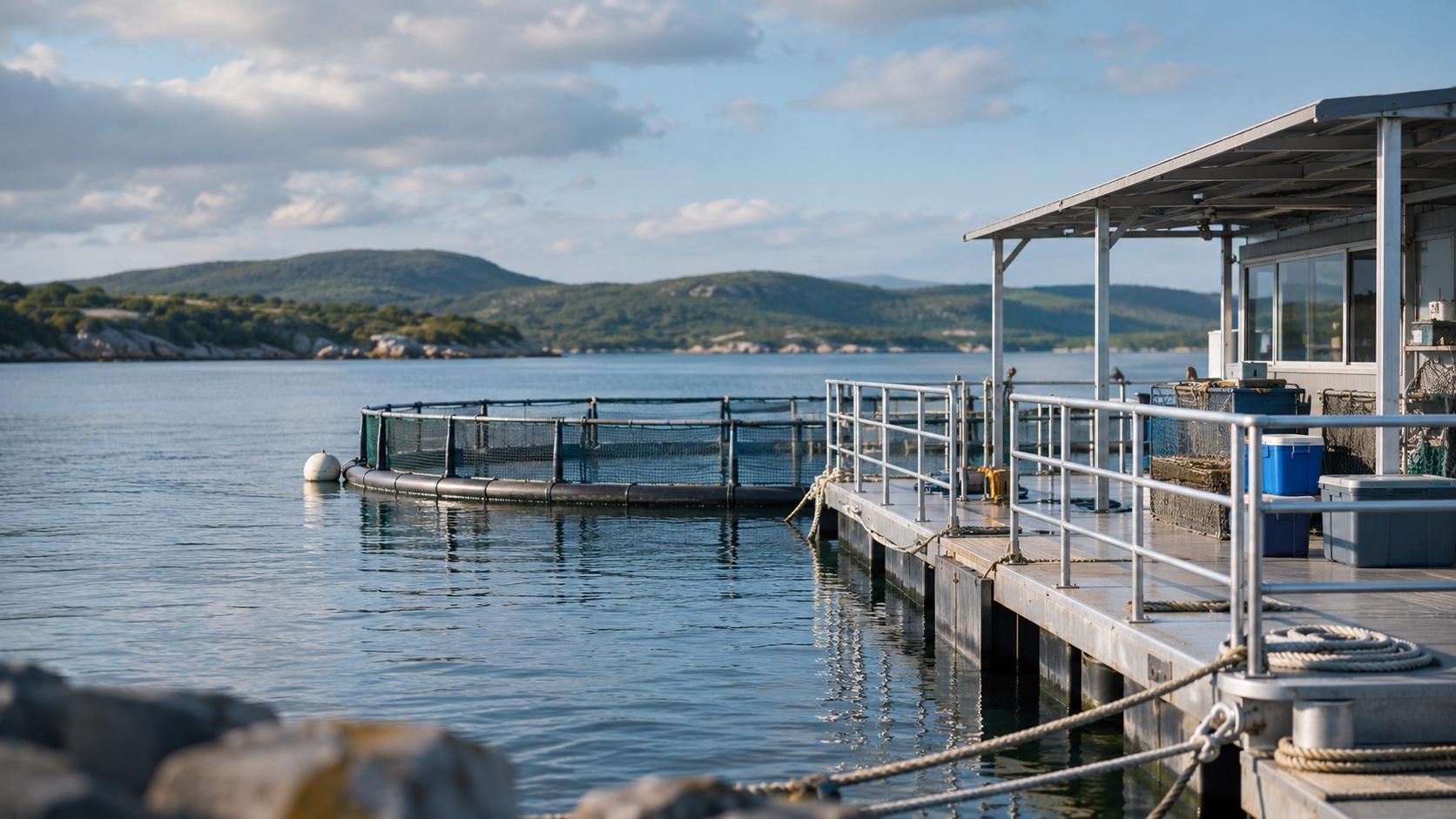
The header is an AI-generated conceptual image, not a photograph of an existing facility. This article examines public information available on 16 November 2026.
What Is Happening
A delayed beluga transfer distinguishes a location from care
A sanctuary postpones a move into the bay
On 29 July 2026, announced that Little White and Little Grey’s move into Klettsvík Bay, Iceland, would be postponed until weather and environmental conditions are suitable in 2027. The animals are two belugas. The operator cited equipment testing, animal familiarisation, staff training and emergency preparedness among the work requiring more time.
The sanctuary’s name should not be taken to mean the whales already live in the bay throughout the year. Even a move into an enclosed sea area requires preparation and decisions, and plans can change. This is the operator’s account, not an independent comparative measurement of welfare improvements. Experience with these belugas cannot simply be applied to another cetacean species or another site.
Different meanings of returning to the sea
The subject here is the health and daily life of the animals themselves. Rest and rehabilitation refer to recovery or adaptation appropriate to an individual’s condition. This article does not address therapeutic or medical effects on people.
Here, a marine sanctuary means a place such as an enclosed sea area where animals receive protection alongside continued feeding and veterinary care. A shared name does not establish identical legal status or operating conditions across countries. Release into the wild, transfer of a long-captive animal to a sea facility, and improvement within an existing facility require separate evaluation. A move to the sea does not establish that an animal can live independently or no longer needs care.
Background & Context
Separate the scope and dates of Japanese, French and US systems
Japanese standards and a forthcoming amendment
Japan’s address efforts toward lifetime care, species and social needs, health management, veterinary measures and rest. Wording calling for efforts toward lifetime care must be distinguished from enforceable standards applying to animal-handling businesses. The notice cannot be read as if every provision carried an identical penal obligation.
The ministry’s Category I guidance(外部サイト、新しいタブで開きます) explains registration for activities such as commercial exhibition and custody. Its Category II guidance(外部サイト、新しいタブで開きます) covers notification for qualifying nonprofit activities with facilities and specified animal numbers. Incorporating a nonprofit does not remove animal-care regulation. Application depends on the actual activities, facilities, species and numbers.
A recent development is greater specificity for mammals other than dogs and cats. The ministry’s October 2026 operational guidance(外部サイト、新しいタブで開きます) states that the amended ordinance was promulgated on 15 October 2026 and takes effect on 1 June 2027. It is not yet in force at the time of writing, nor does the document establish a single new numerical standard specifically for dolphins. It addresses matters including rest and avoiding contact, while noting differences in obligations and duties to endeavour between Category I and Category II.
The guidance also states that it does not recommend keeping wild animals. Whether animals should be kept and how to secure veterinary care and rest for animals already under human management can be considered together. In this article’s assessment, a new facility should not be assumed necessary before comparing improvements at the current site with the burdens of transfer.
French restrictions do not describe all countries abroad
Article L413-12 of France’s Environmental Code(外部サイト、新しいタブで開きます) restricts cetacean captivity and breeding, with exceptions concerning qualifying refuges or sanctuaries and specified scientific research. Paragraph 5 of the Conseil d’État decision of 2 July 2026(外部サイト、新しいタブで開きます) identifies 2 December 2026 as the transition date for captivity and breeding restrictions. This is neither an unconditional ban nor a transition already completed at the time of writing.
The decision rejected the transfer-related application on jurisdictional grounds: the Conseil d’État lacked direct jurisdiction over the individual decisions concerned. Rejection does not mean that the court established the transfer’s suitability for animal welfare. Nor does this decision determine the detailed implementation of the research exception or its application to individual facilities.
US rescue rehabilitation differs from long-term captivity
describes a system for rescuing wild stranded animals and deciding whether they can be released after recovery. NOAA generally requires release within six months, with exceptions; it is not a universal deadline for long-captive dolphins. The guidance also addresses continuing care for non-releasable animals.
The release standards(外部サイト、新しいタブで開きます) consider life history, behavior, medical condition, release planning and monitoring. Agencies make final determinations informed by veterinarians and assessment teams. These rules do not substitute for Japanese release authorisation. They offer a comparison for separating evaluation from decision, rather than assuming rehabilitation automatically establishes releasability.
Wild animal rescued after stranding
US example: NOAA rehabilitation system
- Authorized rescue and treatment
- Veterinary, history, behavior and release assessment
- Agency decision: release when suitable / arrange continuing care if non-releasable
The six-month principle has exceptions. It is not a deadline for long-captive dolphins.
Animal in long-term human care
Sanctuary transfer: assess each individual
- Health, care history and social needs
- Compare current care with a prepared receiving facility
- Ready: consider transfer / not ready: postpone, improve care and reassess
A move to an enclosed sea area is not release into the wild. Care continues.
Both require staff, veterinary access, emergency arrangements and continuing funds. Sources: NOAA release standards (2022); SEA LIFE TRUST update (29 July 2026). The long-term-care pathway is this article’s proposed framework, not a statutory procedure or a guarantee of welfare.
Reading the Structure
Connect individual assessment, receiving facilities and continuing funds
Individual records and receiving conditions
Drawing on these documents, this article considers receiving plans through individual needs, facilities and continuing operations. The following is an assessment framework proposed here, not a new statutory obligation or a substitute for veterinary diagnosis.
A review of health and care history should extend beyond whether transport is possible. It should connect records with the veterinary care, feeding and social arrangements required afterward. If feeding or rest deteriorates following an environmental change, who notices, which specialist is consulted, and what facilities support the response? Fixing an opening date first risks prioritising the schedule before preparation is complete.
In assessing a sea facility, we propose considering water temperature and quality, noise, currents, severe weather and access to veterinary treatment alongside available space. Without seasonal site measurements and expert assessment, proximity to nature alone does not establish suitability. Plans should also allow postponement or temporary return to a protective care facility when needed.
Improvements within the existing facility belong in the comparison. Options to provide rest and places away from human contact should be assessed against transfer options for the same animal. Deciding against transfer should not automatically be equated with neglect, while remaining in place does not by itself ensure health or rest.
Financing lifetime care beyond construction
A lifetime-care project must consider continuing funding for food, veterinary treatment, staff, maintenance, equipment replacement and emergency transport alongside construction and relocation. This is our analysis of project design, not an estimate of a named facility’s accounts. Converting a foreign facility’s fundraising figure into yen does not provide a cost estimate for a Japanese site.
Before accepting animals, a plan needs site-use conditions, animal needs, specialist availability, equipment specifications and local quotations. It should then examine scenarios in which donations or visitor income fall below expectations. Distinguishing hoped-for support from funds secured through agreements or reserves helps determine the feasible scale and timing of admissions.
Plans should identify who remains responsible for care and who could receive the animals if operations become unsustainable. If an entity dissolves or its facility becomes unusable, does another organisation have both the willingness and capacity to assume care, and who pays? Naming another facility is not an agreement. Arrangements also require reassessment as animal conditions and receiving capacity change.
Remaining Questions
Measure changes and establish responsibility if care cannot continue
Records that can establish improvement
Even when establishing a sanctuary is a project’s goal, its name and completion of a transfer do not establish changes in an animal’s daily life. The operator announcement examined here demonstrates the need for operational preparation but does not allow us to estimate long-term comparative welfare improvements. It does not justify combining different species and facilities into one success rate.
One possible evaluation approach is for veterinarians and care staff to maintain records of health, feeding, rest and behavior before and after transfer, examining them alongside seasonal changes and treatment. Measures and frequency would depend on the animal and facility. Plans should specify what changes follow sustained deterioration. Where feasible, external experts could examine the evaluation process, helping distinguish an operator’s goals from documented results. This is a proposed evaluation approach, not an observational study conducted for this article.
Comparing Japan with other countries requires examining who continues to support the remaining animals as well as what the law restricts. Assessing each animal’s suitability for a sea transfer, and securing uninterrupted care when transfer is unsuitable, makes aftercare a concrete responsibility.
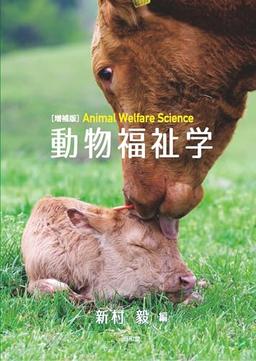
For further reading on welfare concepts and assessment, [増補版]動物福祉学 (Animal Welfare Science, expanded edition)(外部サイト、新しいタブで開きます), edited by Tsuyoshi Shinmura (Showado, 2024), lists zoo animal and wild animal welfare in its table of contents. It is offered as related reading, not evidence of a particular sanctuary’s effectiveness or current law.
References
展示動物の飼養及び保管に関する基準 — Ministry of the Environment, Japan (Last amended 2020). Ministry notice
第一種動物取扱業者の規制 — Ministry of the Environment, Japan. Ministry of the Environment
第二種動物取扱業者の規制 — Ministry of the Environment, Japan. Ministry of the Environment
動物取扱業における犬猫以外の哺乳類の飼養管理基準の細部解釈と運用指針 — Ministry of the Environment, Japan (October 2026). Ministry of the Environment
Article L413-12 du Code de l’environnement (Provision introduced by the 2021 law). Légifrance
Décision n° 516917 du 2 juillet 2026 — Conseil d’État (2026). ArianeWeb
Marine Mammal Rehabilitation — NOAA Fisheries (Updated 20 March 2026). NOAA Fisheries
NMFS Standards for Release of Marine Mammals Following Rehabilitation — Marine Mammal Health and Stranding Response Program (November 2022 revision). NOAA / NMFS
Putting Animal Welfare First — SEA LIFE TRUST (29 July 2026). Beluga Whale Sanctuary
Statistics cited in this article
- 1SEA LIFE TRUST Putting Animal Welfare First(29 July 2026) Open source
Questions to Reflect On
- Are improvements being inferred from a receiving facility’s name?
- Are responsibility and funds secured if the operator cannot continue?
Related Content

Data Literacy for Social Impact: A Practical Guide to Japan's e-Stat and RESAS
A foundational guide to statistical literacy for NPOs and civic organizations, covering the basics of reading data critically and practical use of Japan's free government data portals: e-Stat, RESAS, and jSTAT MAP.

The Structure Behind 38% Food Self-Sufficiency — Rethinking Food Security in an Age of Globalization
Japan's agriculture ministry published three self-sufficiency rates on the same day: 38% by calories, 64% by production value, 46% by intake calories. The 38% excludes livestock raised on imported feed; include them and the "domestic-production rate" is 47%. That nine-point gap sits behind the "domestic" label. Read alongside 4.61 million tonnes of annual food loss.

Practical Guide to Social Vulnerability Mapping During Disasters — Lessons from the Noto Peninsula Earthquake
Disaster damage concentrates on socially vulnerable groups. A guide to vulnerability mapping, inclusive shelter management, and community resilience building.
Series: Organization Design & Resilience

Gender Mainstreaming Practical Guide for NPOs — How to Integrate Gender Perspectives into Organizations and Operations
A practical guide to gender mainstreaming in NPOs—from improving internal gender balance to integrating gender perspectives into program design and evaluation.
Series: NPO Management & Operations
Get new columns by email
1-2 social structure analysis columns per week. Free to subscribe.
Join ISVD's activities?
Sign up to receive the latest research and activity reports. Feel free to reach out about collaboration or project participation.
Support ISVD’s research and activities
Support ISVD’s research and publications with JPY5,000 per year. There is no automatic renewal.