
After an AI bear alert, who handles checks and safety measures?
AI-camera trials and the decisions, responsibility and costs of emergency shooting in Japan
Under Japan's emergency shooting scheme, which began in September 2025, the municipal mayor decides whether to shoot, and responsibility stays with the municipality even when an outside shooter is commissioned. AI-camera trials and plans were announced in several places in 2026. The materials examined cover image classification, alerts, park management responses and labour costs, but do not measure changes in human injuries. The article separates three denominators, captured images, alerts sent and bears that actually appeared, and sets out the human checks after an alert and the costs a municipality carries.
TL;DR
- Emergency shooting is something a mayor may do when four conditions are met; it is not a duty. A shooter asked to take a commission has no duty to accept, and responsibility stays with the municipality after commissioning.
- In the park report, operational bear-classification results count capture occasions, while reclassification of the previous year’s material counts images. These denominators differ from the number of bears that appeared in the field. None of the materials examined measured whether injuries fell.
- In one example in the government guideline, it took 3 hours 12 minutes from the first report to completing traffic restrictions and evacuation. A faster alert does not remove the people and time needed after it.
The article image is an AI-generated thematic illustration, not a photograph of a real location or installed equipment.
This article is a general explanation of the rules, not legal advice. It does not cover what to do if you meet a bear. Please follow the guidance of your municipality and the Ministry of the Environment.
What Is Happening
The 7 October 2026 ministry table lists 33 known FY2026 cases reaching firing; AI figures differ from post-alert human checks.
In September 2025 Japan's amended Wildlife Protection and Management Act took effect, and began. When a bear or wild boar enters a residential area, the scheme allows shooting, at the municipal mayor's decision, in places where guns ordinarily cannot be used. stated on 6 April 2026 that more than 50 emergency shootings had been carried out since the scheme began. In fiscal 2026, which started in April, 33 cases reached the point of firing: 2 involved wild boar and 2 brown bears; the rest involved Asian black bears. The table covers only cases known to the ministry and excludes cases considered but not fired upon. The "more than 50" is a total since the start of the scheme and the 33 covers fiscal 2026 alone, so the two should not be added or subtracted.
In 2026, trials and plans for cameras using artificial intelligence (AI) to identify bear sightings were announced in several places. The town of Yakumo in Hokkaido partnered with on a trial running from 18 September to 30 November, planned for 4 sites and 4 outdoor cameras in the town. A camera takes a picture when it senses movement, and an email is sent only when the AI judges that a bear may be present. In Nanto, Toyama Prefecture, was selected for a national government programme. City staff will check what thermal and other cameras detect before pushing a notice to televisions in homes in the area.
Injury figures were covered in an earlier column(このサイトの記事). In fiscal 2025 there were 216 incidents involving 238 people, 13 of whom died; these are preliminary figures. This article looks at the steps that come after. Once an AI system sends an alert, who checks what? And if the decision is to shoot, which responsibilities and costs stay with the municipality?
Background & Context
Mayors decide; shooting is not a duty. Commissioning does not remove responsibility or municipal costs.
The mayor decides whether to shoot
Article 34-2 of the act says the mayor "may" carry out shooting when four conditions are met. (brown bear, Asian black bear or wild boar) has entered an area of everyday human life, or is highly likely to. Measures to prevent harm to people are urgently needed. Capture by means other than guns is difficult to do accurately and quickly. And traffic restrictions, evacuation or other measures must establish that there is no risk of harm to life or bodily safety from the shooting, including bullets reaching people. This is a power, not a duty to shoot. The ministry's also says a municipality is not required to respond by emergency shooting and chooses among measures that include driving the animal away.
The mayor is not normally expected to direct operations on site. The guideline says it is desirable to authorise the officer in charge to decide, or to delegate the power, but that this is not mandatory. The shooting may be done by municipal staff or commissioned to an outside shooter. Article 34-2(3), however, requires the person to meet cabinet-order requirements for the necessary experience, skill and knowledge, including holding a hunting licence. The scheme does not allow just anyone to be a shooter.
Responsibility stays with the municipality after commissioning
A shooter asked to take a commission has no duty to accept. The guideline states plainly that a request or commission can be declined, and that a situation in which dangerous work has to be entrusted to private individuals ought in principle to be corrected. Page 18 of the guideline explains that, from the fiscal 2025 supplementary budget, wages for appointing municipal staff engaged in emergency shooting became eligible for the Designated Wildlife Management Grant. Permanent full-time staff other than fixed-term appointees are excluded.
After commissioning, the shooter decides the type of gun, the angle and the timing, and the municipal officer gives no order to fire. Even so, the guideline says responsibility lies with the municipality. The officer's job is to keep checking that traffic restrictions and evacuation hold, and to call a halt if they break down.
A municipality can also ask the prefecture for support. When support is requested under Article 34-5, the prefectural governor may not refuse without just cause, and the support staff act under the mayor's command. The mayor must then bear the cost of that support. The guideline gives travel, food and equipment as examples, and asks municipalities to say explicitly when they call that the request is made under the law, so it is not confused with voluntary support. A shooter cannot be requested as statutory support. The guideline also describes a case in which prefectural staff operated a tranquilliser gun under an individual arrangement.
is provided by the mayor under Article 34-6. The person who suffered the loss files a claim, and the mayor decides and notifies the amount. Anyone dissatisfied with the amount may sue the municipality for an increase within 6 months of notification. The guideline lists damage to buildings or vehicles hit by bullets, profits lost because of that damage, and losses from entry onto land or removal of obstacles. Losses because a bear was present and a shop could not open are not covered. Personal injury caused by emergency shooting is expected to be handled through a State Redress Act claim rather than this loss-compensation procedure. Insurance is described as desirable, not required.
How many people and how much time a case takes
The revised guideline replaced hypothetical examples with 7 real cases. This article’s simple sum of the listed role counts gives 17 to 53 people per case. The figures include shooters, municipal officers and police, with prefectural officers participating in some cases. In some cases the same people handled both traffic restrictions and evacuation calls, so the number who actually took part can be smaller than the total. Conversely, the source also mentions headquarters and intra-office coordination staff outside the role tables, so this range does not represent the total number mobilised.
In a case involving 2 bears, a mother and cub, in an urban garden, subtracting the listed times gives 3 hours 12 minutes from the 8:50 report to completion at 12:02, with the shot 13 minutes later. In a case where a tranquilliser gun was used on a bear in a tree on school grounds, the prefecture was asked for support at 9:20 and its staff arrived at 11:15. Arranging support also takes time, and when the support is requested under the law, the municipality bears the cost.
- Report received8:50Notices by loudspeaker vehicle and emergency email from 8:55
- Police begin evacuation calls9:25
- Bear located; emergency shooting considered10:00
- Municipality begins traffic restrictions and evacuation for shooting10:28
- Traffic restrictions and evacuation complete12:021 hour 34 minutes after starting; 28 people on traffic restrictions
- Shot fired12:15
- Traffic restrictions lifted12:41
This article’s sum of the listed role counts is 48, including shooters, municipal and prefectural officers and police. Additional headquarters and intra-office coordination staff are excluded, and one person may fill several roles. This is one of seven cases, not an average or the total number mobilised. Durations are this article’s calculations from the listed times.
Reading the Structure
Image classification and alert-time targets do not measure missed bears or reduced harm. Human checks remain.
What the trial figures measure
When reading the performance of AI cameras, it helps to separate three denominators. Of the images captured, how many were classified correctly? Of the alerts sent, how many were really bears? Of the bears that appeared, how many were reported? The same word, accuracy, means different things depending on which is meant.
must also be counted separately. Classifying a non-bear image as a bear and missing a bear in an image are different failures. Animals that were never captured on camera do not enter image-classification results.
, a national government park, was written by the office that runs the system. The park introduced 20 network-connected cameras and planned 10 more for 30 in total from July. An AI identifies the species and emails the manager when it judges an animal to be a bear. The operational results were of 2 daytime capture occasions, 1 bear was classified correctly; of 3 night-time capture occasions, 1 was classified correctly. For these operational figures, the denominator is the number of capture occasions with a bear in the image, including occasions the AI missed. When the previous year's images were classified afterwards, 7 colour images yielded 6 correct classifications, while 18 black-and-white night images yielded 8. In the previous year's survey photographed individuals totalled 6,539 on a cumulative basis, counting repeat captures, of which 3,381 were raccoon dogs and 9 were bears. The report says that medium-sized mammals such as raccoon dogs and badgers were very often classified as bears and that mistaken emails were frequent. By combining the system with staff checking images through a service, the park became able to close some sections within 24 hours of a capture. The report does not say that harm fell.
reports that a few days after installation, images triggered by movement are building up, but no bear has appeared and the AI alert has not sounded once. The town reads this as the AI judging correctly. Because no bear has yet been captured on camera, whether the system can report a bear, in other words how few it misses, has not been tested at this point. The verification items in TOPPAN's release are detection accuracy across day, night and weather, keeping false detections down, the stability of cameras and communications, ease of operation, and time saved compared with the existing process. All of these are plans, and the trial runs until 30 November.
The Itscom release says the existing response relied on residents' reports and took about 30 minutes before a loudspeaker vehicle arrived and announced the sighting, and that the trial aims to cut the time from detection to notice to about 5 minutes. The 30 minutes is what the old report-based process took; the 5 minutes is a target counted from camera detection. The two need not start from the same moment, and the 5 minutes is a target, not a result.
Figures in the materials examined
Each has a different denominator and year
- Classification of bear captures (capture occasions, park, 2022)
- Day 1/2, night 1/3
- Cumulative photographed individuals in the previous year (park)
- 9 bear captures of 6,539, counting repeats
- Labour cost of retrieval and maintenance (park)
- Up to ~¥1m → ~¥200k/month
- Time to notify residents (Nanto, target)
- ~30 min → ~5 min
Figures not in the materials examined
Not a claim that they exist nowhere
- Share of bears that appeared which were reported
- None
- Share of alerts that were real bears
- None
- Staff time spent checking alerts
- None
- Change in human injuries
- None
The right-hand side records what was found in the materials read for this article. The park report says mistaken emails were frequent but gives no count. Nanto's 30 minutes and 5 minutes need not be counted from the same starting point.
The human check after an alert remains
These systems each build in a step in which people check after an alert. At the park, the manager looks at the cloud screen. In Yakumo, staff check the location and image on a map. In Nanto, staff check the footage remotely from the city office or elsewhere before notifying homes.
What the trials aim to shorten is the time from detection to notice. In example 2 of the guideline, it took more than 3 hours from the report until traffic restrictions and evacuation were in place, and 1 hour 34 minutes even after the municipality began securing safety for the shooting. However fast an alert arrives, the checking and safety measures that follow need people and time. The park report identifies frequent mistaken emails as a problem. It also explains that the burden of checking images when many cameras are installed led it to choose a cloud service where images could be checked together.
How the costs are compared
The cost figures in the park report compare the labour of technicians retrieving data. Previously 1 visit cost about ¥200,000 and there could be up to 4 or 5 a month, about ¥1,000,000. After switching to network-connected cameras, 1 monthly visit to change batteries and check operation cost about ¥200,000, at most 1/5 of the earlier cost. Equipment, communications and cloud costs are not part of this comparison.
A comparison of camera retrieval and maintenance labour alone cannot total staff time spent checking alerts, the cost of statutory prefectural support and loss compensation. Materials showing the effect of installing cameras and materials showing the cost of emergency shooting exist separately, and no combined figure appeared in the materials examined.
Questions that remain
Will evaluations count misses, false alerts and staff time? Which records could show whether harm fell?
The first is what trial evaluations will report. Yakumo's trial runs until 30 November, and TOPPAN lists keeping false detections down as a verification item. When results are published, it is worth checking whether the three denominators, captured images, alerts sent and bears that appeared, are shown separately. Cameras alone cannot tell how many bears appeared, so matching against sighting reports and records of signs takes extra work.
The second is who counts the time of the people who check alerts. The guideline asks municipalities to compile records from sighting to response after an emergency shooting, and the ministry collects the case counts. For each trial, I would check who manages AI detection and alert records and whether they can be matched to response records. Linking the two would allow the time and staffing from alert to decision, safety measures and firing to be compared as one sequence. If one sighting generates several alerts, can records distinguish it from separate sightings and retain the time spent checking again? Before excluding unmatched records, could the reasons and scope for further investigation be explained?
The third is which records could show whether harm fell. For a future comparison, I would check how far records across several years before and after installation can be assembled for districts with and without cameras. An evaluation plan should also explain how it will handle , such as annual changes in sightings. For anyone raising the issue in a council or community, a good first step is to check whether their municipality has a response manual for emergency shooting and whether the evaluation items of any trial are published.
References
Emergency Shooting Guideline, Revised April 2026 (title translated by the author) — Ministry of the Environment (2026). Ministry of the Environment website (PDF, Japanese)
Act on the Protection and Management of Wildlife and the Proper Conduct of Hunting (Act No. 88 of 2002), Articles 34-2 to 34-6 (title translated by the author) (2002). e-Gov (Japanese government legal database)
Revision of the Emergency Shooting Guideline (title translated by the author) — Ministry of the Environment (2026). Ministry of the Environment press release (Japanese)
Emergency Shooting Cases, FY2026 (title translated by the author) — Ministry of the Environment (2026). Ministry of the Environment website (PDF, Japanese)
Human Injuries Caused by Bears: Preliminary Figures (title translated by the author) — Ministry of the Environment (2026). Ministry of the Environment website (PDF, Japanese)
Introducing a Bear Intrusion Countermeasure System Using Digital Technology at Echigo Hillside Park (title translated by the author) — Sasaoka, Hosoi and Adachi (family names transliterated by the author) (2022). Hokuriku Regional Development Bureau, FY2022 research presentation (Japanese)
TOPPAN and Yakumo, Hokkaido, Begin a Trial of AI Detection, Reporting and Integrated Management of Bear Sightings (title translated by the author) — TOPPAN Inc. (2026). News release (Japanese)
The Bear Detection Trial Has Begun (title translated by the author) — Town of Yakumo, Information Policy Office (2026). Town of Yakumo website, staff blog (Japanese)
Selected for the Ministry of Internal Affairs and Communications FY2026 Regional DX Programme: Towards Rapid Warnings of Bear Sightings (title translated by the author) — Itscom (2026). News release (Japanese)
Figures and provisions were initially based on materials checked on 4 October 2026. The emergency-shooting table was checked again on 10 October and the figures updated to its 7 October edition. The provisions and published materials were checked again on 13 October. The Ministry of the Environment keeps updating its table of emergency shootings, so please check the latest version.
For injury statistics and the management of , see the column on human injuries caused by bears(このサイトの記事).
For distinguishing denominators and causation, see the statistics and public-data literacy guide(このサイトの記事).
Reference Books
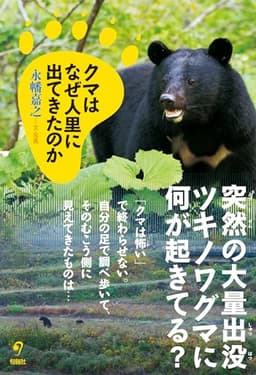
Related reading: クマはなぜ人里に出てきたのか (Why Bears Have Come into Human Settlements; title translated by this article)(外部サイト、新しいタブで開きます) / Publisher’s bibliographic record(外部サイト、新しいタブで開きます) / ISBN 9784845119530
Statistics cited in this article
- 1Ministry of the Environment press release on the revision of the Emergency Shooting Guideline(6 April 2026) Open source
- 2Ministry of the Environment, Emergency shooting cases (FY2026)(updated 7 October 2026) Open source
- 3TOPPAN Inc. news release on the bear detection trial in Yakumo(18 September 2026) Open source
- 4Ministry of the Environment, Human injuries caused by bears (preliminary)(2 October 2026) Open source
- 5Wildlife Protection and Management Act, Article 34-6(4)(current version effective 1 July 2026) Open source
- 6Ministry of the Environment, Emergency Shooting Guideline (revised April 2026)(April 2026) Open source
- 7Ministry of the Environment, Emergency Shooting Guideline (revised April 2026), section 5 Examples(April 2026) Open source
- 8Sasaoka et al. (family name transliterated by the author), report on the bear intrusion countermeasure system at Echigo Hillside Park(2022) Open source
- 9Itscom news release(21 August 2026) Open source
- 10Itscom news release on the Nanto trial(21 August 2026) Open source
Questions to Reflect On
- Has your municipality published a response manual or decision procedure for emergency shooting?
- Does the evaluation of an AI camera trial report missed detections and false alerts together with their denominators?
Key Terms in This Article
- Cloud Computing
- A model for on-demand network access to shared computing resources such as servers and storage. Using a cloud service alone does not determine who may view information or the conditions for providing it to third parties.
- Designated Dangerous Wildlife
- Wildlife designated by cabinet order because its appearance in areas of everyday human life poses a high risk of harm to life or bodily safety. Brown bears, Asian black bears and wild boar are designated and are the species covered by emergency shooting.
- Emergency Shooting (Wildlife)
- A scheme under Article 34-2 of Japan’s wildlife law permitting a municipal mayor to carry out shooting of designated dangerous wildlife under specified conditions. It requires entry or a high risk of entry into areas of everyday life, urgent need to prevent harm, difficulty capturing the animal accurately and quickly without guns, and safety measures; it does not impose a duty to shoot.
- Loss Compensation for Emergency Shooting
- The mechanism under Article 34-6 of Japan’s wildlife law by which the municipal mayor compensates losses ordinarily resulting from emergency shooting or entry onto land or removal of obstacles under Article 34-3(1). The affected person files a claim and the mayor decides and notifies the amount; it is distinct from a State Redress Act claim concerning personal injury.
- False Positives and Missed Detections
- Two ways a detection system can be wrong: a false positive classifies a target as present when it is absent, while a missed detection classifies it as absent when it is present. A rate of correct classification of captured images alone does not establish how many targets present in the field were detected.
- Confounding Variable
- A third variable that influences both variables under study. Overlooking confounding variables leads to mistaking spurious correlations for causal relationships.
- Satoyama
- The belt of woodland, farmland, and grassland between settlements and the deep mountains, kept up by human tending. Through gathering firewood, cutting undergrowth, and farming, people and nature interacted cyclically, and it worked as a buffer separating human settlements from wildlife habitat.
Related Content
The Linear-Shizuoka Agreement Now Carries a Clause to Halt the Work — How a Century-Old Memory of Water Loss Became Procedure
On July 18, 2026, Shizuoka Prefecture and JR Central signed a nature-conservation agreement for the Linear Chuo Shinkansen, and the only unbuilt section, in Shizuoka, moves toward construction. What matters is the content: a clause to halt the work if something unforeseen arises. This is not the finale of a conflict drama but the result of a century-old memory — the Tanna Tunnel's water loss — transcribed, through a national expert panel, into numbers and procedure like the 30-day rule and the monitoring of 33 streams.
Bear Injuries Hit a Record 216 in Japan — Depopulation Has Emptied the Hands That Tended the Boundary
By Japan's Environment Ministry, bear-inflicted injuries hit a record 216, with 13 deaths, in FY2025, and sightings reached 50,801, 2.1 times FY2023. But a poor nut crop is only the trigger. Depopulation has drained the hands that tended the satoyama; abandoned farmland is turning, in quality, back into forest; and the buffer between people and the wild is dissolving from within. This reads not culling versus coexistence, but the vacancy of who manages the boundary.
Kumamoto's Car Society Cannot Be Solved by Roads — Transit's Downward Spiral and Planning Backward from Where People Live
Congestion is worsening in the Kumamoto urban area, where semiconductor industry is concentrating. The Kumamoto Urban Area Person Trip Survey shows the car's mode share rising from 59.3% in 1997 to 67.3% in 2023, while the transit share fell to 5.2%. Yet total travel has fallen to 0.85 times its 2012 level, so congestion cannot be explained by the volume of traffic across the urban area. Adding roads does not clear congestion; in an expressway toll-free trial, traffic rose about 79%. This reads the downward spiral in which driver shortage leads to cuts, fewer riders, unprofitability, and withdrawal, and points to reconnecting where people live with transit by working backward, rather than widening roads.
Fukushima Holds About 14 Million Cubic Metres of Removed Soil. Reuse Outside the Prefecture Began With Flower Beds at Two Government Buildings
Soil removed during decontamination in Fukushima must be finally disposed of outside the prefecture by March 2045, an obligation written into law. About 14 million cubic metres sit in interim storage. On 29 August 2026 the first reconstruction reuse outside Fukushima began at a government building in Sendai, followed by one in Saitama. The volume used across both sites was about 2 cubic metres. The government's basic policy and roadmap say that selecting and surveying candidate sites for final disposal begins around 2030. This piece reads the distance between the deadline and the start, using the government's own documents.
Get new columns by email
1-2 social structure analysis columns per week. Free to subscribe.
Join ISVD's activities?
Sign up to receive the latest research and activity reports. Feel free to reach out about collaboration or project participation.
Support ISVD’s research and activities
Support ISVD’s research and publications with JPY5,000 per year. There is no automatic renewal.