
Ten Riot Police, Twenty Minutes, a House That Had Not Collapsed — False Rescue Requests Went from 1 in 573 to 104 in 1,091
After the 2026 Kumamoto earthquake of 28 July, false rescue requests naming addresses that do not exist, and AI-generated videos purporting to show the damage, spread on social media. Measured by the same system, false posts among rescue requests numbered 1 out of 573 in the 2016 Kumamoto earthquake and 104 out of 1,091 in the 2024 Noto Peninsula earthquake. What changed is not the volume of malice but who pays for the correction: no longer the attention of readers, but the deployment of fire and police.

TL;DR
- After the 2026 Kumamoto earthquake of 28 July, false rescue requests naming non-existent addresses and AI-generated videos of purported damage spread on social media
- Measured by the same analysis system, false posts among rescue requests numbered 1 out of 573 in the 2016 Kumamoto earthquake and 104 out of 1,091 in the 2024 Noto Peninsula earthquake
- The false rescue requests in Noto named real addresses, so address checks cannot filter them; what works is behaviour, namely duplication and the distribution of origins
Both figures come from D-SUMM, the disaster-situation summarisation system built by Japan's National Institute of Information and Communications Technology (NICT), covering 10% of Japanese-language posts on X rather than the whole. Over eight years, rescue-request posts themselves doubled from 573 to 1,091, while those seen as false went from 1 to 104. In the 2026 Kumamoto earthquake, videos generated by AI have been added to the mix.
What Is Happening
After the 2026 Kumamoto quake, false rescue requests naming addresses that do not exist, and AI-made videos, spread. A repeat of 2016
On 28 July 2026, an earthquake registering a maximum seismic intensity of 7 struck Kumamoto Prefecture. The Japan Meteorological Agency named it the . The following day, that false rescue requests naming addresses that do not exist were spreading on social media. Videos generated by AI and presented as footage of the damage have appeared as well. From immediately after the quake, older photographs were posted as images of this disaster, alongside claims with no scientific basis that the earthquake had been successfully predicted. One account claiming to be able to predict earthquakes posted that it had "announced a prediction and got the location right," and the post was viewed more than 3.4 million times. Several posts also claimed the earthquake had been caused artificially.
The 2016 lion post
This is not the first time in Kumamoto. Immediately after the 2016 Kumamoto earthquake, a post reading "a lion has been let loose from the zoo near my place because of the earthquake," together with a photograph of a lion, appeared on Twitter. That July, Kumamoto Prefectural Police on suspicion of obstruction of business through deception.
Ten years on, in the same prefecture
A decade has passed. The same prefecture, the same intensity of 7, and false information circulating again. of Wayo Women's University notes that, alongside collapsing buildings and hillsides, footage of the "a wild animal has escaped" type draws attention readily on social media. The form that moved people a decade ago is still alive. The substance, however, has changed.
Background & Context
By the same D-SUMM measure, false rescue requests went from 1 in 573 to 104 in 1,091. The motive shifted to ad revenue from views
There is a record that measures the change on a single scale. D-SUMM, the disaster-situation summarisation system built by Japan's National Institute of Information and Communications Technology (NICT), extracts damage reports from posts on X, and figures exist for both the 2016 Kumamoto earthquake and the 2024 Noto Peninsula earthquake as analysed by this same system.
Measuring Kumamoto and Noto by the same yardstick
For the 2016 Kumamoto earthquake, posts asking for rescue in the first 24 hours came to 573 out of 19,095 total reports. One of them was seen as false.
For the 2024 Noto Peninsula earthquake, the same 24 hours produced 1,091 out of 16,739 total reports. Rescue requests themselves had doubled. Of those 1,091, contradictory reports were detected in 254, and 104 were estimated to be hoaxes. Those 104 were judged by checking whether the address given actually existed and by cross-referencing news coverage. From 1 in 573 to 104 in 1,091 — roughly 0.2% to roughly 9.5%. D-SUMM, however, analyses 10% of Japanese-language posts on X, so these are not whole-population estimates.
What changed was the purpose, not the volume of malice
What changed is not the volume of malice. It is the purpose. of the Interfaculty Initiative in Information Studies at the University of Tokyo notes that the false and misleading information around the Noto Peninsula earthquake included duplicate rescue-request posts thought to be aimed at harvesting views, and fraudulent rescue requests and transfer solicitations thought to be aimed at extracting money. Among the duplicate posts, 9 in 10 of the accounts were estimated to belong to non-Japanese speakers. By X's own tally, posts relating to "rescue requests" among those containing false or misleading information numbered about 21,000. In the same tally, posts claiming the earthquake was an "artificial earthquake" numbered about 100,000, "appeals for support" soliciting fraudulent donations about 350, and claims of looting gangs on the ground about 200. Conspiracy theories dominate by volume, but rescue requests come next, exceeding the donation and looting topics by an order of magnitude. These, however, are counts classified by X against its own data, differing from D-SUMM's 1,091 both in denominator and in how a post is judged. The two sets of figures cannot be divided into one another.
What happened behind the figures matters more. On 2 January 2024, ten prefectural riot police searched for about 20 minutes in the city of Wajima. There was no collapsed house at the address given in the post, and the residents were unharmed. An official of the Oku-Noto Wide-Area Fire Department has said that there were many cases in which no one at the scene needed rescuing. A man in his forties whose home stands at that address said that there were lives that could have been saved. On 24 July that year, a 25-year-old company employee from Saitama Prefecture was arrested on suspicion of obstruction of business through deception.
Reading the Structure
What changed is who pays. Not readers' attention but fire and police deployment. Address checks fail; duplication and origin work
What is happening here is a substitution in who pays for the correction.
Brandolini's law
Discussions of false information often invoke Brandolini's law: the energy needed to refute nonsense is an order of magnitude greater than the energy needed to produce it. That generative AI is widening this imbalance was covered in a separate piece(このサイトの記事). With ordinary falsehoods, though, the cost is paid by the attention of readers and fact-checkers. It takes time, but it can be recovered later.
Rescue requests in a disaster are different. The cost is paid by the deployment of fire and police. Those 20 minutes were borrowed from someone. A genuine request may well arrive during the same interval. Unlike attention, the number of people who can be sent is finite, and nothing else substitutes for it. Occasions on which the bears directly on survival are limited, and a rescue request during a disaster is one of them.
The motive has been replaced as well. For the 2016 lion post, the . No exchange of money was at issue in that case. Noto happened on top of a mechanism in which views become income. That 9 in 10 duplicate posters were estimated not to use Japanese means that a disaster in the Japanese-speaking world became monetisable traffic for people who do not read Japanese. Then, in 2026, AI-generated video was added. Only the cost on the producing side fell again.
The correcting side is moving too
The other side is moving too. Citizens' capacity to correct has risen: during the Noto Peninsula earthquake, the number of people contributing to a Community Note on X for the first time reached its highest level yet. The mechanism, in which users attach background information to potentially misleading posts, gained contributors sharply because of the disaster. Fact-checking bodies moved as well. Within a month of the quake, the Japan Fact-check Center had published a breakdown of disaster misinformation into five types. Regulation has changed as well. The Act on Dealing with Information Distribution Platforms came into force on 1 April 2025, obliging large platform operators to speed up their response to takedown requests and to publish how those takedowns are handled.
But correction is slower than production. That is what Brandolini's law means. And takedown is an after-the-fact measure. A post deleted once the riot police are back does not return the 20 minutes.
The law, too, moves only after the fact. Minami sets out that Japan has no statute punishing the mere posting of a hoax. Only when false information obstructs business, rescue operations or evacuation, or damages the reputation of a person or organisation, can obstruction of business through deception or defamation come into play. The law waits, in other words, until real harm has been done. It moves after the 20 minutes have been spent.
Designing the receiving end
What remains is design on the intake side. But it is not a matter of simply checking whether an address exists. The false rescue requests that spread in Noto . That is why the riot police had to go. A place name absent from the map can be filtered by machine; an address on the map cannot.
What works is not the truth of the content but the behaviour of the posting. Whether the same text is coming from several accounts. Where the posts originate. In Noto, 9 in 10 duplicate posters were estimated not to speak Japanese. Real disaster victims do not throw the same text at a feed nine-tenths from abroad, all at once. Looking at duplication and distribution is faster than adjudicating each claim, and it keeps working even when generative AI rewrites the wording.
Some people have only social media
What is hard is that some disaster victims have no channel but social media. Phones do not connect, the location of the desk is unknown, and there is nowhere to write but a feed. A design that shuts social media out is not an answer. Concentrating reports into a single channel does not mean refusing posts on social media. It means pulling requests written there in automatically, letting a machine look first at duplication and distribution, and only then passing them to human hands. The burden of judgement moves from the person posting to the desk receiving.
So the question is not how to reduce false information. It is how to build an intake that assumes false information will be mixed in and still does not exhaust the resources of rescue. What was 1 case in 2016 became 104 eight years later. Whether that intake is ready by the next disaster will decide whether those 20 minutes can be given back to someone.
The design of disaster information raises questions on the warning side as well. The structure by which trust in a warning becomes the sole trigger for evacuation in a distant tsunami with no felt shaking was covered in a separate piece(このサイトの記事). The steps for checking statistics and primary sources yourself are set out in our introduction to statistical literacy(このサイトの記事).
Further Reading
- 無知学への招待――〈知らないこと〉を問い直す (An Invitation to Agnotology: Rethinking What We Do Not Know)(外部サイト、新しいタブで開きます) (edited by Souto Tsuruta and Togo Tsukahara, Akashi Shoten, March 2025). An introduction to agnotology, the study of how not knowing is produced rather than how knowledge is made. It provides the grounding for reading disaster misinformation as a system of production rather than as individual malice.
References
White Paper on Information and Communications in Japan 2024, Feature 1: Information and Communications during the 2024 Noto Peninsula Earthquake, Column 1: Responding to False and Misleading Information in Disasters — Ministry of Internal Affairs and Communications (2024). Ministry of Internal Affairs and Communications
Ambulances dispatched on false rescue requests: 'lives that could have been saved'; many scenes with no one to rescue — Chunichi Shimbun (2024). Hokuriku Chunichi Shimbun, 25 July 2024
Responding to Illegal and Harmful Information on the Internet (Act on Dealing with Information Distribution Platforms) — Ministry of Internal Affairs and Communications (2025). Ministry of Internal Affairs and Communications
Man arrested for spreading a hoax on Twitter that a lion had escaped in the Kumamoto earthquake — ITmedia NEWS (2016). ITmedia NEWS, 21 July 2016
An estimated 10% of Noto earthquake rescue requests were false posts, including non-existent addresses and overseas origins — Asahi Shimbun (2024). Asahi Shimbun Digital, 5 August 2024
Hoaxes about the Kumamoto earthquake spread on social media: 'fake images and videos are possible', 'do not share when you are unsure' — Yomiuri Shimbun Online (2026). Yomiuri Shimbun Online, 28 July 2026, 21:15
That act may be a crime: hoaxes already spreading on social media after the Kumamoto earthquake, and how a 'like' or a repost makes you complicit — Ryuta Minami (2026). Yahoo! News Expert, 29 July 2026
Hoax that a lion escaped after the earthquake: the poster will not be indicted — J-CAST News (2017). J-CAST News, 23 March 2017
Kumamoto earthquake: false rescue requests on social media, and AI-generated fake videos — a call for caution — NHK (2026). NHK News, 29 July 2026
Statistics cited in this article
- 1Yomiuri Shimbun Online, "Hoaxes about the Kumamoto earthquake spread on social media"(28 July 2026) Open source
- 2Ministry of Internal Affairs and Communications, White Paper on Information and Communications in Japan 2024, Feature 1, Column 1: Responding to False and Misleading Information in Disasters(2024) Open source
- 3Ministry of Internal Affairs and Communications, White Paper on Information and Communications in Japan 2024 (original source: Yuya Shibuya and Tomoka Nakazato, report on the circulation of false and misleading information in digital space during the 2024 Noto Peninsula earthquake)(2024) Open source
- 4Ministry of Internal Affairs and Communications, White Paper on Information and Communications in Japan 2024, Feature 1, Column 1 (tally by X)(2024) Open source
- 5Chunichi Shimbun, "Ambulances dispatched on false rescue requests: 'lives that could have been saved'"(25 July 2024) Open source
- 6Ministry of Internal Affairs and Communications, "Responding to Illegal and Harmful Information on the Internet"(2025) Open source
Questions to Reflect On
- When a disaster strikes your area, is the desk that receives rescue requests built to check whether an address actually exists?
- How can false requests be filtered out without shutting out disaster victims for whom social media is the only channel available?
- Can regulation that speeds up takedowns ever recover the 20 minutes already spent on a deployment?
Key Terms in This Article
- Agnotology
- The study of how ignorance is produced and maintained. Systematized by Robert Proctor in 2008. Analyzes the absence of knowledge not as a natural state but as a social product actively manufactured by industry, power, and institutions. The tobacco industry's manufacture of doubt is the canonical case.
Related Content

Can Verified Provenance Establish That a Disaster Photograph Is True?
C2PA provenance, factual context, affected people’s safety and correction, using documents checked October 6, 2026.

Zentsuji's electronic voting: how can voters who cannot read the screen check a choice?
About braille and assisted voting, completion audio, candidate confirmation and trial evidence, using the August 30, 2026 election and materials checked through October 6

Gennai OSS: Is Published Code Enough for Deployment?
The April 2026 partial release, the release planned around February 2027, and the license, data, and maintenance checks for adopting organizations
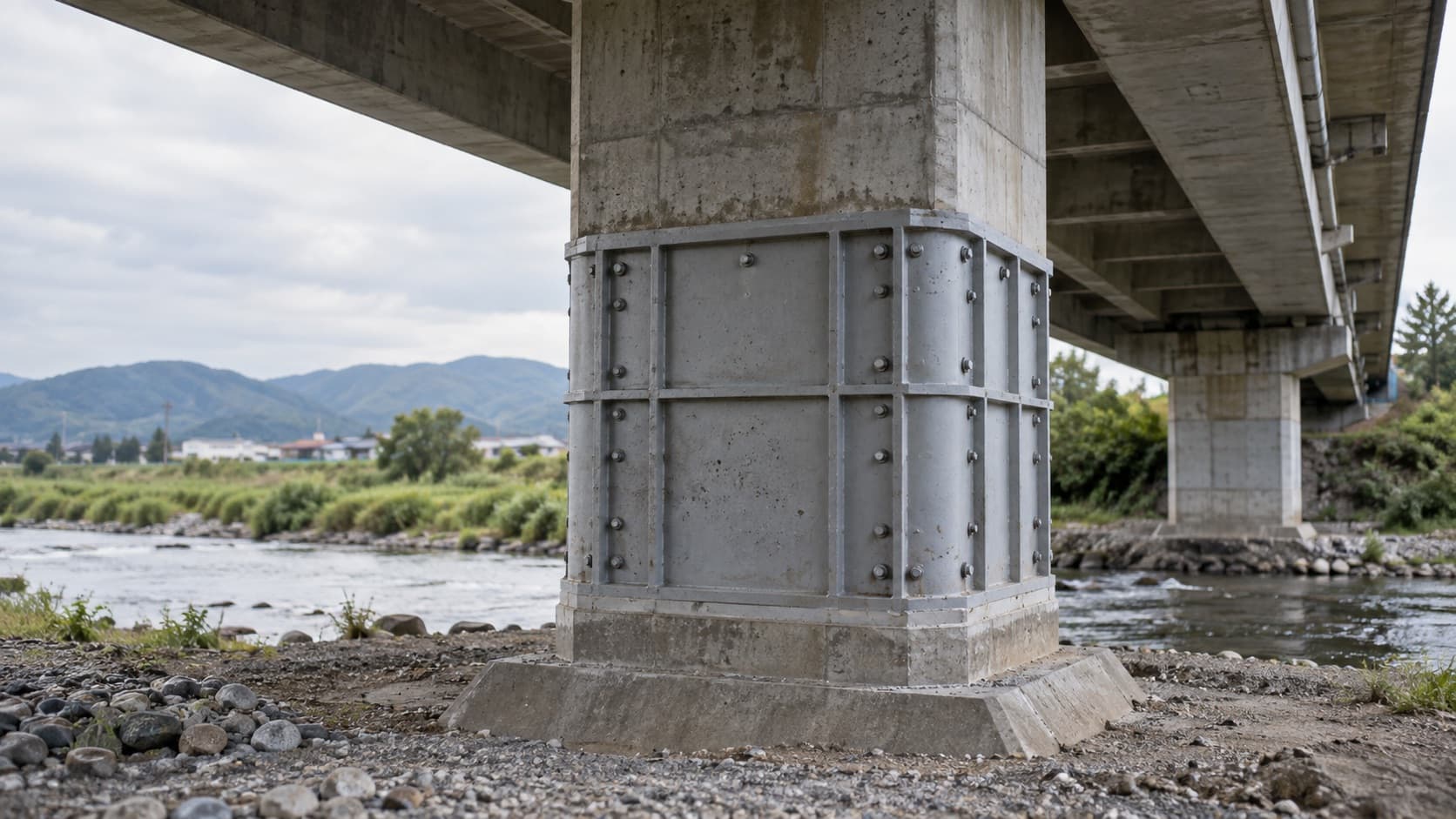
A stronger bridge pier still needs a checked foundation
407 of 496 examined bridges had findings after deduplication; this is not a national danger rate. 214 missing checks and 161 out-of-range results without appropriate redesign require different responses. Follow column and foundation checks through response plans and reinforcement.
Previous
The Linear-Shizuoka Agreement Now Carries a Clause to Halt the Work — How a Century-Old Memory of Water Loss Became Procedure
Next
For a Distant Tsunami That Brings No Shaking, Only Trust in the Warning Drives Evacuation — the Dilemma of False Alarms and Misses
Related Research Labs
ISVD researches and verifies the topics covered in this article on an ongoing basis at the following lab.
Get new columns by email
1-2 social structure analysis columns per week. Free to subscribe.
Join ISVD's activities?
Sign up to receive the latest research and activity reports. Feel free to reach out about collaboration or project participation.
Support ISVD’s research and activities
Support ISVD’s research and publications with JPY5,000 per year. There is no automatic renewal.