
Can Verified Provenance Establish That a Disaster Photograph Is True?
C2PA provenance, factual context, affected people’s safety and correction, using documents checked October 6, 2026.
Read disaster imagery through provenance, contextual verification and care for affected people. C2PA and AP documents frame questions about missing records, handovers, privacy and continuing correction.
TL;DR
- Separate provenance, factual accounts and publication decisions
- Describe the object checked and open questions when records are missing
- Support handovers and contact with affected people through correction
The header image is an AI-generated concept image. It does not depict an actual disaster site, affected person or news organization.
What Is Happening
Read provenance technology and what it can verify
Checking a disaster photograph requires separate attention to provenance and its accompanying account.
What are we checking when we look at a disaster photograph? Visible damage does not, on its own, tell us when or where an image was made. The accompanying description makes further claims that need verification. A photograph and the account attached to it should therefore be examined together.
The , develops standards for recording media provenance. Its current index identifies specification version 2.4, while the linked explainer and user-experience guidance remain version 2.2 documents. The specification index and each guidance document have distinct versions.
Content Credentials connect records about creation and editing to an asset and allow signatures to be checked. The makes clear that provenance alone cannot establish factual truth. Absence of credentials, by itself, also does not establish that an image is untrustworthy. This article examines responsibility for checking disaster imagery; it does not authenticate a particular victim's photograph.
Background & Context
Distinguish records, accompanying accounts and editorial standards
A record of creation and an account of events answer different questions
Consider an explicitly hypothetical example: an old photograph is described as showing damage today. The original file and its records may be intact while the description points to the wrong event. Verifying the file's history does not complete the work of verifying that description.
When a person appears in a photograph, an editor must also consider what can reasonably be inferred from one expression or moment. The frame cannot stand in for the person's whole experience. Interview material, context and the purpose of publication remain matters for editorial judgment.
In its , The Associated Press said it would not use generative AI to add or remove elements in photographs and other media. It also described checking sources, reverse image searches and corroborating reporting. These are AP's published standards, rather than a law binding every publisher.
Its May 2024 update(外部サイト、新しいタブで開きます) introduced experiments with translations, summaries and headlines checked by journalists. That update illustrates the need to distinguish tasks and responsibilities. It is not an announcement authorizing fabricated photographs to stand as records of real events.
What does a missing record establish?
Credentials are optional, and not every image has them. A transformation or sharing step may separate an image from its provenance. External records can sometimes be rediscovered, so it is equally wrong to say every transformation necessarily destroys all provenance. The outcome depends on the file, tools and workflow.
The object being examined matters. An original file, a downloaded social-media image and a screenshot are different objects. A result from the screenshot should not be reported as a result from the original. Keeping track of what was examined and how helps the next person understand the finding.
Provenance
Examine the file and its records
- Object
- Which file was checked?
- Records
- Creation, edits and signatures
- Scope
- What was verified?
Content and use
Continue other verification
- Account
- Time, place and context
- Reporting
- Consistency with other evidence
- Person
- Publication scope and impact
The article's synthesis. Credential presence or signature verification alone does not decide factual truth or permission to publish.
Reading the Structure
Examine handovers, privacy and responsibility for correction
Avoid reducing verification to a single approval badge
The distinguishes conditions concerning record structure, signature validity and trust in the signer. A valid signature and a signer trusted by a particular verification environment are different findings. Describing those differences helps readers understand what a result supports.
The guidance also considers an implied truth effect: labeling some assets as involving generative AI may lead people to regard unlabeled material as more real. A label needs an explanation of its scope. Both labeled and unlabeled images can still require contextual checks.
Overreliance on automated output, with remaining checks omitted, raises a question of . This is an analytical concern, not a finding measured in a particular disaster. Staff receiving a tool's result still need to decide what further evidence publication requires.
Hand responsibility across capture, editing and distribution
Adding a record at capture does not prove it remains available after publication. Editors need to distinguish source files from publication copies; distributors need to examine what the actual published asset retains. Owning compatible equipment is different from demonstrating a working end-to-end process.
The operational proposals here start with preserving received material, recording relevant changes and carrying unresolved questions between staff. That could make it possible to return to source material when a problem arises. These proposals have not been tested here, and no existing newsroom is presented as having implemented them.
Different staff can explain different parts of the process. A reporter can explain the circumstances of capture, production staff the transformations, and distribution staff the published output. Assigning every responsibility to one person's vigilance ignores changes that person may be unable to see.
The handover should therefore include the limits of each finding. A colleague who receives only “verified” cannot tell whether that means a signature check, a contextual check or permission to publish. Recording the question answered makes it easier to see which questions remain.
Changes after publication also need a handover. Correcting a date or place on one page does not necessarily update the short description on every distribution channel. A record of where corrections were sent, and which destinations remain unchecked, could help the next staff member continue the work.
An evaluation could look beyond how many images carry credentials to whether staff can return to evidence when questions arise. Enquiries that stall may reveal missing contacts or material. These are proposed evaluation questions, not measured comparisons between publishers using provenance systems.
Transparency can create further exposure
C2PA's harms-modelling document(外部サイト、新しいタブで開きます) discusses unintended disclosure of sensitive information and possible recovery of earlier records containing redacted information. It also raises access barriers for civic and smaller media. These are potential implementation harms, not findings about a particular disaster photograph.
For disaster reporting, the question is what information needs to be public and what can be checked under restricted access. Establishing provenance should not automatically entail exposing an affected person's location or private life. The article proposes defining those access boundaries alongside the verification process.
If people without suitable records are dismissed as incapable of contributing knowledge, that raises a concern about . This is a question about the design of verification and listening. It does not establish that all credentials requirements are unjust or that an unsupported claim should be accepted.
Alternative reporting and corroboration could preserve a route for examining material without credentials. An organization would still need to decide who performs that work and what resources it requires. Technical access and a person's opportunity to be heard deserve consideration together.
A correction needs to reach the earlier account
Deleting a post does not necessarily correct an explanation that has already reached readers. The proposal is to connect a correction to the relevant earlier account, explaining which assertion changed. Republishing a person's name or photograph for that purpose also requires a decision about avoidable exposure.
Publishing a correction and repairing a misunderstanding are different outcomes. Organizations could ask about responses to enquiries, burden on the affected person and records that help staff avoid repeating the error. None of those effects has been measured in this article.
Capture and editing
Keep the creation context
- Material
- Source file and account
- Editing
- Changes and open questions
- Publication
- Consider effects on the person
Distribution and correction
Explain to the audience
- Display
- Verification scope and limits
- Contact
- Who receives questions?
- Correction
- Connection to the earlier account
An operational proposal, not an official product-state list or a workflow tested in a particular newsroom.
Consider receiving a photograph and its account separately
Identify the particular file and description that were checked together.
Consider a hypothetical community organization asked to publish a photograph. The image arrives through a shared chat while its date and location arrive in another message. The receiving staff member could record both the saved file and the proposed description. If a colleague changes that description, they could check the intended combination before publication, rather than carry an earlier account into a later version.
Knowing the date does not establish the location. A completed file check does not determine whether the provider's intended scope of use includes the organization's planned destinations. A handover could separate findings, outstanding questions and the person to contact next. This is an operational proposal, not an official technical acceptance condition. It preserves the question answered by each check instead of reducing them all to the word “verified.”
An approaching deadline still leaves an editorial decision. Depending on purpose and potential effects, staff may seek more information, limit what the description says, or hold publication. Recording why work is waiting can help a successor continue without repeatedly asking the provider the same question. Time and people for that contact are conditions distinct from the technology that records provenance. No organization is presented here as having tested this arrangement.
Connect an affected person's request to the people making a correction
Receiving a request, changing a page and reaching earlier readers are separate events.
Someone receiving a request may not be able to settle every question immediately. A proposed division of work could distinguish the contact point, the editor checking the account and the distributor notifying publication destinations. The person who contacted the organization could be told who will respond next. Before circulating their account, identify who needs which information for the check rather than sharing the entire conversation with every participant.
A record that a correction was sent is not evidence that its destination changed the text. Record whether a reply arrived, whether the published change was checked and which destinations remain unconfirmed. That gives a successor work they can continue. Seeing a corrected page also does not establish that earlier readers changed their understanding. Checking publication status and continuing explanations to people serve different purposes. The proposal does not claim a measured reduction in harm or establish legal permission to publish a particular photograph.
Related Columns and Guides
- False rescue requests and the burden of disaster response(このサイトの記事)
- Checking primary sources and statistics(このサイトの記事)
Reference Books
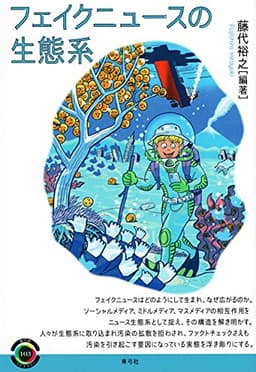
フェイクニュースの生態系 (青弓社ライブラリー) (The Fake News Ecosystem; title translated by this article)(外部サイト、新しいタブで開きます), edited by Hiroyuki Fujishiro (Seikyusha, 2021), is background reading for considering how information travels through several kinds of media. This mention draws on the publisher’s public bibliographic details, description and contents(外部サイト、新しいタブで開きます). The whole book and its case analyses have not been evaluated here. It does not authenticate a particular disaster photograph or establish the effectiveness of a correction method.
Remaining Questions
Ask who supports verification, listening and continuing explanation
Who will support verification as provenance technology spreads? Linking capture, editing and distribution requires more than buying equipment. Staff need time to check explanations, preserve evidence and respond to questions when records are interrupted. Can those responsibilities and resources be assigned across the whole process? Can reasons for an incomplete check and the next contact be passed on so a successor examines the same object?
What happens when affected people or citizen photographers cannot use the technology? A missing record should not automatically end consideration of their material. Can further reporting and corroboration remain available, while allowing people to say what may be published? Establishing reliability should not require sacrificing safety in everyday life. Can a contact point connect a question about publication scope to the person responsible for that decision?
When an account is wrong, can showing the correct image alone restore trust? An organization could explain what it checked, what it missed and whether the correction reached people who received the earlier explanation. Could records and contacts also help affected people avoid repeating their account to successive staff? The continuing ability to describe both findings and uncertainties deserves attention alongside the moment of validation. Provenance technology and the work of explanation and correction need to develop together.
References
C2PA Specifications — C2PA. C2PA, accessed October 6, 2026
C2PA and Content Credentials Explainer — C2PA. C2PA, accessed October 6, 2026
C2PA User Experience Guidance for Implementers — C2PA. C2PA, accessed October 6, 2026
C2PA Harms Modelling — C2PA. C2PA, accessed October 6, 2026
Standards around generative AI — The Associated Press (2023). AP announcement, August 15, 2023
Updates to generative AI standards — The Associated Press (2024). AP announcement, May 8, 2024
フェイクニュースの生態系 (青弓社ライブラリー) — Hiroyuki Fujishiro (editor) (2021). Seikyusha (public bibliographic details and introduction)
Questions to Reflect On
- Can you describe which file was checked and what the method established?
- Can material without credentials be examined through further reporting?
- Who checks whether corrections reach readers and how publication affects the person?
Key Terms in This Article
- Automation bias
- A tendency to place excessive trust in automated output and insufficiently check errors or omissions. Even a neatly presented AI summary requires comparison with underlying material.
- Epistemic Exclusion
- The exclusion of a person's account from a discussion on the grounds that it does not count as knowledge. Belonging to the lineage of Miranda Fricker's work on epistemic injustice, it locates the harm not in the loss of a chance to speak but in the loss of credibility when speaking.
Related Content
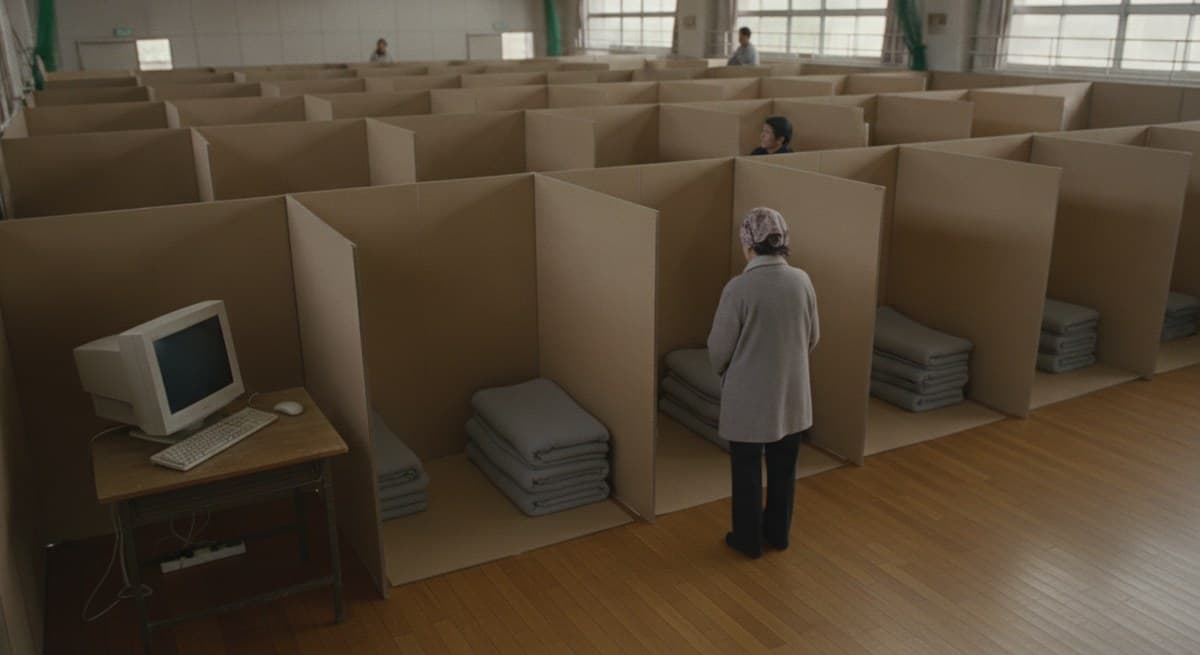
Ten Riot Police, Twenty Minutes, a House That Had Not Collapsed — False Rescue Requests Went from 1 in 573 to 104 in 1,091
After the 2026 Kumamoto earthquake of 28 July, false rescue requests naming addresses that do not exist, and AI-generated videos purporting to show the damage, spread on social media. Measured by the same system, false posts among rescue requests numbered 1 out of 573 in the 2016 Kumamoto earthquake and 104 out of 1,091 in the 2024 Noto Peninsula earthquake. What changed is not the volume of malice but who pays for the correction: no longer the attention of readers, but the deployment of fire and police.

AI Amplification of the Brandolini Asymmetry — When the Cost of Producing Lies Approaches Zero
The proliferation of AI-generated content has amplified the asymmetry between the production cost of misinformation and the cost of correction (Brandolini's Law) by orders of magnitude. Employing RAND Corporation's 'Firehose of Falsehood' model, this essay analyzes the consequences of this structural transformation.
The New Ignorance Produced by Algorithms — Filter Bubbles and Echo Chambers
Recommendation algorithms, search engine optimization, and social media feed design automatically determine what users do not see. This structural ignorance, which arises not from intentional design but as a consequence of optimization, is analyzed as a compound mechanism of attention control and complexity weaponization.
Why Unreported Issues Are Treated as 'Nonexistent' — Media Agenda-Setting and Invisibilization in Japan
Why do 'unreported issues' disappear from social perception? This case study analyzes the 'non-reporting structure' built into Japanese media by the press club system, sponsor pressure, and audience metrics — through the lens of agnotology. It illuminates how agenda-setting theory and framing effects erase unreported problems by rendering them as 'nonexistent' in social cognition.
Get new columns by email
1-2 social structure analysis columns per week. Free to subscribe.
Join ISVD's activities?
Sign up to receive the latest research and activity reports. Feel free to reach out about collaboration or project participation.
Support ISVD’s research and activities
Support ISVD’s research and publications with JPY5,000 per year. There is no automatic renewal.