
When can municipal disaster staff rest? Health checks, handovers and support
About staff health, rest, handovers and receiving support, drawing on DOHAT activity in Kumamoto in 2026 and public continuity and reception handbooks
Read the DOHAT response in Kumamoto alongside Japan's municipal continuity and support-reception guidance. Separate health monitoring from changes to shifts, incoming staff from workable handovers, and activity counts from rest and service continuity.
TL;DR
- DOHAT describes a system linking health reports to individual support and organization-level updates
- Monitoring can lead to rest only when someone can change assignments and arrange a handover
- Consider incoming support, rotation and handovers while distinguishing activity counts from actual rest and continued services
What Is Happening
Read DOHAT's Kumamoto announcement for the scope of monitoring and support
Municipal workers responding to a disaster are also people whose homes and families may have been affected. Recognizing ill health is one part of supporting them; arranging for someone else to take over their work is another. The connection between a health report and a changed assignment deserves an organizational response, alongside the commitment of individual responders.
The announced that its Disaster Occupational Health Assistance Team, or DOHAT, began support on August 1 following the July 28, 2026 Kumamoto earthquake. The announcement covers municipal workers and deployed responders, among others. A J-SPEED health-check system operated with Hiroshima University began on August 2.
According to the university, staff and responders enter their health information through a smartphone or similar device once a day, taking approximately two minutes. Occupational health professionals review the information, offer individual support where needed, and report organization-level health conditions to those directing the response.
The announcement establishes the start of an activity and describes its operation. It does not establish complete staff participation or reductions in illness or departures from employment. Nor can missing survey conditions be filled in to estimate a region-wide fatigue rate or explain its causes. Knowing a person's condition and changing work so that they can rest are separate steps.
Background & Context
Consider fatigue, working conditions and the impact on staff and their families
Read fatigue alongside working conditions
Japan's Ministry of Health, Labour and Welfare publishes a fatigue accumulation self-assessment checklist, revised in 2023(外部サイト、新しいタブで開きます). It combines recent symptoms with working conditions. Its questions concern working hours, irregular assignments, workload, sleep and rest between shifts. It should not be treated as a test that establishes a disease diagnosis.
The checklist advises workers to consult a supervisor or occupational physician about working conditions they cannot change themselves. Telling someone to rest may be insufficient if unfinished work remains and nobody can take it over. Reducing the burden also requires decisions about staffing and the tasks that need to be done.
Comparing survey results requires checking the periods, respondents and classification methods. The same word, fatigue, can describe numbers with different meanings when those conditions differ. A percentage whose conditions cannot be established should not be used to diagnose a workplace. Public guidance instead provides a basis for examining how support and working conditions connect.
When considering an assignment change, examine work still following the person who needs rest. Continued replies or explanations may mean relief exists only on the roster. In handing over a resident-inquiry role, for example, identify pending answers and the decisions a replacement may make. This is an example for transferring work, not an inference about anyone’s diagnosis or health.
Avoid assuming every worker can report for duty
The recognizes that the number of available workers may fall below expectations when staff or their families are affected. Its 2023 handbook also considers workers' own health, childcare and caregiving responsibilities, and the arrangements for replacement personnel.
Counting available people does not establish which tasks they can undertake or when someone will replace them. Municipalities need to identify priority work and consider what can be assigned to another department. The handbook's provisions for rest and accommodation also need to be read alongside who will carry the work while a colleague is away.
Reading the Structure
Connect information handling, workload decisions, incoming support and handovers
Separate individual support from organizational sharing
A DOHAT document published by the National Association of Chief Public Health Nurses(外部サイト、新しいタブで開きます) depicts a cycle of personal reporting, professional health support and daily reports to municipal personnel. It describes telephone interviews where needed and the use of reports about achievements and issues in meetings. Its design extends beyond providing a form for people to complete.
Changing assignments does not necessarily require sharing detailed symptoms with everyone. The ministry's handbook on rules for handling workers' health information(外部サイト、新しいタブで開きます) explains purposes, handling methods, access authority and processing information to the scope needed for its purpose. It also discusses how concern about adverse personnel treatment can make workers reluctant to seek help.
That handbook addresses workplaces; it does not settle every legal question applicable to an individual municipality. As a reference for operational design, it helps distinguish information needed for professional consultation from the work-related adjustments needed by those assigning tasks. Workers need an explanation of the purpose and recipients of information, and of how reporting or consultation connects to the next assignment.
Consultation records and work-handover records can be prepared for separate purposes. The next worker may need unfinished tasks, contacts and unresolved decisions, rather than detailed symptoms. Discuss the form of work-related adjustments with the person, health professionals and those allocating assignments within their respective roles. Urgency in handing over work should not itself become a reason for wider circulation of health information.
Individual support
A professional checks with the worker
- Information
- Symptoms and concerns
- Response
- Consultation and support
- Handling
- Purpose and authority
Organizational decisions
Adjust work and assignments
- Information
- Work-related adjustments
- Response
- Tasks and shift changes
- Follow-up
- Was rest possible?
An analytical arrangement informed by DOHAT's support cycle and the ministry's information-handling guidance. It does not imply identical sharing rules or authority in every municipality.
Turn incoming personnel into workable relief
The 2025 handbook for municipal personnel support-reception plans(外部サイト、新しいタブで開きます) identifies an overall reception contact, task-level coordinators, the scope of assigned work and working environments. Staff arriving from another municipality may not be able to take over immediately if they lack information, equipment or a clear source of instructions.
During operations, the handbook includes checks on the incoming workers' health and safety, numbers, deployment periods and rotation. For additional requests, it advises allowing for the time needed to arrange a deployment and hand over work. If a request waits until fatigue reaches a crisis, the local team still has to sustain the response through that delay.
While awaiting additional support, consider whether all current tasks can keep the same priority. Coordinators could identify work to continue or defer and agree what residents should be told. Match incoming staff with tasks they can undertake, decisions requiring confirmation and available equipment. Before attributing unfamiliarity to individual ability, examine what information the receiving team could not provide.
The handbook does not say that the receiving municipality must provide every accommodation arrangement. Preparing accommodation is primarily the sending side's responsibility, while the receiving side should identify facilities it can recommend when arrangements are difficult. Both sides need to understand their responsibilities and the conditions that allow the next team to rest safely, alongside the work for that day.
Prepare to receive
Match people to tasks
- Coordination
- Contacts and instructions
- Environment
- Workspaces and lodging
- Assignments
- Define the scope of work
Maintain the response
Check health and the next team
- Rotation
- Numbers, periods and health
- Requests
- Deployment and handover time
- Departure
- Transfer work and knowledge
Based on the Cabinet Office's 2025 reception handbook. This diagram does not set a nationwide working-hours limit or a trigger tied to a particular fatigue percentage.
From completed reports to actual rest
Incoming support has an end. The reception handbook emphasizes the affected municipality's responsibility for decisions and the need to transfer knowledge before incoming workers leave. Looking only at staffing while a short deployment is active can obscure the work and burdens that remain afterward. The remaining workload and the transition toward ordinary services need a shared outlook.
Evaluation also needs to extend beyond report submissions and deployed headcounts. A can help organize the relationship between activities and intended changes. Possible include whether an assignment changed after consultation and whether the worker could actually rest. These are proposed evaluation questions, not measured effects established for this particular response.
Delays in services to residents can be examined separately from individual diagnoses. Reading workload, rotation and rest alongside service continuity helps identify tasks that need more support. Results from small departments may also identify individuals; the scope of information should remain connected to organizational improvement.
As incoming personnel rotate, a receiving department may need to repeat explanations. A written record alone does not establish a completed handover. Test whether the next worker can open necessary documents, locate advice and understand their decision-making scope. Include explanation time in workload planning rather than assigning both documentation and guidance to one exhausted person. Separate completed transfers from work still needing handover.
Keep the plan usable when personnel change
The reception handbook goes beyond preparing a document. It recommends periodic training and exercises to test and improve the plan, training that also serves as a handover when personnel change, and checks on the contacts and procedures in support agreements. Arrangements understood by a previous coordinator need to remain workable for a replacement.
Exercises could consider a coordinator needing rest as well as incoming workers arriving on schedule. Which tasks can be transferred, who can change assignments, and can the consultation contact be reached? These are suggested exercise questions, not practices confirmed in every municipality. The difficulties recorded during an exercise should also be considered in the next revision of the plan.
Exercise reviews could ask whether the remaining team handled inquiries after the person assigned to rest left the workplace. Include a scenario in which expected support does not arrive, recording who changed priorities or contacts. Rather than judging rest only through individual effort, discuss which organizational decisions and preparations need revision.
Related Guide
Designing outcome indicators(このサイトの記事) separates activity counts from changes that result. This distinction also helps connect health reports and support deployments to rest and continuity of public services.
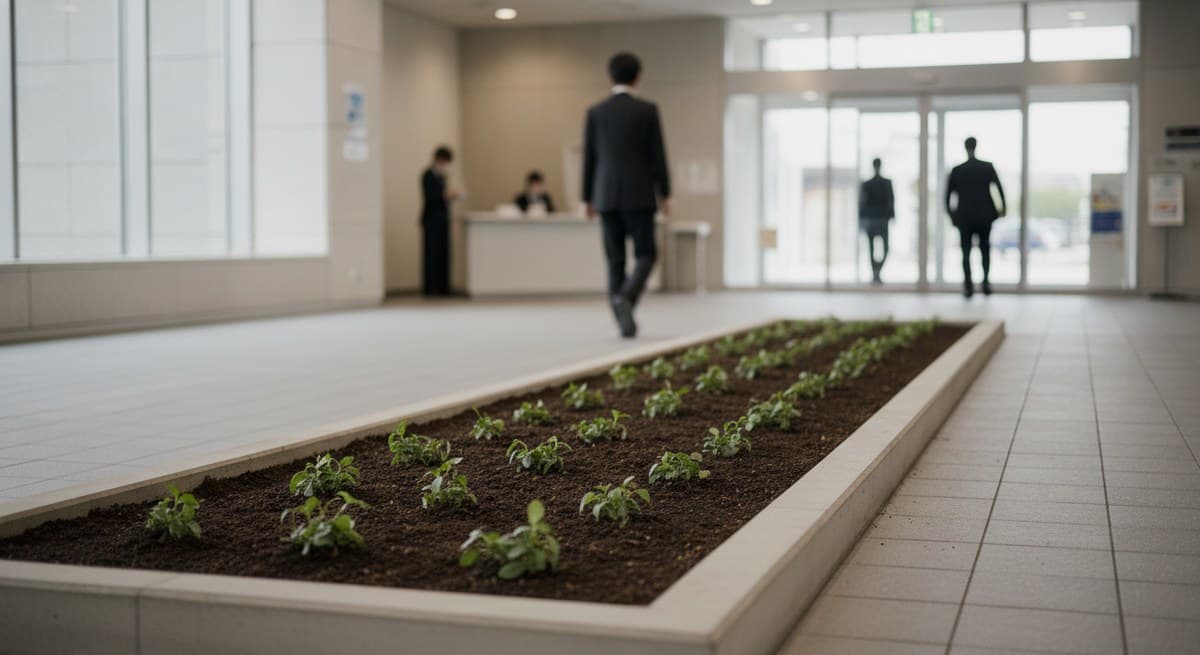
The photograph is an AI-generated illustration of municipal work and rest spaces. It does not depict an actual disaster site or municipal workers.
Reference Books
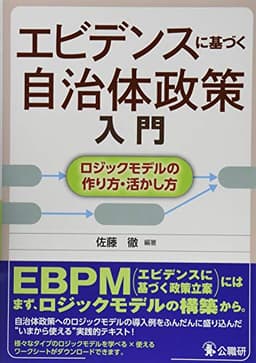
For background reading on evaluation, see エビデンスに基づく自治体政策入門: ロジックモデルの作り方・活かし方 (Introduction to Evidence-Based Municipal Policy: Creating and Using Logic Models; title translated by this article)(外部サイト、新しいタブで開きます), edited by Toru Sato (Koshokuken, 2021). The book’s body has not been read as evidence for DOHAT’s effectiveness or any individual worker’s health.
Remaining Questions
Examine handover time, missing reports and support after deployments end
When someone needs to stop work, where will the time for a handover come from? Residents still need a response between the request for support and its arrival. Making the exhausted worker explain everything can add another assignment before rest begins. Can preparedness exercises test records that another person can access and the decisions they are authorized to make? Beyond counting replacements, follow-up should establish whether the original worker was also able to stop answering work-related calls. Could the next rotation also reflect work that could not be transferred and the burden carried by those remaining?
People who find health reporting difficult also need a route to support. A lack of time, unavailable communications or concern about how an answer may affect personnel decisions cannot be inferred from submission counts. Can the organization explain who sees the information and why, and provide another way to consult? A missing response is not evidence of good health. Even when many reports arrive, decisions about shifts need to allow for people whose circumstances remain unknown. After another consultation route is offered, who checks whether it was usable and passes on circumstances still unconfirmed?
Recovery work and ordinary public services overlap after incoming support ends. Can the end of support be considered alongside remaining tasks, rest and access to professional consultation, rather than only a deployment deadline? Learning about ordinary staffing from a disaster requires records of responsibilities and the adjustments that changed burdens. Those records can help the next plan and exercise address the conditions under which responders can keep serving residents without sacrificing their health. A deployment ending need not mean support is complete. Can the municipality distinguish work it will continue from work still requiring incoming assistance?
References
Launch of occupational health support in areas affected by the Kumamoto earthquake — University of Occupational and Environmental Health, Japan (2026). DOHAT and J-SPEED announcements; individual and organizational support
Fatigue measures for government staff and responders in the 2026 Kumamoto earthquake response — Disaster Occupational Health Assistance Team (DOHAT) (2026). Published by the National Association of Chief Public Health Nurses on August 26; PDF page 1
Handbook for local government business continuity in major disasters — Cabinet Office, Japan (2023). May 2023 revision; printed pages 45 and 54: availability, health, replacement staff and rest spaces
Handbook for municipal plans to receive personnel support — Cabinet Office, Japan (2025). April 2025 revision; printed pages 9, 19–20, 25 and 29: reception, health, rotation, handover and exercises
Fatigue accumulation self-assessment checklist for workers (2023 revision) — Ministry of Health, Labour and Welfare, Japan (2023). Symptoms, working conditions, assessment and prevention of fatigue accumulation
Handbook for workplace rules on handling workers’ health information — Ministry of Health, Labour and Welfare, Japan (2019). Printed pages 1, 4 and 12: purposes, authority, processing and management of health information
Statistics cited in this article
- 1University of Occupational and Environmental Health, Japan: Launch of occupational health support in areas affected by the Kumamoto earthquake(2026) Open source
Questions to Reflect On
- Who changes assignments and takes over work when a staff member needs rest?
- Can health information reach appropriate support without unnecessary sharing?
- How will rest and public services continue after incoming support ends?
Key Terms in This Article
- Logic Model
- A framework that visually maps the causal relationships from inputs to activities, outputs, and outcomes of a program.
- Outcome Indicator
- A measure intended to examine changes or benefits relevant to the problem a program seeks to address. Its design distinguishes outcomes from immediate activity outputs; improvement in a measure alone does not establish the program's causal effect.
Related Content

Before charging for Fuji rescues, measure delayed calls
Yamanashi targets September 2027; the announcement does not finalize fees or exemptions. Saitama currently charges ¥8,000 per five minutes, with distinct exclusions and relief. Six first-year cases and ¥350,000 in fees do not establish a causal effect on accidents or calls.

Japan Post Failed to State Terms to 167 Freelancers. The First Day of the Violation Period Is the Day the Law Took Effect
On 2 September 2026 the Japan Fair Trade Commission issued a recommendation to Japan Post under the Act on Ensuring Proper Transactions Involving Specified Entrusted Businesses. Terms were not stated promptly to 167 people, and payment due dates were neither set nor met for 140. The violation period runs from 1 November 2024 to 30 June 2025, and its first day is the day the law took effect. All ten recommendations in FY2025 involved a failure to state terms. This piece reads why the most basic obligation is the one that goes unmet.
Fukushima Holds About 14 Million Cubic Metres of Removed Soil. Reuse Outside the Prefecture Began With Flower Beds at Two Government Buildings
Soil removed during decontamination in Fukushima must be finally disposed of outside the prefecture by March 2045, an obligation written into law. About 14 million cubic metres sit in interim storage. On 29 August 2026 the first reconstruction reuse outside Fukushima began at a government building in Sendai, followed by one in Saitama. The volume used across both sites was about 2 cubic metres. The government's basic policy and roadmap say that selecting and surveying candidate sites for final disposal begins around 2030. This piece reads the distance between the deadline and the start, using the government's own documents.

Teacher Attrition from Mental Illness Hits a Record 1,319 — Will the Raise Reach the Root?
Japan's School Teacher Statistics Survey shows 1,319 public school teachers left over mental illness in FY2024, a record, up 369 from the prior survey. The state has amended the Kyutoku Law to raise the teaching allowance from 4% to 10% in stages, yet long hours are cited in only 0.5% of leave cases. Does adding money reach the root of why teachers fall ill? This reads the downward spiral of attrition and vacancy, and the question of symptom versus cause.
Get new columns by email
1-2 social structure analysis columns per week. Free to subscribe.
Join ISVD's activities?
Sign up to receive the latest research and activity reports. Feel free to reach out about collaboration or project participation.
Support ISVD’s research and activities
Support ISVD’s research and publications with JPY5,000 per year. There is no automatic renewal.