
What Does It Take to Keep a Demonstrated Robot Working on Site?
On business meetings at SusHi Tech Tokyo 2026 and September announcements by NEDO and NSK: prototype assessment, maintenance, parts supply and running costs
What do SusHi Tech Tokyo’s business meetings and September robot-development announcements establish? Primary sources help distinguish demonstrations, prototypes and continued operation, examining safety assessment, stopping and restarting, maintenance, parts supply and records.

TL;DR
- Business meetings differ from deployments; examine operational conditions separately from demonstrations.
- Prototype progress requires assessment; pilot announcements do not prove suitability for every use.
- Define restart reviews, maintenance, supply, costs and records for continued robot operation.
The cover is an AI-generated conceptual image, not a photograph of an actual event, product or pilot site.
This article provides general information from public sources, not an individual safety assessment or legal advice. Confirm operating conditions with responsible managers or specialists and legal judgments with a qualified legal professional.
What Is Happening
Distinguish business meetings and demonstrations from deployment and operating conditions.
Avoid jumping from business meetings to deployment results
, held at Tokyo Big Sight on April 27–29, featured exhibitions and discussions about AI, robotics and other fields. The organizer’s summary report records 25,140 business meetings.
A business meeting offers an opportunity to discuss applications or collaboration. Its count cannot be substituted for signed contracts or numbers of robots operating at workplaces. Whether a demonstrated function suits an organization’s tasks and facilities needs separate examination. Distinguish the scale of interaction from subsequent confirmed results when evaluating an event.
To follow a meeting, parties could retain a shared record of the counterpart, intended application and next questions within an agreed scope. Consultation, consideration of joint development, contract negotiation and trials differ. Pending replies should not be counted as deployment results; agree when to check progress.
At an exhibition, people can hear explanations and compare technologies and providers. Conditions in a brief demonstration differ from those of repeated daily work. Recognizing the value of an exhibition does not justify omitting pre-deployment checks. Record what was observed, then identify applications and constraints to examine in subsequent discussions.
September announcements also describe development stages
A September 10 announcement by the described plans to exhibit domestic general-purpose robot prototypes at an event that month. Companies meeting assessment criteria would proceed to improved-model development, with further assessment preceding work toward production capacity. A planned exhibition does not establish that production began or that every use is suitable.
On September 25, announced a joint exhibition and presentation with . It planned to introduce a quadruped robot pilot at its manufacturing workplace and explained the need for dependable components, continued supply and maintenance after deployment. Read this as the participants’ account of activities and issues, separately from independent verification of deployment benefits.
Here, prototype development means examining functions and design, while a pilot means examining use under specified conditions. Individual development programs may define these terms and assessment conditions differently; their labels alone cannot determine maturity. Examining what was assessed, where, for how long and under which conditions makes subsequent questions more concrete.
NEDO’s competition concerns general-purpose robots with two arms and mobility. NSK describes a quadruped robot pilot at a manufacturing site. The physical AI label therefore covers different machines and tasks. Reading uses separately helps avoid extending one successful demonstration into a conclusion that another task is suitable.
Background & Context
Prototype progress requires assessment; pilot announcements do not prove suitability for every use.
Align machine performance with the conditions of work
This article uses physical AI for technology connecting recognition of physical surroundings and decisions with machine actions. In addition to obtaining an answer on a screen, consider where objects move, how workers move and periods when the machine is unused. The label does not establish identical autonomy or safety across machines.
For example, when considering parts transport, examine not only whether a machine can carry parts but also its route, load and other people using the space. This illustrates deployment planning; it is not instructions for a particular product. Describing both the required task and its environment gives a provider conditions against which to examine suitability.
Describing the purpose only as addressing labor shortages leaves the relevant change unclear. For example, when seeking to reduce patrol burdens, record people’s inspection and confirmation work alongside machine operation. Without examining transferred tasks, reduced time for one person does not establish a lower burden across the workplace.
Consider facility-change costs separately from the machine’s price. Changes to routes, storage locations or work sequences may benefit some people while adding tasks for others. Deployment managers should also discuss how people working at the site can participate in a trial. Such consultation belongs in pilot preparation.
What is announced
- Event results
- Meetings
- Development
- Prototypes
- Workplace pilot
- Scoped trial
What to examine
- Contract and use
- Terms
- Production
- Assessment
- Continued use
- Upkeep costs
The article’s schematic synthesis of SusHi Tech Tokyo’s report and NEDO and NSK announcements. The right-hand conditions have not been established by this article, and reported counts are not converted into later-stage results.
Even a small trial should retain differences from ordinary work: limited objects, temporarily cleared routes or constant provider attendance, for example. Recording these conditions does not reduce the trial’s value. It helps examine whether they can be maintained in daily work and what additional checks are needed.
New technology does not remove the need to examine safety
A 2013 notice from the addresses industrial robot hazard assessment and relationships with surrounding structures. Existing discussion of robot safety should not be described as wholly absent. New technology still requires examination of current conditions applicable to its field and machinery.
Avoid treating the state of standards development described in an old notice as today’s compliance conditions. Read documents’ dates and scope, and examine current standards and particular conditions with providers and relevant specialists. Observing a machine moving differs from judging whether it can perform intended work continuously; the necessary examination has a different scope.
Installation, inspection, cleaning and parts replacement also remain, beyond normal operation. Deciding which tasks the organization performs and which it requests from a provider helps estimate workplace burdens. Alongside records of initial training, consider what to re-examine when personnel or tasks change.
Reading the Structure
Define restart reviews, maintenance, supply, costs and records for continued robot operation.
Make stopping and restarting someone’s work
An explanation of autonomous movement does not imply that workplace judgment is unnecessary. Unclear responsibility for interruption, reporting anomalies and confirming restart leaves people to make decisions on the spot. Consider agreeing on records to examine after a stop, contacts and the person responsible for restarting during deployment discussions.
These assignments are distinct from final judgments of legal responsibility. Specifying tasks and communication in a contract differs from establishing the causes of, and responsibility for, a particular accident. Pre-deployment explanations should not be treated as proof that every accident responsibility is settled. Discuss what information to retain and who can examine it.
Work for continued use
- Stop and restart
- Assign review
- Upkeep and supply
- Fund upkeep
- Operating records
- Define use
Agree during planning
- Anomalies/changes
- Re-examine
- Parts/contract
- Supply/exit
- Data
- Access/keep
This article’s proposed deployment-planning questions. The diagram is not a particular product’s operating procedure, safety certification or conclusion about contractual legal responsibility.
Software updates and changes to tasks also justify checking whether conditions match a previous trial. Retaining the assessed version, location, objects and usage helps people discuss which changes call for reassessment. Availability of an update alone does not demonstrate improvement. Relate the conditions of work after changes to observed results.
Assigned contacts or restart reviewers may be unavailable at certain times. Comparing shifts, holidays and provider service hours can reveal an unstated assumption that someone is always watching. Distinguish machine availability from inquiry and recovery-support hours when determining operations the workplace can manage.
Costs and parts remain after a pilot ends
The NSK and RT announcement’s discussion of operation and parts supply also informs questions about expenditure after deployment. Budgeting only for initial purchase leaves responsibility for inspections, replacements, inquiries and staff time unresolved. When using a support program, consider costs after its support period as well.
Consider how necessary work continues during a breakdown alongside assessment of the machine. Ask a provider about spare parts and repair times and agree on who handles required tasks while the machine is unavailable. This does not prescribe a universal uptime or repair deadline; it helps select arrangements suited to the organization’s work.
Discuss conditions for ending a trial or removing a machine from the start. If intended uses do not fit, determine how to handle the machine, facilities and records and return to ordinary work. Retaining reasons that conditions were unsuitable can inform subsequent procurement and support design, rather than concealing non-adoption as failure.
When budgeting, examine whether staff and facilities available during a pilot remain available in ordinary operation. If provider tasks during the trial transfer to the organization afterward, include the handover in costs and time. A period of operation does not establish that it can continue without the same support. Share when operating conditions will change.
Distinguish the purposes of records and their readers
Operating records may serve several purposes, including checking actions, maintenance and development improvements. If footage captures workers, for example, a question arises whether records for examining machine actions will also evaluate those people. Examine collection purposes, recipients, retention scope and access before deployment.
When adding record uses, examine whether conditions still match the initial explanation. Records for local operation and materials shared externally for development may require different scopes. Before collecting detailed worker behavior, discuss which decisions require it and whether collection can be avoided, rather than treating more data as an objective in itself.
Future data collection in NEDO’s announcement is also part of a development plan. Collecting records, using them for foundation-model development and supplying useful workplace machines pose different questions to assess in turn. Data volume should not be substituted for deployment benefits or safety. Explain usage conditions and assessment results separately.
Local governments and facility managers supporting deployment can examine conditions for continued use and reasons for discontinuation alongside purchases and exhibitions. Asking about added burdens, work transferred to others and secured funding can reveal conditions needed for future support. This proposes an evaluation approach; it does not report measured improvement effects from this article.
Remaining Questions
Can event evaluation follow operating costs, workers’ experiences and reasons for discontinuation?
Who will establish what work followed demonstrations and business meetings? Collecting only examples that reached contracts or pilots omits organizations whose uses did not fit or whose consideration continues. Distinguish this from requiring disclosure of commercial secrets, and develop ways to share what can be confirmed and what remains unknown. Can opportunities for interaction be evaluated while subsequent operating conditions are followed?
How can the burdens of continued use inform initial discussions? Workers also spend time identifying anomalies, cleaning, inspecting and examining records. When purchasing managers and people working at the site differ, agree on who can contribute to operational changes. Beyond support during a pilot, can maintenance, parts and staff time after it ends be treated as continuing costs?
Can discontinued trials inform subsequent decisions? Demonstrating technology differs from establishing its suitability for local work. Retaining reasons for non-adoption can inform future specifications and facility changes. Alongside increasing deployments, can conditions for reconsidering choices be prepared? Consider whether people meeting at technology exhibitions can maintain relationships that also share experiences of operation and withdrawal. Can the version and task scope examined after an update be linked to the earlier assessment in handover records? Can discontinuation records distinguish problems with the machine, costs and staffing? Can outstanding checks and the timing of reconsideration be shared so the next deployment team can recognize those conditions?
References
SusHi Tech Tokyo 2026 Executive Committee — SusHi Tech Tokyo 2026 Executive Committee (2026). Official website
Latest Information on SusHi Tech Tokyo 2026 — Tokyo Metropolitan Government (2026). Shin Tosei
SusHi Tech Tokyo 2026 Official Report, Summary Version — SusHi Tech Tokyo 2026 Executive Committee (2026). Official website
First Public Presentation of Domestic General-Purpose Robot Development Competition Results at Physical AI Summit — New Energy and Industrial Technology Development Organization (NEDO) (2026). NEDO
NSK and RT Jointly Present Physical AI Initiatives at Robotics NEXT Tokyo 2026 — NSK (2026). NSK
Points Concerning Amendments to the Implementation Notice for Article 150-4 of the Industrial Safety and Health Regulations on Industrial Robots — Ministry of Health, Labour and Welfare (2013). MHLW
The introduction to social impact evaluation design(このサイトの記事) offers related guidance on distinguishing activity counts from subsequent changes.
Further Reading
ロボット・AIと法(外部サイト、新しいタブで開きます) (The Laws of Robots and Artificial Intelligence): the publisher’s bibliographic information and contents(外部サイト、新しいタブで開きます) establish this related book. Only the public bibliography and contents were consulted; the full book has not been read. Published in 2018, it is not a substitute for examining current compliance conditions for particular products and institutions.
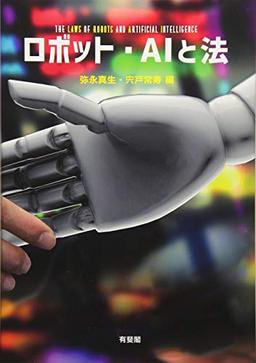
The publisher supplies the English title The Laws of Robots and Artificial Intelligence. The linked edition is Japanese; an English edition has not been established here.
Amazon links in this article are affiliate advertising links.
Statistics cited in this article
- 1SusHi Tech Tokyo 2026 Executive Committee, Official Report Summary, business meeting count(2026) Open source
Questions to Reflect On
- Are announcements about business meetings or prototypes being interpreted as evidence of contracts or continued operation?
- Can responsibility and funding for maintenance and records continue after a pilot ends?
Related Content

Vocational Training in the Generative AI Era — Can Institutional Design Keep Up with Technology?
Structural analysis of generative AI's labor market impact and the effectiveness of reskilling policies. Examining the gap between institutions and technology

Cognitive Debt — What Happens to the Brain and Society When We Delegate Thinking to AI
Using MIT Media Lab’s essay-writing experiment and related research, this article examines cognitive debt and possible effects of AI use on memory and independent thinking. It distinguishes short-term observations from longer-term effects that require further study.

The Common Structure of 'Unreached Populations' — What a 20% Take-up Rate Reveals About Policy Design
Japan's public assistance take-up rate is an estimated 22.9%—80% of eligible households receive no benefits. Analyzing three reinforcing barriers.
Series: Policy Design & Civic Participation

Can Vocational Training Be Measured? — EBPM and the Evaluation Design of Workforce Development Policy
Japan invests billions in vocational training yet lacks rigorous impact measurement. An EBPM-based evaluation design guide with international comparisons.
Series: Evaluation & Measurement Frameworks
Get new columns by email
1-2 social structure analysis columns per week. Free to subscribe.
Join our activities
Sign up to receive the latest research and activity reports. Feel free to reach out about collaboration or project participation.
Support our research and activities
Support our research and publications with JPY5,000 per year. There is no automatic renewal.