
Japan's Proposed Information Curriculum: How Will Teachers Prepare?
The October 5 deliberation summary: proposed dates, teacher licences, training and generative AI rules.
The deliberation summary was published October 5. Separate that step from a new curriculum notice, then examine proposed dates, the licence breakdown of 9,649 technology teachers, training and AI guidance.

TL;DR
- The deliberation summary was published October 5. Full implementation in FY2030 and FY2031 is an envisaged schedule, distinct from an issued new curriculum notice.
- Of 9,649 teachers of lower-secondary technology, 2,406 taught outside their licence or held a temporary licence. Reaching zero by FY2028 is a target, not a result.
- The lines for generative AI are in the December 2024 guideline Ver.2.0, which is reference material rather than a standard; revising it within FY2026 is still a stated plan.
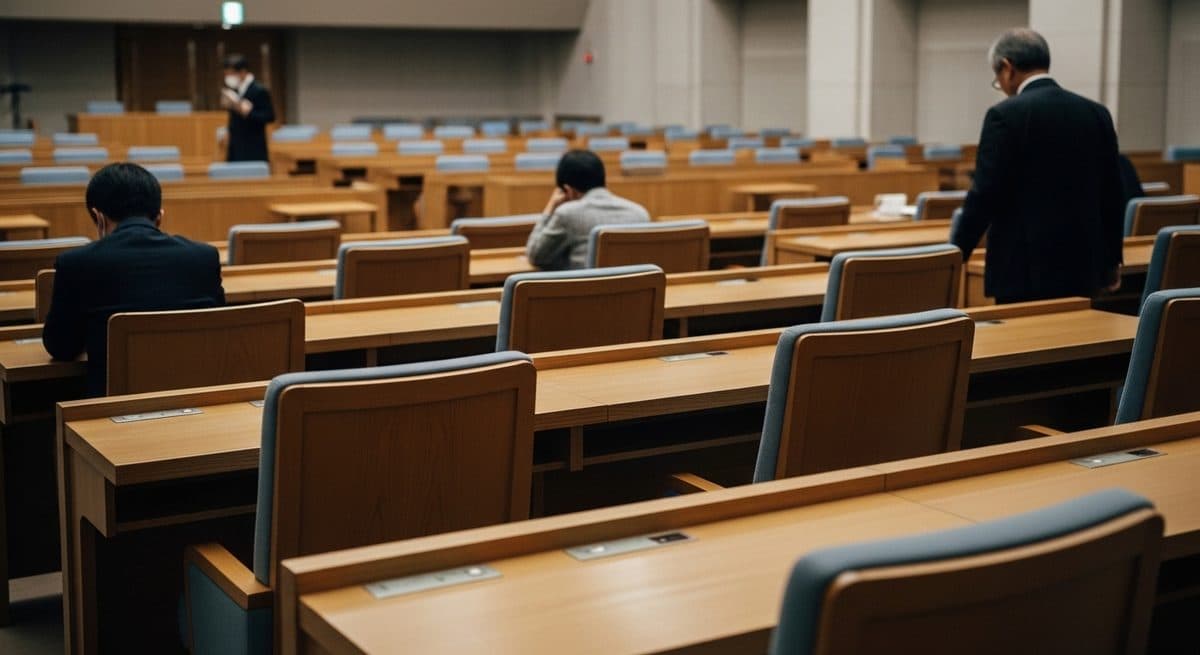
The image associated with this article is an AI-generated thematic illustration, not a photograph of an actual site or person.
This article provides general information about policy. It is not legal or privacy advice for individual cases. For specific decisions, consult the board of education or a qualified professional.
What Is Happening
The October 5 summary proposes information education; a curriculum notice is a later step.
This article is based on material available as of November 4, 2026.
On October 5, 2026, MEXT published the Curriculum Subcommittee's . The document has progressed beyond the draft presented on September 25. The Courses of Study are national curriculum standards. The summary proposes renaming the elementary and lower-secondary Period for Integrated Studies as the Period for Integrated Inquiry, adding an information area at elementary level and creating an Information and Technology subject in lower-secondary schools.
The e-Gov notice(外部サイト、新しいタブで開きます) sets November 5, 2026 at 23:59 JST as the deadline for voluntary comments on the summary. Receiving comments and issuing new curriculum standards are separate stages. This article remaining online does not establish that comments are accepted after the deadline.
Publication of a deliberation summary and an official curriculum notice are different stages. , including hearings from relevant organizations. Its revision schedule places the council's report in winter and revision at the fiscal year end as planned steps. Posting these documents does not prove those subsequent steps have occurred.
The summary and October 8 schedule envisage full implementation in FY2030 for elementary and FY2031 for lower-secondary schools. Early implementation of the new area and subject would proceed in stages from FY2028 and FY2029 respectively; specific transitional measures remain to be developed. High schools would follow from students entering in FY2032, with a note that the schedule may change. These are not dates established by an issued new curriculum notice.
The curriculum standard schools follow today is the current Courses of Study, revised between 2017 and 2019. For generative AI there is MEXT's guideline Ver.2.0 of December 26, 2024, but it is not a standard. The guideline describes itself as reference material to support the use of generative AI in schools and says it neither bans nor requires such use across the board. This article reads, within the limits of government documents, how far licensing, training, teaching materials and usage rules are planned to progress before the new subject starts.
In use now
Current standard and national reference material
- Courses of Study
- Current, revised 2017 to 2019
- Generative AI guideline
- Ver.2.0 (Dec 2024)
- Nature of guideline
- Reference; no blanket ban or mandate
Policy and future plans
Deliberation summary and national plans
- Summary
- Published (Oct 5)
- Final report / notice
- Planned subsequent steps
- Elementary
- Early FY2028, full FY2030
- Lower secondary
- Early FY2029, full FY2031
- High school
- From FY2032 entrants
- Guideline revision
- Within FY2026 (plan)
The policy section contains proposed dates, not an issued new curriculum notice. The content of early implementation is still to be examined, and the high-school schedule carries a note that it may change.
Background & Context
AI capability differs from operating skills. Guideline Ver.2.0 is reference material.
The summary separates AI capability from operating skills
Page 247 of the summary of deliberations refers to the spread of that carry out tasks on their own and of "physical AI" that moves machines. It notes that children already encounter AI every day, for example through search engines.
The same page records a concern. It cites the view that excessive dependence on AI and skipping steps in the learning process, so-called cognitive offloading, can reduce learning effects and fail to lead to deep learning. Cognitive offloading here means handing thinking work over to a tool. The summary treats the ability to use AI well as more than an operating skill, and proposes covering it across content areas in the new subject and area, according to students' stage of development.
Page 248 states that AI writing code does not make learning programming unnecessary, because code written by AI may contain errors that people must be able to check.
Class time would be shifted from other subjects
The summary proposes an exception that would add standard class hours for the new subject and area. The proposed maximums include about 30 periods per year in elementary grades 3 and 4 and about 70 periods per year in lower-secondary grades 1 and 2. The lower-secondary figure includes the content of the current technology field. To make room, the summary expects to reduce other subjects from elementary grade 3 upward by about 3 to 4 percent across the board. Subjects with 35 periods or fewer would not be reduced, and the standard total of class hours would stay the same. The actual numbers are still being examined, so it is not yet decided which subject loses how many periods.
Today's boundaries are in guideline Ver.2.0
MEXT's generative AI guideline has a history. The ministry published a provisional guideline (ver1.0) in July 2023, set up a review panel of experts, current teachers and education administrators in July 2024, and compiled Ver.2.0 that December. It also envisages revisions in light of developments in technology and practice in schools. The guideline explains that the current Courses of Study already aim to develop children's abilities on the premise that AI exists. It therefore cannot be said that "today's Courses of Study ignore AI". What is new in the summary of deliberations is its proposal to establish a dedicated subject and area for developing information literacy.
states that it neither bans nor requires the use of generative AI in schools across the board. When students use it, schools follow the policy of the board of education, and the principal and the responsible teacher check conditions such as age limits. The guideline sets no fixed age. Schools follow the latest terms of use set by each provider, and some terms require parental consent.
The guideline draws other concrete lines. Students should not enter personal information such as names or photos into prompts, the instructions given to an AI. Direct use by elementary pupils calls for more careful judgement in light of their stage of development. As an example for the elementary level, it also lists teachers showing the content of their own dialogue with generative AI. Using AI in regular exams or quizzes, and grading students on AI output without the teacher's own judgement, are listed as inappropriate examples.
Under , published works may be reproduced or publicly transmitted without permission in the course of classes at non-profit schools, to the extent necessary and as long as this does not unreasonably harm the copyright holder's interests. When works are sent online for classes, the body running the school generally pays a compensation fee. The guideline says the article does not apply to uses beyond class purposes, such as posting on a school website or submitting to an outside contest, so permission is needed unless another provision allowing use without permission applies.
The guideline acknowledges that use of generative AI differs greatly between schools and teachers. It says rigid operation that bans or mandates use uniformly is undesirable, and it asks boards of education to provide training. It also addresses cost: providers' terms will not necessarily stay free or cheap, so schools should consider the financial burden on parents.
The summary says that key points for using AI will be shown through guidelines without waiting for the curriculum revision. The summary calls for revision within FY2026. The MEXT guidance page checked on November 4 still lists Ver.2.0.
Reading the Structure
Training content is due before early rollout; out-of-subject and temporary-licence teachers total 2,406. Zero is a target.
Training-material deadlines and early implementation
The and the published deliberation summary both include a "plan to improve the teaching system" as of July 30, 2026. Under the position that the national government is responsible for preparing conditions, it plans to produce and provide training content by the end of FY2027 for elementary schools and by the end of FY2028 for lower-secondary schools, leading to training for all responsible teachers. It also lists teaching materials including lesson videos to be updated at least about once a year, trials of teaching across several schools and remote lessons, and the use of outside expertise.
The deadlines for producing and supplying content are the end of FY2027 for elementary schools and the end of FY2028 for lower-secondary schools, immediately before their respective years of early implementation. A deadline does not establish the actual delivery date. Assessing how long teachers will have to use the materials requires a delivery schedule or implementation records as well as the timing of decisions about content. This article has not established an earlier delivery date or an actual delay.
Lower-secondary technology teachers and their licences
Page 106 of the same working-group draft shows the licences held by teachers of lower-secondary technology in FY2025.
- Regular licence7,243 people
- Teaching outside licence1,863 people
- Temporary licence543 people
Source: Information and Technology WG draft summary, p.106. Page 101 of the same document sets a target to reduce the combined number of teachers outside their licence and temporary licence holders to 1,604 in FY2026, 802 in FY2027 and zero in FY2028. The chart shows FY2025 actual counts and does not include the target values.
"Teaching outside licence" refers to an arrangement in which a teacher without a licence for the subject teaches it. In FY2025 there were 1,863 such teachers and 543 temporary licence holders, 2,406 in total. The plan aims to bring this to zero by FY2028. The online licence certification course lists 656 expected participants in FY2026, which is not the number of people who have completed it. A licence system for the new subject is still under consideration.
This breakdown counts technology licence categories. It does not measure the ability to teach about generative AI, and the number of teachers outside their licence cannot be read as the number of teachers unable to teach AI.
For lower-secondary schools, the deadline for producing and supplying training content and the target of zero teachers outside their licence or with temporary licences both fall in FY2028. Early implementation then starts in FY2029. The target year for licences and the deadline for preparing and supplying training content coincide; this does not establish the actual delivery date.
Self-assessment shares and the training rate are different numbers
covers teachers who teach classes in public schools. Its ICT teaching ability items come from a checklist compiled in 2018 with four main categories and 16 sub-items, and teachers who taught classes in FY2025 rate themselves at four levels. The published figures are the shares of teachers answering "can do" or "can mostly do", averaged within each main category. They are not head counts. None of the 16 items asks about generative AI alone.
By main category, the shares were 91.1% for using ICT in material research, preparation and school administration (90.7% the previous year). The share for teaching with ICT in class was 83.4% (82.2%). For guiding students' ICT use, it was 84.0% (83.1%). For teaching the knowledge and attitudes that underpin information use, it was 89.7% (89.2%).
The training figure answers a different question. The share of teachers who received training on the ICT teaching ability items during FY2025 was 71.0% nationally, down from 73.5% the previous year. By prefecture, the highest was 98.1% and the lowest 53.2%, compared with 95.8% and 58.8% the year before. A teacher who attended several trainings counts once, and teachers scheduled to attend by the end of March 2026 are included.
The self-assessment shares rose slightly while the training rate fell. Because the two numbers answer different questions, this pairing does not establish the effect or adequacy of training.
An existing column on the digitization of textbooks(このサイトの記事) uses figures from the same survey two years earlier. Because the years differ, those figures should not be compared directly with the ones here. The survey does not show the causes of differences between prefectures, and this article does not assert any.
Related Reading
SCHOOL SHIFT あなたが未来の「教育」を体現する(外部サイト、新しいタブで開きます) is related reading on school organization and teachers’ learning. The publisher bibliography, introduction, contents and public preface were checked. The full book is unread and is not evidence for current deliberations or licensing. This is an Amazon Associates advertising link.
For how to read statistics and public data, see the guide to reading public statistics and open data(このサイトの記事).
Remaining Questions
Licences, early implementation and revised guidance remain undecided. Who prepares teachers?
On licensing, no system matched to the new subject has been decided. The zero target for FY2028 is presented in a national plan as a goal for all local governments. As stopgaps until a system is settled, the plan lists trials of teaching across several schools and remote lessons, along with the use of outside expertise. Which of these each region can use will only become clear as the plan progresses. If teachers are shared across schools, who provides travel and preparation time and handles each school’s lesson discussions? A rising licence count and enough people and time to support lessons require separate checks.
Training and materials need to be adjusted to the specific content of early implementation. The deadlines for producing and supplying training content are the end of FY2027 for elementary schools and the end of FY2028 for lower-secondary schools. The timing of the final report and notice may affect adjustments to content. The deadline alone does not establish when teachers will receive usable materials or how long they will have to use them. The plan to update materials about once a year also depends on whether a team to carry out those updates is sustained.
Generative AI rules remain those of Ver.2.0 until a new guideline appears. Age limits and parental consent follow providers' terms, students should not enter personal information into prompts, and copyright treatment changes once work leaves the classroom. The premise that boards of education set policy also remains. Because the guideline calls uniform, rigid operation undesirable, the finer lines may differ from one board of education to another. Whether each school can translate these lines into its own devices and lessons until a new guideline appears and the new subject begins matters as much as the content of the new subject.
References
Summary of deliberations toward the next Courses of Study — Central Council for Education Curriculum Subcommittee (2026). MEXT
Information and Technology WG draft summary — Information and Technology WG (2026). MEXT
Guideline on generative AI in elementary and secondary education (Ver.2.0) — MEXT Elementary and Secondary Education Bureau (2024). MEXT
FY2025 school informatization survey summary as of March 1, 2026 (preliminary) — MEXT (2026). MEXT
Notice of the 19th Curriculum Planning Committee meeting — MEXT (2026). MEXT

Copyright Act, Article 35 — Japan (1970). e-Gov Laws
Illustrative schedule for revision of the Courses of Study — Curriculum Planning Committee (2026). MEXT
Summary of deliberations toward the next Courses of Study (publication page) — MEXT (2026). MEXT
Documents for the 19th Curriculum Planning Committee meeting — MEXT (2026). MEXT
Statistics cited in this article
- 1Summary of deliberations toward the next Courses of Study, p.78(October 2026) Open source
- 2Information and Technology WG draft summary, p.106(FY2025) Open source
- 3Information and Technology WG draft summary, p.106(as of July 23, 2026) Open source
- 4FY2025 survey on the informatization of education in schools, summary as of March 1, 2026 (preliminary), p.23(as of March 1, 2026) Open source
- 5FY2025 survey on the informatization of education in schools, summary as of March 1, 2026 (preliminary), p.28(as of March 1, 2026) Open source
Questions to Reflect On
- What can schools and boards of education prepare before the content of early implementation is decided?
- Apart from training attendance rates, how could anyone check how teachers handle generative AI in class?
- If teachers are shared between schools, who ensures time for travel, preparation and lesson discussions?
Key Terms in This Article
- AI agent
- AI that combines tasks such as searching and creating materials in response to instructions. Available actions and accessible materials depend on the environment’s specifications and settings.
Related Content
The Digital Deficit and the 'Year of the AI Agent' — Three Structural Biases Settling in the Draft Phase of Japan's Digital Society Vision Council
The 11th meeting (December 2025) and 12th meeting (May 2026) of Japan's Digital Society Vision Council form the draft phase of the next Priority Plan for the Realization of a Digital Society. ISVD reads three structural biases solidifying in this phase: (a) the one-directional nature of the "deficit" indicator, (b) the framing of AI as competitiveness, (c) the narrowness of decision-making channels.

Digital Society Vision Council, 12th Meeting (May 22, 2026) — Briefing on the Next Priority Plan and ISVD's Reading
A briefing on the 12th meeting of Japan's Digital Society Vision Council (Digital Agency, held May 22, 2026), with materials submitted by two local government heads (Miyakonojo City, Yamaguchi Prefecture) and one industry leader (Rakuten). ISVD reads the agenda against its own scope of social vision design.

Must young people wait for a ballot before campaigning?
The court found the ban on under-18s’ own campaigning unconstitutional, but upheld the use prohibition under Article 21(1). The operative part distinguishes inadmissible confirmation actions from dismissed remaining claims, including damages. Separate voluntary expression from pressure and avoid presenting the judgment as blanket permission.

Japan DBS needs more than a criminal-record check
Incumbents have different deadlines: three years from commencement in mandatory settings, one year from certification in certified settings. Advance notice and correction protect the reliability of a conviction check. Check record coverage alongside everyday reporting and protective measures.
Get new columns by email
1-2 social structure analysis columns per week. Free to subscribe.
Join ISVD's activities?
Sign up to receive the latest research and activity reports. Feel free to reach out about collaboration or project participation.
Support ISVD’s research and activities
Support ISVD’s research and publications with JPY5,000 per year. There is no automatic renewal.