
What Should a Garbage Bag Charge Pay For? Lessons from Nanae
Public documents from Nanae illuminate the difference between bag prices and treatment charges, and the relationship between waste reduction, funding and service continuity.
TL;DR
- Nanae’s November 1–2 notices withdrew the existing proposal for reconsideration of the whole charging scheme.
- Bag purchases and treatment charges are distinct; temporary restoration costs and continuing maintenance need separate examination.
- Waste reduction, service continuity and household burdens should be measured separately and assessed together.
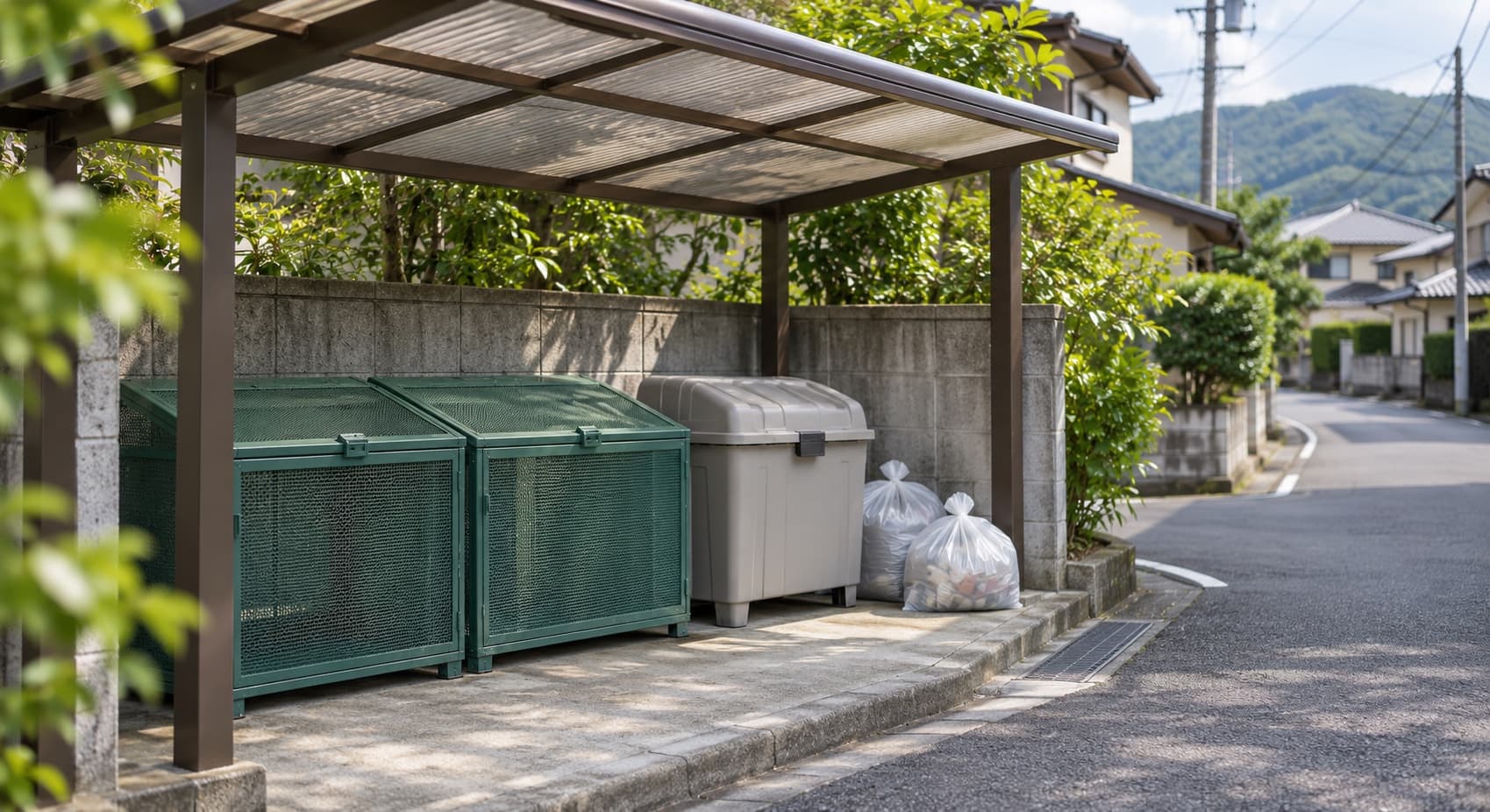
This AI-generated conceptual image does not depict an actual incident site, facility or organization.
What Is Happening
Identifies what dated documents establish about the charging proposal and facility suspension.
On November 1, 2026, Nanae Town announced that it would withdraw its existing waste-treatment charging proposal and reconsider the whole scheme from the beginning. Following the October 7–9 meetings, it would review timing, prices, covered waste and bag types and sizes. A November 2 purchasing notice likewise includes whether to proceed within that reconsideration. Neither announcement establishes implementation or a permanent decision against charging. , November 2 purchasing notice(外部サイト、新しいタブで開きます)
The town's facility page attributes the suspension of Clean Oshima, an incineration facility in Hokuto City, to a fire on April 29. A May 13 notice also reported suspended acceptance of waste. The original explanation retained on the meeting page described transfers to other areas and temporary storage within Nanae. Continuing collection while the usual treatment site is unavailable requires arrangements for storage, transport and treatment. Facility suspension notice(外部サイト、新しいタブで開きます), May 13 delivery notice(外部サイト、新しいタブで開きます)
A garbage bag's price alone cannot explain the whole issue. Alongside the cost of the bag as a product, there is a question about how much waste generators should contribute to treatment and what that contribution should secure. Japan's Environment Ministry distinguishes a treatment charge from a requirement to buy designated bags without an added treatment fee. Buying a bag and paying a treatment charge are therefore separate concepts in its guidance.
This distinction matters because percentage price increases may compare different kinds of payments. This article uses public administrative documents to examine treatment costs and household contributions. It does not rely on prices or explanations in the inaccessible news article. It makes no judgment about the cause of the fire, facility safety or an appropriate charge.
Background & Context
Separates shared-facility disruption, long-term planning and population changes.
The original explanation retained on Nanae's meeting page identifies pressures beyond restoration and alternative treatment: aging municipal facilities, insufficient treatment capacity, and rising prices and personnel costs. Temporary and continuing expenditure may therefore arise together. Discussion of household contributions needs to distinguish cost categories and the periods they cover. The notice alone does not establish how much each category will increase. Nanae meeting announcement(外部サイト、新しいタブで開きます)
The effects extend beyond one town. A June 1 mayoral broadcast published by Matsumae Town stated that the same fire had prevented incineration, that combustible waste was being transported to Esashi and Muroran, and that incineration costs had increased. This is a June record, not proof of October destinations or expenditure. It nevertheless documents how the loss of a shared treatment facility can affect routes and expenditure in several municipalities. Matsumae's June 1 broadcast record(外部サイト、新しいタブで開きます)
Long-term provision is also a national policy concern. An Environment Ministry notice dated March 29, 2024 called for prefectures and municipalities to work together on long-term plans for regional cooperation and facility consolidation, against a background including population decline, workforce shortages and maintenance and renewal costs. Regional cooperation concerns treatment arrangements across municipal boundaries; consolidation concerns bringing facilities together. This notice predates the fire and was not created as a response to it. Environment Ministry notice(外部サイト、新しいタブで開きます)
Future waste indicators also require care. Nanae's March 2026 basic plan compares fiscal 2024 actual figures with its fiscal 2040 planning projection. Annual business waste changes relatively little, from 2,136 to 2,188 tonnes, while population is assumed to fall from 27,068 to 24,656. Business waste per resident per day consequently moves from 216 to 243 grams. The denominator is the resident population, not the number of businesses or their employees. A rising per-resident figure does not establish that individual businesses will generate more waste. Nanae basic plan, Table 3-4-1(外部サイト、新しいタブで開きます)
These future figures are neither post-fire observations nor an estimate of a fee change's effects. A changing population denominator can move a per-resident indicator even when the total is broadly stable. Annual tonnage helps assess treatment capacity, while the per-resident figure describes the relationship with population size. Neither measure alone determines facility costs or an appropriate charge.
Bag purchase price
- Pays for
- The bag as a product
- Check
- Whether a treatment fee is added
Waste treatment charge
- Pays for
- Waste treatment costs
- Check
- Revenue use, burdens and reductions
Organized from the 2022 national handbook and this article. It does not establish adopted Nanae charges or exemptions.
Reading the Structure
Examines waste reduction, funding, household conditions and cost sharing between municipalities.
The design issue this article emphasizes is the need to examine waste reduction and service funding within the same financial assessment. A quantity-based charge can lower payments for households that produce less chargeable waste. But if waste reduction lowers the chargeable quantity, revenue at an unchanged rate will also fall. If restoration or maintenance expenditure does not fall proportionately, successful reduction and a funding shortfall can coexist. This is a financial possibility, not a finding that such a shortfall has occurred in Nanae.
Testing that relationship requires distinguishing ordinary collection, transport and treatment; alternative treatment during the suspension; restoration; and future renewal. It also requires checking which contracted payments change with waste quantity and which expenditure remains unchanged over a given period. A single cost-per-tonne figure can obscure the difference between a higher unit cost caused by falling tonnage and an increase in contract or repair costs themselves. Total expenditure, quantity and contract terms together provide a basis for assessing a charge proposal.
A proposal for higher charges should also explain how the money would be used. The ministry's waste charging handbook, revised in March 2022, addresses transparency over revenue use and consideration of exemptions or reductions for households needing support, in coordination with welfare departments. National guidance and a locally adopted scheme are different things: the handbook does not establish that Nanae has adopted a particular exemption or use of revenue. Waste charging handbook, printed pages 31 and 42(外部サイト、新しいタブで開きます)
This article therefore proposes assessing household burdens beyond spending on bags. Recycling collection days, the ability to carry materials to a collection point and space for storage at home may affect how practical the same sorting requirements are for different households. Research on these conditions and financial burdens could inform support eligibility and collection arrangements. This is a hypothesis requiring investigation, not a claim that particular households have already suffered disadvantage.
Regional treatment introduces another allocation of costs. The ministry's regional cooperation and consolidation handbook, revised in March 2025, explains that prices for treatment commissioned from another municipality should include facility development and operation as well as treatment costs. The continuing provision of the receiving facility is therefore part of the consideration. This guidance does not establish which categories the actual contracts in this case cover. Regional cooperation handbook, printed page 55(外部サイト、新しいタブで開きます)
The documents do not justify a conclusion that regional cooperation always lowers costs, or that consolidation caused the present problem. Comparing arrangements requires ordinary operating costs alongside the quantity other facilities could accept during a suspension, transport options and contract periods. Maintaining reserve capacity entails upkeep; relying on capacity elsewhere entails coordination with receiving operators. The relevant comparison concerns how much waste can be treated under what conditions during a suspension, as well as the number of facilities.
The outcomes should also be assessed separately. Waste reduction, continuity of treatment and household impact are distinct results. Waste might fall while charge revenue remains insufficient for necessary expenditure. A better financial balance could coexist with substantial burdens for some households. This article proposes measuring these outcomes separately before judging them together. Showing what improved and what remains unresolved makes it easier to identify what needs revision.
Related Reading
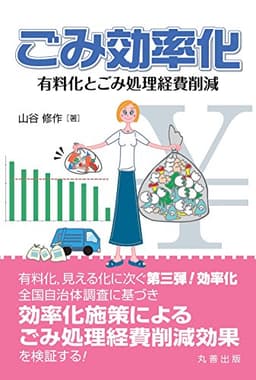
山谷修作’s ごみ効率化 有料化とごみ処理経費削減(外部サイト、新しいタブで開きます) (Maruzen Publishing, 2014) is related reading for examining waste reduction separately from processing costs. The publisher-registered public contents(外部サイト、新しいタブで開きます) cover household charging, processing expenses, collection operations and intermediate treatment. The full book has not been read; this description is limited to public bibliography, introduction and contents. It does not establish Nanae’s current deliberations or costs, or the effects of charging there.
This section contains Amazon Associate links.
Guide to defining what an indicator measures(このサイトの記事)
Remaining Questions
Identifies evidence gaps, trade-offs and proposed checks for the town, regional union and assembly.
The unresolved issue is how residents would share temporary costs before restoration and continuing maintenance costs afterward, across what period and geographical scope. The documents read here do not establish a final charging decision or household support arrangements. The November 1–2 reconsideration statements cannot establish a subsequent decision on charges or timing. Itemized estimates and records showing the status of each proposal are needed.
Options include retaining a substantial role for general revenue, combining it with quantity-based charges, and establishing reserves for facility renewal. The first involves allocation alongside other public services. The latter two raise questions about revenue when waste falls and burdens on households needing support. Continued treatment elsewhere also requires checking receiving capacity and contract terms.
The town and regional union should publish transferred quantities, treatment prices, restoration schedules and the basis for cost allocation over matching periods. The assembly should compare these with financial projections and burden-sharing proposals. Resident input should identify household costs and sorting difficulties alongside support or opposition, with an explanation of how it affected charges or assistance. These are this article's proposed checks, not evaluations already completed.
References
- Nanae: public meeting announcement, updated November 1, 2026(外部サイト、新しいタブで開きます)
- Nanae: purchasing designated garbage bags, updated November 2, 2026(外部サイト、新しいタブで開きます)
- Nanae: Clean Oshima suspension notice; publication date not established(外部サイト、新しいタブで開きます)
- Nanae: waste arrangements following the fire, May 13, 2026(外部サイト、新しいタブで開きます)
- Environment Ministry: waste charging handbook, revised March 2022(外部サイト、新しいタブで開きます)
- Matsumae: mayoral broadcast record, June 1, 2026(外部サイト、新しいタブで開きます)
- Environment Ministry: regional cooperation and consolidation notice, March 29, 2024(外部サイト、新しいタブで開きます)
- Nanae: basic waste management plan, March 2026(外部サイト、新しいタブで開きます)
- Environment Ministry: regional cooperation and consolidation handbook, revised March 2025(外部サイト、新しいタブで開きます)
Documents checked on November 4, 2026. The access date is not a publication or implementation date.
Public meetings on waste treatment facilities: report — Nanae Town (2026). Nanae Town
Waste treatment charging handbook — Ministry of the Environment (2022). Ministry of the Environment
Basic waste management plan — Nanae Town (2026). Nanae Town
Related Content

Digital Society Vision Council, 12th Meeting (May 22, 2026) — Briefing on the Next Priority Plan and ISVD's Reading
A briefing on the 12th meeting of Japan's Digital Society Vision Council (Digital Agency, held May 22, 2026), with materials submitted by two local government heads (Miyakonojo City, Yamaguchi Prefecture) and one industry leader (Rakuten). ISVD reads the agenda against its own scope of social vision design.

Reading the 85.6% estimate for digital high-school admissions
The November 4 update to Shizuoka's admissions pilot reports modeled workload savings, not measured overtime reductions. Separate actual participant counts, assumed task times, paper exceptions and coordination work before evaluating the result.

Drink-driving: How Should Japan Assess Legal Changes and Recurrence Prevention?
Japan's July 2026 reform, 2025 fatal-crash statistics, recorded offences and referral to consultation or treatment.

Does a Shorter Governance Code Reduce Directors’ Responsibilities?
Japan’s July 2026 principles and interpretive guidance, Companies Act duties, board information and the July 2027 report deadline.
Previous
Reading the 85.6% estimate for digital high-school admissions
Next
Japan's Proposed Information Curriculum: How Will Teachers Prepare?
Get new columns by email
1-2 social structure analysis columns per week. Free to subscribe.
Join ISVD's activities?
Sign up to receive the latest research and activity reports. Feel free to reach out about collaboration or project participation.
Support ISVD’s research and activities
Support ISVD’s research and publications with JPY5,000 per year. There is no automatic renewal.