
Must Tenants Leave Immediately After a Condominium Rebuilding Vote?
Japan’s 2025 amendment and main provisions commencing in 2026: voting requirements, lease-termination periods, compensation and housing continuity.
Read Japan’s condominium-law changes through decision subjects, denominators, rebuilding conditions, individual rules and tenants’ periods and compensation. Two diagrams connect collective decisions with housing continuity.
TL;DR
- Distinguish commencement and convening procedures
- Separate quorum, members and voting rights
- Distinguish court procedures for unknown owners from tenants’ housing conditions
The header image is an AI-generated fictional condominium common area and meeting-preparation scene, not a photograph of an actual building or redevelopment case.
What Is Happening
Separate collective decisions and continued housing
This article provides general information about Japan’s legal arrangements, not legal advice for an individual case. Consult a qualified legal professional about a particular building, its rules or a termination request.
Adopting a resolution and meeting implementation conditions require separate examination.
Deciding on necessary maintenance and paying for it while sustaining a home involve different conditions. Making a resolution easier to adopt does not automatically fund the work or secure alternative accommodation. Resident owners, tenants and owners living elsewhere may need different information before they can respond to a proposal.
The transport ministry's describes an amendment promulgated in May 2025, with most provisions taking effect in April 2026. It concerns condominium ownership law alongside legislation on management and regeneration.
This article focuses on single-building condominiums, distinguishing decision subjects, counting rules, rebuilding conditions and effects on tenants. What is decided, who enters the denominator and whose life changes afterwards matter together. An earlier column(このサイトの記事) examined information gaps in procurement. Here, the subject is collective decisions and continued housing.
Background & Context
Read estimates, voting conditions and rebuilding exceptions
Separate building age from management condition
National unit estimates do not diagnose an individual building.
The ministry's estimates approximately 7,236,000 units at the end of 2025. Its definition covers specified multi-storey, jointly housed condominiums offered for individual ownership. This is not a count of every rental dwelling in Japan.
The estimates approximately 1,588,000 units aged forty years or more at the same date. Units differ from buildings. Age alone does not determine management failure or a need to rebuild.
National estimates provide context. A particular building still needs its condition, maintenance history, plans and costs examined. The transition from a national aging trend to a specific work proposal requires that investigation. A projected future age distribution is also different from a present count of poorly managed dwellings. Mixing these measures would give the reader a problem the data did not actually measure.
Attendance rules do not apply identically to every decision
The ministry's explain that specified decisions, including changing rules and major changes to common areas, require attendance exceeding half of both total members and voting rights, followed by approval from at least three quarters of attending members and their voting rights. Other specified common-area changes have different requirements. Routine management and rebuilding also need to be distinguished.
Members and voting rights, quorum and approval threshold are separate checks. A statement that those present can decide anything by majority loses the subject and conditions. Written voting and authorised representation can also count towards attendance. The denominator is not simply the number of people sitting in the room on the day.
Model rules provide a reference for drafting and revising each condominium's rules. Consulting the model differs from checking an individual building's currently effective arrangements. Nor should a single-building explanation automatically be transferred to an estate, a mixed-use building or a disaster-damaged building. This article does not offer an exhaustive decision table for those different cases.
A rebuilding exception requires objective conditions
The model states a general rebuilding threshold of at least four fifths of total members and total voting rights. The threshold becomes three quarters when the building meets specified statutory grounds. This is different from a universal reduction applying to every rebuilding proposal.
The identify grounds concerning seismic and fire safety, falling exterior materials, certain deterioration of piping and accessibility standards. The piping ground includes conditions relating to substantial difficulty of renovation. A building's age by itself is not the exception.
Checking whether a ground applies requires evidence about the building. It remains separate from comparing whether rebuilding fits costs, housing needs and local circumstances. A changed threshold cannot complete a comparison with alternatives. Nor does meeting a threshold establish that every participant can bear the resulting financial or residential change.
Check the resolution
Subject and procedure
- Subject
- Management, common changes or rebuilding
- Count
- Members, rights, totals and attendance
- Conditions
- Quorum, grounds and applicable procedure
Check implementation
Costs and housing
- Compare
- Maintenance and renovation alternatives
- Burden
- Who pays for what and when
- Housing
- Relocation, compensation and continuity
Reading the Structure
Consider participation, rules and tenants’ procedures
Non-participation differs from an unknown owner or location
The amendment provides a court process where an owner or the owner's location cannot be identified, allowing decisions by the remaining owners. The model rules describe a court application, the final decision and the subsequent treatment of voting rights and denominators.
Missing a meeting, opposing a proposal and having an unknown location are different situations. The arrangement does not allow management simply to exclude someone it considers uninterested. Missing information or needing help to understand a proposal could also affect participation; this article does not measure their frequency.
Alongside making decisions possible, participants need to consider which explanations reach whom and how opportunities to respond are provided. Without distinguishing the situations, non-participation and uncertainty about an owner's identity can be treated as one problem. Notification and records therefore deserve attention beyond checking that a formal step occurred.
Distinguish legislation, a model and individual rules
The ministry's says individual rules need review following changes affecting assembly procedures and decisions. Publishing a model does not itself rewrite every clause of every condominium's rules.
The amendment's transitional provisions also state that existing rule provisions conflicting with the new law lose effect from commencement. An unchanged individual document therefore does not establish that the old method always remains available. Revising a document and a law changing its legal effect are different events.
The distinguishes procedures depending on whether convening a rule-amendment assembly began by the end of March 2026 or from April. A identifies when a provision begins to apply to covered people or activities. Commencement and transitional treatment need to be checked together rather than inferred from the meeting date alone.
Procedures also affect people renting their homes
The model provides for an occupier using a unit with the owner's consent to attend and comment when the meeting's subject concerns their interests, after advance notice. Expressing an opinion about one's housing differs from exercising an owner's voting rights. The distinction matters when considering how residents learn about a proposal and how their concerns can be heard.
For a rebuilding-related request to terminate a lease, the amendment specifies who may make the request, a six-month period from the request and compensation for losses ordinarily resulting from termination. It also provides that possession may be withheld until compensation is offered. The period, compensation and conditions for surrender need to be read together.
A rebuilding resolution therefore does not mean that every tenant must leave immediately. A compensation provision also differs from finding an acceptable home in a desired neighbourhood. It cannot simply be expanded into compensation for every future living expense or treated as proof that all practical relocation problems disappear.
Owner decisions
Building and financial commitments
- Choices
- Compare maintenance and regeneration
- Resolution
- Check rights and procedural conditions
- Costs
- Examine funding and payment timing
Tenants' lives
Changes to continued housing
- Information
- Learn about plans and express concerns
- Procedure
- Request, period and compensation
- Relocation
- Another home and everyday continuity
Discuss later burdens before deciding
Compliance with a decision requirement does not describe the circumstances of someone struggling to fund a contribution or a tenant's relocation preferences. Participants can consider who receives concerns and which information is shared before a decision. This is a proposal for discussion, not a survey finding that every condominium lacks consultation.
Comparing maintenance, renovation and rebuilding may involve initial cost, time during which housing cannot be used and later work. Explaining how changing assumptions affects the comparison can reveal concerns not expressed by a simple yes or no. National estimates of building age cannot settle a particular property's costs or commercial feasibility.
Keeping the date and assumptions of decision materials could also support later discussion. If the quotation or work scope changes, records linking the resolution with its explanations and cost comparison can clarify what was decided and what remained to be checked. These are recordkeeping proposals rather than claims that a particular association already uses them.
Consultation could separately address payment burdens, disruption and preferences for another home. It also needs attention to what a resident agrees to share, distinguishing public planning information from personal circumstances. This discussion does not assert an additional statutory duty for every association.
A drawing and a workable relocation plan
Knowing the same proposal does not give every resident the same relocation options.
Imagine residents of a hypothetical condominium receiving rebuilding information and discussing another home. A drawing can describe the construction scope without showing someone's healthcare needs or a workable journey to work. A person hoping to move with family may consider different places from someone with support available elsewhere. These examples help identify questions about explaining a proposal. They do not report measured relocation outcomes or establish new legal entitlements.
Even when a quotation states the same amount for everyone, an explanation could examine what residents understand that amount to include. Construction contributions and expenditure associated with finding another home concern different questions. If they become mixed, people may think they are comparing the same alternatives while considering different costs. Clarifying the comparison does not enlarge the statutory scope of compensation. It identifies the assumptions being discussed without assigning an invented price to a household's circumstances.
Listening to a preference also does not demonstrate that it can be met. A response could distinguish issues that can inform the proposed plan, issues requiring individual investigation and matters that remain unresolved. That distinction may help a resident identify what to enquire about next. It should preserve the difference between an opportunity to express a concern and an owner's voting authority. The proposal here is to retain unresolved living conditions in the discussion, rather than assuming that a completed consultation settles them. This is a suggested approach to explanation, not evidence that a particular association has already achieved better housing outcomes.
Related Guides
Remaining Questions
Ask how participation and housing continuity connect
Can arrangements enabling necessary decisions develop alongside conditions enabling participation? Non-attendance, an unknown location and a need for help understanding a proposal deserve different treatment. Before counting approval, did information and alternatives reach the people concerned? A successful resolution cannot, by itself, reveal an explanation that did not arrive or a circumstance that was never expressed.
If owners and tenants learn about plans at different times, they have different periods to consider costs and relocation. After checking statutory periods and compensation, when and with whom can residents discuss continuity in healthcare, work or raising children? Could those circumstances inform the comparison and explanation of a plan while remaining distinct from owners' voting rights?
Should the number of adopted resolutions determine whether building management succeeds? Safety, required performance, sustainable costs and housing changes need their own evaluation boundaries. Separating national estimates from particular building conditions, what records would allow problems discovered between decision and implementation to inform the next choice? When work scope or costs change, can participants check whether the assumptions in earlier explanations still hold? Beyond the result of a vote, could records show which alternatives were compared and which conditions subsequently became uncertain? Managing a building and sustaining homes remain connected questions.
References
Condominium-related legislation (author translation) — Ministry of Land, Infrastructure, Transport and Tourism (2026). Primary source; relevant provisions or estimate
Revision of the Model Condominium Management Rules, 17 October 2025 (author translation) — Ministry of Land, Infrastructure, Transport and Tourism (2025). Primary source; relevant provisions or estimate
Model Condominium Management Rules and revision-procedure guidance (author translation) — Ministry of Land, Infrastructure, Transport and Tourism (2025). Primary source; relevant provisions or estimate
Condominium stock series at end-2025 (author translation) — Ministry of Land, Infrastructure, Transport and Tourism (2025). Primary source; relevant provisions or estimate
Condominium stock aged at least forty years at end-2025 (author translation) — Ministry of Land, Infrastructure, Transport and Tourism (2025). Primary source; relevant provisions or estimate
Act No. 47 of 2025 amending condominium ownership and related legislation for management and regeneration (author translation) — House of Representatives of Japan (2025). Primary source; relevant provisions or estimate
2025 revised Model Condominium Management Rules, single-building type, with comments (author translation) — Ministry of Land, Infrastructure, Transport and Tourism (2025). Primary source; relevant provisions or estimate
Reference Books
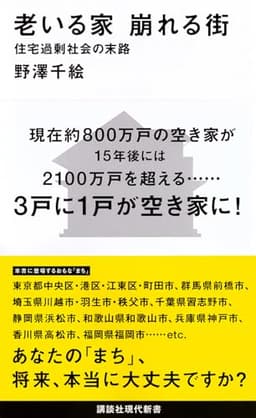
老いる家 崩れる街 住宅過剰社会の末路 (講談社現代新書 2397) (Aging Homes, Collapsing Streets: The Consequences of Housing Oversupply; title translated by this article)(外部サイト、新しいタブで開きます) by 野澤千絵 (Kodansha, 2016) is related reading on housing supply and sustaining existing homes. This selection uses bibliographic information and the publisher’s description; the full book is unread. The public sources above support the 2025 amendment and 2026 commencement discussed here. A book published in 2016 is not a source for those current voting requirements.
The Amazon link is an affiliate link. ISVD may receive a referral fee from qualifying purchases.
Statistics cited in this article
- 1Ministry of Land, Infrastructure, Transport and Tourism: Condominium Stock Series (author translation)(End of 2025) Open source
- 2Ministry of Land, Infrastructure, Transport and Tourism: Condominium Stock Aged at Least Forty Years (author translation)(End of 2025) Open source
Questions to Reflect On
- Which subjects and denominators apply?
- Who learns about plans at which point?
- Which records evaluate problems after adoption?
Key Terms in This Article
- Date of application
- The date from which a provision applies to covered persons or activities. Its scope, transitional arrangements and amendments also require checking.
Related Content

What would the proposed tokuryu measures change?
The September 2026 remote-analysis proposal, current law, help after recruitment and oversight

Japan DBS needs more than a criminal-record check
Incumbents have different deadlines: three years from commencement in mandatory settings, one year from certification in certified settings. Advance notice and correction protect the reliability of a conviction check. Check record coverage alongside everyday reporting and protective measures.

Japan's Civil Court Digitalization, May 21, 2026 — mints Mandate and the Problem of the 7% Pro-Se Litigant
Japan's amended Code of Civil Procedure took full effect May 21, 2026, with attorneys now required to use mints for electronic filing. The pro-se rate has already fallen from 20% to 7%; ~90% of plaintiffs are represented. Those digitalization helps least are already a minority — and those who give up on litigation never appear in judicial statistics.

Why the General Incorporated Association Suits Social Entrepreneurship — Criteria for Choosing a Legal Entity
Why is the general incorporated association well-suited for entrepreneurship aimed at solving social issues? This guide examines its structural advantages over NPO corporations and stock companies, and explores the potential of a two-tier structure with a for-profit entity.
Series: Feature: Nonprofit Formation Guide
Get new columns by email
1-2 social structure analysis columns per week. Free to subscribe.
Join ISVD's activities?
Sign up to receive the latest research and activity reports. Feel free to reach out about collaboration or project participation.
Support ISVD’s research and activities
Support ISVD’s research and publications with JPY5,000 per year. There is no automatic renewal.