
What does the EU ban on nonconsensual sexual AI content cover?
The amended AI Act prohibition applying from December 2, 2026: scope, consent and safeguards, alongside separate procedures for reporting posts and requesting removal
Read the amended EU AI Act’s consent and provider conditions alongside DSA reporting and remedies. Separate entry into force, application dates, transparency, prevention and access to support.
TL;DR
- The amendment’s entry into force and the new prohibition’s application are different dates
- Providers and deployers face different conditions; a label cannot supply consent
- Notice receipt, removal and access to support require separate confirmation
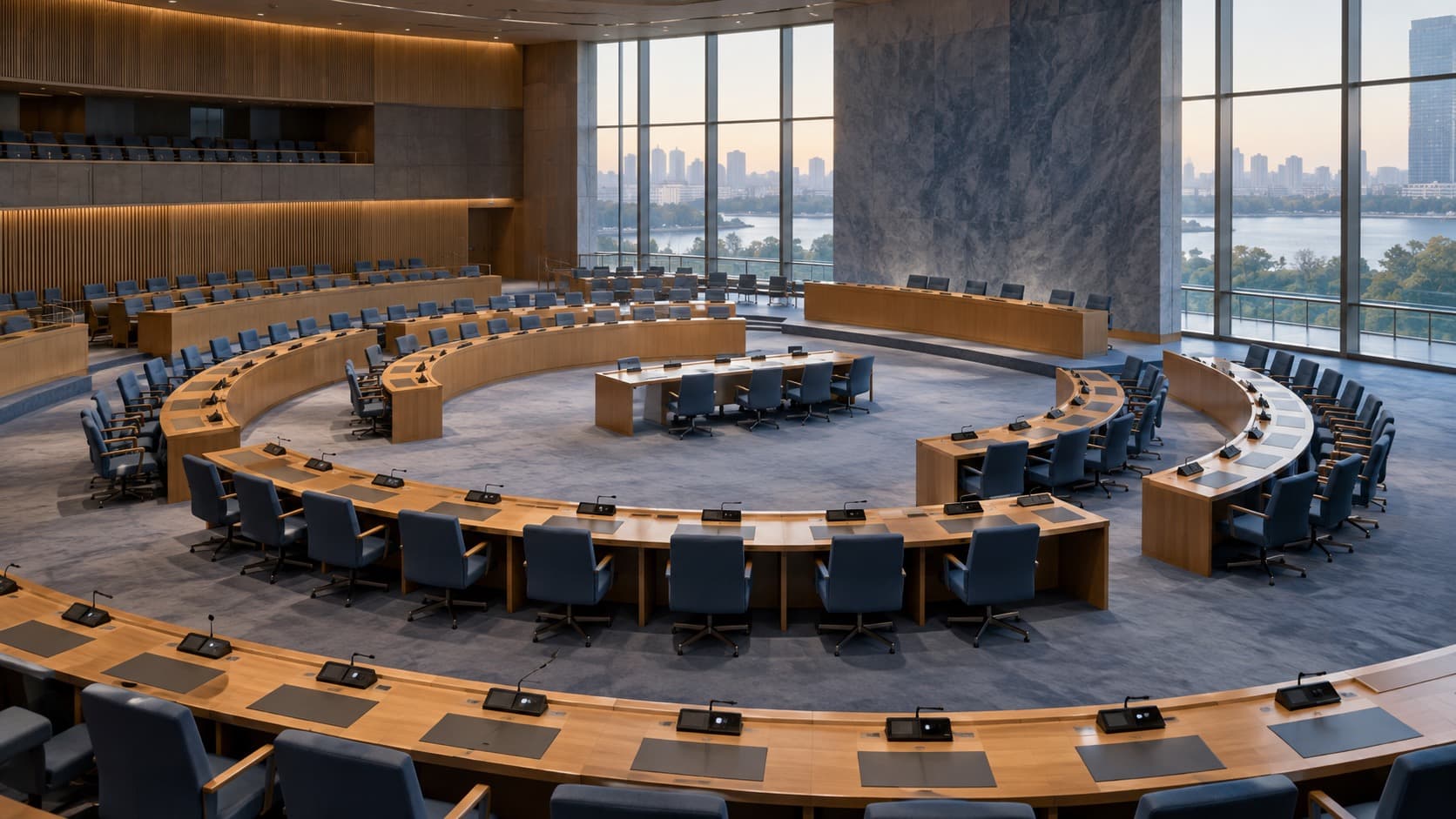
The thumbnail is an AI-generated illustration, not a photograph of an actual victim, abusive material, legal procedure or certification.
This article provides general information based on public EU sources and is not legal advice. Individual applicability and procedures require advice from a lawyer familiar with the law of the country concerned.
What Is Happening
Separate consent conditions from adoption, entry into force and application.
Does describing an AI-generated sexual image as fictional resolve the problem when the person depicted did not consent? The amendment to the EU asks who is depicted and what they consented to, alongside questions about whether generated content represents reality. The practical issue is how prevention connects to responses to content already circulating and to support that the person can actually use.
The announced July 27, 2026 as the AI simplification amendment’s . The additional prohibitions concerning sexual content did not become applicable on that date. The sets their at December 2, 2026. Adoption, entry into force and the dates when particular provisions apply need to be read separately.
addresses AI generating or manipulating realistic images, videos, audio or similar material of an identifiable person’s intimate parts or participation in sexually explicit activities without that person’s consent. Consent must be freely given, specific, informed, unambiguous and explicit for that generation or manipulation. Making an original photograph public cannot simply be treated as consent to producing a different sexual image.
Generating or manipulating child sexual abuse material or performances is addressed by a separate added provision. Consent alone cannot be described as permitting every kind of material. Nor does the amendment impose a blanket prohibition on all adult sexual expression. Reading only a broad headline about “sexual content,” without checking the covered material and conditions, obscures what prevention must address.
Article 5(1b) also excludes manipulation that neither increases the exposure of depicted intimate parts nor alters the nature of depicted sexually explicit activities. This limits the meaning of manipulation for this additional prohibition; it is not a general permission under every other applicable law. The actual change needs examination.
Other laws governing illegal posts and rules governing platform responses already exist before the additional prohibitions apply. It does not follow that nothing can be done until December or that the amendment’s entry into force guarantees removal of every post. Generation, distribution and subsequent support require separate examination.
Audio is covered as well, so a description focused exclusively on images containing a face would be incomplete. The identifiable person and the sexual material must be examined against the provision’s conditions. Whether content looks authentic and whether the person consented are separate questions; a fictional-content label cannot end that inquiry.
Background & Context
Distinguish provision, use, transparency and the law governing posts.
Providing an AI system and using it have different conditions
Article 5 distinguishes placing an AI system on the market or putting it into service from using that system. On the provision side, a system intended for the prohibited generation or manipulation is covered. A general-purpose system is also assessed for whether its design or capabilities make the result reasonably foreseeable and reproducible without significant technical modification, and whether it lacks reasonable and adequate safeguards to prevent the generation and correct misuse. This absence of safeguards is also a condition of the prohibition.
The provision addresses preventing the generation, taking reasonably foreseeable misuse into account, and correcting observed or reported misuse. Merely adding a prohibition to the terms of service cannot be assumed to satisfy those conditions. Equally, the conditions concerning foreseeability, reproducibility and safeguards should not be omitted in favour of claiming that any single sexual output automatically makes every provider unlawful.
When considering safeguards, organizations should not assume that they must collect actual victims’ material or create prohibited content to demonstrate a problem. They can distinguish what can be examined through safe testing from what requires specialist judgment. Recording when a safeguard was introduced, who will revise it and what will be checked after a report is one proposed way to plan continuing operations.
On the use side, the prohibition concerns a deployer using the system for the purpose of generating or manipulating the covered material. Different roles entail different conduct to examine. Labels such as photo editing or creative work cannot replace checking the person, content and purpose. Determining whether a particular act is prohibited requires examining its circumstances and the law that applies.
Providing an AI system
- Prohibited purpose
- Intended use
- General-purpose misuse
- Foreseeable
- Safeguards
- Prevent & fix
Using an AI system
- Purpose of use
- Make material
- Person concerned
- Identifiable
- Consent
- For this act
Author’s summary of amended Article 5. Provision also involves reproducibility without significant technical modification and reasonable, adequate safeguards. Separate rules address child sexual abuse material and performances. This diagram alone cannot determine permission or prohibition.
Identifying AI-generated content does not supply consent
The official timeline states that the Article 50 transparency provisions apply from August 2, 2026. Providers of relevant systems generating synthetic content that were already on the market before that date have a transitional deadline of December 2 for compliance with Article 50(2). This does not postpone all transparency obligations until December. The deadline and the application of the new prohibitions have different legal purposes.
Making generated content identifiable and obtaining the person’s consent are different tasks. An “AI-generated” label does not authorize nonconsensual sexual depictions. Nor can retaining a label be assumed to eliminate harm. Providers need to examine transparency compliance and generation prevention under their respective provisions.
The legality of a post and the response procedure are separate
The explains ways to report illegal content and seek remedies. The applicable definition of illegal content also depends on national law. Criminal penalties and removal conditions for nonconsensual sexual images of adults cannot be described as identical across the entire EU. The AI Act’s generation prohibition should not be conflated with the laws governing a post.
For the same image, distinguish the person who generated it, the AI provider and the service accepting the post. Knowing what a particular contact handles and what needs referral helps identify whom to approach. EU arrangements cannot simply be applied unchanged to Japanese providers or users; the business, use, service and conduct need individual examination.
Reading the Structure
Connect prevention, decisions and referrals while limiting information exposure.
Connect prevention responsibilities to responses after an incident
Preventing problematic generation leaves a separate task concerning posts already saved or reposted. Reporting misuse to an AI provider is a different procedure from requesting removal from a platform hosting content. Guidance should explain what to send where and what decision to expect, without promising that one report will resolve everything.
The describes notifying a platform about content considered illegal and receiving confirmation, the decision and information about challenge mechanisms. Receipt of a notice and removal of a post are different outcomes. A reference number alone should not be counted as completed action; a record linking the post to the decision is one proposed approach.
Generation and provision
- Before generation
- Consent
- Technical and operational
- Prevent abuse
- After a report
- Fix measures
Distribution and remedies
- Notice about a post
- Log receipt
- Decision
- Allow appeal
- Personal support
- Make referral
Author’s proposed checks, based on the prohibition conditions and DSA guidance. Notice receipt, removal, judicial remedies and access to support require separate confirmation. No automatic removal, compensation or identical support access for every user is promised.
guidance sets out free internal platform complaints, certified , complaints to the relevant coordinator about failures to meet DSA duties, and judicial remedies. Out-of-court decisions are not legally binding. Listing these routes does not guarantee removal or compensation. The covered service, procedure and the person’s access conditions must be checked.
When no reply arrives, repeatedly sending the same notice may not be enough. The post concerned, receipt record and reasons supplied should be checked alongside available challenge mechanisms and advice contacts. Support staff can distinguish giving a referral from the person reaching that service, and record the difficulties that remain when a route cannot be used.
The also discusses practices for notifying authorities about suspected criminal offences involving a threat to life or safety. It does not mean that every user complaint is automatically forwarded to police. Ordinary complaints about content and responses to danger or suspected offences need to be distinguished, with the scope of any explanation checked.
Do not expand exposure while gathering information
Reposting abusive material elsewhere to investigate a report risks increasing exposure the person did not want. Information requirements and recipients should be checked, without directing the person to publish material as proof. One proposed approach separates private circumstances from information needed to handle the post and specifies authorized viewers, retention periods and conditions for transfer to another service.
When receiving a request, staff should also establish what response the person wants and whom they permit to be informed. A removal request, immediate personal safety and legal advice involve different information needs. Consolidating every record is not automatically efficiency. The purpose and sharing boundaries explained to the person must remain effective when responsibility changes.
The guidance itself should be checked for usability. Language, interface requirements and unclear costs can prevent a person from deciding whether to use a procedure when only its name is supplied. This article proposes explaining the issues a contact handles, the preparation required and whom to ask. It does not present evidence that identical support already exists in every country or service.
Separate organizational compliance from outcomes reaching the person
The evaluation proposed here distinguishes notice and safeguard counts from people receiving decisions, people reaching support and people abandoning the process. Time to removal and responses to later reposts also need separate tracking. People answering a satisfaction survey cannot stand in for those unable to respond or reach assistance.
Mistaken restrictions on lawful expression and avenues to challenge them also belong in the assessment. Expanding prevention coverage alone is not proof of improvement. Missed harm and erroneous restrictions need separate records. Periods, populations and decision conditions should be comparable, and other changes must be examined before attributing improvement to the policy. The present account does not demonstrate effectiveness.
Continuing work has costs. Who revises safeguards, examines individual notices and handles personal support? Planning should extend beyond a temporary contact point to later reposts and the burden of continuing an appeal. A useful approach reduces the number of times a person must repeat their account while avoiding additional sharing they do not want.
Related Guide and Book
The outcome indicator design guide(このサイトの記事) explains how to distinguish activity counts from changes reaching people. It can inform the evaluation questions proposed here.
ポルノ被害の声を聞く デジタル性暴力と#MeToo (Listening to Survivors of Pornography Harm: Digital Sexual Violence and #MeToo; title translated)(外部サイト、新しいタブで開きます) is a 2022 book by . Its title may be rendered as Listening to Survivors of Pornography Harm: Digital Sexual Violence and #MeToo, an unofficial translation. The public introduction and contents provide a route into questions of harm and support. They do not establish current EU law or prove the effectiveness of a particular remedy.
Remaining Questions
Ask who sustains safeguards, information protection and access to remedies.
Who takes responsibility for prevention while explaining the prohibition accurately? Can providers examine both intended purpose and the conditions concerning foreseeable, reproducible misuse and safeguards? Can users distinguish publication of an original photograph from consent to a different sexual depiction? Compliance with labelling requirements should not end the inquiry. What the person authorized, and what changes after a misuse report, need examination in both contractual terms and actual operations.
Can information requirements be limited to what the response needs? Support staff should distinguish information for examining a post, notifying its host, addressing personal safety and obtaining legal assistance, and explain purposes and recipients before transfer. Procedures should avoid redistributing material or making the person repeat the same account after every change of contact. Access, retention and responsibility after referral must be specified so that recording receipt of a request does not become the end of support.
What must be established before the existence of a procedure can be called access to remedy? Beyond removal counts, can organizations track decision time, reposts and people unable to use appeals or support? Remaining barriers involving country, language and cost need examination alongside responses to erroneous restrictions. Entry into force should not end the work. Providers and support organizations need continuing responsibilities and resources, with evaluation examining whether the responses the person needs in everyday life can be sustained.
References
AI Omnibus enters into force (July 27) — European Commission (2026). European Commission
Article 5: Prohibited AI practices (consolidated as of July 27) — European Commission AI Act Service Desk (2026). European Commission AI Act Service Desk
Timeline for the Implementation of the EU AI Act, including amendments — European Commission AI Act Service Desk (2026). European Commission AI Act Service Desk
Adopted text PE-CONS 30/26 (selected printed pages 47–48 and 90; not the final Official Journal publication) — Council of the European Union (2026). Council of the European Union
Tackling illegal content online: Digital Services Act — European Commission (2026). European Commission
Fighting online scams with the DSA (notice-and-action explanation) — European Commission (2026). European Commission
European Board for Digital Services adopts good practices to notify suspected criminal offences (September 25 announcement) — European Commission (2026). European Commission

Questions to Reflect On
- What generation or manipulation did the person authorize?
- Who receives the notice and returns the decision?
- Can the person reach support without additional unwanted exposure?
Key Terms in This Article
- AI Act
- The EU regulation governing provision and use of AI. Prohibitions and transparency rules have distinct scopes, conditions and application dates.
- Digital Services Act (DSA)
- The EU regulation for online intermediary services. It covers notices about illegal content and challenges to decisions; the laws defining illegality remain distinct.
- Out-of-court dispute settlement
- A route to challenge platform moderation decisions before a body certified under the DSA. Its decisions are non-binding; the service and access conditions must be checked.
- Entry into force
- The point at which a legal instrument becomes effective. Particular obligations may have separate dates of application.
- Date of application
- The date from which a provision applies to covered persons or activities. Its scope, transitional arrangements and amendments also require checking.
Related Content
Can majority support alone bring about Security Council reform?
The September 2026 G4 statement, proposals to expand membership, and the adoption and ratification of Charter amendments

Foreign Parties Acquired 175 Hectares of Japanese Farmland, 0.004% of the National Total — and Not One Hectare Went to a Foreign Corporation or a Foreign National Living Abroad
On 16 September 2025 the Ministry of Agriculture and the Forestry Agency published their 2024 surveys of farmland and forest acquisition by foreign parties. Farmland came to 175.3 hectares, 0.004% of the national total, of which foreign corporations and foreign nationals living abroad accounted for zero. Forests came to 382 hectares, 0.003% of private forest, with a cumulative 10,396 hectares since 2006, or 0.07%. The Forestry Agency states that no case of development for water intake or groundwater extraction has ever been reported.

Structural Analysis of Foreign Aid Budget Allocation: Does the ODA vs. Domestic Welfare Tradeoff Hold?
Starting from the recurring social media claim "spend it at home, not abroad," this article analyzes the scale gap between ODA and social security budgets, international comparisons across DAC countries, and the evolving structure of strategic ODA. The numbers show that eliminating ODA would barely dent social security funding — and the framing of the question itself needs reexamination.

Is Japan's Childcare Levy a 'Bachelor Tax'? — The Political Reason Social Insurance Was Chosen Over Tax
Japan's Childcare Support Levy started April 2026 — ¥575/month at ¥6M income, rising to ¥1,000 by FY2028. The "bachelor tax" label is imprecise, but it correctly identifies a structural break from insurance principles. Social insurance was chosen over a tax for one reason: it wouldn't be called a tax hike.
Get new columns by email
1-2 social structure analysis columns per week. Free to subscribe.
Join ISVD's activities?
Sign up to receive the latest research and activity reports. Feel free to reach out about collaboration or project participation.
Support ISVD’s research and activities
Support ISVD’s research and publications with JPY5,000 per year. There is no automatic renewal.