
Stranded by Heavy Rain: What Do Temporary Stay Notices Tell Us?
An examination of Japan’s 2026 guidance and Chiba’s historical heavy-rain records, facility designation, opening, reception, closure and cross-boundary updates.
Read Japan’s 2026 guidance and Chiba’s historical heavy-rain notices. Two diagrams distinguish designation, opening, reception and closure from transport status, examining operations, cross-boundary updates and experiences outside reception counts.

TL;DR
- Read the 2026 guidance beyond major earthquakes
- Distinguish designated sites and prefectural reception
- Examine opening, capacity and closure notices alongside operations and cross-boundary updates
The header is an AI-generated conceptual image, not a photograph documenting an actual disaster or facility reception conditions.
This analysis uses sources checked on November 4, 2026 and official publication pages rechecked on November 5. It does not cover subsequent updates or establish any individual facility’s current safety or reception status.
What Is Happening
Read the 2026 guidance and heavy-rain disruption
When trains stop, does a designated temporary stay facility necessarily mean that someone can be admitted there now? Heavy rain can make this distinction consequential. An inventory of buildings describes one part of preparation. Opening decisions, changing reception conditions and the information reaching people describe other parts. Treating the inability to return home entirely as an individual's preparedness problem leaves the work between those stages difficult to see.
Japan's revised its guidance in January 2026. The revised title addresses large numbers of people unable to return home following disasters. It separates measures associated with major earthquakes from measures for other causes of widespread disruption. The latter include distant tsunamis, storms and flooding, snowfall, power outages and communications failures affecting transport.
Part Two recognizes that large numbers of people may be stranded even without earthquake damage to buildings. It discusses flexible public-private provision and opening of temporary facilities, considering transport operations and conditions around stations. Conditions such as extreme heat or cold also matter. An earthquake-oriented approach cannot simply become an instruction to remain in place for an identical period in every rain event. The relevant risks differ.
The August 2026 heavy rain in Chiba offers a subsequent case through which to examine reception and information. The January revision preceded that event; it was not produced in response to the August rain. This article reads historical administrative records to examine institutional arrangements. It does not identify currently open facilities or determine a safe route during a live disaster.
Background & Context
Distinguish counts and changing reception conditions
Designated facilities and people actually received
At a September press conference, the governor of said that designation of temporary stay facilities had expanded to 126 facilities. In the same explanation, he said that approximately 2,700 people were received at prefectural-owned facilities, including the prefectural government building on the day of the rain.
The first number concerns designation. The second concerns reception within a specified group of facilities. Neither says that every designated facility opened, nor that the reception figure represents everyone stranded throughout the prefecture. Read designation, opening and reception as distinct states. Dividing figures with different coverage cannot establish actual facility utilization or the burden borne by an average operating site.
Designation is a meaningful preparatory step, but it does not establish the condition of each building during an event, staff availability, supplies, surrounding hazards or the completion of opening notifications. The documents read for this article do not identify deficiencies at individual sites in all those areas. The analytical task is to connect a measure of preparation with records of what was actually available on a particular day.
Conditions continue to change after opening
Historical notices on the include an announcement at 19:15 on August 13 saying that the prefectural government building had opened at 19:00. Later notices added reception sites. In the early hours of August 14, notices distinguished facilities that had opened from facilities that had reached capacity. An opening record alone therefore does not establish that reception space remained available afterwards.
Another notice said that all temporary stay facilities closed at 15:00 on August 15. These are records of the event, not current availability information. Republishing an earlier list as present-day directions would omit the later closure status.
The archive demonstrates that announcements changed over time. It does not establish who received each update, how long individuals waited, or how many could not gain admission. Publication and timely receipt require separate examination. A reader consulting the collected archive afterwards has a different information position from someone receiving fragmented notifications while transport is disrupted.
Preparation and start
- Designation: prepare a potential reception site
- Opening: begin actual reception
- Notification: communicate the opening
Subsequent changes
- Reception: capacity and operating conditions change
- Updates: communicate those changes
- Closure: make the end of reception explicit
The author's organization of Cabinet Office guidance and Chiba notices. This is neither a record that every site followed a fixed sequence nor a guarantee that travel to a site is safe.
Different users need different information
In 2025, described a system with functions for disaster headquarters, facility managers and people unable to return home. Its operational map combines information such as crowd conditions and railway operations. Facility management uses digital reports and communication tools. Public information functions include searching for facilities that have opened. Tokyo's preparedness portal provides an entry point to related information.
This is Tokyo's own description of its system. It is not evidence that Chiba used the same arrangement during the August rain. This article did not observe live disaster screens or measure update delays, user numbers or independently demonstrated reductions in workload. The distinction between headquarters, facility and public information nevertheless helps identify work that a static inventory of reception sites cannot capture.
Reading the Structure
Examine operations, coordination and evaluation coverage
Connect transport and reception without substituting one for the other
Transport status and reception status answer different questions. Railway information describes a means of movement. Facility information describes a place where temporary reception may be possible. Neither alone establishes safety across surrounding roads and buildings. The guidance's attention to both disaster conditions and transport reflects the fact that disruption does not have a single uniform cause.
Putting information onto one map is consequently not the end of coordination. Questions remain about when a condition was checked, who reports a change and whether that change reaches those providing public guidance. Consider a hypothetical site that reaches capacity while an older opening notice remains visible. Separately recording opening and current reception conditions would help distinguish those facts. This example is an analytical proposal, not an allegation that a particular display was neglected in the Chiba event.
Records also need interpretable coverage. A facility's reported reception number may answer a different question from a transport operator's estimate of affected passengers. One concerns people admitted within a setting; another may concern disruption across a service. Their relation requires investigation rather than an assumed equivalence. The source scopes in this article are deliberately retained so that a reader can see what each number actually describes.
An unconfirmed condition also deserves separation from confirmed closure or full capacity. An exercise could retain the fact that a report has not arrived, the last confirmation time and the person responsible for another check. Missing information should neither automatically classify a facility as unavailable nor establish that reception remains possible. Beyond adding a display field, examine whom the next shift can contact. This is a proposal about handling records, not a finding that Chiba’s displays lacked such a status.
Shared places have limits on simultaneous use
Jointly preparing temporary space can benefit many people, while concentrated use creates a need to allocate limited reception capacity. The concept of offers one way to consider this combination of broad benefit and competing use. Here it is an analytical lens on provision and allocation, not a legal classification of every temporary stay facility.
The work behind shared provision can include reception, communication, management of supplies and staffing arrangements that can continue through an event. A growing count of designated sites says little by itself about who will perform those tasks. When documents invoke public-private cooperation, it remains useful to ask how providing a building relates to operational responsibility and expenses. These questions are not findings that a particular organization failed to meet an obligation.
Administrative boundaries differ from travel patterns
Chiba's September explanation described flooding, transport disruption and return-home movements crossing administrative boundaries. It proposed a shift from disaster management organized only by municipality toward approaches organized around river basins and transport networks. Other perspectives included preparing, enduring and recovering alongside prevention, and avoiding entry into dangerous spaces rather than relying only on movement after danger develops.
Those perspectives form a vision for subsequent discussion and action. They do not show that every proposed improvement was already implemented at the press conference. Still, commuting, study and shopping journeys need not stop where a municipal notice's jurisdiction ends. Where reception information is shared, and who retains responsibility for updating it, cannot be answered solely by identifying the municipality in which a building stands.
Include experiences missing from reception totals
Evaluate reception with attention to coverage and experiences outside the count. The figure for prefectural-owned facilities does not establish reception at municipal or private sites, hotel use, or the experience of people remaining at workplaces. If admitted people become a performance measure, evaluation also needs to specify included sites, treatment of movement between sites and ways of learning why someone could not use the provision.
Information access deserves similar attention. Smartphone maps and notifications can provide a channel, but communications, batteries, languages and usable devices may affect receipt. The documents read here do not quantify those effects. Their absence from a count is a reason to investigate additional pathways, such as on-site notices and staff guidance, rather than to invent an affected population or declare a particular digital service unsuccessful.
Records of preparation and records of use
Future exercises could distinguish confirmation of contact with designated sites, actual opening times and the transmission of changed reception conditions. Combining them in one completed-response field would make it harder to see what was checked. The person reporting an opening may not be responsible for every later public notice; role records help establish that relation.
Examining users' experiences also means distinguishing admission from the channel through which a site became known and the time information was checked. Additional records, however, can add work to reception and reporting. Their purpose, responsible person and feasibility in exercises therefore deserve consideration. This is the author's proposal for examining process, not a finding that Chiba's arrangements lacked these records.
Information concerning movement
- Transport operation status
- Disaster and surrounding hazard information
- Time of confirmation and update source
Information concerning reception
- Facility opening and reception conditions
- Eligible use and contact with operators
- Channels for changes and closure notices
The author's questions for review, not a current facility directory or a method for guaranteeing route safety. Tokyo's feature announcement and Chiba's historical notices are not treated as evidence of the same operational system.
Related Guide
- Designing outcome indicators(このサイトの記事): Distinguish activity records from changes experienced by users.
Further reading
Amazon links are advertising links.
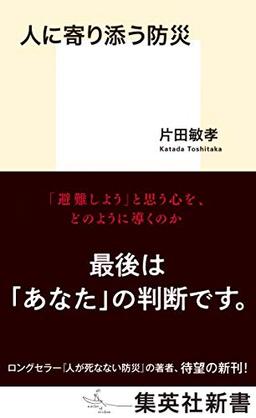
Toshitaka Katada’s 人に寄り添う防災(外部サイト、新しいタブで開きます) (an explanatory translation: Disaster Preparedness Attuned to People) is related reading on the difference between publishing guidance and making it usable. Shueisha’s public introduction and contents(外部サイト、新しいタブで開きます) cover communication by information providers in emergencies. Only those public materials were consulted; the full book has not been read. This 2020 book does not establish current stranded-commuter guidelines, Chiba’s reception counts or whether a facility is open.
Remaining Questions
Ask who updates information and what records miss
When a facility is designated, how much has already been decided about opening, continuing reception and reporting changes? If local government, managers and transport operators hold different information, who receives a changed condition and who updates public guidance? Connecting an inventory with what was usable on a particular day requires records as well as buildings. Exercises could examine the people and communication arrangements supporting reception, rather than only the presence of a designated location.
How does information reach someone whose workplace, station, temporary stay site and home lie in different municipalities? A single jurisdiction's notifications may not supply every relevant update. Cross-boundary cooperation needs ways to retain update sources and confirmation times through handovers. Evaluation should also include those who have difficulty using a smartphone or reading an announcement's language. The question is how information reaches people, beyond whether a display function exists. Who checks a condition without a new report, and what accompanies a handover while it remains unconfirmed? These questions help make coordination assessable.
After recording admitted people, who investigates those who could not enter or stayed elsewhere? More reception does not by itself demonstrate less burden. Waiting, uncertainty, time spent finding guidance and operators' work require their own examination. Moving from designation toward usable provision means identifying what records reveal and what they leave unseen, then carrying those questions into the next plan.
References
帰宅困難者等対策 — 防災庁 (2026). Official document and the scope stated in this article
災害発生時における大規模な帰宅困難者等の発生への対策に関するガイドライン — Cabinet Office (2026). Official document and the scope stated in this article
大規模地震の発生に伴う帰宅困難者等対策のガイドラインの一部改定について(概要) — Cabinet Office (2026). Official document and the scope stated in this article
知事臨時記者会見(令和8年9月11日)概要 — Chiba Prefecture (2026). Official document and the scope stated in this article
緊急情報 — Chiba disaster portal (2026). Official document and the scope stated in this article
帰宅困難者対策オペレーションシステム — Tokyo Metropolitan Government (2025). Official document and the scope stated in this article
帰宅困難者対策 — Tokyo Metropolitan Government (2026). Official document and the scope stated in this article
Statistics cited in this article
- 1Cabinet Office guideline, cover and publication page(2026) Open source
- 2Chiba governor's opening statement on the urban flood vision(2026) Open source
- 3Chiba governor's statement on prefectural-owned facilities(2026) Open source
- 4Chiba disaster portal notice issued at 17:03 on August 15(2026) Open source
Questions to Reflect On
- Do designation and reception records cover the same sites?
- Who communicates changed reception conditions?
- Where are experiences outside reception counts recorded?
Key Terms in This Article
- Quasi-public Goods
- Goods with characteristics between pure public goods and pure private goods. Many can benefit from them, yet rivalry arises when use concentrates in particular periods or users, so their provision and allocation require social coordination. Education, roads, and water infrastructure are common examples. Equipment that is sufficient when circulated locally also approaches this character when optimized collectively rather than owned individually.
Related Content

Do Selected Recycled-Plastic Studies Mean Hubs Are Already Operating?
Japan’s 2026 feasibility studies and FY2027 budget requests, alongside quality, inventory and purchase conditions for regional supply.
After an AI bear alert, who handles checks and safety measures?
AI-camera trials and the decisions, responsibility and costs of emergency shooting in Japan
What changes when you book a recovery discount through a different channel?
Nagasaki's recovery travel campaign: budgets, booking dates and eligible stay periods by sales channel
Fukushima Holds About 14 Million Cubic Metres of Removed Soil. Reuse Outside the Prefecture Began With Flower Beds at Two Government Buildings
Soil removed during decontamination in Fukushima must be finally disposed of outside the prefecture by March 2045, an obligation written into law. About 14 million cubic metres sit in interim storage. On 29 August 2026 the first reconstruction reuse outside Fukushima began at a government building in Sendai, followed by one in Saitama. The volume used across both sites was about 2 cubic metres. The government's basic policy and roadmap say that selecting and surveying candidate sites for final disposal begins around 2030. This piece reads the distance between the deadline and the start, using the government's own documents.
Get new columns by email
1-2 social structure analysis columns per week. Free to subscribe.
Join our activities
Sign up to receive the latest research and activity reports. Feel free to reach out about collaboration or project participation.
Support our research and activities
Support our research and publications with JPY5,000 per year. There is no automatic renewal.