
Correcting Disaster Information: How Can People Get Multilingual Advice?
About Kumamoto’s multilingual consultation announcement and ingredient guidance, corrections, individual questions and handovers
A correction does not establish access to consultation. Read Kumamoto announcements, ingredient guidance, and multilingual resources with two diagrams separating verified facts, individual requests, updates, and operating costs.

TL;DR
- Separate publication from access to consultation
- Read Kumamoto announcements and food guidance
- Combine Easy Japanese and multilingual tools while examining updates, unanswered requests, and operating resources
The article image is an AI-generated fictional consultation desk, not a photograph of a real evacuation shelter or disaster response.
This analysis uses public materials checked through November 4, 2026. Historical opening announcements and resource listings do not guarantee later reception hours, available languages or individual consultation outcomes.
What Is Happening
Distinguish public corrections from individual consultation
Consider a hypothetical municipality identifying an error in a disaster-related post and issuing a correction. People who can read the notice may receive an explanation. People who cannot understand the language, cannot connect to the internet, or need to ask about a particular meal need another route. Establishing what is accurate and receiving a person's request are different tasks. Can both be covered by the same promise to “provide information”?
The Kumamoto International Foundation's says earthquake information will be posted on its website and related consultations will be accepted. The page was last updated on August 4, 2026. It provides notices in Japanese, English, Chinese, and Korean. That date is a page update, not an established opening date or a count of consultations.
The announcement establishes that information and consultation were offered together. It does not establish that every shelter received the information, that misinformation declined, or that every food-related concern was resolved. Record that information was published separately from whether a person could use the consultation service. This distinction makes the work remaining after a correction easier to examine.
This article does not reproduce an unverified story about a nationality or religion as an actual incident. An unconfirmed story cannot simply be declared false either. It examines published guidance about checking information, providing consultation, and describing food ingredients. The operating arrangements below are proposals to examine in preparedness exercises, not interventions with demonstrated effects on misinformation.
Background & Context
Read source-checking, multilingual, and ingredient guidance
Check the claim, place, and time
The advises readers to check the source of social media information, compare information sources, and avoid casually spreading uncertain claims. Information shared with good intentions may still be inaccurate, and disaster information can become outdated. The page also cautions that vague reports of crime may encourage excessive distrust of other people.
The question to investigate is what happened at a particular place and time. If a post changes, or an image comes from another location, the scope of the correction changes too. Finding an error in a post does not establish the character or behavior of a whole community. Conversely, failing to verify a story does not prove that no such event occurred.
This publication offers public guidance. It is not an experiment showing that issuing corrections always reduces misinformation. An accurate correction and an explanation that reaches the people who need it each require examination. A response can state what was checked and preserve the questions that remain unresolved, rather than turning incomplete verification into certainty.
Combine accessible Japanese with multilingual support
A describes concerns that unsuccessful communication between Japanese and foreign residents can leave foreign residents isolated during disasters. It also discusses using Easy Japanese in everyday communication as part of preparedness. This is an explanation of an approach, not evidence that a particular person became isolated in the current earthquake.
The lists multilingual display sheets, evacuation registration cards, food pictograms, and pointing boards. Preparation does not have to begin with creating every document from scratch. Teams can examine how an existing resource connects to the names of local facilities and their current reception arrangements.
The listing for CLAIR's 2023 multilingual disaster support handbook records a version 2.1 update on March 13, 2026, covering population trends and related data. The year in a publication's name is not necessarily the date of its current version. This article checked the listing and update history; it did not reread all handbook chapters or independently validate their operating procedures.
Preparing Easy Japanese does not establish that every reader understands it. A person's preferred language for reading, listening, and consultation may differ. Ask rather than selecting a language from nationality. Likewise, do not assume a foreign resident can provide unpaid interpretation. Residents can participate as contributors to the response, while retaining a choice about their role and the work they accept.
Connect ingredient information to an individual question
Kumamoto Prefecture's third edition of its disaster medical relief manual is dated March 2026. This article checked the cover and the pages on food and material management and support for people requiring consideration. The checklist covers food allergies, cultural or religious dietary considerations, identifying relevant ingredients, and displaying ingredients and raw materials in provided meals.
These points help organizers check requirements; they do not provide a basis for judging someone who cannot eat a meal as uncooperative. Organizers need to establish what information the person requires and whether the description matches the food actually provided. A shared religion or nationality does not establish identical preferences. This article and an AI inference cannot make individual medical or food safety decisions.
CLAIR's food pictogram listing offers a sheet for communicating about foods a person cannot consume. A communication aid and verified ingredient information serve different functions. Pointing to a picture can communicate a request. If no one can contact the meal provider or connect the person to further assistance, the information required for a decision remains incomplete. The availability of a downloadable tool does not demonstrate its use at every shelter.
Reading the Structure
Connect verification, translation, updates, and replies
Link verified information to a response
means being able to use information and services. After publishing a correction, examine whether people can find it, understand it, and ask an individual question. If a printed notice and a website retain different instructions, people approaching the same service may receive conflicting explanations.
Facts to publish
Match scope and time
- Source
- Who checked which claim
- Scope
- Place, time, and content
- Correction
- What changed and why
- Uncertainty
- Questions still unresolved
Conditions for a response
Connect to assistance
- Language
- The person's preference
- Channel
- Paper, phone, or in person
- Reception
- Who receives and checks
- Reply
- Available help and next contact
Correcting a fact does not necessarily resolve every consultation. This diagram does not show demonstrated intervention effects.
Consider a hypothetical request about a meal with unclear ingredient information. A staff member contacts the provider and reports both the ingredients confirmed and the points still unknown. The person's circumstances need not be posted on social media to explain this process. Public information could cover the meal information and the consultation route, while keeping individual health or religious circumstances out of publicity.
A request can be received while its answer remains under investigation. State who received it, whom they will contact, and when the next response will be available. If the service operates only during specified hours, explain that limit. Decide how to receive a question without presenting its unresolved content as a verified fact. This is a proposed operating arrangement, not evidence that an existing service follows it.
Assign responsibility for translated and printed updates
Assign responsibility for bringing the original, translations, and printed notices into agreement.
A translator may not be responsible for verifying ingredients or operating a reception desk. Consider the person responsible for the original content, the person checking language, and the person updating notices at the facility as distinct roles. One staff member may perform several roles, but recording which checks are complete still helps explain the work remaining.
Check each change
Prepare a consistent version
- Original
- Confirmed content and timestamp
- Translation
- Meaning and changed passages
- Notice
- Replace outdated instructions
- Service
- Verify reception arrangements
Examine operation
Record unresolved issues
- Reach
- Another route when unreadable
- Understanding
- Questions and explanation changes
- Handover
- Responder and unanswered request
- Resources
- Time, cost, and staff changes
An author's proposal for local exercises, not a uniform national duty or a measured reduction in misinformation.
When all translations cannot be updated together, do not mark unfinished work as complete. Explain the update time and the scope awaiting confirmation, with an available consultation route. Also consider how to preserve the history of a changed notice. Staff need to explain the difference between a paper copy a resident already holds and the revised instructions, rather than assuming publication makes every earlier copy disappear.
Checking whether words became shorter differs from checking whether the conditions stayed intact. Consider a hypothetical exercise revising reception hours. Removing the time or eligible users to simplify a notice could change its meaning. The people responsible for the original and its translation could compare the place, time and audience that must remain.
The exercise could also include someone carrying an older paper notice. Instead of only pointing to the correction page, explain what changed and what can now be checked. Examine whether the person can ask about an unclear passage and whether a staff member without an answer knows whom to contact. This is a proposal for an exercise, not a report of incorrect guidance at Kumamoto’s service.
Examine unanswered requests alongside publication counts
An exercise could record unsuccessful connections to a service and reasons a request was not handed over, alongside posts published and languages prepared. Few complaints do not establish satisfaction. Reception records do not explain the circumstances of people who never knew how to ask or stopped trying to make contact.
Interpretation, verification, and notice updates require time and money. Goodwill alone does not explain who continues the service at night or after staff changes. An exercise can identify opening hours and handover arrangements, distinguishing funded work from work not currently available. A public promise about access should match what the service can actually provide.
Related Guides
For related approaches, see the Disaster Vulnerability Mapping Guide(このサイトの記事) and the Outcome Indicator Design Guide(このサイトの記事), which distinguishes activities from their outcomes.
Further reading
Amazon links are advertising links.
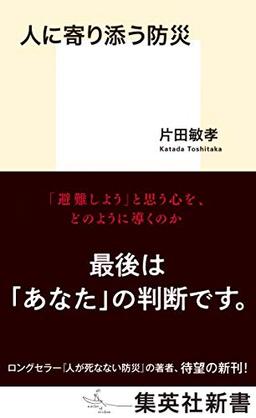
Toshitaka Katada’s 人に寄り添う防災(外部サイト、新しいタブで開きます) (an explanatory translation: Disaster Preparedness Attuned to People) is related reading on reaching recipients with explanations in emergencies. Shueisha’s public introduction and contents(外部サイト、新しいタブで開きます) cover information providers’ communication and evacuation of people needing assistance. Only those public materials were consulted; the full book has not been read. This 2020 book does not establish current multilingual-support procedures, substantiate a particular correction, or demonstrate translation accuracy or recipients’ understanding.
Remaining Questions
Examine access, personal circumstances, and costs
After assigning responsibility for a correction and its languages, who still cannot use the explanation? Printed notices, telephone responses, and in-person conversations need arrangements for updating old information and receiving questions. A view count cannot establish who could consult the service. An exercise should record both explanations that worked and language or channels that people could not use, leaving room to revise instructions through the questions people actually ask. Who checks that conditions about place and time survive in a shorter explanation?
Can someone continue a conversation about food or everyday needs without fearing their personal circumstances will be publicized? Distinguish information necessary for an individual response from findings that need public circulation. When an ingredient cannot be verified, can staff preserve that uncertainty and connect the request to another responder? Treating a nationality or religion as a single group does less to define the work than establishing the conditions for answering a person's specific question. How much of the information received for that response should pass to staff taking over the request?
Who funds reception, interpretation, updates, and staff handovers? Foreign residents can help support their community, but participation does not justify assuming unpaid translation. Examine service limits and unanswered requests when deciding what the next exercise should change. Can staff responsible for corrections and those receiving requests sustain both tasks after a handover? Examine whether unanswered questions have a next responsible person and time set aside for another check.
References
多言語支援センターを開設しました。 — Kumamoto International Foundation (2026). Official announcement; page updated August 4
東京くらし防災 — Tokyo Metropolitan Government (2023). Official digital publication, selected page
防災・減災活動にはやさしい日本語が不可欠(在留支援のためのやさしい日本語ガイドライン) — Immigration Services Agency, Resident Support Division (2021). Cabinet Office preparedness publication No.101, selected article
多文化共生 — CLAIR (Accessed 2026). Official index; linked documents not fully read
防災・減災のための多言語支援の手引き — CLAIR (Accessed 2026). Official listing; handbook chapters not reread
熊本県 災害時医療救護マニュアル 第三版 — Kumamoto Prefecture (2026). PDF pages 1, 130, 136; printed sections 19-6 and 19-12
多言語避難者登録カード・食材の絵文字(FOODPICT) — CLAIR (Accessed 2026). Official resource listing; linked PDFs not newly read
Statistics cited in this article
- 1Kumamoto International Foundation, multilingual support center announcement(2026) Open source
- 2CLAIR, update history on the multilingual disaster support handbook listing(2026) Open source
- 3Kumamoto Prefecture, cover of the third-edition disaster medical relief manual(2026) Open source
Questions to Reflect On
- Can a person understand a correction and reach consultation?
- Who checks an unresolved ingredient question?
- Are translation updates and staff handovers resourced?
Key Terms in This Article
- Accessibility
- The ability to use services and information regardless of disability or other circumstances. Shared components and the actual interface and added functions need to be checked.
Related Content

Can Verified Provenance Establish That a Disaster Photograph Is True?
C2PA provenance, factual context, affected people’s safety and correction, using documents checked October 6, 2026.

Practical Guide to Social Vulnerability Mapping During Disasters — Lessons from the Noto Peninsula Earthquake
Disaster damage concentrates on socially vulnerable groups. A guide to vulnerability mapping, inclusive shelter management, and community resilience building.
Series: Organization Design & Resilience

Ten Riot Police, Twenty Minutes, a House That Had Not Collapsed — False Rescue Requests Went from 1 in 573 to 104 in 1,091
After the 2026 Kumamoto earthquake of 28 July, false rescue requests naming addresses that do not exist, and AI-generated videos purporting to show the damage, spread on social media. Measured by the same system, false posts among rescue requests numbered 1 out of 573 in the 2016 Kumamoto earthquake and 104 out of 1,091 in the 2024 Noto Peninsula earthquake. What changed is not the volume of malice but who pays for the correction: no longer the attention of readers, but the deployment of fire and police.

The Monthly Labour Statistics Scandal and the Reproduction of State Ignorance — When the Numbers 'Did Not Exist'
The systematic falsification of the Ministry of Health, Labour and Welfare's 'Monthly Labour Survey' revealed in 2018 was not a mere survey error. The core of the problem lies in the 'structure of ignorance' that allowed the misconduct to go undetected for nearly twenty years. This article analyzes the mechanisms through which strategic ignorance was produced around national statistics.
Get new columns by email
1-2 social structure analysis columns per week. Free to subscribe.
Join our activities
Sign up to receive the latest research and activity reports. Feel free to reach out about collaboration or project participation.
Support our research and activities
Support our research and publications with JPY5,000 per year. There is no automatic renewal.