
Kumamoto welfare staff dispatch: how do public funding, advances and settlement differ?
About eligible expenses, initial payments, claims and care in sending facilities, distinguishing the July 31 notice, August 20 announcement and September 25, 2026 counts
Read Kumamoto welfare dispatch through the July notice and August announcement. Two diagrams distinguish public eligibility, advances, settlement, matching and continuity of care in both communities.

TL;DR
- Distinguish July rules from the later public-funding announcement
- Separate final funding, initial payment and settlement
- Consider care in the sending community while distinguishing registration, matching, actual work and benefit
The image is an AI-generated fictional welfare-staff preparation room. It is not a photograph of an affected institution or actual workers.
This analysis reads public materials checked through November 4, 2026 within their stated dates and scope. It does not verify subsequent recruitment, settlement terms or implementation outcomes.
What Is Happening
Read dated announcements without assuming universal coverage
When a disaster prevents staff from reaching a care facility, assistance with eating, movement and personal care still has to continue. Bringing welfare workers from another region raises practical questions: who pays their wages, who arranges travel and accommodation, and when does reimbursement arrive? Public eligibility for an expense and the availability of money before departure are different conditions.
A national notice dated 31 July 2026(外部サイト、新しいタブで開きます), concerning the Kumamoto earthquake, distinguished dispatch to welfare evacuation shelters from support for social welfare institutions. For institutional support, its principle was that the requesting facility would pay wages from its care-service payments or other relevant operating funding, while the sending institution advanced the money.
A later registration announcement published by Kishiwada City on 20 August(外部サイト、新しいタブで開きます) described travel, accommodation and personnel costs for the coordinated support dispatch as publicly funded through disaster-relief or other public expenditure. Registered workers would be matched to affected facilities before a dispatch request. Registration therefore did not guarantee deployment. The announcement also stated that parts of the personnel-cost claim process remained unclear at that point.
Public funding does not by itself establish that payment timing and reimbursement have been resolved. Equally, the July notice alone cannot establish that the same facility-payment principle continued under the later arrangements. The date, destination and coordination scheme matter. This article examines those distinctions; it does not establish universal permanent coverage or the reimbursement terms of every subsequent dispatch.
The August registration announcement concerned placements available through the end of September. It is read here as a historical document, rather than as current recruitment, deployment dates or settlement terms.
Background & Context
Distinguish evacuation support, institutional care and payment
Supporting evacuation and maintaining institutional care
The guidelines explain a system for identifying welfare needs early and supporting daily functioning during evacuation. Prefectural networks bring relevant organizations together to coordinate Disaster Welfare Assistance Teams, or DWATs.
Identifying needs at a shelter and connecting people to appropriate services requires coordination. So does supplying daily care for residents of an institution. A team supporting evacuation and workers supporting a facility should not be assigned identical payroll rules simply because both are described as welfare assistance. The actual work, the person receiving support and the requesting arrangement need attention.
The July notice made specified shelter consultation and support personnel costs eligible for disaster-relief expenditure. It allowed consideration of places functioning as welfare shelters even when they had not been designated beforehand. It also addressed people for whom an institutional place or home-care service could not immediately be secured, with support towards subsequent transfer. A change of setting therefore involves continuity of work as well as its funding.
The final payer and the initial payer
The described the sending organization advancing welfare-shelter dispatch expenses and later claiming through its home prefecture from the affected prefecture. Where possible, the sending prefecture was asked to consider bearing the advance and coordinating settlement collectively, reducing the burden on sending organizations.
For institutional dispatch, the notice separated personnel expenses from travel and accommodation. The former involved agreement between facilities over the amount and settlement method; the latter involved disaster-relief expenditure following consultation between the prefecture and the . These were July arrangements. They should not be applied unchanged to a later announcement that describes personnel expenses as publicly funded.
The underlying cash-flow distinction remains useful. Payroll dates and transport payments can arrive before reimbursement. An institution may have to find money in the meantime even when the final funding source is public. Whether that obstacle improved cannot be established from an announcement of public eligibility alone. The initial payer and expected settlement date are part of the conditions for participation.
Reading the Structure
Connect claims, staffing and evidence of service continuity
Follow each expense through to settlement
The August Kishiwada announcement asked facilities to keep travel and accommodation receipts and records showing who was dispatched and when. The statement about public personnel funding appeared alongside the explanation of unsettled payroll-claim details. A funding decision and its practical translation into payment were therefore separate matters within the same announcement.
The page does not establish automatic reimbursement of every wage amount, replacement worker or day before and after deployment. Conditions from other schemes should not be added to this one without evidence. For a facility deciding whether it can participate, the relevant period, expense categories, calculation method, initial payer, claims contact and required records need to be explained together.
Consider a placement whose dates change after the initial request. Revised travel bookings, the dates actually worked and the original request may no longer agree. The sending facility needs a route to clarify eligibility with the coordinator, rather than deciding alone. This is an example for considering claims procedures, not evidence that changed bookings went unpaid during this response.
Final funding
Check scope and date
- Wages
- Request scheme and expense
- Travel
- Transport and accommodation
- Period
- Eligible deployment dates
Payment before settlement
Check funds and procedure
- Advance
- Who pays first
- Claim
- Contact, records and calculation
- Settlement
- Timing and unresolved points
Analytical questions informed by the July notice and August announcement. The diagram does not establish uniform coverage or a single settlement route for every expense.
Care continues in the sending community
A welfare worker is needed in the sending community too. Arranging dispatch can require adjustments to daily staffing and handovers there. Knowing the final wage payer may not make deployment feasible if cover cannot be arranged. This is a staffing consideration, not a measured finding that the Kumamoto dispatch increased vacancies or incidents in sending institutions.
The national guidelines call for advance discussion of dispatch expenses and consultation with disaster-management departments. They also discuss support from relevant organizations and agreements between providers to respond to temporary staff shortages. Funding for maintaining the network is distinguished from expenses for team activity during a disaster. A subsidy for routine coordination should not simply be counted as deployment payroll funding.
An agreement could specify available professions, periods of support and how to report that sending staff is currently difficult. These are possibilities for preparation, rather than a description of uniform arrangements already used by every participating facility. Considering the original service alongside the receiving facility's needs can make decisions less dependent on an individual worker's willingness to absorb additional strain.
Sending a worker also requires a decision about continuing care at home. Registered headcounts may look similar while professions, available hours and suitable tasks differ. Sharing the work and period that need support makes the sending facility's staffing adjustments more concrete. The size of an institution alone does not establish whether it can participate.
A response to a dispatch inquiry could distinguish confirmed availability from conditions still being examined. A hypothetical facility might have the relevant profession but still be arranging its ordinary staffing or travel. The coordinator could retain what is awaited and when another contact is planned, rather than treating registration as readiness to depart. This is a proposal, not a report that a particular facility delayed its reply.
For a work handover, matching a professional title does not establish that every required task and shift has been arranged. Compare the work the receiving facility requests with the work and period the sender can undertake. If conditions do not fit, record what is known without combining payroll, staffing and movement into a single assumed cause. The purpose is to improve the conditions of the next request, rather than assess an individual’s willingness to help.
Registration and matching are distinct records
In an update dated 25 September, the reported August to September needs at 23 facilities, with 584 registered staff. Matching was reported for 351 people, excluding dispatch cancellations and similar cases.
Those categories do not establish the number completing a placement, unmet demand by profession or changes in residents' condition. Subtracting matching from registration would not reveal refusals or a staff-shortage rate. The September 25 update described October needs as being surveyed at that time. Blank fields do not establish zero demand or the end of support.
Coordination records
What has progressed
- Registration
- Profession and availability
- Matching
- Fit with facility needs
- Request
- Destination and conditions
Checks after activity
What was supported
- Work
- Actual roles and days
- Funds
- Advances and settlement
- Continuity
- Care and next responsible staff
An evaluation framework informed by the published coordination figures and local announcement. The right-hand outcomes have not been measured here.
Evaluate support and reimbursement together
A can organize the relationship between financial support, coordination, actual work and continued assistance. Public funding changes a participation condition. Registrations, suitable placements and completed settlement remain separate things to examine. Assessing what changed requires records with comparable dates and conditions.
Possible measures include time from advance to reimbursement, work arranged after a request, and handover when a placement ends. Travel safety, available professions and deployment timing can also influence results. A change in registrations should not automatically be attributed to payroll funding. Records of where coordination stopped would help distinguish these explanations.
Published records also need a reporting period and a definition of the headcount. Counting repeat placements and updating planned activity to reflect actual work can change the meaning of a comparison. Examining requested and delivered support over the same period could help identify the next coordination task. The amount of information staff can reasonably record, and responsibility for compiling it, also need consideration.
The number of support workers and continuity of necessary care should be checked separately. Evaluation need not depend on circulating detailed personal information about residents. Records can focus on what service continuity requires. The receiving and sending facilities both need a view of how ordinary support will continue after the temporary arrangement ends.
Related Guide
Designing outcome indicators(このサイトの記事) distinguishes activity from resulting change. It also helps separate registration, matching and actual work from continuity of assistance for residents.
Further reading
Amazon links are advertising links.
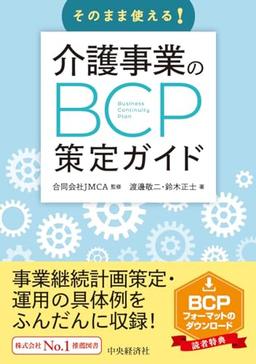
Keiji Watanabe and Masashi Suzuki’s そのまま使える!介護事業のBCP策定ガイド(外部サイト、新しいタブで開きます), under JMCA supervision (an explanatory translation: A Ready-to-Use Guide to Business Continuity Plans for Care Services), is related reading on maintaining care at sending facilities. The publisher-supplied public introduction(外部サイト、新しいタブで開きます) describes basic concepts, operation and review. Only that introduction was consulted; the full book has not been read. This 2024 book does not establish eligible dispatch costs, advance-payment or settlement conditions, completed reimbursement or staffing counts in this response.
Remaining Questions
Ask about initial funds, sending facilities and future preparation
Even when public eligibility is clear, who can help a sending facility bridge the interval before settlement? The relevant question includes payroll dates, travel payments and access to a claims contact. Otherwise participation may depend on the resources already available to a provider. A funding explanation needs to reach the practical conditions on which a dispatch decision rests. If an amount or eligible period remains under examination, can the explanation also identify who takes over the inquiry?
How can the original community's care be examined alongside work delivered in the affected area? Sending staff involves handovers and staffing arrangements at home. Considering both the departing worker and those remaining can reveal burdens that a deployment count misses. Support maintained through exceptional personal strain should not automatically be presented as evidence of a stable institutional system. Can reasons for difficulty participating be examined separately from personal willingness and the conditions a facility could arrange?
What can the next disaster response inherit? Recording this event's conditions is only part of the task. Future staff also need to understand who supported each expense, where coordination became difficult, and what remained at the end. Reimbursement and the handover of care may continue after deployment closes. Shared, traceable records can connect the announcement of public support to the later checks on payment and service continuity. When different staff inherit care and expense questions, can both sets of unfinished work remain visible?
References
令和8年熊本地震にかかる福祉避難所等に対する福祉関係職員等の派遣に係る費用の取扱いについて — MHLW and Children and Families Agency (2026). 31 July notice; all three pages; dated expense and settlement rules
災害時の福祉支援体制の整備について — MHLW (2025). Observed portions of pages 1-3, 7 and 15-16; advance coordination and mutual support
令和8年熊本地震の発生に伴う社会福祉施設等に対する介護職員等の派遣にかかる登録への協力について(障害事業者担当) — Kishiwada City (2026). 20 August announcement; substantive text; matching, public funding and records
2026年熊本地震 社会福祉施設等に対する介護職員等の応援派遣について — Japan National Council of Social Welfare (2026). 25 September update; substantive text; August-September counts and October survey underway
Statistics cited in this article
- 1Japan National Council of Social Welfare: 2026 Kumamoto institutional staff support(Updated 25 September 2026) Open source
Questions to Reflect On
- Who advances expenses and handles settlement?
- Can care continue in the sending community?
- Can registration, actual work and continuity be separated?
Key Terms in This Article
- Logic Model
- A framework that visually maps the causal relationships from inputs to activities, outputs, and outcomes of a program.
Related Content

When can municipal disaster staff rest? Health checks, handovers and support
About staff health, rest, handovers and receiving support, drawing on DOHAT activity in Kumamoto in 2026 and public continuity and reception handbooks

Phase-free Preparedness: How Can Everyday Public Facilities Stay Usable in Disasters?
National proposals from 2026 and Naruto City’s FY2024 to FY2030 plan on procurement, inspection, repair and access conditions

Elder-Care Disaster Supplies: Can Staff Use Them When Needed?
Distinguish reports from Kumamoto, financial survey figures and BCP guidance to examine usable supplies, renewal funding and changes after exercises.

Does Less Redelivery Mean Less Work for Logistics Staff?
Japan’s 2026 redelivery and general-freight releases, survey scopes, receipt choices and work transferred through delivery changes.
Get new columns by email
1-2 social structure analysis columns per week. Free to subscribe.
Join our activities
Sign up to receive the latest research and activity reports. Feel free to reach out about collaboration or project participation.
Support our research and activities
Support our research and publications with JPY5,000 per year. There is no automatic renewal.