
How can furusato gift origins be verified? Shipment records and responses to donors
About 2026 administrative findings and municipal inspections, checking gift origins and shipment records, and explanations and advice for donors
Read Japan’s administrative findings and municipal records on incorrectly labelled furusato gifts. Two diagrams examine ingredient and shipment evidence, inspection counting units, donor responses and continuing management costs.

TL;DR
- Distinguish breed, origin and identification evidence
- Separate return-gift entries from donor counts
- Examine inspection units, response responsibilities and sustained costs
This article provides general information, not legal or tax advice for an individual case. Consult a qualified lawyer or tax adviser for specific decisions.
The article image is an AI-generated fictional packing and records-checking workspace, not a photograph of an actual supplier or administrative investigation.
What Is Happening
Read administrative findings and the evidence behind labels
A donor selects a regional beef gift, then learns that its declared origin or cattle breed did not match the ingredients used. A municipality's name can help someone decide whom to trust, but the relationship between a product description and its underlying records still has to be checked. Once incorrect labelling is identified, can the organisations involved explain what reached whom and which responses remain unfinished?
The describes incorrect breed, origin and individual identification labelling on beef products processed by Mizusako Chikusan in Ibusuki. The ministry issued corrective instructions under food labelling legislation and recommendations under the law governing cattle identification information. These are administrative findings and measures; the release is not a criminal judgment.
The findings concern different questions. Some ingredients from other cattle breeds were sold under a Japanese Black beef description. Some ingredients from other prefectures were included in products labelled as originating in Kagoshima. Products containing ingredients with different individual identification numbers displayed only one number. Breed, origin and identification require different evidence. The reported weights also cover different periods and potentially overlapping products, so adding them into a supposed total affected weight would not be justified.
Match the product description to the records that support it.
A shipping address is not, by itself, proof of where food was produced: collection, storage and production can take place in different locations. Treating those locations as interchangeable could cast unwarranted suspicion on legitimate distribution. Conversely, the presence of an identification number does not establish that it matches all ingredients actually used. The relevant question is whether the description can be followed through ingredient, processing and shipment records.
This article examines administrative findings, municipal investigations, donor communications and a published inspection report. Those materials do not establish a national fraud rate or a causal fall in donations. The immediate task is to distinguish documented activities from questions that remain unanswered.
Background & Context
Examine recipient identification, inspection units and responsibilities
Identifying a labelling problem does not identify every donor
records suspension of new donations for the supplier's gifts and forthcoming deliveries after information arrived from the prefecture. The city began extracting potential recipients, then investigated an additional gift distributor following a separate report. Receiving the initial administrative findings and establishing the full range of gifts distributed through a municipality are different tasks.
In its April 20 entry, the city explains that some donors within the affected period were difficult to identify, and that it therefore organised the findings as return-gift entries. It reports 3,784 entries. This is a count of affected gift entries, not a count of people. Substituting one for the other would change the scope of the response without evidence.
The chronology also records emails and letters about investigation findings, guidance on alternatives for unshipped gifts and guidance concerning apology gifts. These entries show that activities took place. They do not establish that every recipient read the messages, completed a procedure or accepted the outcome. Where donations, products and shipment destinations cannot be connected, further investigation remains separate from correcting the label.
Ibusuki's chronology distinguishes the initial contact with donors who might have received an incorrectly labelled gift from later communications of findings to affected and unaffected recipients. An initial contact list therefore need not be identical to the population eventually confirmed as affected. If an investigation changes that scope, an explanation could state what the first notice meant and what was subsequently established. A contact list alone may not preserve those distinctions for a later staff member. Retaining the basis and timing of recipient selection is proposed here as a way to keep a preliminary possibility separate from a confirmed finding; it is not evidence that every municipal record already does so.
Inspections exist. What do their results count?
describes on-site investigations conducted between June 2025 and February 2026. They covered 145 suppliers, excluding new entrants during that fiscal year. This documented activity prevents a general claim that the system has no on-site inspections.
The summary reports no serious or malicious violations requiring contract termination or suspension of gifts in this investigation, while recording 155 items requiring improvement guidance. Multiple items for the same supplier are counted separately; items corrected after guidance during the investigation are also included. Dividing guidance items by suppliers cannot produce the share of suppliers committing fraud.
The absence of identified serious violations is a finding about these suppliers, this city and this investigation period. It does not establish the absence of wrongdoing nationwide or inspection of every individual product. The report also describes suppliers consulting specialist organisations, organising supporting documents and improving hygiene management. Investigation can examine legitimate practices as well as discover problems; those two roles should remain visible in the account of its results.
Supplier commitments and continuing municipal responsibilities
lists food label submission and on-site investigation at registration, and planned investigations and supplier self-checks after registration, among its preventive measures. Obtaining a pledge at registration and checking its implementation against records require different work.
The requires conformity with designation criteria throughout the designation period, rather than only when an application is submitted. It explains that a breach originating with a contractor does not, by that fact alone, create an exception to revocation of municipal designation. The notice also recognises particular circumstances, so it does not make revocation automatic after every labelling problem.
Several questions therefore need their own evidence: whether food is correctly labelled, whether a gift meets local-product criteria and how donors are treated. Cancelling a supplier's registration and revoking a municipality's designation are different decisions. An outsourcing contract does not erase these distinctions or make municipal management unnecessary.
Reading the Structure
Connect ingredient, shipment and donation records to responses
Can ingredient records be followed to delivered products?
Producers and donors hold different information. Donors cannot necessarily examine ingredient procurement and processing records themselves. This raises a practical question about which records a municipality or contractor checks and what it can explain. Municipal names and product photographs can convey credibility, but neither independently verifies an individual shipment.
Read supporting evidence
Record what was checked
- Breed and origin
- Ingredients and procurement evidence
- Identification
- Match numbers to ingredients used
- Processing
- Connect ingredients and products
- Changes
- When ingredients or labels changed
Read delivery coverage
Establish the response scope
- Gift
- Description when donations were sought
- Shipment
- Products and destination records
- Donation
- Match applications and gift entries
- Unknown
- Unidentified coverage and reasons
Not evidence of a nationwide implementation or inspection effect. Appropriate checks depend on the product and available records.
Consider a hypothetical product combining different ingredients. Ingredient records remain, but they cannot later be matched to particular shipments. This example explains a records problem; it does not reconstruct the actual supplier's processing operations. A response team would need to distinguish traceable shipments from shipments still unidentified. Filling gaps with guesses could result in incorrect communications to donors.
Receiving a certificate is therefore only part of the inquiry. Which product, period and ingredients does it cover? Was an earlier description retained after ingredients or processing changed? Paper records can still be useful when their scope and revision history are understandable. The medium alone does not settle whether the evidence answers the question.
Connect publication and communication to actual responses
Separate publication of findings from completion of donor responses.
Kagoshima's page distinguishes 2,142 gift entries and 1,272 donors. It describes guidance for apology-gift procedures and subsequent dispatch by the supplier. Responses to gifts already received are distinct from arrangements for alternatives to unshipped gifts. Calling both an announcement would obscure the work still required.
Staff establish the scope
Distinguish roles and coverage
- Coverage
- Received gifts or unshipped gifts
- Contact
- Delivery of emails or letters
- Responsibility
- Municipal and supplier contact points
- Discrepancy
- Donor accounts versus records
Explain to the donor
Include unresolved matters
- Choice
- Available responses and conditions
- Progress
- Receipt, procedure and dispatch
- Inquiry
- Contact for unidentified cases
- Updates
- Further investigation and guidance
An author's proposal, not a determination of individual refund or compensation rights or a uniform national procedure.
This diagram does not claim that sending more emails restores confidence. Unknown addresses, inaccessible instructions and discrepancies between records and a donor's account require different responses. If the municipal or supplier contact point changes, an existing inquiry should also be examined for continuity rather than treated as a new conversation with no history.
Common systems still require people to check their inputs
The September national notice describes a return-gift confirmation system under development toward operation from 2027, with testing before its formal release under consideration. The referenced document does not report a system already operating or an established reduction in false origin labelling. Even if submission procedures become shared, the relationship between submitted descriptions and actual ingredients or shipments still requires examination.
Provide staff for organising records and checking their contents.
Additional documents consume time for municipalities and suppliers alike. One proposal is to distinguish evidence already checked, unresolved matters, duplicate requests, documents requiring revision after product changes and matters best examined on site. This is a proposal for considering sustained inspection costs, not a demonstrated method for reducing workload.
In the governor's August 21 press conference, Kagoshima Prefecture also discusses municipal checks of the supply process and the limits of information obtained through administrative investigation compared with criminal investigation. Records should not be completed with assumptions about unexamined processes or facts.
Related Guide
Designing outcome indicators(このサイトの記事) distinguishes work undertaken from changes experienced by people. It provides related questions for separating inspection and notice counts from improvements in labelling and donor responses.
Related reading
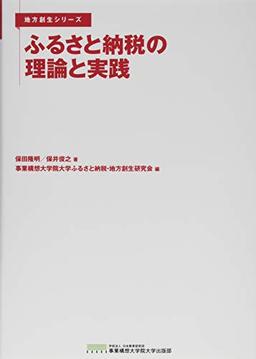
ふるさと納税の理論と実践(外部サイト、新しいタブで開きます) (保田隆明 and 保井俊之; edited by 事業構想大学院大学ふるさと納税・地方創生研究会, 2017; ISBN 9784883353873) is a Japanese-language edition. The authors’ university page lists chapters on the costs of gifts, local industry and external procurement. The book provides related reading on relationships between municipalities and suppliers. This recommendation is limited to the bibliography and public description/contents(外部サイト、新しいタブで開きます). The full book has not been read and does not substantiate current rules or case-specific facts in this article.
Links include affiliate advertising.
Remaining Questions
Ask about coverage, legitimate workloads and unresolved cases
When inspections expand, who reads the records legitimate suppliers already retain, and for what purpose? Repeated submissions do not necessarily reveal ingredient changes or shipment discrepancies. The distinction between documentary checks and on-site work needs to be explained alongside suppliers and periods outside the investigation. Before treating inspection counts as success, ask what was found, which corrections followed and whether improved practices continued. New obligations should be considered with the time needed to carry them out.
Connecting ingredient, shipment and donor records raises questions about necessary retention and permitted access. Can an unidentified donor make an inquiry without being blamed for missing institutional records? Changes in contact points should not require someone to repeat everything already explained. Unreached messages, disputed records and unsatisfactory responses remain relevant even after an administrative system marks a notice as sent. Staff need a way to receive those accounts and establish what is still unresolved.
A nationwide assessment would require consistent populations, products, periods and investigation coverage. A publicised case is not a national prevalence estimate; an investigation finding no serious violations is not an unconditional guarantee. Time and costs for records review, site visits and donor inquiries also belong in evaluation. Who examines those results and changes subsequent management? People who choose a gift because they trust a municipality's name should be able to understand the work behind that name and the response after a problem is identified.
References
Measures concerning incorrect cattle breed, origin and individual identification labelling at Mizusako Chikusan — Ministry of Agriculture, Forestry and Fisheries (2026). March 10 release, Japanese main text; attachments unread
Apology and report concerning incorrect labelling of furusato return gifts — Ibusuki City (2026). Japanese official chronology, updated June 4; entry definition and donor responses
Apology and report concerning incorrect labelling of furusato return gifts — Kagoshima City (2026). Japanese official page, updated September 1; gift entries, donors and registration management
Publication of FY2025 on-site investigation results for furusato gift suppliers — Miyakonojo City (2026). May 14 official listing in Japanese; coverage and investigation period
FY2025 on-site investigation results for furusato gift suppliers: summary — Miyakonojo City (2026). Single Japanese page; full text, table and counting footnote checked
Proper operation of the furusato donation system — Ministry of Internal Affairs and Communications (2026). September 25 notice, all seven Japanese pages; continuing conformity and system development
Governor's regular press conference of August 21, 2026 — Kagoshima Prefecture (2026). Japanese transcript: complete questions 3 and 7 concerning the supplier; other topics unread
Statistics cited in this article
- 1Ibusuki municipal response chronology on incorrectly labelled furusato gifts(April 20, 2026) Open source
- 2Miyakonojo FY2025 on-site inspection summary for furusato gift suppliers(Published 2026) Open source
- 3Kagoshima City report on incorrectly labelled furusato gifts(Published 2026) Open source
Questions to Reflect On
- How far can supporting evidence be followed through shipments?
- Does a reported count describe suppliers or improvement items?
- Who receives an inquiry when records cannot identify a donor?
Key Terms in This Article
- Information Asymmetry
- A state in which two parties to a transaction hold different amounts or qualities of information. The gap grows when the seller does this every day while the buyer does it a handful of times in a lifetime. The wider it is, the more the better-informed side can set price and terms in its favour. Fraud and inflated quotes work by exploiting that gap.
Related Content

Can Neighbouring Prefectures Sustain Emergency Care When a Doctor Helicopter Cannot Fly?
The September 2026 interim report on cross-border assistance, staffing, contracts and safety management

Who Decides on Reentry After a Shopping Centre Evacuation?
Aeon Mall Kumamoto’s August and September 2026 notices and preparedness guidance on requests, safety checks, communication and drills

When University Systems Stop, How Do Procedures Continue?
University notices and IPA materials inform an examination of alternative registration and financial support procedures, restoration decisions and continuity evaluation.

Who verifies the population counted in Japan's census?
Separate publication dates, evidence of usual residence, response-method rates and post-enumeration verification in Japan's 2025 Population Census.