
When University Systems Stop, How Do Procedures Continue?
University notices and IPA materials inform an examination of alternative registration and financial support procedures, restoration decisions and continuity evaluation.

TL;DR
- On October 8, the university announced in-person teaching from October 9 while investigation and restoration continued.
- Providing temporary functions and enabling students to complete registration or support applications require separate evaluation.
- The October 21 follow-up distinguishes reported compromise and storage leakage from continuing investigations; procedural outcomes require separate evaluation.
This AI-generated conceptual image depicts a fictional workspace, not an actual census operation, university, person or private record.
This article provides general information from public documents, not individual legal or privacy advice. Check specific decisions with the responsible authority or a qualified professional.
What Is Happening
Separate the outage, resumption notices, reported causes and completed procedures.
On October 8, 2026, Osaka Metropolitan University published its fourth notice about an information infrastructure outage. It announced that in-person classes across all campuses would resume on October 9 while investigation and restoration work continued. It also described temporary teaching services, including Moodle for materials and assignments. An announcement about restarting classes should be distinguished from full restoration of the original infrastructure.
The outage began in the early hours of October 2. The university's public information page, explicitly describing the position at 3 p.m. on October 8, listed the cause and any personal information leakage as under investigation, with no restoration estimate. That describes the October 8 position. In its October 21 follow-up(外部サイト、新しいタブで開きます), the university reported receiving NEC’s account that a cyberattack against a subcontractor and unauthorized access using a legitimate account caused the outage. It also reported confirmed leakage of university-related information held in NEC’s storage. Whether information leaked from the university’s virtualization infrastructure remained under separate investigation. These scopes should not be conflated, and the announcement does not establish ransomware as the attack method. University statement of the facts(外部サイト、新しいタブで開きます)
Classes were not the only activities affected. The October 2 procedural notices described postponement of course registration adjustments and a process involving first-come applications, as well as the use of personal email addresses for financial support applications. A support scheme can remain in place while the communication and submission processes needed to use it become unavailable. University outage and procedural notices(外部サイト、新しいタブで開きます)
These documents allow examination of an operational question: which procedures should a university continue during an infrastructure outage, which should it postpone, and what information should it provide to students? The number of unavailable functions alone does not capture the consequences. Delays to assignments and delays to tuition support applications involve different deadlines and responsible departments.
Creating temporary services does not, by itself, demonstrate that disadvantage was prevented. Students must receive the relevant notice, be able to use the service, and confirm that their submission was accepted. Continuity at a digitally administered university therefore needs to be evaluated through completed educational procedures as well as running servers.
Available functions
- Notice
- Function and stated date
- Limit
- Not proof each student succeeded
Completed procedures
- Check
- Notice reach and acceptance
- Scope
- Population and period by procedure
Checks organized from this article; not a completed university evaluation or measured completion rate.
Background & Context
Read the scope of IPA guidance alongside operational continuity.
Japan's Information-technology Promotion Agency (IPA) published a collection of ransomware lessons on September 8, 2026. The current introduction was updated on October 16, and the retrieved document is version 1.2. Its introduction describes how investigation, restoration, business continuity and public communication require decisions by operational departments and management alongside IT teams. The material predates the university outage; it is not a new announcement made on October 12.
The collection is not a statistical survey of all incidents in Japan. Its limitations section says the lessons reflect interviews and IPA's selection of findings, and do not provide a comprehensive methodology. They cannot establish either a demonstrated result applying to universities generally or inadequate precautions at this particular institution. Collection, section on limitations(外部サイト、新しいタブで開きます)
Nevertheless, considering technical response and operational continuity together offers a useful way to examine university procedures. IT staff can investigate system conditions, but cannot independently determine how application order should be treated, whether a deadline can change, or how teaching plans should be adjusted. Procedure owners and university decision makers need to share the conditions being changed and the reasons for changing them. This is the article's operational proposal.
Backups present a separate issue. An IPA alert published on August 20, 2020, explained that network-connected backup servers could also be affected by attacks. It also described extortion involving threatened disclosure of stolen information alongside encryption. These are general risks documented in an older source, not evidence that this university's backups were damaged or its information stolen. IPA's 2020 alert(外部サイト、新しいタブで開きます)
The distinction matters because restoring stored data and determining whether information was taken are separate tasks. Similarly, recovering student records would not establish that they match applications accepted during an outage. Where several submission methods are used, duplicate submissions and accepted applications missing from the final record become matters to check. This describes considerations for designing alternative intake, rather than events established at the university.
Universities handle information and operations with different purposes, including teaching materials, grades and student support. A plan that gives every function the same restoration deadline does little to explain which procedures are needed first. Linking technical dependencies to the deadlines facing users would allow more concrete discussion of priorities. That discussion should distinguish procedures that can be adjusted by postponement from those needing an alternative communication channel sooner.
Technical checks
- State
- Available functions and dependencies
- Restoration
- Scope of restored records
Operational checks
- Intake
- Deadlines, order and identity checks
- Reconcile
- Alternative intake and restored records
Checks organized from this article; not a completed university evaluation or measured completion rate.
Reading the Structure
Examine ordering, identity checks, record reconciliation and procedural populations.
The evaluation proposed here covers both restored functions and procedures that users can complete. A temporary learning management system may support assignment submission without revealing whether students knew the deadline or could complete the authentication needed to use it. Specifying how instructors handle exceptions and communicate decisions would help connect additional functionality to continued learning.
Allowing personal email for financial support applications offers a way to maintain communication. It also requires decisions about identity checks, changes of notification address and storage of consultation information. The arrangement cannot be assessed as categorically safe or unsafe from these notices. The first questions are whether the university explains what information is needed and how it is handled, and whether students can confirm acceptance and requests for missing documents.
For procedures where application order affects the result, setting a replacement date may leave further issues unresolved. Restarting a first-come process raises questions about existing submissions, the notice period before reopening and provision for people unable to connect. Moving to another method, such as a lottery, would also require an explanation of changed conditions. These are options for evaluating rules after postponement, not descriptions of the method chosen in this case.
Records from alternative intake also matter when the original system returns. Submission time, applicant, accepted content, revision history and final record destination need to be reconcilable. Otherwise, a student's proof of acceptance could differ from the university's record. A target concerned only with reducing inquiries could miss this problem: fewer inquiries might reflect resolution, but might also reflect difficulty finding a contact or abandonment of an attempt.
Public information serves different purposes. Publishing detailed entry routes or device configurations is a different decision from telling students which services work, which deadlines have changed and when the next update is expected. Waiting for a completed cause investigation before offering procedural guidance would prolong uncertainty about what students can do. Conversely, presenting an unverified cause or restoration date as settled could force further changes to their plans. It is useful to state both the confirmed scope and the unresolved items.
Document dates and service use also need separate treatment. A notice describing functions as available on October 8 does not establish successful student use on October 12. The university's official entrance page directs visitors to its temporary site, but reaching a public page does not establish access to authenticated services or completion of an application. Official link to the temporary site(外部サイト、新しいタブで開きます) Making those distinctions explicit helps readers identify what remains to be checked for their own procedure.
Exercises could include these operational decisions. On April 15, 2025, IPA published tabletop exercise materials for discussing responses to a ransomware scenario. They target general businesses and medical institutions; they do not prescribe university procedures. IPA tabletop exercise materials(外部サイト、新しいタブで開きます) An adaptation for universities could assume simultaneous loss of email and the portal near registration and support deadlines, then examine the decisions required of academic administration, student support, IT staff and university leadership.
Evaluation during an exercise need not stop at how quickly a notice is drafted. It could examine whether guidance reaches students unfamiliar with contact arrangements, whether alternative submissions can be reconciled with restored records, and who decides deadline changes. Student representatives and people needing support could help identify conditions that seem obvious to administrators but remain unclear to users. A successful exercise would still not guarantee the same outcome during an actual outage.
The relevant denominator also depends on the procedure. People seeking course registration changes and people planning financial support applications are not interchangeable groups. A completion rate using all enrolled students could obscure effects on a particular group of applicants. Where the eligible or intended applicant population is unknown, reporting should explain what can be learned from recorded consultations or accepted applications without estimating effects among people not reached. This article has obtained no statistics establishing such populations or outcomes.
Related Reading
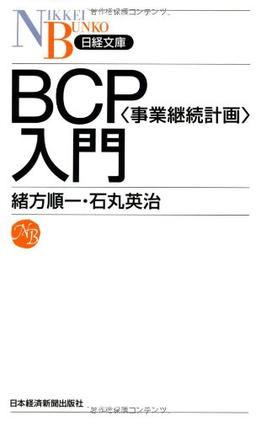
BCP〈事業継続計画〉入門(外部サイト、新しいタブで開きます), by 緒方順一 and 石丸英治 (Nihon Keizai Shimbun Shuppansha, 2012), is related reading on planning and operating the continuation of necessary work. The publisher’s public introduction(外部サイト、新しいタブで開きます) covers risk assumptions, plan development and operation, and participation across an organisation. The full book has not been read; this description is limited to public bibliography and introductory information. It does not establish the cause or recovery status of the university’s outage, or whether students completed their procedures.
This section contains Amazon Associate links.
Guide to reading statistics and public data(このサイトの記事)
Remaining Questions
Compare alternatives and proposed checks by university teams and students.
The October 2–8 documents establish procedural changes and an announcement of teaching resumption using temporary functions. The October 21 follow-up adds reports about compromise and leakage, rather than measured procedural-completion outcomes. They do not show whether students were unable to complete applications, or whether deadline and ordering adjustments prevented disadvantage. Alongside investigations of cause and information leakage, educational and support continuity warrants evaluation with an explicit period and population.
Options include postponing deadlines, offering in-person or telephone consultation, accepting submissions through another contact channel, and using a separate temporary system. Postponement affects later schedules; in-person intake requires travel and staffing; temporary systems add authentication and reconciliation work. A combination could be chosen according to deadlines, identity verification needs and students' access conditions, with those conditions made public.
Academic administration and student support teams could identify affected populations and submission outcomes, while IT staff reconcile these with the functions and periods available. University decision makers could explain deadline changes and alternatives, and student representatives examine notice reach and practical difficulties. Publishing non-identifying aggregates and a way to revisit disputed or pending applications could inform future continuity plans. This is a proposed evaluation, not an investigation already completed.
References
- Osaka Metropolitan University, fourth notice (October 8, 2026)(外部サイト、新しいタブで開きます)
- University public facts page (position at 3 p.m., October 8)(外部サイト、新しいタブで開きます)
- University outage and procedural notices (October 2 entries)(外部サイト、新しいタブで開きます)
- IPA lessons introduction (published September 8; updated October 16, 2026)(外部サイト、新しいタブで開きます)
- IPA lessons collection, version 1.2 (limitations: printed page 5)(外部サイト、新しいタブで開きます)
- IPA ransomware and business continuity alert (August 20, 2020)(外部サイト、新しいタブで開きます)
- University OMU entrance page(外部サイト、新しいタブで開きます)
- IPA tabletop exercises (published April 15, 2025)(外部サイト、新しいタブで開きます)
Fourth notice on the infrastructure outage: in-person teaching resumption — Osaka Metropolitan University (2026). Osaka Metropolitan University
Lessons learned from ransomware incidents — Information-technology Promotion Agency (2026). Information-technology Promotion Agency
Security incident tabletop exercise materials — Information-technology Promotion Agency (2025). Information-technology Promotion Agency
Questions to Reflect On
- Are available functions separated from completed procedures?
- Who reconciles alternative intake with restored records?
- How is the population for each procedure defined?
Key Terms in This Article
- Cloud Computing
- A model for on-demand network access to shared computing resources such as servers and storage. Using a cloud service alone does not determine who may view information or the conditions for providing it to third parties.
Related Content

Who verifies the population counted in Japan's census?
Separate publication dates, evidence of usual residence, response-method rates and post-enumeration verification in Japan's 2025 Population Census.

After Fill Removal, How Can the Public Verify Cost Recovery?
Historical records from Atami distinguish soil removal from recovery of its cost. Earlier action under a prefectural ordinance must be distinguished from the national law introduced later. The article proposes linking work, order and accounting records for matching cases and reporting dates.
What Should a Garbage Bag Charge Pay For? Lessons from Nanae
Public documents from Nanae illuminate the difference between bag prices and treatment charges, and the relationship between waste reduction, funding and service continuity.

Digital Society Vision Council, 12th Meeting (May 22, 2026) — Briefing on the Next Priority Plan and ISVD's Reading
A briefing on the 12th meeting of Japan's Digital Society Vision Council (Digital Agency, held May 22, 2026), with materials submitted by two local government heads (Miyakonojo City, Yamaguchi Prefecture) and one industry leader (Rakuten). ISVD reads the agenda against its own scope of social vision design.
Get new columns by email
1-2 social structure analysis columns per week. Free to subscribe.
Join ISVD's activities?
Sign up to receive the latest research and activity reports. Feel free to reach out about collaboration or project participation.
Support ISVD’s research and activities
Support ISVD’s research and publications with JPY5,000 per year. There is no automatic renewal.