
Japan’s Customer Harassment and Job-Seeker Sexual Harassment: Who Takes Reports?
Employer duties from October 1, 2026, accommodation requests, and reporting routes for job seekers
Japan made customer-harassment and job-seeker sexual-harassment prevention measures employer duties on October 1, 2026. The article reads the boundary with complaints and accommodation requests and the reporting routes open to job seekers, separating duties, recommended practices and proposals.
TL;DR
- From October 1, 2026, prevention measures for customer harassment and for sexual harassment of job seekers became employer duties.
- Customer harassment requires all three conditions; complaints within what is socially acceptable and accommodation requests from people with disabilities are not harassment in themselves.
- For job seekers, rules on job-hunting activities, a consultation contact point and privacy protection are duties, while a contact person outside HR and cooperation with schools are options or recommended practices.
The image associated with this article is an AI-generated thematic illustration, not a photograph of an actual site or person.
This article provides information based on public sources. It is not legal advice on any individual case. An individual case can be taken to the prefectural labour bureau for consultation; where a legal judgment is needed, consult a lawyer or other specialist.
What Is Happening
From October 1, 2026, prevention measures for customer harassment and for sexual harassment of job seekers became employer duties.
Since October 1, 2026, measures against harassment by customers and others ("customer harassment") and against sexual harassment of job seekers and others, including interns ("job-seeker harassment"), have been duties for employers in Japan. According to the , the amending Act (Act No. 63 of 2025, promulgated on June 11, 2025) has been in force or applied since that date.
The customer-harassment measures are set out in Article 33 of the Act on the Comprehensive Promotion of Labour Policies, and the job-seeker measures in Article 13 of the Equal Employment Opportunity Act. Guidelines issued as Public Notices No. 51 and No. 52 of 2026 specify what employers must do. The fiscal 2023 survey report records that, as of March 2024, handling of severe nuisance behavior by customers and others and of sexual harassment of job seekers was positioned in related guidelines as a "recommended practice".
The circular states that the ten customer-harassment measures must be taken regardless of a company's size or workplace conditions. Counting the items in the job-seeker guideline gives eleven measures. The full lists are in Section 4 of the customer-harassment guideline(外部サイト、新しいタブで開きます) and the job-seeker guideline(外部サイト、新しいタブで開きます).
In a fiscal 2023 survey commissioned by the Ministry of Health, Labour and Welfare, 10.8% of 8,000 workers said they had experienced "severe nuisance behavior by customers and others" in the previous three years. In a survey of 1,000 people who graduated in fiscal years 2020 to 2022, reported in the same survey project, 30.1% of the 758 who had joined an internship said they had experienced sexual harassment in job hunting (the survey's term). These are different surveys with different respondents and question wording, so this article does not compare them. Both were conducted before the legal definitions that took effect in 2026, and the first one's wording is not the same as the law's three conditions.
This article is limited to the boundary between complaints, accommodation requests and customer harassment, and to rules on job-hunting activities and reporting routes; it is not a checklist of all required measures. Workers' compensation for mental disorders is covered in a separate article(このサイトの記事).
Background & Context
All three conditions are required. Reasonable complaints and accommodation requests are not harassment in themselves.
Three conditions, all required
The defines customer harassment as conduct that meets three elements: it is conduct by customers and others, it exceeds what is socially acceptable, and it harms workers' working environment. If any element is missing, it is not customer harassment under the guideline.
Not every complaint is customer harassment. The guideline calls a request made within what is objectively socially acceptable a "legitimate request" and says it is not customer harassment. "Customers and others" is broad: it includes people who have not yet become customers, family members of facility users and people living near a facility. Conduct by telephone or online, including social media, is covered, and a customer's home can be a workplace.
The effect on the working environment is judged by how an average worker would feel. Frequency and persistence are taken into account, but conduct that inflicts severe physical or mental distress can qualify even if it happens once. When judging whether conduct exceeds social norms, the guideline also requires attention to cases where problems in the employer's or worker's handling caused or contributed to the conduct. Its examples are not an exhaustive list. The circular gives, as an example, a request that begins legitimately but grows as workers respond until it becomes very hard to meet. This article reads that example as showing that the object of judgment can extend beyond a single remark to the course of an exchange.
Customer harassment under the guideline: all three conditions must be met
- 1. Conduct by customers and others
- 2. Beyond what is socially acceptable
- 3. The worker's working environment is harmed
What the guideline says is not customer harassment
Separate legal duty: Act on the Elimination of Discrimination against Persons with Disabilities, Article 8(2)
- The effect on the working environment is judged by how an average worker would feel; conduct inflicting severe physical or mental distress can qualify even once
- Consider whether an employer's or worker's inappropriate handling caused or contributed to the conduct
- The guideline's examples are not an exhaustive list
This figure organizes points to consider. It does not decide automatically whether something qualifies; each case is handled on its own facts, including through constructive dialogue with the customer.
An accommodation request is not harassment in itself
When a person with a disability asks not to be subjected to the unfair discriminatory treatment prohibited by the Act on the Elimination of Discrimination against Persons with Disabilities, or expresses a need to have social barriers (things, systems, practices, attitudes and the like that hinder the lives of people with disabilities) removed, that is not customer harassment in itself. The guideline says so. The circular cites paragraphs 1 and 2 of Article 8 of that Act separately: paragraph 1 prohibits unfair discriminatory treatment, and paragraph 2 requires necessary and reasonable accommodation (changes or adjustments to remove social barriers according to individual circumstances) where the burden is not excessive.
For employers' measures, the guideline lists points to keep in mind: consumers' rights, the Act's prohibition of unfair discriminatory treatment and its duty to provide reasonable accommodation, and the government's basic policy and ministry guidelines. It asks for responses suited to each case, including constructive dialogue with customers. Training and similar activities to deepen understanding of consumer psychology and disability characteristics are recommended practices. The circular includes dementia as an example.
Consider a hypothetical example, not an actual case. A user with a hearing impairment asks to be served by e-mail rather than telephone. This article reads the request itself as not belonging in a customer-harassment record. Whether e-mail service would impose an excessive burden depends on staffing and the nature of the work. If conduct beyond social norms occurs later in the exchange, it is judged against the three conditions separately from the accommodation request.
Job-seeker harassment is not limited to the interview room
The covers job-hunting activities such as interviews, information sessions, visits to employees, internships and teaching or nursing practicums. Online exchanges, including on social media, are covered, and the location need not be a regular workplace. Conduct directed at someone of the same sex is included, and the guideline applies regardless of the victim's sexual orientation or gender identity (a person's sense of their gender). The says that restaurants and social gatherings at alumni visits can also count as job-hunting activities.
Reading the Structure
Judgment stays with the employer, and job-seeker reporting is designed by separating duties, options and this article's proposals.
Judgment stays with the employer
Prefectural labour bureaus do not decide whether an individual case amounts to harassment (Q&A). In customer-harassment disputes between a worker and an employer, a bureau director's assistance (advice, guidance and recommendations) carries no obligation to comply, and only workers and employers can request it. Conciliation by the dispute coordination commission also does not decide whether conduct violates the law; it seeks resolution through the parties' compromise.
The contact point that handles consultations from workers, including their complaints, may be outsourced. It must also respond when it is unclear whether something qualifies, and a contact point that exists only in form is not enough. Employers must set in advance a policy and a system for especially malicious cases.
Section 4(3)(iii) of the customer-harassment guideline also says that recording a case, sharing it with relevant departments and using it to prevent recurrence are conceivable where necessary. Sharing should respect the handling of personal information. How to divide the record is this article's proposal. Recording complaints, accommodation requests and suspected customer harassment without separate intake categories can mix accommodation requests into complaint counts, making them harder to distinguish during later aggregation. Separate intake categories preserve the distinction but add decisions for the contact point. Separate fields for the content of the conduct, its manner and its effect on the working environment would preserve which of the three conditions a case did not meet. Because accommodation requests may include information about a disability, it would also help to limit the recorded items, and who can see the record, to what is necessary.
Protecting the privacy of those who consulted and others and informing workers, and stating and publicizing that workers will not be treated disadvantageously for consulting or otherwise cooperating, are duties under Section 4(5) of the customer-harassment guideline. The circular states that the information of those who consulted does not include customers' information, but that customers' personal information must still be handled properly under the Act on the Protection of Personal Information and related guidelines.
Rules on job-hunting activities and reporting routes for job seekers
The duty-bound measures for job-seeker harassment include clarifying rules on job-hunting activities in advance and telling employees and job seekers about them. Designating interview times and places, the arrangements for conducting interviews and the social-media channels used are examples of such rules given in the guideline; each one is not a separate duty. Setting up a consultation contact point in advance and telling job seekers about it is also a duty. The guideline gives examples of how to set one up, such as designating staff, creating a system or outsourcing to an outside body, and adds that, because job seekers may hesitate to consult HR staff, designating someone other than HR staff as the person in charge is conceivable. That is an option described as "conceivable", not the wording of a duty. Taking measures to protect the privacy of the person who consulted, the person whose conduct is reported and others, and telling employees and job seekers about them, is also a duty (Section 4(4)(i) of the job-seeker guideline).
Cooperating when an educational institution's contact point passes on information about a consultation to the company is described as a recommended practice. A job seeker can consult the company's contact point or the employment environment and equal employment department (office) of the prefectural labour bureau, and a student can also use the contact point of their own school, such as its career center (). Article 13, paragraph 2, of the Equal Employment Opportunity Act prohibits unfavorable treatment of workers because they stated facts while cooperating with the employer's response to a job seeker's consultation. A job seeker who sought consultation is not covered by this provision. Section 4(4)(ii) of the job-seeker guideline also makes it a duty to state, and tell workers, that workers will not be treated disadvantageously for cooperating with fact-finding or for consulting the labour bureau, applying for conciliation and the like.
Consider a company whose president handles both recruitment consultations and selection. It is hard to place the contact point outside HR. As one way to protect privacy, this article suggests keeping reports apart from selection materials, with access limited to designated people. Checking company records for changes in the person's treatment in selection before and after reporting is also possible, but neither has been tested for effect. Conduct by the president personally falls outside the duty to take preventive measures; making an effort to respond appropriately is a recommended practice (Section 2(4) of the job-seeker guideline). However, the employer and its officers must themselves endeavor to take care in their conduct toward job seekers (Section 3(1)).
Among the 37 who did nothing during an internship and the 29 who did nothing in job hunting outside internships, the most common reason for doing nothing in both groups was "I thought nothing I did would resolve it." The latter group is under 30 people, so it is only a reference value. The survey asked only about reasons and does not show their relationship to how a contact point was built. Whether to decide, after a contact point is set up, a procedure for telling the person how the report was handled is an operational question.
- Duty
- Recommended practice
- Option or example
- This article's proposal
- Route open to job seekers
1. Before contact: set rules and tell people
2. Receiving a report: contact point and outside routes
3. After a report: privacy, unfavorable treatment and records
"This article's proposal" marks operational points raised by this article; their effects have not been tested. The figure carries no numbers.
What remains outside the duties
Among the 228 interns who experienced job-hunting sexual harassment during internships, asked from whom they received it (multiple answers allowed), 26.3% chose customers and others, including patients and their families. That option is the survey's classification, and it has not been confirmed to cover the same range as "customers and others" in the guideline. The duty for job-seeker harassment covers sexual conduct by the employees the employer hires. Responses to officers and to customers and business partners are treated as recommended practices. Power-harassment-like conduct toward job seekers is not covered by the same duty either; showing a matching policy and making an effort to respond appropriately to consultations are recommended practices (Section 6 of the job-seeker guideline).
Customer harassment has the same structure. Responses to conduct by customers and others toward people who are not employed by the employer, such as freelancers who are sole proprietors, remain recommended practices. Cooperating when another employer takes measures is a duty to endeavor (an obligation to make an effort, weaker than the duties above), and indicating a policy that one's own employees must not harass other companies' employees is a recommended practice.
Remaining Questions
Whether people can now seek help is yet to be confirmed; decide how contacts are staffed and what to review after a consultation.
Even if the new duties bring policies and contacts into place, whether workers and job seekers can actually request help remains to be established. The number of organizations publishing measures does not establish reduced danger or appropriate handling of legitimate complaints. Report counts are read as an indicator in which harm and access to consultation may change simultaneously.
This article views handover time and staffing as needs when responsibilities are shared or a contact is appointed outside recruitment. Concentrating responsibility in one person may speed up contact, but routes for cases that are hard to report to that person also need consideration. Rather than imposing a large organization's arrangement on a small workplace, this article would compare options including outside consultation and how the process is explained to the person concerned.
After publishing a policy, employers and frontline staff need to review whether people found the contact, received an explanation of the response, and obtained both safety measures and factual investigation. They should also check whether complaints were investigated and accommodation requests were confused with nuisance conduct. Identifying which parts of the procedure were unusable, without spreading the reporter's information, gives material for deciding what to fix next. When aggregating records by department, it would also be worth checking whether an individual could be identified from a small number of cases.
References
Related guide: statistical literacy(このサイトの記事).
Guidelines on Employment Management Measures Employers Should Take to Address Workplace Problems Caused by Conduct of Customers and Others (MHLW Public Notice No. 51 of 2026; author translation) — Ministry of Health, Labour and Welfare (2026). Public Notice
Guidelines on Employment Management Measures Employers Should Take to Address Problems Caused by Sexual Conduct During Job-Hunting and Similar Activities (MHLW Public Notice No. 52 of 2026; author translation) — Ministry of Health, Labour and Welfare (2026). Public Notice
Operation of Chapter 10 and Related Provisions of the Act on the Comprehensive Promotion of Labour Policies and the Stabilization of Employment and Enrichment of Working Lives of Workers (Koyo-kin No. 0424-2; author translation) — Director-General, Employment Environment and Equal Employment Bureau, Ministry of Health, Labour and Welfare (author translation) (2026). Circular (April 24, 2026; applies from October 1, 2026)
Interpretative Matters Regarding Provisions on Harassment Prevention Duties and Related Matters (author translation) — Ministry of Health, Labour and Welfare (2026). Q&A (issued April 24, 2026; revised September 30, 2026)
Protecting People Engaged in Job-Hunting and Similar Activities: New Rules on Sexual Harassment Measures for Job Seekers and Others (author translation) — Ministry of Health, Labour and Welfare (2026). Ministry web magazine (September 1, 2026)
FY2023 Ministry-Commissioned Survey Report on Harassment in the Workplace (Summary; author translation) — PwC Consulting LLC (2024). Commissioned by the ministry (March 2024)
FY2023 Ministry-Commissioned Survey Report on Harassment in the Workplace (Full report; author translation) — PwC Consulting LLC (2024). Commissioned by the ministry
Act on Ensuring Equal Opportunities and Treatment of Men and Women in Employment (revision in force from October 1, 2026; author translation) (2026). e-Gov Laws
Act on Promotion of the Elimination of Discrimination on the Grounds of Disability (author translation) (2013). e-Gov Laws
Reference Books
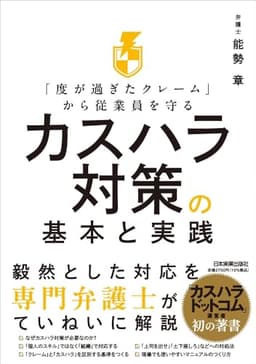
Related reading: 「度が過ぎたクレーム」から従業員を守る カスハラ対策の基本と実践 (Protecting Employees from Excessive Complaints: Basics and Practice of Customer Harassment Measures; title translated by this article)(外部サイト、新しいタブで開きます) / Publisher’s bibliographic record(外部サイト、新しいタブで開きます) / ISBN 9784534062253
Statistics cited in this article
- 1MHLW Survey on Harassment in the Workplace (FY2023), summary report(FY2023) Open source
- 2MHLW Survey on Harassment in the Workplace (FY2023), full report(FY2023) Open source
Questions to Reflect On
- Does your complaint handling record complaints, accommodation requests and suspected customer harassment in the same form at the same contact point?
- Who can see what a job seeker reported, and how is it kept apart from selection materials?
Related Content

Japan's Replacement for the Technical Intern System Starts in April 2027 — In 8 of 17 Sectors, Changing Employer by Choice Takes Two Years
The amending act dissolving Japan's Technical Intern Training programme and creating the Employment for Skill Development system was promulgated on 21 June 2024 and takes effect on 1 April 2027. How long before a worker may change employer of their own accord is set sector by sector: two years in 8 of the 17 sectors, one year in 9. Beyond that come a basic skills test, a Japanese examination at A2.1, staying within the same work category, and requirements on the receiving employer.

89.1% of Japan's 661,000 Local Government Fiscal-Year Appointees Work Part-Time and 75.8% Are Women — Outside the 19-Hour-25-Minute Line Sit Another 452,697
A survey by Japan's internal affairs ministry counted 742,424 temporary and part-time local government staff, of whom 661,368 are fiscal-year appointees. Of those, 10.9% work full-time and 89.1% part-time, and 75.8% are women. The survey counts only staff appointed for six months or more and working at least 19 hours 25 minutes a week; outside that line sit a further 452,697. This piece reads what the line makes invisible.

Time Asymmetry in Pediatric Care: How Japan's 71.9% Dual-Income Reality Collides with Medical Access
71.9% of Japan's married households are now dual-income: 13 million households strong. Maternal employment continuation after the first child has climbed to 69.5%. Yet pediatric care hours remain anchored to weekday daytime. Tottori at 187.3 vs. Chiba at 101.5: a 1.85x gap. Sick-child daycare is absent in 39.6% of municipalities. The 2024 physician work-style reform adds new tension. This article reads "time", the invisible third variable of medical access, through primary data.

The Gender Wage Gap in International Comparison – Three Institutional Designs and the 134-Country Child Penalty Atlas
Japan's gender wage gap is roughly 1.9× the OECD average, ranking second worst among member countries. But the central question of this article is not how far behind Japan stands. Using OECD, ILO, and WEF comparative data alongside Kleven et al.'s (2024) Child Penalty Atlas covering 134 countries, we read the differences in how countries chose to answer the same problem – mandatory certification, index disclosure, voluntary disclosure – and structure what institutional design can and cannot change.
Previous
Recovery subsidies need an accessible booking entrance
Next
Children's social media: what changes after an age check? Features and correction
Get new columns by email
1-2 social structure analysis columns per week. Free to subscribe.
Join ISVD's activities?
Sign up to receive the latest research and activity reports. Feel free to reach out about collaboration or project participation.
Support ISVD’s research and activities
Support ISVD’s research and publications with JPY5,000 per year. There is no automatic renewal.