
The Structure of Political Distrust — What Voter Turnout and Trust Data Reveal About Japan's Democratic Crisis
Voter turnout in Japan's House of Representatives elections has remained in the 50% range for five consecutive cycles since 2012, while trust in government stands at approximately 26% — among the lowest in the OECD. A Cabinet Office survey finds 73.6% of citizens feel policies do not reflect public opinion. This article overlays three indicators — turnout, trust, and political efficacy — to decode the structure of political distrust.
TL;DR
- Voter turnout peaked at 69.28% in 2009 and has since stagnated, reaching 53.85% in 2024 — the third-lowest in postwar history
- The OECD Trust Survey 2024 places Japan's government trust at approximately 26%, well below the OECD average of 39%
- 73.6% of respondents in a Cabinet Office survey say policies do not reflect public opinion, pointing to eroded political efficacy as a structural driver of voter abstention
What Is Happening
Long-term decline in voter turnout and internationally low levels of political trust.
In October 2024, the general election for the House of Representatives recorded a voter turnout of 53.85% — the third-lowest in postwar history. Nearly half of all eligible voters stayed home.
This figure is no anomaly. Since 2012, turnout in House elections has remained in the 50% range for five consecutive cycles. The last time it surpassed 60% was in 2009, when a change of government brought turnout to 69.28%. The subsequent decline is structural, not circumstantial.
* Turnout for single-seat districts since 1996. Since the 2009 change-of-government election, turnout has remained in the 50% range for five consecutive elections.
The generational breakdown makes the structure even clearer. In the 2024 election, turnout among voters in their 20s was just 34.62%. Teenagers recorded 39.43%, and those in their 30s reached 45.66% — all well below the national average. In contrast, voters over 60 maintained turnout rates of approximately 70%. The generational gap in voter turnout — with younger voters participating at roughly half the rate of older voters — has become entrenched.
The decline in turnout runs parallel to a decline in political trust. According to the Trust Survey 2024, conducted in late 2023 across 30 countries with approximately 60,000 respondents, the share of Japanese citizens expressing high or moderate trust in national government was approximately 26%. This falls far below the OECD average of 39% and places Japan among the lowest-ranked countries surveyed.
* Percentage responding with high or moderately high trust in national government. Survey conducted in late 2023 across 30 countries with ~60,000 respondents.
Background & Context
Money-in-politics problems, absence of policy alternatives, and the entrenchment of generational disparities.
Money in Politics: The Erosion of Trust
Any analysis of political distrust in Japan must begin with the persistent problem of money in politics.
A public opinion survey conducted between October and November 2024 found that 61.7% of respondents viewed money-in-politics issues as "largely unresolved and likely to remain a major problem." Furthermore, 80.8% called for revision or abolition of the political party subsidy system.
Political funding scandals recur, each time provoking calls for reform that fail to produce fundamental institutional change. This cycle erodes what political scientists call — the belief that one's political participation can make a difference.
The Absence of Choices: The Expanding "No Party" Bloc
A Cabinet Office survey on social awareness conducted in October 2024 found that 73.6% of respondents said national policies "do not reflect" public opinion ("not much" at 52.1% plus "hardly at all" at 21.5%). Only 24.1% felt their views were reflected.
The Genron NPO survey further revealed that 74.5% of respondents said they "cannot expect current political parties or politicians to solve Japan's challenges," while 52.3% identified as supporting no particular party. Among those under 20, this figure reached 69.6%; among those in their 20s, 70.9%.
This is not mere apathy. There is nowhere to cast one's vote. A May 2024 proposal by (Japan Association of Corporate Executives) similarly noted that a dearth of policy alternatives accelerates voters' disengagement from politics.
The Entrenchment of Generational Disparity
Low voter turnout among young people is often attributed to "political apathy." The reality is more complex.
Research by (Nippon Institute for Research Advancement) shows that the proportion of respondents trusting politicians stands at only about 20% — a level of distrust shared across all age groups. What distinguishes younger voters is not distrust alone but the additional absence of political efficacy: the feeling that their single vote could change anything.
The gap between 18- and 19-year-old voters is instructive. In the 2024 election, 18-year-olds voted at 49.21% while 19-year-olds managed only 36.67% — a gap of over 12 percentage points. The difference between high school seniors who have just received civic education and those who have since left that environment speaks volumes about the impact of structured citizenship education.
Reading the Structure
The loss of political efficacy creates a self-reinforcing cycle of voter abstention and deepening political distrust.
Political Distrust as a Self-Reinforcing Cycle
Overlaying the data reveals a clear structural pattern:
- Accumulation of distrust: Recurring money-in-politics scandals, lack of policy alternatives, perception that public opinion goes unheard
- Erosion of political efficacy: "Nothing changes no matter what we say" and "It doesn't matter who we vote for"
- Declining voter turnout: Especially pronounced among younger generations, with nearly half of eligible voters abstaining
- Age-skewed policy priorities: The voting population's age composition becomes distorted, tilting policy toward a "silver democracy"
- Further youth disengagement: Young people experience firsthand that their voices do not reach government, reinforcing the cycle
This cycle is self-reinforcing and difficult to break once set in motion. The Genron NPO finding that approximately half of citizens (49%) believe "is not functioning" signals that this cycle has already reached an advanced stage.
What Separates Japan from the Nordics
Switzerland (65%), Norway (60%), Finland (56%) — in these countries, government trust levels are more than double Japan's. What accounts for the difference?
Institutions, transparency, civic education
First, institutional design. Nordic countries employ proportional representation systems that channel diverse policy positions into parliament. The situation of "having no one to vote for" rarely arises.
Second, information transparency. Exemplified by Sweden's principle of public access to government documents, the degree to which citizens can observe governmental decision-making is substantially higher. The OECD Trust Survey 2024 confirms a strong correlation between citizens' perception that "government listens to us" and trust levels.
Third, systematic civic education. Finland integrates practical training in social participation from the primary school level, naturally cultivating the understanding that "voting is not a duty but a right, and the exercise of that right shapes the quality of society."
Institutional Reform and the Citizen's Role
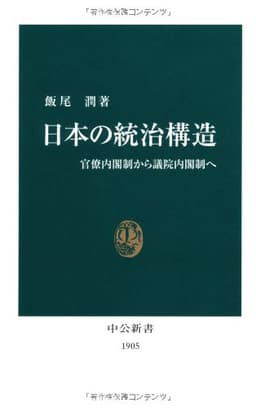
As argued in 『日本の統治構造: 官僚内閣制から議院内閣制へ』 (Japan's Governance Structure)(外部サイト、新しいタブで開きます), Japan's political distrust is deeply intertwined with the governance structure itself. In a policy-making process dominated by bureaucrats, the extent to which elected politicians' intentions actually shape policy remains opaque — making it structurally difficult for voters to believe that their ballots matter.
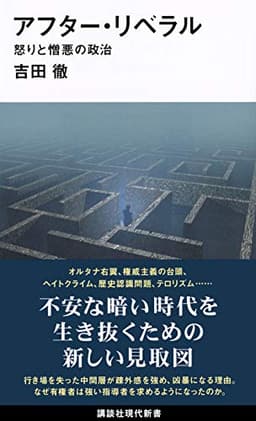
analyzed in 『アフター・リベラル: 怒りと憎悪の政治』 (After-Liberal)(外部サイト、新しいタブで開きます) the mechanisms by which citizens who feel liberal democracy can no longer solve society's problems gravitate toward populists and strongman leaders. In Japan, too, the risk that political distrust erupts not as indifference but as rejection of existing democratic procedures cannot be ignored.
Breaking the cycle of political distrust requires approaches from both the institutional and citizen sides. Ensuring transparency in political financing, revising electoral systems, and institutionalizing citizen participation in policy-making — these are institutional tasks. Simultaneously, strengthening citizenship education, improving media literacy, and practicing political participation at the local level — these are tasks for citizens themselves.
53.85 percent, 26 percent, 24.1 percent
Voter turnout at 53.85%. Government trust at 26%. Only 24.1% feel their voices are heard. These numbers starkly indicate that Japan's is experiencing institutional fatigue. Transforming the resignation of "politics never changes" into a structural understanding grounded in data — that is the first step toward confronting this crisis.
References
Voter Turnout in National Elections — Ministry of Internal Affairs and Communications (2024)
Age-Group Voter Turnout Trends in National Elections — Ministry of Internal Affairs and Communications (2024)
OECD Survey on Drivers of Trust in Public Institutions – 2024 Results — OECD (2024)
Public Opinion Survey on Japanese Democracy — Genron NPO (2024)
Public Opinion Survey on Social Awareness (October 2024) — Cabinet Office (2024)
Political Reform to Resolve Political Distrust — Keizai Doyukai (2024)
Second Survey on Political, Economic, and Social Attitudes — NIRA (2024)
Age-Group Voter Turnout Trends — Association for Promoting Fair Elections (2024)
Statistics cited in this article
- 1MIC, Voter Turnout in National Elections(2024) Open source
- 2MIC, Age-Group Voter Turnout Trends(2024) Open source
- 3OECD Survey on Drivers of Trust in Public Institutions(2024) Open source
- 4Genron NPO, Public Opinion Survey on Japanese Democracy(2024) Open source
- 5Cabinet Office, Public Opinion Survey on Social Awareness(2024) Open source
- 6MIC, Age-Group Voter Turnout Trends(2024) Open source
Questions to Reflect On
- Did you vote in the most recent election? If not, what were the reasons behind your decision?
- Can you recall a moment when you felt your vote could genuinely influence political outcomes?
- What might be done — on both the institutional and citizen side — to rebuild trust in democratic processes?
Key Terms in This Article
- Political Efficacy
- The subjective belief that one's political participation can influence politics. Divided into internal efficacy (belief in one's ability to understand and participate in politics) and external efficacy (belief that government responds to citizens). A major determinant of voter turnout and political participation.
- Representative Democracy
- A form of democracy in which citizens make political decisions through elected representatives. Contrasted with direct democracy, it resolves the problem of scale while being based on the principle of popular sovereignty, though the gap between representatives and voters is a persistent challenge.
Related Content

Digital Society Vision Council, 12th Meeting (May 22, 2026) — Briefing on the Next Priority Plan and ISVD's Reading
A briefing on the 12th meeting of Japan's Digital Society Vision Council (Digital Agency, held May 22, 2026), with materials submitted by two local government heads (Miyakonojo City, Yamaguchi Prefecture) and one industry leader (Rakuten). ISVD reads the agenda against its own scope of social vision design.
What changes when you book a recovery discount through a different channel?
Nagasaki's recovery travel campaign: budgets, booking dates and eligible stay periods by sales channel

Before charging for Fuji rescues, measure delayed calls
Yamanashi targets September 2027; the announcement does not finalize fees or exemptions. Saitama currently charges ¥8,000 per five minutes, with distinct exclusions and relief. Six first-year cases and ¥350,000 in fees do not establish a causal effect on accidents or calls.

In the Year the National Museum of Art's Grant Rose, the National Film Archive of Japan's Share of the Grant Fell Sharply. That Same Year, More Than 5,500 People Gave the Archive Over ¥150 Million
From June to September 2026 the National Film Archive of Japan ran a crowdfunding campaign and raised more than ¥150 million from more than 5,500 people. In the same fiscal year, the state's operating grant to the National Museum of Art, which runs the archive, was ¥8.46 billion, about ¥320 million more than the year before. According to the Agency for Cultural Affairs, the institution decides how the grant is split among its museums, and the archive's share of the grant fell sharply after the balance between grants and self-generated revenue was adjusted across all museums. This piece reads the work the Agency says the state funds alongside what the money raised is used for.
Previous
The Structure of Price Hikes — Why Only Food Keeps Rising
Next
The 'Invisible Walls' of Disability Pension — Structural Barriers from Application to Receipt
Get new columns by email
1-2 social structure analysis columns per week. Free to subscribe.
Join ISVD's activities?
Sign up to receive the latest research and activity reports. Feel free to reach out about collaboration or project participation.
Support ISVD’s research and activities
Support ISVD’s research and publications with JPY5,000 per year. There is no automatic renewal.