
Public-Private Partnership & Public Asset Revitalization
For idle public facilities (abandoned schools, historic buildings, parks, former government offices), we provide end-to-end support from selecting optimal PPP methods to consortium formation, proposal writing, and consensus building. With 90% of municipalities under 200,000 population never having implemented PPP/PFI, we serve as the first-step companion — providing WTP calculation, logic model design, and internal advocacy support.
What We Do
Abandoned school small concession design (including 10-year rule and urbanization control zone solutions)
WTP calculation, logic model design, and outcome indicator selection
Internal evangelist development and executive briefing support
Corporate hometown tax donation scheme design for staffing and funding
Target Audience
Municipal officials, private operators, NPOs
Pricing
Initial consultation is free. Ongoing support priced individually.
Estimated Duration
Initial hearing 60 min; project-dependent, typically months to 1 year
How It Works
Hearing & vision alignment
We listen to your current challenges, target facilities, and goals, then map out the direction for public-private partnership. It's perfectly fine to start from 'we don't know where to begin.'
Scheme design & proposal drafting
We select the optimal project method based on facility characteristics and local needs, and draft a proposal including financial simulations.
Partnership formation support
We match private operators, financial institutions, and specialists needed for the project, and design the consortium structure. We also support market sounding design and execution.
Consensus building & implementation support
We support internal coordination, council briefings, and resident information sessions. We walk alongside you through procurement guidelines, evaluation criteria design, and operator selection.
5 Core Functions of the ISVD Platform
ISVD is not just a consulting firm — it is a platform that connects projects with the right talent to bring public asset revitalization to life. Bridging social issue design with PPP/PFI implementation, we provide five core functions.
Project Information Aggregation & Distribution
We monitor Small Concession, Park-PFI and other public procurement opportunities, matching project characteristics with specialized expertise.
Building Municipal & Community Connections
Through seminars, workshops, and regional platform participation, we build trusted relationships with municipalities and local stakeholders.
Project-Specific Team Assembly
We assemble optimal teams of architects, construction firms, financial institutions, and welfare operators tailored to each project's unique requirements.
Knowledge Asset Accumulation & Dissemination
We compile project insights into reports and academic publications, bridging practice and research. Our 109-article specialized media 'PUBLIC 0' is part of this function.
Local Business Companion Consulting
We support local companies in becoming PFI lead entities — from SPC formation and joint proposal drafting to monitoring system design. Our philosophy: local businesses lead, we fill the gaps.
Public Asset Revitalization
public0.isvd.or.jpWe provide 109 in-depth articles and free consultation on activating idle public facilities through Small Concessions, Park-PFI, abandoned school reuse, and more.
Public Asset Utilization: Where We Stand
While adoption rates for Priority Review Regulations are rising, actual implementation by municipalities remains limited. The data below shows ISVD's original analysis of the gap between adoption and operation rates by population size.
Source: Compiled by ISVD based on Cabinet Office PPP/PFI Action Plan follow-up surveys
Read the full analysisRelated Research & Insights
Content published by ISVD on public asset utilization and public-private partnerships.
Research
Structural Analysis of Abandoned School Small Concessions — The Institutional–Execution Gap Behind 1,951 Unused Schools
Corporate Hometown Tax at ¥63.1 Billion — How Personnel Dispatch Is Reshaping Public Asset Regeneration
PFS Adoption at 9% — Why Municipalities Cannot Embrace Pay-for-Success Despite Complete Institutional Infrastructure
The Structural Gap in Priority Review Regulations — Behind the 82% Adoption Rate Lies a System That Doesn't Work
The 'Softification' of Public Services — A Paradigm Shift from Facilities to Services
Public Asset Utilization Lab — Hypotheses and Scope
Structural Analysis of Japan's Small Concession Three Walls — Revenue Structure Types and Breakthrough Patterns
Airport Concession Revenue Structure — The 'Viability Threshold' Revealed by 12 National-Government Airports and the Conditions for Private Entry
Park-PFI Seven Years of Revenue Structure — Conditions for Revenue Facilities in Urban Parks and the Three-Type Divergence
The PPP Desk Divide — Structural Gaps in Municipal Internal Capacity and Their Impact on Project Formation
Risk Allocation in PPP/PFI Projects — How Poor Matrix Design Drives Project Failure
Structural Comparison of Three Water Concession Cases — Divergence Conditions of Operational Transfer in Miyagi, Hamamatsu, and Susaki
Contract Design Comparison of Three Small Concession Cases in Small Cities — Breakthrough Patterns for the Three Walls
Pricing What Cannot Be Measured: Building a Willingness to Pay
Has PFS Reached Beyond the Three Priority Fields?
The Two Seats PFS Sets Aside for Supporters
Three Markers for Spotting a Supporter's Seat
27,000 Defunct Gas Stations and Subsurface Tank Legacies: A Typology of Shrinking Assets
Adaptive Reuse of Decommissioned Oil Terminals and Refineries — Comparing Ten Domestic Cases and Three International Precedents
The Five-Layer Methodology of Meaning Inversion for Shrinking Assets — A Draft Evaluation Framework for PPP Projects
A Methodology for Structural Analysis of PPP/PFI Contracts — Reading Foundational Clauses, Risk Allocation Matrices, and Monitoring Provisions in Three Streams
Insights & Analysis

20% of Japan's Water Pipes Are Past Their Service Life — Data on an Invisible Infrastructure Crisis

Structural Analysis of Local Government 'Extinction' — 744 Municipalities Face the Critical Point of Population Decline and Fiscal Crisis

'Fund Museums with Public Money' — What's at Stake in a Country Spending 0.02% of GDP on Culture
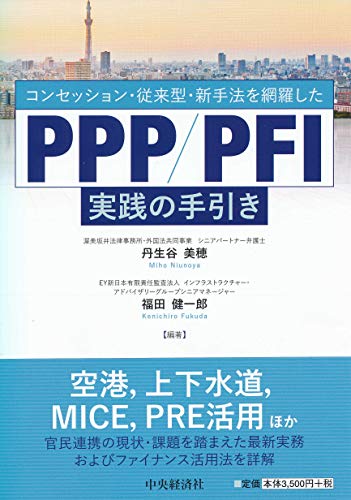
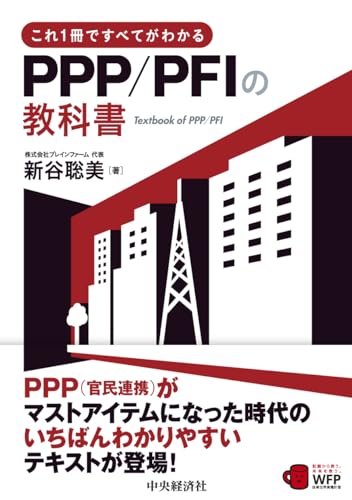
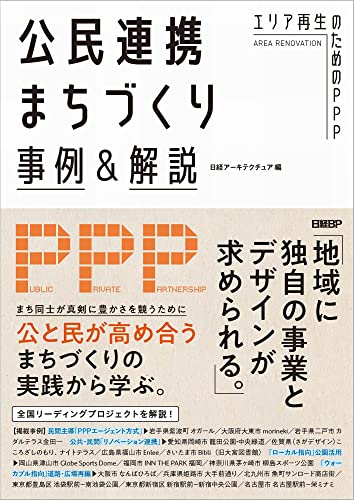
Recommended Reading for This Field
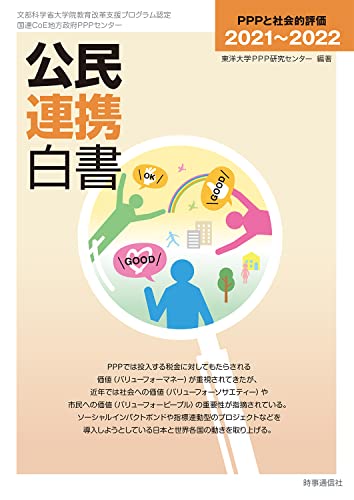
Books recommended by ISVD to deepen understanding of public-private partnerships and public facility management.



Frequently Asked Questions
Q1Can I consult without any PPP experience?
Q2Do you accept consultations from both government and private sides?
Q3Can you draft proposals on our behalf?
Cases We Can Help With
ISVD provides end-to-end support from conceptual planning to scheme design and consensus building for cases like these.
Repurposing Closed Schools
Design schemes for private utilization of vacant school buildings from municipal consolidation. We cover facility assessment, method selection (lease, concession, etc.), and tender documentation.
Concept → Scheme Design → Tender Preparation → Operator Selection
Park Revitalization via Park-PFI
Leverage the public tender management system under the City Park Act to integrate private revenue facilities (cafés, outdoor amenities) with park improvements.
Analysis → Sounding → Tender Design → Consortium Formation
Water Utility Concession Review
Evaluate the feasibility of concession methods for water and sewage utilities facing financial pressure from population decline. Includes precedent analysis and VFM estimation.
Financial Analysis → Method Comparison → VFM → Feasibility Assessment
The above are examples of cases we can support. We tailor our approach to each facility type and local context.
Pre-Consultation Preparation Checklist
To make the most of your initial consultation, please review the following where possible. You can still consult us even if not all items are ready.
- 1Type and location of the facility under consideration (e.g., closed school, former government building, park)
- 2Current usage status of the facility (unused, temporary use, degree of deterioration)
- 3Stage of internal review (conceptual stage, priority review regulation adopted, preparing for public tender, etc.)
- 4If any specific PPP/PFI method is being considered (concession, Park-PFI, designated manager, etc.)
- 5Overview of the region's population size and fiscal situation
If the above information is not yet organized, please don't hesitate to reach out. We'll work through it together during the consultation.
Inquire About This Support
Feel free to reach out.
Consult on PPPOther Consultation & Support
Strategy & Project Design
From vision/mission alignment to logic model design and community project structuring. Your consultation partner at the 'concept stage.'
Funding, Grants & Nonprofit Setup
From grants and dormant deposits to Google for Nonprofits (eligible nonprofits can use up to $10,000 per month in search ad credits). We also support nonprofit incorporation. All funding-related consultations in one place.
Creative & DX
From website, logo, and brochure design to AI adoption and DX assessment. Organizational infrastructure support, all in one place.
Student Career Counseling
Employment, graduate school, entrepreneurship, NPO, study abroad — we lay the options out side by side. We take no referral fee from anyone. Pro bono.
Second Opinion
Business plans, organizational management, fundraising, design — we provide third-party feedback on any topic. The catch-all for 'I don't know where to ask.'
Sales Email Policy Adoption Support
Accompanying support for adopting the Institute's open-source Sales Email Policy, tailored to your organization's business and operations. Three tiers: regulation customization, implementation integration, organization-wide operation.