
Does More Water Infrastructure Mean Better Services for Residents?
Population coverage and household access describe different conditions. Hamamatsu's wastewater monitoring helps examine who operates and who checks.
Five official sources explain water services and treatment. Two diagrams distinguish population coverage from household service conditions, using Hamamatsu’s monitoring information to examine operational roles, public records and evaluation.
TL;DR
- Facility coverage differs from everyday conditions of use
- Check drinking-water and sanitation service definitions
- Separate operating responsibilities from checking results
- Connect monitoring records to residents’ concerns
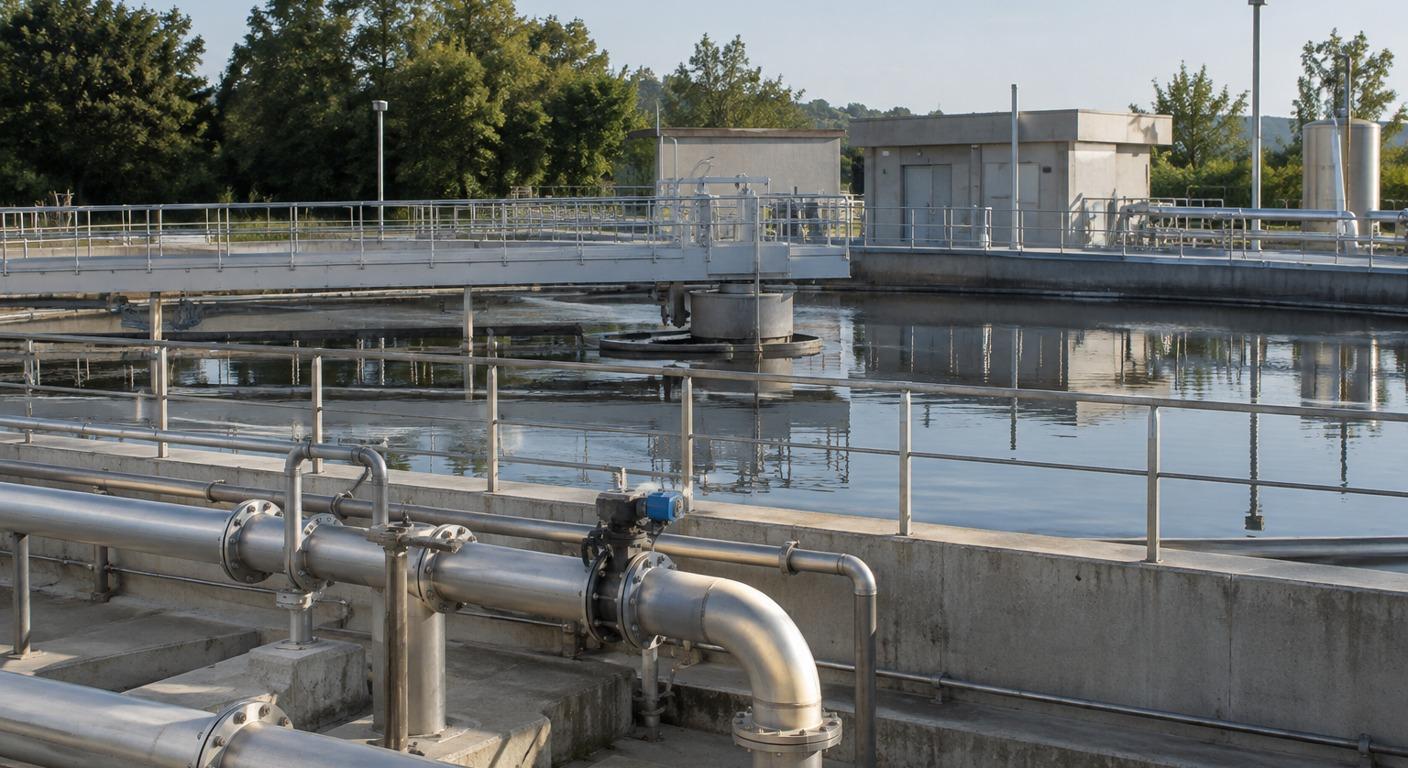
The image is an AI-generated fictional treatment facility, not a photograph of Hamamatsu or another documented site.
What Is Happening
Read distinct evidence about facilities, access and treatment
When a treatment facility opens or a water-related business expands, what does that tell us about residents' access to a usable service? Investment can help sustain infrastructure, but evidence about household supply and treatment after use requires different information. Revenue, facility coverage and conditions of use should not be counted as the same outcome. Separating them makes it easier to ask whose daily circumstances changed.
Japan's , or MLIT, reports a sewerage population coverage rate of 82.2% and a wastewater-treatment population coverage rate of 94.0%. The similar names refer to different facility scopes.
These are population-coverage indicators, rather than the proportion of wastewater volume treated. They also do not directly establish whether a household can use drinking water when needed. Facility availability, effective operation and residents' ability to use a service each require attention. This article uses official definitions and Japanese operational information to examine those distinctions, rather than inferring access from a global market forecast.
Background & Context
Separate definitions, coverage and operating arrangements
Infrastructure alone does not establish the conditions of use
The WHO/UNICEF Joint Monitoring Programme, or JMP, provides an international framework for monitoring water and sanitation services. Its defines a safely managed service through an improved source that is accessible on the premises, available when needed and free from contamination. The criteria concern the service households can use, rather than only the physical presence of a pipe or improved source.
Questions about collection distance, timing and quality therefore remain distinct. A definition helps establish what to measure; it does not itself demonstrate that conditions improved in a particular place. The service classifications also distinguish basic services from safely managed services. Using a broad label such as “access to water” without identifying the classification can obscure what was actually established.
The JMP's extends beyond the facility used. Safely managed services involve improved facilities that are not shared with other households and safe management of excreta. The pathways include treatment and disposal in place, emptying and treatment elsewhere, or transport through a sewer followed by treatment.
A sewer connection is consequently not the only possible pathway. The process after use matters. At the same time, these international household service classifications cannot simply be equated with Japan's population-coverage indicators. Their populations, facilities and criteria differ. Before comparing percentages, readers need to establish what each indicator counts.
Questions about facilities
- Scope
- Facilities counted
- Coverage
- Population included
- Development
- Local method chosen
Questions about services
- Drinking water
- Place, timing, quality
- Sanitation
- Facility and treatment
- Operation
- Checks and responses
An interpretation of MLIT indicators and JMP definitions. The measures are not interchangeable rates, and infrastructure alone does not establish every condition of use.
Distinguish the treatment method from the operating arrangement
MLIT describes approaches to areas without coverage that include reviewing local plans in light of population change, lower-cost methods and public-private collaboration. The relevant question is which treatment arrangement suits local circumstances and future needs. Publication of that approach should be distinguished from completion of development in every locality.
Choosing a facility type and deciding who operates it are also different decisions. MLIT's identifies ageing facilities, declining user-charge revenue and staff shortages among the challenges. It presents the use of private expertise as one possible response, rather than a measured result establishing superiority over other arrangements.
The ministry says the name “Water PPP” changed to “water public-private collaboration” from FY2025, with the substance unchanged. A new name should not be treated as evidence of a new benefit. Assessing an arrangement requires identifying the tasks assigned, standards required and people responsible for checking results. This article does not determine grant eligibility or the legality of an individual contract.
Reading the Structure
Examine Hamamatsu’s monitoring roles and residents’ concerns
Who checks the operation after it is assigned?
One concrete example is , updated on 6 October 2026. It describes self-monitoring by the private operator, monitoring by the city and monitoring by a third party. Here, monitoring means checking operations and treatment against the contract and required standards.
The city checks compliance with law and required standards, including appropriate handling of wastewater and sludge. A requirements document identifies what the operator must meet; a facility name or an operator's reputation does not substitute for those criteria.
For discharged-water quality, the city conducts irregularly timed measurements at a monthly frequency, separately from the operator's own measurements. This illustrates a distinction between carrying out an operation and checking it. It is one project's arrangement, rather than a universal legal sampling frequency or a comparative study demonstrating that private operation performs better.
The measurement table also requires attention to its notes. Hamamatsu states that the item changed from coliform counts to E. coli counts from April 2025. Similar terminology does not make the historical series directly interchangeable. Requirements for water discharged from a treatment plant should not be substituted for household drinking-water standards either.
Roles described
- Operator
- Operation and own checks
- City
- Contract and water checks
- Third party
- Another monitoring role
Records to examine
- Standards
- What was required
- Results
- What and when measured
- Response
- Action after a problem
Hamamatsu's described roles and proposed reading questions. This does not impose identical responsibilities or frequencies on every municipality.
Connect measurements to the response to a problem
The purpose of reading a table extends beyond noticing that figures were published. Where, when and how were they measured, and how were they compared with the required standard? If a problem is identified, a further record can explain who was informed, what action followed and what was checked afterwards. These are proposed questions, rather than a claim that this Hamamatsu project left a problem unresolved.
The city's explanation says disputes about monitoring results are addressed through a council. An arrangement for discussing disagreement is relevant to oversight, but its existence does not establish that every dispute was resolved. Actual handling requires additional records. Similarly, a published technical measurement does not automatically answer every concern about everyday service use.
In a fictional locality, residents might report difficulty using water at particular times. A water-quality measurement at a facility would not by itself answer that concern. Someone must receive the enquiry and establish which aspect of supply or use needs checking. This illustrates the need to connect operational evidence with residents' experiences, rather than describing a documented local incident.
Examine the conditions people need to use the service
Health equity concerns eliminating unfair, avoidable differences in health. Applied here, it offers a perspective for examining conditions of use alongside the existence of infrastructure. The concept is not evidence that a particular operating arrangement produced a health benefit.
Payments, repair requests and accessible information may be relevant procedures to examine. The documents considered here do not establish which locality has which deficiency. Before asking residents about their experience, an evaluation should define the difficulties it seeks to understand and how it will include people who have not submitted a complaint. Consultation records can be useful without representing everybody.
Comparisons across places also need to account for population, geography, initial facility condition and the tasks assigned. A higher count of checks does not alone establish a better service. A system that detects more problems may produce more records. The purpose and scope of a comparison should therefore be specified before interpreting differences as an operating arrangement's effect.
Maintenance and oversight also continue after construction. In a fictional renewal project, reporting only completion of the works would leave questions about later repairs, monitoring and responsible staff. A claimed saving should identify the comparison period and tasks included. A lower contract payment would not capture the whole change if public-side monitoring or enquiry work increased. This is an evaluation question, rather than a finding that outsourcing necessarily transfers costs.
Staff changes create a further reason to make records understandable. A future operator or public-side reviewer should be able to identify why an item was measured and which earlier response it relates to. Keeping a form is different from preserving that explanation. The question is what information enables successive staff to discuss the same service and follow through on a concern, without expecting a resident to reconstruct the history.
Further reading
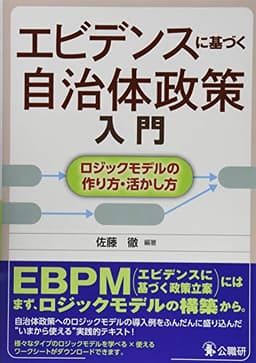
Toru Sato’s エビデンスに基づく自治体政策入門 : ロジックモデルの作り方・活かし方(外部サイト、新しいタブで開きます) (an explanatory translation: Introduction to Evidence-Based Municipal Policy: Creating and Using Logic Models) is related reading on distinguishing infrastructure investment from changes experienced by users. The publisher-supplied public introduction and contents(外部サイト、新しいタブで開きます) cover creating logic models and using them in policy design and evaluation. Only those public materials and bibliography were consulted; the full book has not been read. This 2021 book does not substantiate current coverage rates, water-quality standards or measurements, or Hamamatsu’s contractual terms.
Remaining Questions
Consider access difficulties, explanations and evaluation
First, how can an evaluation identify people who live within a covered area but find the service difficult to use? Coverage alone cannot explain whether water is available when needed or whether people can reach a contact when something fails. Enquiry records may miss people who did not apply or receive information. Learning about those experiences should avoid making residents carry disproportionate explanatory burdens.
Second, what can residents examine when monitoring reveals an anomaly or disagreement? A useful account would identify the decision-maker, action taken and subsequent checks. Publishing a technical document does not guarantee that the relevant explanation reached an affected person. Changes in measurement items and periods should be clear, along with what the results establish and what requires further investigation.
Finally, whose conditions improved after an investment or operating change? Facility coverage, monitoring activity, treatment results and residents' ability to use the service concern different evidence. Comparisons between unlike places cannot directly establish an effect. Before-and-after analysis also needs to consider other works, charges and supply changes. Agreeing on what improvement means and preparing records suited to that question would help connect investment to daily experience.
The introduction to social impact evaluation(このサイトの記事) provides related guidance on distinguishing activities from changes experienced by people.
References
Promotion of sewerage development — Ministry of Land, Infrastructure, Transport and Tourism (2026). End-of-FY2025 population indicators; checked 4 November 2026
Drinking water — WHO/UNICEF Joint Monitoring Programme (2026). Service definitions; checked 4 November 2026
Sanitation — WHO/UNICEF Joint Monitoring Programme (2026). Service and treatment definitions; checked 4 November 2026
Use of public-private collaboration in sewerage — Ministry of Land, Infrastructure, Transport and Tourism (2026). Official information; checked 4 November 2026
Monitoring of the Hamamatsu Seien sewerage treatment-area operation — Hamamatsu City (2026). Updated 6 October 2026; monitoring and discharge-measurement information
Amazon links in this article are affiliate advertising links.
Statistics cited in this article
- 1MLIT sewerage development: sewerage population coverage(End of FY2025) Open source
- 2MLIT sewerage development: wastewater-treatment population coverage(End of FY2025) Open source
Questions to Reflect On
- Does facility coverage establish everyday service access?
- Where can a reader find the response to a monitoring problem?
- Does a cost comparison include oversight and enquiry work?
Related Content
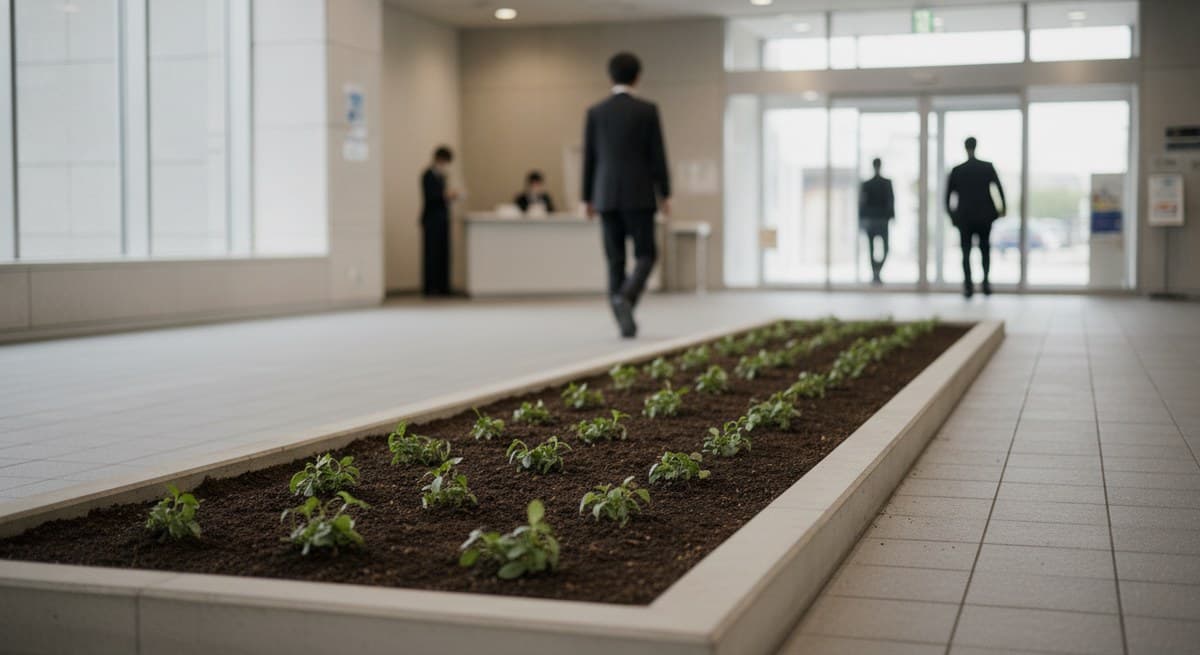
Fukushima Holds About 14 Million Cubic Metres of Removed Soil. Reuse Outside the Prefecture Began With Flower Beds at Two Government Buildings
Soil removed during decontamination in Fukushima must be finally disposed of outside the prefecture by March 2045, an obligation written into law. About 14 million cubic metres sit in interim storage. On 29 August 2026 the first reconstruction reuse outside Fukushima began at a government building in Sendai, followed by one in Saitama. The volume used across both sites was about 2 cubic metres. The government's basic policy and roadmap say that selecting and surveying candidate sites for final disposal begins around 2030. This piece reads the distance between the deadline and the start, using the government's own documents.

Chemical Management and SDS Compliance: Legal Reform and the Burden Structure on Japanese SMEs
Japan's Industrial Safety and Health Act was amended in two phases (April 2023 and April 2024). The substances subject to labeling, SDS notification and risk assessment numbered 674 substances before the amendment (including 8 banned from manufacture and 123 already covered by the specified-chemicals rules), with 234 added in April 2024. The ministry says it will keep adding every substance the national GHS classification flags, and about 3,100 substances have been classified so far. The duty to appoint a chemical substance manager applies regardless of industry, scale, or quantity, and localizing SDS documents from overseas manufacturers has become the responsibility of importers. Starting from FIRST-HAND Local's reporting on a medical-research reagent SME in Tokyo, this article reads the burden structure of Japan's shift to autonomous chemical management from the perspective of small and medium-sized enterprises.
Medical critical infrastructure: connecting procurement oversight with continuity of care
Japan's proposed paths for national medical-DX systems and individual hospitals, and what remains undecided

Do Selected Recycled-Plastic Studies Mean Hubs Are Already Operating?
Japan’s 2026 feasibility studies and FY2027 budget requests, alongside quality, inventory and purchase conditions for regional supply.
Get new columns by email
1-2 social structure analysis columns per week. Free to subscribe.
Join ISVD's activities?
Sign up to receive the latest research and activity reports. Feel free to reach out about collaboration or project participation.
Support ISVD’s research and activities
Support ISVD’s research and publications with JPY5,000 per year. There is no automatic renewal.