
Chemical Management and SDS Compliance: Legal Reform and the Burden Structure on Japanese SMEs
Japan's Industrial Safety and Health Act was amended in two phases (April 2023 and April 2024). The substances subject to labeling, SDS notification and risk assessment numbered 674 substances before the amendment (including 8 banned from manufacture and 123 already covered by the specified-chemicals rules), with 234 added in April 2024. The ministry says it will keep adding every substance the national GHS classification flags, and about 3,100 substances have been classified so far. The duty to appoint a chemical substance manager applies regardless of industry, scale, or quantity, and localizing SDS documents from overseas manufacturers has become the responsibility of importers. Starting from FIRST-HAND Local's reporting on a medical-research reagent SME in Tokyo, this article reads the burden structure of Japan's shift to autonomous chemical management from the perspective of small and medium-sized enterprises.
TL;DR
- The amended Industrial Safety and Health Act expanded the substances subject to labeling, SDS and risk assessment from 674 substances before the amendment (including 8 banned from manufacture and 123 already covered by the specified-chemicals rules), with 234 added in April 2024. The ministry says it will keep adding every substance the national GHS classification flags, and about 3,100 substances have been classified so far. The duty to appoint a chemical substance manager applies regardless of industry, scale, or quantity, including sole proprietors
- The regulatory paradigm shifted from substance-designation (specific chemicals ordinance, organic solvents ordinance, and similar instruments) to autonomous management, in which the operator evaluates risk and selects countermeasures. Determination responsibility moved from the regulator to the operator, increasing fixed costs across information acquisition, classification, and operation
- On the chemical substance control side, the Chemical Substances Control Law (PRTR Law) expanded Class 1 designated chemicals from 462 to 515, and Class 2 from 100 to 134 in April 2023. The Industrial Safety and Health Act and the PRTR Law manage independent substance lists, requiring operators to track multiple legal revisions in parallel
What Is Happening
Amended Act added 234 substances to the 674 covered; ~3,100 classified so far. SDS localization from overseas makers falls on SME importers.
The burden of chemical management compliance is being accumulated as fixed costs on small and medium-sized operators. FIRST-HAND Local (May 2026) profiled Mr. A, who runs a medical-research reagent business in Tokyo with about 80 percent of products imported, presenting the on-site burden in this kind of operator. SDS (Safety Data Sheets) provided by overseas manufacturers do not conform to Japanese law, so the cross-referencing and rewriting of each component is largely manual work. There are cases where substances unregulated abroad fall under Japanese regulation, and management centered on Excel and free tools cannot keep up with the volume of historical SDS updates. Commercial multi-function package systems carry high initial and running costs, and Mr. A states that "for an operator of our size, the cost-benefit does not work."
Mr. A's voice represents only the visible portion of a wider pattern. According to the Ministry of Health, Labour and Welfare, the amended Industrial Safety and Health Act is widening the scope in stages. Before the amendment, labelling and SDS provision were required for 674 substances — a figure that includes the 8 banned from manufacture and the 123 substances covered by the Specified Chemical Substances Ordinance and similar rules. In April 2024, 234 substances classified by the state under GHS as Category 1 for carcinogenicity, germ cell mutagenicity, reproductive toxicity or acute toxicity were added. The Ministry describes this not as a one-off addition but as a rolling one: it will "successively add all substances whose hazards have been confirmed by the state's GHS classification." Some 3,100 substances have already been classified and published, with 50 to 100 more each year, all of which will be brought into scope in turn. From a small firm's vantage point, there is no visible end to how far the scope will reach. The duty to appoint a chemical substance manager became mandatory at "all workplaces manufacturing or handling substances subject to risk assessment," with no exemption by industry, scale, or quantity. Sole proprietors also fall within scope. SDS sections on "effects on the human body" must be periodically reviewed within five-year cycles, and a duty to notify upon revision is part of the same package.
The Chemical Substances Control Law (PRTR Law), administered by the Ministry of Economy, Trade and Industry, also revised its designated substances in April 2023. According to the METI's PRTR Reporting Basics (January 2025), Class 1 designated chemicals expanded from 462 to 515 substances, Specified Class 1 designated chemicals from 15 to 23 substances, and Class 2 designated chemicals from 100 to 134 substances. This was the second revision of designated substances since the law's enactment in 1999, the previous being in 2008.
Two laws relying on the same SDS
The point is that this is not an efficiency problem of individual operators. The Industrial Safety and Health Act governs prevention of worker exposure, while the PRTR Law governs the tracking of environmental loads. Both laws impose SDS issuance duties in parallel, but their substance lists are independently managed. SME operators must track revisions across multiple laws and actively determine which classification under which law applies to the substances they handle. This article reads the situation not as a problem of operator management capability but as a burden structure produced from the side of institutional design.
Substance-designation regime (Specified Chemicals + Organic Solvents Ordinances). Compliance = meeting statutory standards.
Full enforcement: mandatory chemical-substance manager appointment, exposure-reduction duty, enhanced health checks
Self-management regime takes root. Businesses bear responsibility for risk assessment.
Coverage reaches 4.3× the pre-revision scale, running in parallel with the 5-year SDS re-confirmation duty
* Sources: MHLW 'New regulations to prevent occupational accidents caused by chemical substances' (phased enforcement); Miyagi Labour Bureau 'Self-management as the new regulatory pillar'; Kyoto Labour Bureau 'Full enforcement of the new chemical-substance regulations from April 1, 2024'. By April 2026, coverage reaches 4.3× the pre-revision scale. SDS duties also run in parallel under the Chemical Substances Control Act (515 + 23 + 134 substances), but the substance lists are managed independently.
Background & Context
Chemical management spans 6+ laws. Amendments paralleled the shift to autonomous management, moving determination burden to operators.
The Paradigm Shift from Substance-Designation to Autonomous Management
Chemical management in Japan has long operated under "substance-designation" instruments such as the specific chemicals ordinance and the organic solvents ordinance. The Ministry of Health, Labour and Welfare and its regional Labour Bureaus prescribed specific harmful substances and required work environment measurement, special health examinations, and local exhaust ventilation installation for each. The core of this amendment is the shift from substance-designation to autonomous management, in which the operator evaluates risk and selects countermeasures. The Miyagi Labour Bureau's awareness material states explicitly: "Autonomous management will become the foundation of future regulation."
The implication for SME operators is significant. Under substance-designation, an operator could confirm whether its substances appeared on the designated list, and as long as countermeasures met the statutory standard, compliance was complete. Under autonomous management, the operator itself must evaluate what level of exposure its substances generate within its workplace and document the rationale for considering the chosen countermeasures "appropriate." Determination responsibility moved from the regulator to the operator.
Enforcement proceeded in two phases. According to the Kyoto Labour Bureau's enforcement notice, on April 1, 2023, strengthened SDS-based information transmission, more flexible SDS notification methods, and record retention of risk assessment results were enforced. On April 1, 2024, the appointment of chemical substance managers, exposure reduction duties, and strengthened health examinations were fully enforced.
Layered Laws and SDS Issuance Duties
The laws governing chemical management in Japan extend well beyond the Industrial Safety and Health Act and the PRTR Law. As indicated by the NITE, the Chemical Substances Control Law (CSCL) is jointly administered by the Ministry of Economy, Trade and Industry; the Ministry of Health, Labour and Welfare; and the Ministry of the Environment, covering prior screening of new chemical substances and screening evaluation of existing chemical substances. The Poisonous and Deleterious Substances Control Law, the Fire Service Act, the Pharmaceuticals and Medical Devices Act, and the Agricultural Chemicals Regulation Act each cover their own domains. From the operator's perspective, it is common for a single substance to fall under multiple legal regimes simultaneously.
SDS issuance duties exist under both the Industrial Safety and Health Act and the PRTR Law. Japanese Industrial Standards JIS Z 7252 (classification) and JIS Z 7253 (labeling and SDS) implement the United Nations Globally Harmonized System of Classification and Labelling of Chemicals (GHS) domestically. The UN GHS was adopted in 2003, and SDS take a unified structure of 16 items (product information; hazardous properties; composition; first-aid measures; fire-fighting measures; accidental release measures; handling and storage; exposure controls and personal protection; physical and chemical properties; stability and reactivity; toxicological information; ecological information; disposal considerations; transport information; regulatory information; and other).
GHS implementations differ across countries in version and detail. The EU mandated the CLP Regulation and SDS Regulation 2020/878 from January 2023, and OSHA in the United States enforced the revised Hazard Communication Standard (HCS) from July 19, 2024. Japanese JIS implements the GHS domestically, but because the Industrial Safety and Health Act and the PRTR Law manage substance lists independently, unified SDS formats coexist with fragmented list management.
The Current State of JISHA and SME Support
The Japan Industrial Safety and Health Association (JISHA) is at the center of public support for SME operators. The JISHA provides standard training materials for chemical substance manager appointment and the JISHA-method risk assessment procedure, and operates the inquiry desk for the Chemi-Support program (a chemical management support program for small-scale workplaces commissioned by the Ministry of Health, Labour and Welfare). The Ministry of Health, Labour and Welfare also operates the Chemical Management Inquiry Desk and provides risk assessment implementation support systems (such as CREATE-SIMPLE) free of charge.
However, the reach of support extends only to inquiry desks, training, and implementation support systems. Japan has no infrastructure equivalent to the REACH-IT joint registration operated by the European Chemicals Agency (ECHA), where SDS data is aggregated and shared across industries. Reports of difficulty in securing slots for chemical substance manager training, which is capacity-limited, illustrate a supply-side constraint that feeds back into operator scheduling.
Reading the Structure
SME compliance burdens span three layers and are scale non-neutral. Shared schemes and machine-readable SDS are the structural solutions.
The structure can be summarized. The concentration of chemical management costs on SME operators arises not from the regulatory content itself, but from the side of institutional design: the balance of regulation and support, the absence of shared management schemes, and limited adoption of machine-readable SDS standardization.
Three layers: obtaining information, judging, operating
First, chemical management costs have a three-layer structure: information acquisition, classification, and operation. The information acquisition layer is the burden of continuously tracking substance list revisions across more than six laws. The classification layer is the burden of determining which classification under which law applies to substances handled by the operator—a responsibility that moved to the operator under the autonomous management shift. The operation layer is the ongoing maintenance cost of five-year SDS reviews, label updates, risk assessment record retention, chemical substance manager appointment, and exposure reduction records. The three layers generate costs independently, and omitting any of them increases the risk of legal violation.
The design is not size-neutral
Second, the design that imposes chemical substance manager appointment duties "regardless of industry, scale, or quantity" carries scale non-neutrality. Large and small enterprises bear the same volume of duties, but the personnel costs, training costs, and operational time of appointment behave as fixed costs, so smaller operators face relatively heavier burdens. The medical-research reagent SME case reported by FIRST-HAND Local shows that the higher the share of imports, the more concentrated the manual work of localizing SDS from overseas manufacturers.
The absence of a shared-management scheme
Third, the absence of shared management schemes leaves out a structural device for lowering the SME burden. The EU REACH "one substance, one registration" principle prevents duplicate registrations of the same substance by multiple operators and shares registration data through a mechanism that distributes the registration cost burden on SMEs. There is design space in Japan for industry associations and the government to develop industry-wide SDS databases, shared risk evaluation data, and unified labeling proposals for individual substances.
Fourth, the adoption of standardized machine-readable SDS (in XML/JSON formats) remains limited. The Ministry of Economy, Trade and Industry has advanced digitalization through measures such as adding a corporate number field to PRTR reporting forms, but the actual distribution of SDS in structured machine-readable formats remains limited, and many SME operators continue with PDF and Excel-based workflows. Automatic alerts tied to legal amendments, automatic conversion of overseas-supplied SDS to Japanese law compliance, and detection of revisions across historical SDS only become feasible once machine-readable formats are in place.
What sets Japan apart internationally
The international comparison clarifies Japan's distinctive features.
| Region | Major Laws | Substance Registration | SME Support |
|---|---|---|---|
| EU | REACH, CLP, SDS Regulation 2020/878 | Prior registration for manufacture or import of 1 t/year or more; "one substance, one registration" principle | ECHA SME guidance, REACH-IT joint registration, SME registration fee reduction |
| United States | OSHA HCS (revised version aligned with GHS Revision 7, enforced July 2024) | Substance classification under manufacturer responsibility | OSHA Small Business Compliance Assistance |
| Japan | Industrial Safety and Health Act, PRTR Law, CSCL, Poisonous and Deleterious Substances Control Law, Fire Service Act, Pharmaceuticals and Medical Devices Act, Agricultural Chemicals Regulation Act | Independent lists per law, with shift to autonomous management | JISHA, Chemi-Support inquiry desks, CREATE-SIMPLE |
Japan's distinctive features are the layered legal structure, the shift to autonomous management, and the absence of a shared registration scheme. Whether the "one substance, one registration" principle of the EU can be transplanted to Japan is a separate question, but the fact that Japan lacks a device for distributing SME registration costs can be made explicit as a point of policy design.
Finally, chemical management sits at the intersection of occupational safety, environmental protection, and market competition. If chemical management costs exhibit economies of scale, the exit of SME operators could accelerate market concentration and weaken the diversity and innovation base of the market. The public good of preventing worker exposure and tracking environmental loads, and the public good of avoiding market concentration, can collide within the single institutional package of chemical management. Chemical management is also connected to workers' accident compensation insurance, health insurance, and the employee pension system. The economic burden of occupational accidents arising via chemical management is redistributed to society as a whole through the operator's social insurance premiums and workers' accident compensation insurance.
The problem is not a quantitative one of "SMEs being busy." It is a qualitative one: institutions have structurally increased the fixed costs of SME operators without embedding devices for cost reduction through shared management and standardization. Strengthening support for chemical substance manager appointment, developing industry-wide SDS databases, standardizing a machine-readable version of JIS Z 7253, and supporting the localization of SDS from overseas manufacturers must be debated with the same weight as the strengthening of regulations.
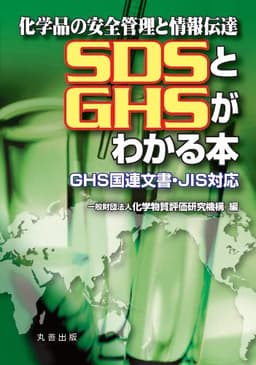
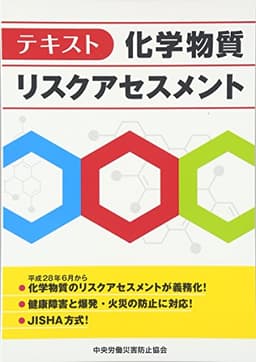
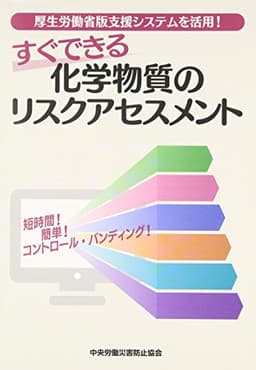
Readers seeking to understand the institutional design of chemical management may find 化学品の安全管理と情報伝達 SDSとGHSがわかる本 GHS国連文書・JIS対応 (Chemical Safety Management and Information Transmission: SDS and GHS, Aligned with UN GHS and JIS)(外部サイト、新しいタブで開きます) (edited by the Chemicals Evaluation and Research Institute, Maruzen Publishing, 2014) useful, as it systematically organizes the foundations of GHS and SDS. For those wishing to learn the practical procedure of risk assessment by the JISHA method, テキスト化学物質リスクアセスメント (Textbook: Chemical Substance Risk Assessment)(外部サイト、新しいタブで開きます) (edited by the Japan Industrial Safety and Health Association, 2016) serves as a standard training text covering the operational details. For SME operators, すぐできる化学物質のリスクアセスメント: 厚生労働省版支援システムを活用! (Quick Chemical Substance Risk Assessment: Using the Ministry of Health, Labour and Welfare Support System)(外部サイト、新しいタブで開きます) (edited by the Japan Industrial Safety and Health Association) makes the on-site workflow more visible when read alongside CREATE-SIMPLE and similar tools.
Related Columns
- Climate Change and the Intersection of Social Inequality(このサイトの記事)
- The Structural Risk of Zero-Rated Food Tax(このサイトの記事)
- Structural Stoppage Risk in Japanese Fisheries(このサイトの記事)
References
On New Regulations to Prevent Industrial Accidents Caused by Chemical Substances — Ministry of Health, Labour and Welfare (2024). Ministry of Health, Labour and Welfare, Labour Standards Bureau
Autonomous Management Will Become the Foundation of Future Regulation — Miyagi Labour Bureau (2024). Ministry of Health, Labour and Welfare, Miyagi Labour Bureau
New Chemical Substance Regulations Will Be Fully Enforced from April 1, 2024 — Kyoto Labour Bureau (2024). Ministry of Health, Labour and Welfare, Kyoto Labour Bureau
Chemical Substances Control Law (PRTR Law) — Ministry of Economy, Trade and Industry (2023). Ministry of Economy, Trade and Industry, Manufacturing Industries Bureau
PRTR Reporting under the Chemical Substances Control Law (Foundational Knowledge for Appropriate Reporting) — Ministry of Economy, Trade and Industry (2025). Ministry of Economy, Trade and Industry, PRTR Documents
The State and Direction of the Chemical Substances Control Law (PRTR Law) — Ministry of Economy, Trade and Industry, Industrial Structure Council (2025). Industrial Structure Council, Chemical Substances Policy Subcommittee, Document 5
PRTR Law: Legal Text and Related Materials — National Institute of Technology and Evaluation (NITE) (2024). National Institute of Technology and Evaluation
What Is a Chemical Substance SDS? — Japan Industrial Safety and Health Association (2024). JISHA, Chemical Substances and Hygiene Technology Services
Chemical Management Inquiry Desk — Ministry of Health, Labour and Welfare (2024). Ministry of Health, Labour and Welfare, Labour Standards Bureau
Globally Harmonized System of Classification and Labelling of Chemicals (GHS) — United Nations Economic Commission for Europe (2023). UNECE GHS Documents
Recommended Books
Statistics cited in this article
- 1National Institute of Occupational Safety and Health, Japan — 'Chemical Management Has Changed' Open source
- 2Ministry of Health, Labour and Welfare, 'New Chemical Regulations under the Industrial Safety and Health Act'(Effective 1 April 2024) Open source
- 3Ministry of Economy, Trade and Industry, 'PRTR Reporting under the Chemical Substances Control Law (Foundational Knowledge for Appropriate Reporting)'(Enforced April 2023) Open source