
Bear Spray: What Does a Test Result of at Least 10m Tell Us?
Japan's August 2026 joint tests and recommendations: 12 bear products, the measurement limit, sustained range and duration, and ingredient labels.
Read Japan’s joint bear-spray tests alongside the Ministry of the Environment’s recommended requirements. Separate the 12 bear products from three reference products, check measurement limits and ingredient labels, and distinguish specifications from evidence of preventing harm.
TL;DR
- The joint tests covered 12 bear products and three reference products for use against people, not the whole market
- Distance measurements stopped at 10m, so a record of at least 10m does not establish the exact maximum range
- Recommended requirements combine distance and duration with ingredients, spray pattern, operation, expiry and information
The thumbnail is an AI-generated illustration, not a documentary photograph of an actual product or test.
What Is Happening
Check the test sample and method, separating the 15-product charts from results for bear products.
A bear-spray sales page might put a maximum range of 10m beside a claim of prolonged spraying. It is tempting to treat the largest numbers as the most reassuring choice, yet a momentary farthest reach and a distance sustained throughout spraying establish different things. Before comparing numbers, we need to know what was measured and under which conditions.
On 25 August 2026, published recommended requirements for bear-spray performance. The , the ministry and the issued a joint caution on product selection, storage and use the same day. Using records checked on 4 October, this column distinguishes recommended design, measured performance and evidence of preventing harm in the field.
Twelve bear products and three reference products
The joint report describes tests of 12 products sold for use against bears and three reference irritant sprays for use against people. Charts of range, duration, spray pattern and contents cover 15 products, while label and structural checks concern the 12 bear products. Reading only the chart total combines products with different intended uses.
Among the bear products, the shortest measured range was 3.5m and the longest at least 10m. Spraying lasted from approximately 2 seconds to approximately 37 seconds. Both results appear on page 4, but the report does not identify the longest-range product as also having the longest duration. Three specimens of each product were tested, with minimum and maximum results shown for range and duration. Variation between specimens should not be treated solely as a difference between products.
According to page 13 of the joint report, testing took place on 22 and 23 June in a vinyl greenhouse protected from wind, at 25±5°C and 60±15% humidity. The nozzle was fixed 1m above the ground with the can upright, and spraying continued until discharge stopped. The farthest visible reach was measured from the side in 0.5m increments. Measurements ended at 10m; reaching that point was recorded as at least 10m. This is a measurement limit, not a finding that a product’s exact maximum range is 10m.
Test setup
Joint report, pages 4, 5 and 13
- Products
- 12 + 3 refs
- Distance limit
- 10m
- Each product
- 3 specimens
Reading scope
Check intended use and method
- Bear results
- 12 products
- At the limit
- At least 10m
- Whole market
- Not covered
Consumer Affairs Agency, Ministry of the Environment and National Consumer Affairs Center of Japan, Preparing Bear Spray (author translation), 25 August 2026, pages 4, 5 and 13. This is not a chart of success rates against actual bears.
The report explicitly says these results do not show the overall tendencies of bear sprays sold or distributed. The 12 bear products were selected from leading search results on major online retail sites, while the three reference products were selected from products sold for use against people, rather than through random sampling of the whole market. Finding differences in a test is distinct from estimating the proportion of all products with a problem. These results cannot provide a product ranking or a percentage reduction in harm.
Units matter too. The report measures contents in grams as the difference in the product’s total mass before and after spraying. Comparing that number directly with a sales label in millilitres changes its meaning. Converting mass to volume requires information about the contents. The test does not establish the accuracy of a can’s stated volume or its concentration through this measurement. Reading the method separates comparable items from those that need other records.
Background & Context
Read ingredient labels and the six recommended areas, checking range and duration together.
Percentages of different ingredients
The ministry recommends expressing active ingredients as , the percentage of capsaicin and related capsaicinoids, with a target of approximately 1.0% to 2.0%. It also calls for percentages stated to one decimal place. Using the same active-ingredient measure clarifies what concentration is being compared.
By contrast, is a pepper extract containing oils, pigments and other constituents as well as pungent compounds. Equal OC percentages may contain different percentages of active ingredients. CRC and OC percentages therefore cannot be placed directly in one concentration ranking. The joint report’s ingredient section checks product labels; it does not chemically analyse every product’s contents.
The quantity of contents is another measure. The ministry sets no numerical contents requirement and says its recommendations do not uniformly deny the effectiveness of products that do not meet them. A larger can should not be presumed more effective, nor a product falling below one number presumed ineffective, beyond the performance actually checked.
Range and duration must work together
The call for a range of approximately 7.5m or more and a duration of approximately 6 seconds or more together, at room temperature without wind. The ministry defines room temperature as 20±15°C, and the joint tests used 25±5°C within that interval. Because range is to be sustained during spraying, checking the single farthest reach and total time until discharge stops separately does not establish this condition.
Other areas include a fine conical mist, a structure whose direction can be identified by touch, a safety mechanism that resists accidental release yet can be released when needed, a dedicated carrying case, an expiry period for retaining necessary performance, and product information. A liquid jet is not recommended. The note beside these numbers emphasises design that meets the requirements together: satisfying an individual item alone cannot establish superior performance.
Of the 12 bear products tested, six produced mist, three a liquid jet and three a mixture of the two. This classification comes from visually examining discharge, not measuring the amount reaching a bear or the proportion successfully repelled. The observed pattern can be compared with the recommended mist design, but it cannot settle field outcomes by itself. A long range does not justify omitting other areas.
All 12 products had safety mechanisms; six had dedicated carrying cases and six did not. The report notes differences in the stiffness encountered when releasing safety mechanisms. The question extends beyond presence or absence to resistance to accidental release and operation when needed. The presence of an accessory also does not prove that a user successfully retrieved a product or avoided dropping it.
Discharge
Ministry recommendations
- CRC
- About 1% to 2%
- Range & time
- ≥7.5m / ≥6s
- Pattern
- Conical mist
Preparation
Check the combined design
- Carry & operate
- Safe access
- Expiry
- Test & label
- Specs & cautions
- Check details
Ministry of the Environment, Recommended Requirements for Bear Spray Performance (author translation), August 2026, printed pages 5 through 16 and the one-page summary. Range of approximately 7.5m or more and duration of approximately six seconds or more should be combined at room temperature without wind. This diagram does not certify individual products.
Reading the Structure
Compare labels with test records, then consider responsibility for checks and practice after procurement.
Compare labels and measurements separately
The following is this column’s proposed checking method, not a new certification system or a judgment on a named product. Keep sales claims, manuals and discharge test records in separate columns. Record temperature, wind, measurement methods and whether range was sustained alongside the distance and duration. That helps determine whether the conditions are comparable. Where information is missing, leave an unverified entry and ask the seller.
For example, a sales description giving only maximum range and the time until spraying ends may contain both numbers without documenting that they are sustained together. This is a hypothetical description, not an allegation that a particular product fails the recommendations. Test records showing range over time, or video with identifiable conditions, make the measurement easier to assess. An impressive discharge video alone cannot guarantee performance at low temperatures or in wind.
Expiry also has an evidence question. The recommendations describe manufacturers setting the period for retaining necessary performance on the basis of validation data. A long stated expiry does not reveal the validation conditions. Storage conditions, expiry and prior use need separate checks. Distinguishing a complete overview of the recommendations from verified evidence for a particular product prevents missing information from immediately becoming proof of danger.
When a seller answers, keep the response date and identify the product concerned. This avoids applying records for a different model or capacity to an entire brand. This column proposes noting the manual version and tested product, while leaving unanswered items unverified. If information changes after a comparison is made, the grounds for the earlier assessment remain traceable. Complete documentation and independent verification of performance should also remain distinct.
Responsibility for checks and practice after procurement
The caution from the National Consumer Affairs Center of Japan recommends checking instructions and preparing products within their expiry period, alongside learning operation and practising with training sprays. The ministry does not recommend test spraying the actual product, because of accidental exposure and loss of gas pressure. Reading the report is not an invitation to reproduce its experiments at home. Understanding tests and taking action with a product are separate matters.
For organisations procuring equipment, this column proposes recording who checks expiry and condition, who receives instructions and how practice is arranged, rather than counting purchases as completed preparation. It does not report an existing lending system. When users change, the person who received instructions may differ from the person carrying the equipment that day. Without an assigned check on return, a specification sheet alone cannot establish the condition at use.
Cost comparisons should distinguish product prices from preparation that includes a carrying case and training equipment. This does not assume that a cheaper product necessarily costs more in the end; it defines comparable budget scopes. Equipment replacement costs and staff time for explanations and checks belong in separate records too. The choice between buying more units and ensuring that users have an opportunity to understand preparation can then be discussed as a budget question.
Even these records do not directly show how many injuries were prevented. A return without use may mean there was no bear encounter at all. Comparing injuries by equipment possession also requires attention to location, activity and encounter circumstances. Product comparisons should retain the official caution’s emphasis that preventing an encounter in the first place is most important.
Remaining Questions
Who bears verification costs, and how can product evidence and shared equipment responsibilities be assessed?
Publishing detailed conditions creates testing and explanation costs for businesses, while expecting users to evaluate every underlying record is also difficult. What is needed to share, in a comparable form, who measured a product and under which conditions? Can sellers, test organisations and users divide responsibilities between concise explanations and retaining the information needed for decisions? Neither treating undocumented products as automatically ineffective nor calling sales labels alone proof of compliance resolves that question.
Evidence for recommended design and evidence of preventing harm must continue to accumulate separately. Reporting use cases may omit situations where a product did not help if only successes are collected. Yet comparisons cannot deliberately expose people to danger, and individual encounters do not offer controlled conditions. How far can product tests, checks on operation and records of encounter circumstances be connected in evaluation? Before compressing them into one success rate, a way to present the limits is needed.
Communities and facilities sharing equipment also face questions about who pays for procurement and who sustains expiry checks, condition checks and practice. Selecting good performance does not establish that equipment is accessible on the day or that the user understands its operation. A comparison starting with a maximum range of 10m should connect measurement conditions, product information and preparation in the field. Can people share what has been checked and what remains uncertain, beyond the reassurance of selecting the larger number?
References
Publication of recommended requirements for bear-spray performance and a joint caution (author translation) — Ministry of the Environment (2026). Announcement, 25 August 2026
Recommended Requirements for Bear Spray Performance (author translation) — Ministry of the Environment, Nature Conservation Bureau (2026). August 2026, 19-page PDF
Summary of the Recommended Requirements for Bear Spray Performance (author translation) — Ministry of the Environment (2026). One-page summary PDF
Preparing Bear Spray: prior checks and preparation are essential (author translation) — Consumer Affairs Agency, Ministry of the Environment and National Consumer Affairs Center of Japan (2026). Joint caution, 25 August 2026, 14-page PDF
Preparing Bear Spray: prior checks and preparation are essential (author translation) — National Consumer Affairs Center of Japan (2026). Announcement page, 25 August 2026
Sources were checked on 4 October 2026. This column does not certify individual products or safety in the field; consult public cautions and the product’s instructions for actual handling.
The guide to reading statistics and public data(このサイトの記事) discusses samples versus populations and measurement versus effects. For local response responsibilities, see the column on bear AI notifications and response(このサイトの記事).
Reference Books
The publisher’s description and selected contents of ’s edited and coauthored book include preparation to avoid encounters and the use and effectiveness of bear spray. It is related reading on relationships with bears beyond equipment. Product test figures and recommended requirements above come from the public sources, rather than a review of the full book.
The following Amazon link is an affiliate link. ISVD may receive a referral fee from qualifying purchases.
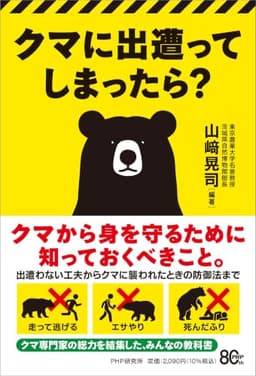
Our English rendering of the complete product title is What If You Encounter a Bear? (Bonus: Data Download on Changing Common Knowledge about Bears). This is our translation, rather than the title of a published English edition.
Publisher’s bibliographic page(外部サイト、新しいタブで開きます) / Publisher-supplied record(外部サイト、新しいタブで開きます) / ISBN9784569861814
Statistics cited in this article
- 1National Consumer Affairs Center of Japan publication, Preparing Bear Spray (author translation), joint caution, page 4(Published 25 August 2026) Open source
- 2National Consumer Affairs Center of Japan publication, Preparing Bear Spray (author translation), joint caution, page 13(Published 25 August 2026) Open source
- 3Ministry of the Environment, Recommended Requirements for Bear Spray Performance (author translation), printed page 6(August 2026) Open source
- 4Ministry of the Environment, Recommended Requirements for Bear Spray Performance (author translation), printed page 7(August 2026) Open source
- 5Ministry of the Environment, Recommended Requirements for Bear Spray Performance (author translation), printed page 8(August 2026) Open source
- 6Ministry of the Environment, Recommended Requirements for Bear Spray Performance (author translation), printed pages 7 and 8(August 2026) Open source
Questions to Reflect On
- Under what conditions and measurement method were the range and duration you are reading obtained?
- Can you distinguish verified information from questions that still need an answer from the seller?
- Who checks equipment condition and expiry, and who arranges practice after procurement?
Key Terms in This Article
- CRC concentration
- The percentage of active capsaicin and related capsaicinoids in bear spray. Japan’s Ministry of the Environment recommends approximately 1.0–2.0% in its August 2026 requirements; this differs from the percentage of OC pepper extract, which also contains other constituents.
- OC (oleoresin capsicum)
- A pepper extract containing oils, pigments and other constituents as well as pungent compounds such as capsaicin. Equal OC percentages may contain different active-ingredient percentages, so they cannot be compared directly with CRC concentration.
Related Content

Data Literacy for Social Impact: A Practical Guide to Japan's e-Stat and RESAS
A foundational guide to statistical literacy for NPOs and civic organizations, covering the basics of reading data critically and practical use of Japan's free government data portals: e-Stat, RESAS, and jSTAT MAP.

Do Additional Charges for Long-listed Medicines Depend Only on Patient Preference?
Charges for eligible originator medicines with generic counterparts, medical necessity, supply and patient explanations under the 2026 notices.
Fukushima Holds About 14 Million Cubic Metres of Removed Soil. Reuse Outside the Prefecture Began With Flower Beds at Two Government Buildings
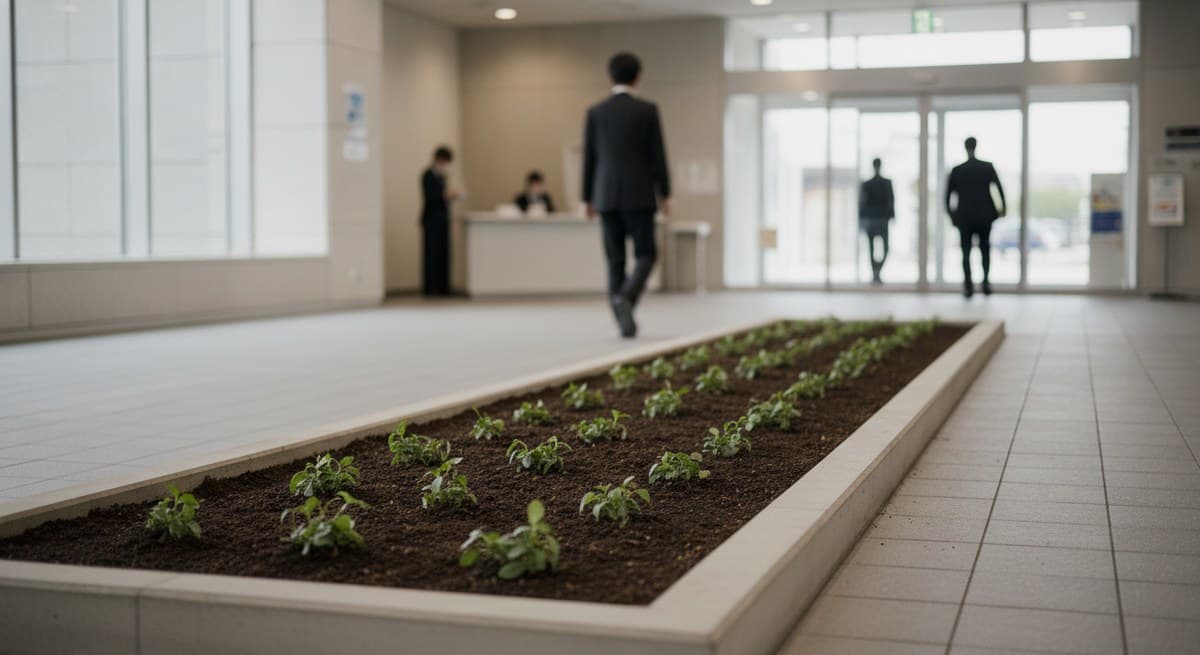
Soil removed during decontamination in Fukushima must be finally disposed of outside the prefecture by March 2045, an obligation written into law. About 14 million cubic metres sit in interim storage. On 29 August 2026 the first reconstruction reuse outside Fukushima began at a government building in Sendai, followed by one in Saitama. The volume used across both sites was about 2 cubic metres. The government's basic policy and roadmap say that selecting and surveying candidate sites for final disposal begins around 2030. This piece reads the distance between the deadline and the start, using the government's own documents.

20% of Japan's Water Pipes Are Past Their Service Life — Data on an Invisible Infrastructure Crisis
Of Japan's 746,000 km of water pipes, 25.3% have exceeded the 40-year statutory useful life. With over 20,000 leak incidents annually, a replacement rate of just 0.61%, and a renewal pace that needs to double, the data reveals an invisible infrastructure crisis demanding an average 48% rate hike across 96% of water utilities.
Get new columns by email
1-2 social structure analysis columns per week. Free to subscribe.
Join ISVD's activities?
Sign up to receive the latest research and activity reports. Feel free to reach out about collaboration or project participation.
Support ISVD’s research and activities
Support ISVD’s research and publications with JPY5,000 per year. There is no automatic renewal.