
G7 Critical Minerals Cooperation: How Can Supply and Local Benefits Be Checked?
An examination of 2026 statements and project announcements, price-support costs, local work and participation.
Examine G7 critical minerals cooperation through 2026 statements and project announcements. Distinguish commitments from implementation, price-support costs and benefits retained in producing regions.
TL;DR
- Check cooperation policy, contracts and facility operation separately
- Distinguish price-support costs from work retained locally
- Examine local contract conditions and responses to community questions
The opening image is an AI-generated concept photograph. It does not depict an actual G7 meeting, company or identified mineral specimen.
This article provides general information based on public sources and is not legal advice. Individual agreements and support measures require examination of the relevant documents and law with an appropriate professional.
What Is Happening
Separate project announcements from supply implementation
Assess cooperation to secure supply and cooperation to retain local benefits separately.
When governments promise to source from trusted partners, when can that cooperation be judged to have protected supply? Announcing cooperation, signing a purchase agreement and operating a processing facility involve different evidence and timescales. These distinctions matter when reading the G7's initiatives.
describes 13 recent or new partnerships and initiatives expected to unlock more than CAD5 billion in capital expenditure. This is the government's account of the project pipeline. It does not mean that an equivalent public budget has been spent or that every facility is complete.
The list includes arrangements, equity investment, proposed guarantees, and technology arrangements. A memorandum involving a Japanese company and a processing facility appears alongside an agreement involving another Japanese company to purchase processed rare earth products. Neither the existence of the list nor a purchase agreement independently establishes delivery.
Cooperation did not begin suddenly in June. The March Canada-Japan roadmap(外部サイト、新しいタブで開きます) had already proposed cooperation on processing, manufacturing and partnerships among industry, researchers and government. That earlier policy and the later announcements of individual projects establish different things. To ask what has progressed since a plan was agreed, readers need records concerning comparable subjects and periods. A new memorandum can document a further commitment without establishing a completed facility. An operating record can establish activity at one facility without proving that the wider policy has achieved every intended outcome. Keeping those objects separate allows a specific question about progress rather than a general verdict based on the number of announcements.
This article examines the conditions for cooperation to continue. Alongside partner countries and investment announcements, it asks who pays for price support, where processing occurs and what work and opportunities to influence decisions remain in producing regions. Securing material for buyers and creating benefits in producing regions require separate assessments.
Background & Context
Read G7 policy positions and price-support discussions
Investment and market conditions
The expresses concern about concentration in production and processing, non-market practices and arbitrary export restrictions. It proposes stronger cooperation on investment, recycling, procurement standards and information sharing. These are shared policy positions; the statement does not adjudicate the legality of every export restriction.
The statement also describes financing constraints and market uncertainty despite robust long-term demand expectations. Expected demand alone does not ensure a viable investment. Cooperation therefore addresses finance, customers and production conditions as well as relations between governments.
In his June 17 summit press conference(外部サイト、新しいタブで開きます), the French President described agreement on critical minerals and cooperative projects to reduce dependence. This is the presidency's account of the summit. It does not independently establish implementation of every project or benefits for particular communities. Agreements need to be followed through subsequent contracts, operation and delivery records.
What is being discussed about minimum prices?
The calls for discussion of the feasibility and design of trade mechanisms, including or other measures. A price floor seeks to prevent prices falling below a specified level. The plan does not announce an operative minimum price for every mineral transaction.
It also addresses downstream competitiveness, investment, technology, regulatory cooperation, stockpiling and disruption response. Support for producers is thus considered alongside industries using the materials. Isolating the price proposal would not demonstrate that diversification must succeed.
The Finance Ministry's July account of the spring meetings(外部サイト、新しいタブで開きます) records Japan's argument that higher alternative sourcing costs may need to be accepted as an insurance premium. It reports a policy position, rather than a consumer bill or a uniform implemented scheme. Assessing a proposal requires identifying whose costs its design would affect.
What the documents describe
Each document has a different object
- Statements and plans
- Cooperation policies and measures to explore
- Memoranda and intent
- Intentions to cooperate or support
- Purchase and technology contracts
- Agreed arrangements between parties
Implementation to check separately
Announcements alone do not settle it
- Policy
- Coverage, timing, costs and budgets
- Projects
- Financing, construction and operation
- Outcomes
- Delivery, local work and benefits
This article's synthesis of the G7 finance statement, U.S.-Japan plan and Canadian project announcements. It does not prescribe a universal sequence or determine the legal effect of individual agreements.
Reading the Structure
Examine costs, local work and influence over decisions
Who bears the cost of securing supply?
Price support, equity, guarantees and long-term purchasing arrangements address different risks. Price support raises questions about transaction prices; guarantees require scrutiny of coverage and triggering conditions; equity involves the business receiving investment and possible losses. Adding announcement values together conceals these differences in costs and responsibility.
Consider a hypothetical processing business accepting higher material costs in return for a more reliable purchase arrangement. Increased expenditure and reduced exposure to interruption have different value. The effect on finished-product prices would require evidence about contractual terms, material use and how much the business itself absorbs.
Public support also needs assessment beyond the amount announced. At the , Japan announced a USD20 million contribution to the Asian Development Bank's new critical minerals financing facility. The pledge, payment, operation of supported facilities and local employment are different facts to establish.
Value retained in producing regions
The same meeting discussed producing countries' priorities, participation in supply chains and domestic employment benefits. These countries are suppliers, but also decision makers concerning resource use and work retained locally. Their priorities deserve consideration beyond their usefulness to buyers seeking additional supply sources.
A describes discussion of processing, suppliers, infrastructure and skills alongside extraction. Government, industry and academic participants considered these development opportunities. The account does not present measured increases in community incomes.
Locating a facility in a producing country is therefore a starting point for further questions. What work is available, what training can people access and under what conditions can local businesses obtain orders? What power and water requirements accompany operation? National export growth cannot stand in for the benefits experienced by people living near a project.
Procurement and investment evidence
Buyer and project conditions
- Supply
- Purchase quantity, quality and delivery terms
- Finance
- Implementation of equity, guarantees and support
- Facilities
- Construction, capacity and operation
Questions about the region
Checks proposed by this article
- Work
- Job quality, skills and local orders
- Burdens
- Power, water and environmental effects
- Participation
- Explanation, views and chances to change plans
Questions prompted by Japanese meeting records and the World Bank dialogue account. These are neither measured outcomes for a particular mine nor legal duties shared by every project.
Participation in cooperation and influence over decisions
The March Canada-Japan roadmap(外部サイト、新しいタブで開きます) proposes cooperation on processing, manufacturing and partnerships among industry, researchers and government. It does not establish that researchers or local residents hold decision-making authority in every project.
describes differences in the information available to parties. Reading a project announcement differs from understanding its effects on one's life and being able to raise concerns. Publishing explanations does not establish adequate time to consider them or adequate answers to questions.
This article does not demonstrate exclusion at every mine. An individual assessment would ask who received information, what they could use and when they could request changes. Following national participation, business agreements and local decisions separately reveals conditions that a count of supplier countries misses.
Which work can local businesses join?
Alongside the location of a facility, examine whether local firms can sustain the work it offers.
The World Bank dialogue account discusses processing, logistics, suppliers and skills around extraction. This article proposes examining those opportunities through local orders. Imagine a new processing facility planning to contract maintenance to firms in its area. Advertising work, being able to apply, signing a contract and continuing to perform the work are different facts at different times. This hypothetical example does not report the performance of a particular mine or business.
An assessment could examine required skills and equipment, work scope, contract duration and payment terms. A training course raises further questions: could participants choose the resulting work, and did they have the conditions needed to continue it? A firm's local address alone cannot settle whether its orders represent benefits for residents. Identifying whose work is being studied changes the records needed.
Beyond the total value of orders, consider the tasks, their duration and costs borne by the supplier. What happens to local contracts if facility operation is reduced? This is another question about continuity. The proposal does not require disclosure of every commercial term. It asks what information is available to assess public support and work retained locally, leaving unavailable matters explicitly unknown.
Who answers after views are received?
Read participation in a meeting alongside answers to questions and opportunities to reconsider a plan.
A policy for government, industry and research cooperation differs from the conditions for nearby residents to influence decisions. This article proposes looking beyond meeting counts to the questions people could ask and answers they received. Imagine explaining what is known about water use and what requires further investigation. This example does not establish a water shortage or a particular company's refusal to respond.
If the person receiving a question cannot answer immediately, could they explain who will check it and when a response will be available? After receiving an answer, can the questioner examine it again and raise a follow-up? Publication alone cannot establish understanding. The language and method of explanation, and time to consider it, need separate examination from participant counts.
Another option is to identify which parts of a plan remain open for discussion and until when. Distinguishing settled matters from those subject to further studies or discussion clarifies why views are sought. Alongside whether a requested change was made, ask who explained the reasons for declining it. These are proposed ways to examine participation, not a claim that residents hold a veto or that every project follows one legal procedure.
Related Article and Guide
- Increasing tungsten supply and protecting factory procurement(このサイトの記事)
- Designing outcome indicators(このサイトの記事)
Reference Books
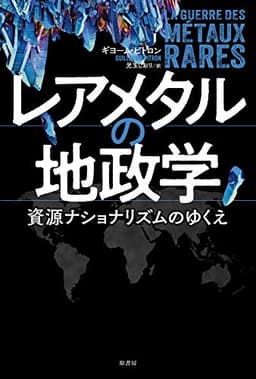
レアメタルの地政学:資源ナショナリズムのゆくえ (The Geopolitics of Rare Metals: The Direction of Resource Nationalism; title translated)(外部サイト、新しいタブで開きます), by ギヨーム・ピトロン and translated by 児玉しおり, was published in 2020. It is related reading for considering international relations around resources. Only public bibliographic details were checked; the book itself is unread here. It does not establish current G7 policy or the results of announced projects, and is offered as further reading alongside this article’s questions about supply, costs and producing regions.
Remaining Questions
Ask who can assess continued cooperation and benefits
If raw-material prices fall, who will bear the cost of continuing investment and purchasing from additional suppliers? A buyer accepting higher material prices, a government providing support and a company operating a facility face different conditions for maintaining cooperation. Following crisis announcements into contracts and budgets that can continue in ordinary conditions would help assess continuity. Which information allows each party to make that decision? Can the same information be left in a form that smaller buyers can use, instead of assessing cooperation solely through the announcements of major participants? Can firms receiving local work also examine the conditions for continuing their contracts?
For producing regions, which jobs endure and support skills or local orders? Export earnings and employment totals can begin an assessment, but they do not answer every question about the work that continues locally. Are national benefits being used to offset water, power or environmental burdens experienced by people nearby? Beyond recording that a community meeting occurred, an assessment can ask who answered the concerns raised and whether changes to the project remained possible. That would make participation itself a subject of inquiry alongside the economic outcome. Does time to consider the plan remain while people await answers, and can they ask follow-up questions?
Where published contracts and business reports remain limited, how should the matters that could not be checked be recorded? Requesting the information needed to assess public spending, supply and local benefits is different from demanding disclosure of every commercial detail. Comparing government and company explanations can identify which questions still require separate investigation. Keeping those questions clear allows a continuing assessment rather than a verdict based on the size of an announcement. Beyond investment totals, what has cooperation enabled different parties to check for themselves?
References
G7 Finance Ministers and Central Bank Governors’ Statement (May18–19 2026; provisional Japanese translation) (title translated) — Japan Ministry of Finance (2026). Japan Ministry of Finance
U.S.–Japan Action Plan on Critical Minerals Supply Chain Resilience (provisional Japanese translation) (title translated) — Japan Ministry of Finance (2026). Japan Ministry of Finance
G7 critical-minerals outreach meeting (April17; publicationApril21) (title translated) — Japan Ministry of Finance (2026). Japan Ministry of Finance
Overview of the 2026 IMF–World Bank Spring Meetings and G20 Finance Ministers and Central Bank Governors’ meetings (title translated) — Japan Ministry of Finance (2026). Japan Ministry of Finance
Prime Minister Carney secures new partnerships in defence and critical minerals at the 2026 G7 Leaders’ Summit — Prime Minister of Canada (2026). Prime Minister of Canada
Canada-Japan Comprehensive Strategic Roadmap — Prime Minister of Canada (2026). Prime Minister of Canada
Sommet du G7 d’Évian : troisième jour. Conférence de presse du 17 juin — Présidence de la République française (2026). Présidence de la République française
Latin America Seeks to Transform Its Mineral Wealth into Jobs and Development — World Bank Group (2026). World Bank Group
Statistics cited in this article
- 1Prime Minister of Canada: new defence and critical mineral partnerships at the 2026 G7(June 17, 2026) Open source
- 2Japan Ministry of Finance: G7 outreach meeting on critical minerals(Meeting April 17; published April 21, 2026) Open source
Questions to Reflect On
- Does an announced value represent a budget, payment or expected project investment?
- Can support costs and local benefits be assessed separately?
- What information shows whether local views can change a project?
Key Terms in This Article
- Offtake agreement
- An agreement establishing conditions for purchasing or taking a producer’s output. Contract formation and actual delivery or payment require separate evidence.
- Price floor
- A policy or mechanism intended to keep prices above a specified level. The U.S.–Japan minerals plan calls for feasibility and design discussions; it does not set a minimum price for every transaction.
- Memorandum of understanding
- A document recording parties’ understandings or intentions to cooperate. Its legal effect depends on the document; it is distinct from evidence of completed facilities or delivery.
- Critical minerals
- Minerals important to economic activity or security whose supply concentration or disruption is a concern. Covered minerals depend on the country and policy framework.
Related Content

Tungsten Prices Doubled in a Year and World Output Rose 3.7% — China Holds 78.8% of Mine Production
China tightened export controls on tungsten in February 2025 and announced a domestic cap on concentrate production in April. Rotterdam prices roughly doubled over the year, while world mine production rose from 82,000 to 85,000 tonnes, an increase of 3.7%. China holds 78.8% of production and 53.2% of reserves. This piece sets what worked after the 2010 rare earth restrictions against what is available now.

Structural Analysis of Foreign Aid Budget Allocation: Does the ODA vs. Domestic Welfare Tradeoff Hold?
Starting from the recurring social media claim "spend it at home, not abroad," this article analyzes the scale gap between ODA and social security budgets, international comparisons across DAC countries, and the evolving structure of strategic ODA. The numbers show that eliminating ODA would barely dent social security funding — and the framing of the question itself needs reexamination.
Can majority support alone bring about Security Council reform?
The September 2026 G4 statement, proposals to expand membership, and the adoption and ratification of Charter amendments

Do Falling Rice Prices Mean Farmers Receive Less?
The 28 September to 4 October 2026 retail average, August brown-rice contracts and April cost reference measure different stages and periods.
Get new columns by email
1-2 social structure analysis columns per week. Free to subscribe.
Join ISVD's activities?
Sign up to receive the latest research and activity reports. Feel free to reach out about collaboration or project participation.
Support ISVD’s research and activities
Support ISVD’s research and publications with JPY5,000 per year. There is no automatic renewal.