
Can majority support alone bring about Security Council reform?
The September 2026 G4 statement, proposals to expand membership, and the adoption and ratification of Charter amendments
Reading the September G4 statement, the Charter and official African positions, this article distinguishes political support, text-based negotiations, adoption and ratification. The article examines the 1965 expansion and asks how records can show progress without treating majority support as removal of permanent members’ ratification requirements.
TL;DR
- The September 22 G4 statement called for a consolidated model and text-based negotiations. Support for expansion is not a recorded vote on a specific amendment.
- The Council has five permanent and ten non-permanent seats. Its 1965 expansion differs from current G4 and African proposals, which require their own examination.
- Advancing negotiations through majority support differs from amending the Charter. Entry into force under Article 108 requires ratification including all permanent Council members.
The cover is an AI-generated conceptual image. It is not a photograph of an actual UN meeting.
What Is Happening
The September 22 G4 statement seeks a consolidated model and text negotiations. Support for expansion is not an amendment vote.
The G4 seeks text to negotiate
On September 22, 2026, the foreign ministers of the . Japan, Brazil, Germany and India seek expansion in both permanent and non-permanent seats. Their joint statement prioritized developing a consolidated model reflecting majority views and starting text-based negotiations. A consolidated model brings together the reform proposals of countries and groups.
The statement emphasized that a majority of UN Member States supports expansion in both categories. That is the G4’s assertion, not a reported vote on a Charter amendment. Support for expansion does not establish agreement on the specific text determining who receives how many seats and which powers accompany them. The meeting and statement likewise do not establish that Japan has secured permanent membership.
The ministers expressed the view that the long-running , or IGN, had been largely ineffective in producing concrete outcomes toward real reform despite eighteen years of activity. They also expressed serious reservations about a bridging proposal presented even prior to commencement of text-based negotiations. These assessments need to be attributed to the G4. The initial draft used public materials checked through October 4. On October 10, sources were rechecked and attribution was aligned with the verified G4 English statement published by Germany’s Federal Foreign Office and Germany’s ambassador speaking on behalf of the G4. Using these materials, this article asks what support is being sought and what conditions apply to changing the institution. It does not establish that all UN activities are ineffective.
Support for reform and support for a reform proposal
For example, countries wishing to increase the voice of underrepresented regions could disagree about creating permanent seats or increasing seats that rotate through elections. Even countries supporting permanent expansion face further questions about which countries or regions to select and whether new seats should have veto powers. This example separates the objects of support; it does not infer the votes of particular countries. Collecting expressions of support for “expansion” does not amount to counting votes for the same proposal.
Background & Context
Five permanent and ten elected seats followed the 1965 expansion. Current G4 and African proposals need separate examination.
Existing seats and the conditions for changing them
specifies a Council with five permanent members and ten elected non-permanent members. The UN’s names China, France, the Russian Federation, the United Kingdom and the United States as permanent members. Non-permanent members serve two-year terms and cannot serve consecutive terms. Permanent and non-permanent seats have different conditions for continued participation.
Permanent members have what is commonly called a veto over Council decisions other than procedural matters. Separately, requires amendments to be adopted by two thirds of the members of the General Assembly and ratified by two thirds of UN Member States, including all permanent Council members. means accepting the amendment in accordance with each country’s constitutional process. Casting a negative vote on a Council resolution differs from ratifying a Charter amendment.
It is also inaccurate to say the composition has never changed since 1945. The Information Centre’s describes amendments to Articles 23 and 27 in 1965 that expanded Council membership from eleven to fifteen and increased the required affirmative votes from seven to nine. There is a precedent for amendment. That history does not establish that a current proposal will succeed under the same circumstances. The content being negotiated now and countries’ conditions for ratification still need examination.
Existing Council
- Permanent members
- Five countries
- Non-permanent members
- Ten; two-year terms
- 1965 amendment
- Eleven to fifteen
G4 position, September 2026
- Expansion
- Both categories
- Combining proposals
- Consolidated model
- Object of negotiation
- Specific text
Sources: Charter Article 23, the UN’s current-member list, the UN Information Centre’s amendment history and the September 22 G4 statement published by Germany’s Federal Foreign Office. The right column describes the G4’s position, not an adopted allocation of new seats.
African demands cannot be reduced to opposition
The called for no fewer than two permanent seats and five non-permanent seats for Africa, with veto powers for the permanent seats while the veto exists. It concerns both the number of seats and their powers. The G4’s September statement also welcomed submission of the African reform model and expressed support for improving African representation, including in the permanent category.
said the G4 and African reform models share the important aim of expanding both categories. These statements do not establish agreement on every condition, or justify treating the AU as uniformly opposed to the G4. Separating shared positions from text requiring negotiation clarifies the object of discussion. Group statements also do not determine each member country’s future vote or ratification.
Reading the Structure
Negotiating support differs from amendment. Article 108 requires ratification including all permanent Council members.
Building support and changing the legal framework
- Political proposalWhat should change?Positions of the G4 and others
- Specific textCombine and negotiate proposalsIdentify the object of support
- Adoption under Article 108Two thirds of Assembly membersNot a simple majority
- Ratification and entry into forceTwo thirds of UN Member StatesIncluding all permanent Council members
Based on the G4 statement and Charter Article 108. Arrows do not indicate automatic progression. Amendment text and the negotiation process remain unsettled. Each country ratifies through its constitutional procedures.
The G4 statement said consensus is not the benchmark for decision-making on Security Council reform. This expresses a desire to turn majority support into concrete negotiations without requiring unanimity. Yet advancing discussions through majority support and bringing a Charter amendment into force have their respective conditions. Saying political unanimity is unnecessary does not imply that permanent members’ ratification is unnecessary.
For ordinary important questions, General Assembly decisions use two thirds of members present and voting. Article 108 instead refers to Assembly members and UN Member States. Confusing these populations, including how absences and abstentions are counted, can misstate the support needed even though both expressions use “two thirds.” This article does not calculate votes for a particular amendment. When comparing reported vote counts, readers should check the proposal and the population from which the number was derived.
The holders of powers being changed also ratify the change
Article 108 requires all existing permanent Council members to be included in ratification. Changing the distribution of permanent seats and powers therefore requires acceptance by countries currently holding that status. Questions about the powers held after a change overlap with the process for accepting the change. That structure does not establish each country’s internal motive as a desire to defend vested interests. Expressed conditions and actual actions require individual examination.
Article 109 also provides for a general conference to review the Charter. Changes under that provision still require ratification by two thirds of UN Member States, including all permanent Council members, before taking effect. The G4’s willingness to discuss reform beyond the IGN cannot be described as a way to bypass legal amendment conditions. Choosing a forum for discussion and satisfying conditions for changing the text are different matters.
Can seat counts measure reform’s effectiveness?
Broader participation concerns representation: whose voice enters discussions on a continuing basis. Which responses to a crisis are adopted and how decisions are implemented require other records. More seats alone do not establish that future conflicts will be resolved more effectively. The G4’s English statement mentions legitimacy, credibility and efficacy alongside representativeness. These should not be assessed using a single number; the intended improvement in each proposal needs to be followed.
Regional representation and a country’s seat are different questions
In considering better representation for Africa, the country receiving a seat and the voices it brings into discussions deserve separate examination. A permanent seat for one country would not establish that all countries in its region take the same position on particular issues. This is a design question about different interests within a region, not an account of the votes of particular Member States in the current debate.
Methods for consulting when regional views differ and reporting those views would permit comparisons going beyond the names of seat holders. The statements examined here do not establish agreement on such arrangements. A consolidated model should be read for who selects members, the conditions of selection and relationships with other Member States, as well as names and totals. Clearer scope of representation helps explain whose participation would improve.
The distinction between permanent and non-permanent seats also goes beyond rank. Continuing participation and electoral rotation distribute opportunities to participate in different ways. Is sustained membership the priority, or opportunities for more countries to participate in turn? The intended purpose should be identified when comparing designs. Increasing either type of seat does not automatically establish that the world’s voices will be reflected.
Following progress through comparable documents
This article proposes comparing the proponent, publication date, seats and powers proposed, and the confirmed scope of support for the same reform proposal. A statement supporting improved representation should not be added to a statement supporting a specific allocation as though they concerned the same thing. When a proposal changes, the comparison should identify changes in text and issues still unresolved. This is a proposed reading method, not a report that such a comprehensive tally has been completed.
It would distinguish countries welcoming development of a consolidated model from those accepting all its content. That avoids assuming support for starting negotiations amounts to agreement with their outcome. When “a majority” is cited, the source and object of support should be recorded. Published votes could then be compared with expressed support. Differences should not immediately be labelled deception without examining changes in statements, proposals and procedural conditions.
Japan’s position likewise merits examination both as a prospective candidate and as a proponent of institutional change. Focusing solely on support for Japan’s participation makes African and other regional conditions harder to see. The respective actors’ statements are needed to establish their essential conditions and the issues on which they seek further discussion. This is also why G4 and AU materials should be read together. After groups express shared goals, the next question is which parts of a concrete proposal they can share.
Remaining Questions
Match support to texts and adoption and ratification records. Representation and decision-making outcomes need separate assessments.
The next materials to examine are the regions and seats covered by a consolidated model and the text retaining differences between proposals. Assertions of support for expansion should not be widened into support for particular candidates or veto powers. Matching the proposal with dated statements would help. Publication of negotiating text would make that comparison concrete, but publication itself must not be read as adoption or .
Beyond negotiations lie adoption under Article 108 and national ratification. Can support in the Assembly and the conditions for ratification, including all permanent members, be followed in the same record? Separating expressions of support from completion of constitutional procedures would help identify progress and outstanding conditions. Proposals to broaden forums for discussion should also be read alongside the text and procedures that would actually change those conditions.
Assessing expansion requires asking both whether more regions participate and which decisions and implementation it aims to improve. Japan’s status should not be the sole measure; the voices of previously underrepresented regions and responses reaching people affected by crises deserve separate attention. What records could support those assessments? Maintaining expectations for reform while following statements, negotiations, adoption and entry into force through concrete evidence offers a starting point for reading today’s debate.
References
G4 Joint Ministerial Statement on the Reform of the UN Security Council — G4 Foreign Ministers (September 22, 2026). Federal Foreign Office of Germany
UN Charter (Japanese text) — United Nations (1945). United Nations Information Centre, Tokyo
Amendments to the UN Charter (Japanese text) — United Nations Information Centre, Tokyo (accessed 2026). United Nations Information Centre, Tokyo
Current Members — United Nations Security Council (accessed 2026). United Nations Security Council
G4 statement during the intergovernmental negotiations on Security Council reform, Presentation of the African Model, 20 April 2026 — Ambassador Ricklef Beutin, on behalf of the G4 (2026). Permanent Mission of Germany to the United Nations
AUC Chairperson reaffirmed Africa’s united & principled position on UN Security Council reform — African Union (2026). African Union
For a related way to examine institutions, see the guide to systems thinking for social issues(このサイトの記事).
Reference Books
The original Japanese title is retained below. Thinking About Reform of the UN Security Council is an English translation supplied by this article. The book is related reading, rather than the source of the September 2026 statement or the current Charter requirements.
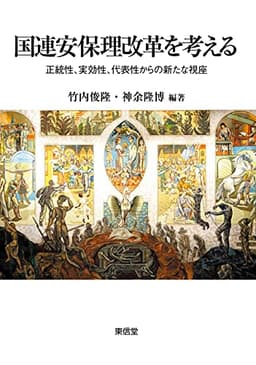
Publisher’s bibliographic record(外部サイト、新しいタブで開きます) / ISBN 9784798917184
Questions to Reflect On
- Which records distinguish support for reform from agreement with a specific proposal?
- Which records would separately assess representation and effectiveness after an expansion?
Key Terms in This Article
- United Nations Security Council
- The UN organ with primary responsibility for maintaining international peace and security. It consists of five permanent members and ten non-permanent members elected for two-year terms.
- Intergovernmental Negotiations on Security Council Reform
- A framework in which UN Member States discuss proposals for Security Council reform. Support and positions expressed in negotiations differ from adoption and ratification of a Charter amendment.
- Ratification of a UN Charter amendment
- Acceptance of a UN Charter amendment by Member States in accordance with their constitutional processes. Entry into force under Article 108 requires adoption by the General Assembly and ratification by two thirds of Member States, including all permanent Council members.
- Entry into force
- The point at which a legal instrument becomes effective. Particular obligations may have separate dates of application.
Related Content

Gennai OSS: Is Published Code Enough for Deployment?
The April 2026 partial release, the release planned around February 2027, and the license, data, and maintenance checks for adopting organizations

Foreign Parties Acquired 175 Hectares of Japanese Farmland, 0.004% of the National Total — and Not One Hectare Went to a Foreign Corporation or a Foreign National Living Abroad
On 16 September 2025 the Ministry of Agriculture and the Forestry Agency published their 2024 surveys of farmland and forest acquisition by foreign parties. Farmland came to 175.3 hectares, 0.004% of the national total, of which foreign corporations and foreign nationals living abroad accounted for zero. Forests came to 382 hectares, 0.003% of private forest, with a cumulative 10,396 hectares since 2006, or 0.07%. The Forestry Agency states that no case of development for water intake or groundwater extraction has ever been reported.

Structural Analysis of Foreign Aid Budget Allocation: Does the ODA vs. Domestic Welfare Tradeoff Hold?
Starting from the recurring social media claim "spend it at home, not abroad," this article analyzes the scale gap between ODA and social security budgets, international comparisons across DAC countries, and the evolving structure of strategic ODA. The numbers show that eliminating ODA would barely dent social security funding — and the framing of the question itself needs reexamination.

Corporate Tax as Indirect Tax — How the Defense Surtax Reaches Citizens' Wallets
In April 2026, Japan's Defense Special Corporate Tax took effect — a 4% surtax on base corporate tax liability. Framed as a tax on corporations, its burden ripples through to citizens via price pass-through, supply chain pressure, and a 10-year extension of the reconstruction surtax. This article traces the structural pathways through which the ¥43.5 trillion defense plan's three funding pillars reach household budgets.
Previous
Does Implementation Under Way Mean a Transport Gap Is Resolved?
Next
Gennai OSS: Is Published Code Enough for Deployment?
Get new columns by email
1-2 social structure analysis columns per week. Free to subscribe.
Join ISVD's activities?
Sign up to receive the latest research and activity reports. Feel free to reach out about collaboration or project participation.
Support ISVD’s research and activities
Support ISVD’s research and publications with JPY5,000 per year. There is no automatic renewal.