
Repairs Keep Surfacing After You Buy a Kominka — The Information Gap Born of Inheritance and Aging
A newcomer who bought an old house in the mountains of Nara found, only after moving in, a well that ran dry for two months, mold, and drainage failures. Japan holds 9.002 million vacant homes at a 13.8% vacancy rate, 80.9% of vacant detached houses are the neglected kind, and more than seven in ten inherited vacant homes already carry decay or damage. Repairs surfacing after purchase are the consequence of a three-layer information gap: disclosure that stops at the state of provision of facilities, sellers who do not know the condition amid inheritance and aging, and vacant-house banks that only 3.3% of households registered with even among those that resolved a vacant home.
TL;DR
- A newcomer who bought an old house found, only after moving in, a well that ran dry for two months, mold, and drainage failures
- Japan holds 9.002 million vacant homes at a 13.8% vacancy rate, and 80.9% of vacant detached houses (2.85 million) are the neglected kind
- Repairs surfacing after purchase come from a three-layer gap—disclosure range, sellers' ignorance, and unreached vacant-house banks—that has not kept pace with inheritance and aging
Repairs surfacing after purchase are not a matter of individual dishonesty. Disclosure stops at whether facilities exist, sellers themselves do not know the condition amid inheritance and aging, and official channels reach only a sliver of actual properties. Three layers have failed to keep pace with the reality of vacant homes.
What Is Happening
A newcomer in Nara found a dry well and mold only after moving in; 80.9% of vacant detached houses are neglected, and buyers face this stock
Only After Moving In Did the Well Run Dry for Two Months
In the mountains of Nara Prefecture, a woman in her thirties bought an old house and moved in with her husband. As , after the move the well ran dry for two full months, and she bathed at an acquaintance's home. Damp brought mold, and drainage failures surfaced little by little through daily use. Re-digging the well cost on the order of a million yen, and clearing grass costs hundreds of thousands of yen each year. None of it showed at the pre-purchase viewing; the need for repairs appeared only once she lived there.
What Buyers Face Is a Pile of Neglected Homes
This is not this newcomer's misfortune alone. Japan holds 9.002 million vacant homes, at a vacancy rate of 13.8%, both record highs. And narrowing to vacant detached houses, the kind closest to an old house, 80.9% (2.851 million) of the 3.523 million are "vacant homes other than those for rent, for sale, or secondary", that is, no tenant or buyer is being sought and they have been left for a long time. What a buyer faces is this pile of homes.
Most Inherited Vacant Homes Are Already Damaged
That the Nara case is no exception shows in the statistics. Among vacant homes passed on by inheritance, 21.2% have structural defects, 47.1% have partial decay or damage inside or outside, and 3.5% have decay or damage throughout. Together, more than seven in ten already carry some injury. Those with none come to only 28.2%. They are old, too: 20.4% were built in 1950 or earlier, 26.4% between 1951 and 1970, and 26.4% between 1971 and 1980, which the ministry sums up as more than seven in ten built in 1980 or earlier. Japan's current earthquake-resistance standard applies to building confirmations from June 1981, so a house built in 1980 or earlier predates that standard. A pre-purchase viewing shows only a sliver of this damage.
Background & Context
Disclosure stops at whether facilities exist, sellers often do not know the condition, and warranty protection misses private sales
The Law Asks About the "State of Provision," and Stops There
Why do the flaws show only after buying? One reason is that the law's disclosure range is narrow. The requires that, before a contract is concluded, the "state of provision" be explained for the facilities supplying drinking water, electricity and gas, and for drainage. What it asks for is whether the facilities are in place. Whether that well keeps water, or that drainage keeps working, falls outside the text.
Inspect the Building and the Well and Drainage Still Fall Outside
An inspection of an existing building's condition does not fill this gap either. What the law requires is disclosure of whether an inspection was done and, if it was, a summary of the results. Doing it at all is voluntary. And the inspection covers only the parts principal to structural strength and the parts that keep rainwater out. Even where an inspection has been done, a well running dry and a drainage failure never appear in it.
The 2-Year Protection After Handover Applies Only When an Agent Sells
The seller's liability once defects appear after handover is also thin from the buyer's side. The Act bars clauses disadvantageous to the buyer, except a clause setting a period of two years or more from the day of handover. But this rule covers only sales where a licensed agent is itself the seller. Most inherited vacant homes are sold by individuals, and the rule does not reach them.
Sellers Do Not Know the Condition Either
Sellers, for their part, often do not know the property's condition. About 60% (57.9%) of vacant homes are acquired by inheritance. Among those inherited homes, just under 60% (58.3%) were triggered by the owner's death. Households that made any preparation before inheriting come to only 23.0%. Many owners live far away and are elderly. Rather than hiding things in bad faith, the seller too does not grasp the lived condition.
Whether anything was prepared shows in what happens next. Vacant homes where nothing was done before the inheritance are held as vacant homes in 45.1% of cases, roughly 1.5 times the 29.4% where something was done. And what was done is modest: the most common step is "a conversation with the person to be inherited from" at 16.7%, with help drafting a will at 1.8% and use of guardianship or family trusts at 1.3%. Houses passed on without even a conversation are left outside the market, damage and all.
Who Can Actually Sell It Is Unclear
The title itself, too, is often unsettled. Registration of inherited real estate became mandatory in April 2024, with a fine of up to 100,000 yen for failing to apply within three years of learning of the acquisition, but the longer a property has been left, the more heirs pile up across generations, and who can sell it grows unclear.
Reading the Structure
Of households that resolved a vacant home, 3.3% registered with a bank and 29.2% used an agent
Only 3.3% Registered With a Vacant-House Bank
The mechanisms meant to fill the information gap barely reach actual properties either. The ministry asked the 228,000 households that resolved a vacant home over the past year what they did about it (multiple answers allowed). The most common answer is "did nothing in particular," at 38.7%. "Registered with a vacant-house bank" comes to 3.3%. That figure asks only whether they registered, so the share actually sold through a bank is lower still. A scheme that exists but never reaches the people it is for is not confined to vacant homes; the common structure behind populations policy fails to reach(このサイトの記事) sets this alongside take-up rates in other fields.
The Party Standing in the Middle Is a Private Agent
The second most common answer in the same survey is "had a real-estate agent look for a tenant or buyer," at 29.2%, roughly nine times the share that registered with a bank. "Consulted the government" comes to 2.8%, and "used a public subsidy or support scheme" to 1.9%. When a vacant home does move, the party standing in the middle is a private broker, not a public desk. And as long as the seller is an individual, the two-year protection after handover does not apply to the deal.
The National Bank Lists 19,626 Homes
The has 1,148 participating municipalities, but only 744 actually list properties. Listings currently stand at 19,626 homes, a total across the two operators that also counts the same property twice. Against 2.85 million neglected vacant houses, that is at most 0.7%. Cumulative deals since launch come to about 26,000.
The Top Outcome Is Demolition, Not a Sale
Vacant homes rarely move at all. Among vacant homes with no intended use, 14.8% stopped being vacant over the past year; the remaining 85.2% did not. Even where one was resolved, the leading reason is "demolished it," at 22.7%, followed by "rented it out" and "the owner or a relative moved in" at 15.5% each. Selling does not make the top three. Asked about future intentions, the most common answer is "keep holding it as a vacant home, including as storage," at 40.6%. Four in ten owners are not thinking of the market at all.
Three Layers, One Over Another
Here three layers come into view, one over another. The law stops at the state of provision of facilities and does not reach their performance or reliability. The seller lets the property go without knowing its condition, amid inheritance and aging. And the official distribution channel connects to only a fraction of actual properties. That repairs keep surfacing after purchase is the consequence of these three layers failing to keep pace with the reality of vacant homes, where inheritance and aging advance.
Measures to encourage migration and the use of vacant homes are spreading. But a piecemeal fix, such as slightly thickening the disclosure of key matters, will not fill this gap. How can the damage in a property left dormant with titles unsettled by inheritance be brought into the open before a transaction? Who investigates the condition, who conveys it to the buyer, who puts it into distribution? Leave that allocation undecided, and a vacant home, a regional resource, keeps sleeping as a negative legacy. What resolves the structure of repairs surfacing after purchase is not a tweak to the duty of disclosure, but the design of a mechanism that draws the real condition out ahead of the transaction.
Further Reading
- 老いる家 崩れる街 住宅過剰社会の末路 (Aging Houses, Crumbling Streets: The End of an Over-Housing Society)(外部サイト、新しいタブで開きます) (Chie Nozawa, Kodansha Gendai Shinsho, 2016) — a study of the over-housing society, where vacant homes rise even as land development and tower blocks keep going, read from the side of institutions. (In Japanese.)
References
2023 Housing and Land Survey: Summary of Basic Tabulation on Housing and Households — Statistics Bureau, Ministry of Internal Affairs and Communications (2025). Ministry of Internal Affairs and Communications
2024 Survey of Vacant House Owners: Report — Housing Bureau, Ministry of Land, Infrastructure, Transport and Tourism (2025). Ministry of Land, Infrastructure, Transport and Tourism
About the National Vacant House and Land Bank (Participating Municipalities, Listing Municipalities, and Deals) — Ministry of Land, Infrastructure, Transport and Tourism (2026). Ministry of Land, Infrastructure, Transport and Tourism
National Vacant House and Land Bank: Participating Municipalities and Listings Over Time — Ministry of Land, Infrastructure, Transport and Tourism (2026). Ministry of Land, Infrastructure, Transport and Tourism
On the Mandatory Application for Inheritance Registration — Civil Affairs Bureau, Ministry of Justice (2024). Ministry of Justice
Statistics cited in this article
- 1Statistics Bureau, 2023 Housing and Land Survey (final figures)(2023) Open source
- 2MLIT, 2024 Survey of Vacant House Owners(published 2025) Open source
- 3Ministry of Justice, On the Mandatory Application for Inheritance Registration(in force April 2024) Open source
- 4MLIT, 2024 Survey of Vacant House Owners(published 2025) Open source
- 5MLIT, National Vacant House and Land Bank(as of end of July 2026) Open source
- 6MLIT, National Vacant House and Land Bank: Participating Municipalities and Listings Over Time(as of end of July 2026) Open source
Questions to Reflect On
- In your area, is there a way to investigate a vacant home's real condition before a sale and convey it to the buyer
- Are you writing off vacant homes as an owner's dishonesty? Where does the information gap lie, in law, seller, or distribution
- Who should investigate a property left dormant with unsettled inheritance, and who should put it into distribution
Related Content
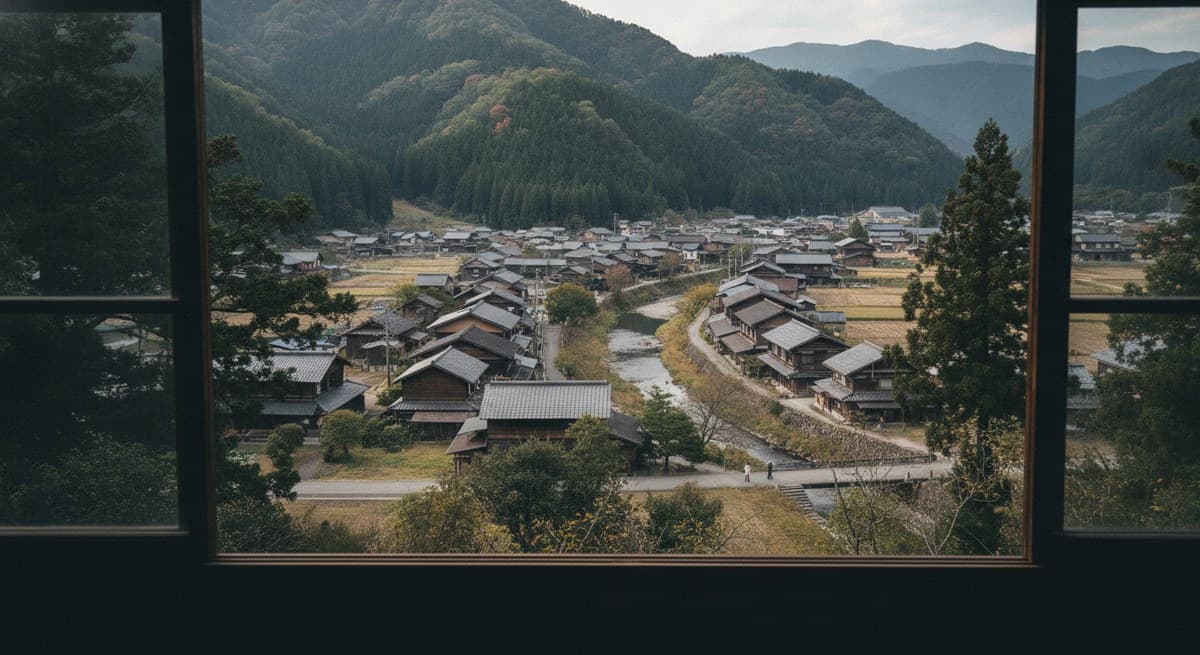
Bear Injuries Hit a Record 216 in Japan — Depopulation Has Emptied the Hands That Tended the Boundary
By Japan's Environment Ministry, bear-inflicted injuries hit a record 216, with 13 deaths, in FY2025, and sightings reached 50,801, 2.1 times FY2023. But a poor nut crop is only the trigger. Depopulation has drained the hands that tended the satoyama; abandoned farmland is turning, in quality, back into forest; and the buffer between people and the wild is dissolving from within. This reads not culling versus coexistence, but the vacancy of who manages the boundary.
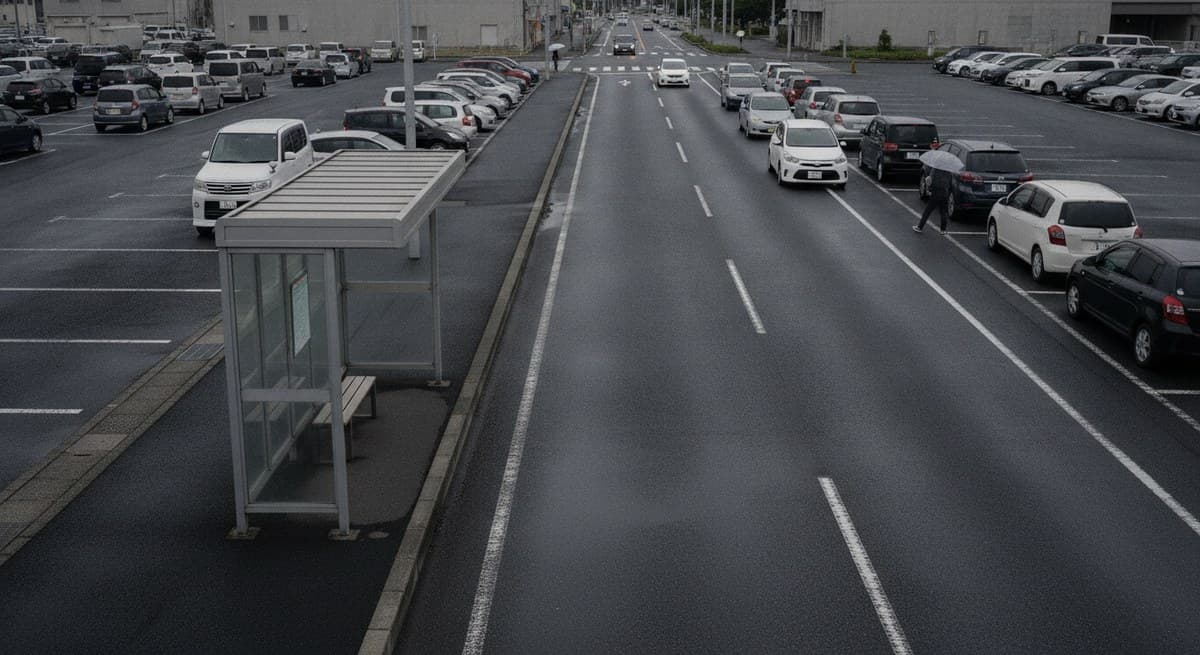
Kumamoto's Car Society Cannot Be Solved by Roads — Transit's Downward Spiral and Planning Backward from Where People Live
Congestion is worsening in the Kumamoto urban area, where semiconductor industry is concentrating. The Kumamoto Urban Area Person Trip Survey shows the car's mode share rising from 59.3% in 1997 to 67.3% in 2023, while the transit share fell to 5.2%. Yet total travel has fallen to 0.85 times its 2012 level, so congestion cannot be explained by the volume of traffic across the urban area. Adding roads does not clear congestion; in an expressway toll-free trial, traffic rose about 79%. This reads the downward spiral in which driver shortage leads to cuts, fewer riders, unprofitability, and withdrawal, and points to reconnecting where people live with transit by working backward, rather than widening roads.

Inherited Forest Land Without Clear Boundaries — Negative Assets and the Making of Owner-Unknown Land
A family in Imari, Saga inherited about 4,300 square meters of forest whose boundary survives only by word of mouth; timber is worth less than surveying, yet disaster liability stays with the owner. Owner-unknown land reached about 4.1 million hectares in 2016 (exceeding Kyushu's main island) and a projected 7.2 million by 2040, while the cadastral survey sits near 53%. This reads how the four faces of one piece of land—ownership, boundary, benefit, and liability—split apart while registration, cadastral survey, forest management, the environment tax, and treasury absorption each pursue them separately, and points to redesigning ownership.
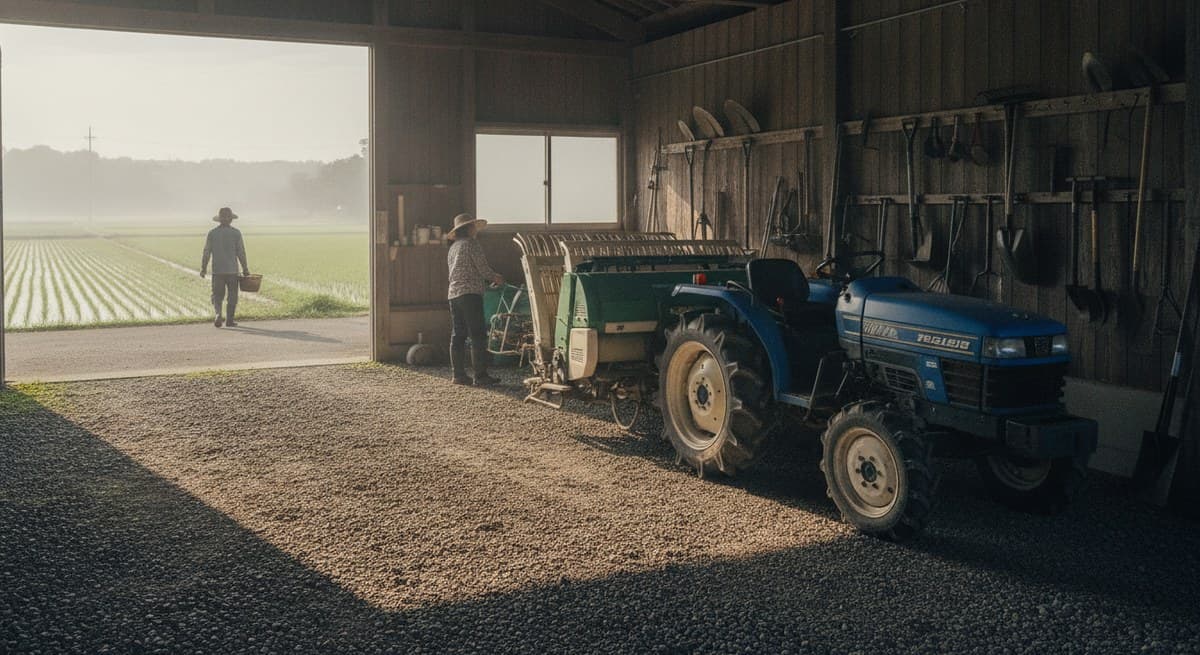
Farm Machinery That Runs Only Days a Year — The Structure That Keeps Individual Ownership Locked In
A newcomer farmer in Takamori, Kumamoto faces machinery worth millions of yen that runs only a few days a year. This is not bad luck. MAFF data—an average of 3.8 hectares per farm, 24.3% use of paid support services, 28.5% for equipment sharing—reveals why joint use fails to spread, and points to reframing farm machinery as a quasi-public good.
Previous
Inherited Forest Land Without Clear Boundaries — Negative Assets and the Making of Owner-Unknown Land
Next
Trucking's "Appropriate Cost" — Can a Legal Floor Stop Rates Thinning Toward the Bottom of Multi-Tier Subcontracting?
Get new columns by email
1-2 social structure analysis columns per week. Free to subscribe.
Join ISVD's activities?
Sign up to receive the latest research and activity reports. Feel free to reach out about collaboration or project participation.
Support ISVD’s research and activities
Support ISVD’s research and publications with JPY5,000 per year. There is no automatic renewal.