
Causes of School Non-Attendance in Japan 2023 — 1 in 15 Junior High Students, 346,000 by Grade and Region
School non-attendance reached 346,482 students in 2023, an 11-year consecutive increase. One in 15 middle schoolers is absent. What lies behind the 51% labeled 'apathy and anxiety'? Analysis by grade and prefecture.
TL;DR
- Non-attendance reached 346,482 students in FY2023 (+15.9% year-on-year); junior high students at 67.9 per 1,000 (approximately 1 in 15)
- The "Junior High Gap" — a ~1.6x statistical jump in non-attendance from Grade 6 to Grade 7 — is confirmed in the data
- "Low motivation and anxiety," which accounts for more than half of reported causes, is potentially a "residual category" created by the perceptual gap between teachers and students
What Is Happening
The statistical overview of 350,000 students, and the reality of 1 in 15 junior high students
In FY2023, the number of non-attending elementary and junior high school students reached 346,482 (). This marks the 11th consecutive year of increase, continuing to set all-time records. The year-on-year growth rate of +15.9% suggests structural changes that accelerated in the wake of the COVID-19 pandemic.
Breaking down the figures makes the scale even clearer.
| Category | Count | Per 1,000 Students |
|---|---|---|
| Elementary school | 130,370 | approx. 17.1 (1 in 59) |
| Junior high school | 216,112 | 67.9 (approx. 1 in 15) |
| High school | 68,770 | 2.4% of enrollment |
The junior high non-attendance rate is approximately 1 in 15 — meaning 2 students per class of 30.
FY2024 provisional data shows 353,970 students (+2.2%), extending the streak to 12 consecutive years, though the growth rate slowed sharply from 15.9% to 2.2%. Whether this reflects policy effectiveness or an approach to saturation — where the numbers can no longer rise much higher — will be determined by future data.
Background & Context
The "Junior High Gap" revealed by grade-level data, and the structural trap in cause statistics
The "Junior High Gap" Revealed by Grade-Level Data
Grade-level breakdowns of non-attendance expose a structural problem in the education system.
| Grade | Count (FY2023) |
|---|---|
| Grade 1 (elementary) | 9,154 |
| Grade 3 (elementary) | 17,997 |
| Grade 6 (elementary) | 36,588 |
| Grade 7 (junior high 1) | 58,035 |
| Grade 8 (junior high 2) | 77,768 |
| Grade 9 (junior high 3) | 80,309 |
Source: figures for the 2023 school year
The approximately 1.6x jump from Grade 6 (36,588) to Grade 7 (58,035) is striking — the so-called "Junior High Gap." The data corroborates that the environmental transition from elementary to junior high — subject-based teaching, club activities, restructured peer relationships — structurally elevates the risk of non-attendance.
However, cautions against casual use of the "Junior High Gap" framing. The increase in junior high non-attendance is not solely a Grade 7 spike; it includes cumulative growth through Grades 8 and 9 as well, making it important to view the junior high environment as a whole.
"Low Motivation and Anxiety" — A Structural Trap in Cause Statistics
The largest category in non-attendance cause statistics is "low motivation and anxiety": 50.9% in elementary school and 52.2% in junior high. Taking these figures at face value, however, involves a serious problem.
What the commissioned survey found
A Ministry of Education-commissioned survey published in March 2024 by the revealed a decisive perceptual gap between teachers and students/parents.
| Factor | Students/Parents | Teachers |
|---|---|---|
| Bullying victimization | 16–44% | 2–4% |
| Reprimand from teacher | approx. 20% | 2–3% |
A tenfold gap in perception
While 16–44% of students and parents cited bullying victimization as a trigger for non-attendance, teachers recognized it at only 2–4%. This more-than-10x perceptual gap suggests that the "low motivation and anxiety" category may be functioning as a "residual category" — a catch-all when no specific trigger can be identified.
In other words, "low motivation and anxiety," which accounts for the majority of causes, may not reflect an inner problem in children, but rather a statistical artifact reflecting the state in which teachers cannot identify a concrete cause. Drawing the conclusion that "more and more children are unmotivated" without acknowledging this structural issue risks misdirecting interventions.
Reading the Structure
Analysis of regional disparities across prefectures, and the problem of 67,000 students with no support
Regional Disparities — "Urban High, Rural Low" Does Not Hold
Non-attendance rates vary significantly across prefectures.
Prefectures with the highest junior high non-attendance rates (per 1,000 students) include Miyagi Prefecture (46.7), Kochi Prefecture (44.8), and Okinawa Prefecture (ranking high across all school levels). The lowest rates are found in Akita and Yamagata prefectures (approximately 21.0 per 1,000 for Akita).
The key observation is that the simple picture of "urban high, rural low" does not hold. Miyagi (Tohoku) and Kochi (Shikoku) rank at the top, while Tokyo is not necessarily in the highest group.
Structural factors underlying regional disparities include:
- Okinawa: Association with Japan's highest child poverty rates. Economic hardship raises non-attendance risk through its effects on the home environment.
- Miyagi: Declining willingness to attend school after COVID, combined with the spread of awareness from the 2017 Act on Promotion of Diverse School Attendance ("Educational Opportunities Act") that children should not be forced to attend.
- Akita's low rate: Correlation with top-ranking academic survey results nationwide. Potentially reflects high school satisfaction.
67,000 Students No Support Can Reach
The most severe group among non-attending students are those in "complete isolation" — absent for 90 days or more with zero support. That number is approximately 67,000 (about 19% of all non-attending students). One in five is connected to no school, no support agency, nowhere.
1,142 education support centres
There are approximately 1,142 Educational Support Centers (Tekio Shidoshitsu) across Japan, but 38.8% (approximately 134,000 students) of non-attending students are not connected to any support agency.
The government is promoting the establishment of "Special Non-Attendance Schools (Diverse Learning Schools)," which grew from 35 schools in 2024 to 58 in 2025. The future target is 300, but this remains severely insufficient relative to 350,000 non-attending students.
Users of the ICT-based "counted as attendance" system stand at approximately 13,000 (about 3.7% of all non-attending students), with awareness and implementation lagging far behind.
A problem of the system, not the children
346,482 non-attending students. This number reflects not a "children's problem" but an "institutional problem."
The "low motivation and anxiety" figure of 52% may be a residual category generated by the perceptual gap between teachers and children. The regional disparities reflect differences in educational environments across the country. And the complete isolation of 67,000 children indicates a structural insufficiency in the support system.
Changing how we read the data changes the structure we can see. That is the first step toward changing the direction of policy.
For youth mental health challenges more broadly, see "The Structure of Youth Mental Health Crisis(このサイトの記事)"; for the connection between education and work, see "Higher Education and Labor Market Disconnect(このサイトの記事)."
References
FY2023 Survey on Student Guidance Issues Including Problem Behavior and Non-Attendance — Ministry of Education, Culture, Sports, Science and Technology (MEXT) (2024)
Survey Research on Analysis of Non-Attendance Factors (MEXT Commissioned) — Research Institute of Human Development and Society (2024)
COCOLO Plan: Measures on School Non-Attendance Toward Learning Guaranteed for Every Child — Ministry of Education, Culture, Sports, Science and Technology (MEXT) (2023)
Further Reading

Statistics cited in this article
- 1MEXT Survey on Student Guidance Issues (FY2023)(FY2023) Open source
- 2MEXT FY2024 Provisional Report(FY2024)
- 3MEXT, Survey on Problem Behaviour and Non-attendance in Student Guidance — non-attendance by school year(2023) Open source
- 4MEXT Survey on Student Guidance Issues — Prefectural Data(FY2023)
- 5MEXT FY2023 Non-Attendance Survey(FY2023)
- 6MEXT Advisory Council on Non-Attendance(2024)
Questions to Reflect On
- How did the adults around you respond when a child in your school was not attending?
- Does the "low motivation and anxiety" classification truly reflect the voices of children?
- Where is the boundary between viewing non-attendance as a "problem" versus as a "diverse learning choice"?
Related Content

The Reality After Japan's Digital Textbook 'Formalization': How the Three-Option System Entrenches Regional Inequality
On April 7, 2026, the Japanese government approved a bill amending the School Education Act, establishing digital textbooks as official textbooks on equal standing with print. The law takes effect in April 2027, with full application to elementary schools beginning in academic year 2030. Yet roughly one and a half months after the cabinet decision, the ground reality reveals a three-option system — paper-only, paper-and-digital combined, or digital-only — that is already structurally entrenching regional inequality. High school digital textbook coverage stands at 11.5%, compared to 99.8% for elementary and middle schools. Teacher ICT-instruction training completion rates range from 99.6% in the highest prefecture to 56.8% in the lowest — a 42.8-percentage-point gap. Abroad, South Korea's AIDT was downgraded from "textbook" to "educational material" within one semester, leaving a connection rate of 0.3–0.5% in Sejong City. Japan's formalization is a starting point, not an endpoint — and the four-year transition design will determine whether the country repeats the same mistakes.
High School Tuition Gaps by Prefecture — Osaka ¥630K, Tokyo ¥490K, Rural Areas ¥457K
A 2026 reform abolished income limits for Japan's high school tuition support program and raised the private school cap to ¥457,000. But "tuition-free" means very different things depending on where you live: Osaka offers ¥630K (the national high), Tokyo covers up to the metro average, while most rural prefectures have only the national base. This article reads the structural inequality through data.

The Day One Complaint Erased 2,100 Meals — The Iwaki Sekihan Disposal Incident and Structural Vulnerability in Public Administration
On March 11, 2026, approximately 2,100 graduation celebration sekihan meals were discarded in Iwaki City, Fukushima, following a single anonymous phone call. The caller never requested disposal. An analysis of how one voice overrode the rights of 2,100 students and the contradiction of a government that promotes food waste reduction.
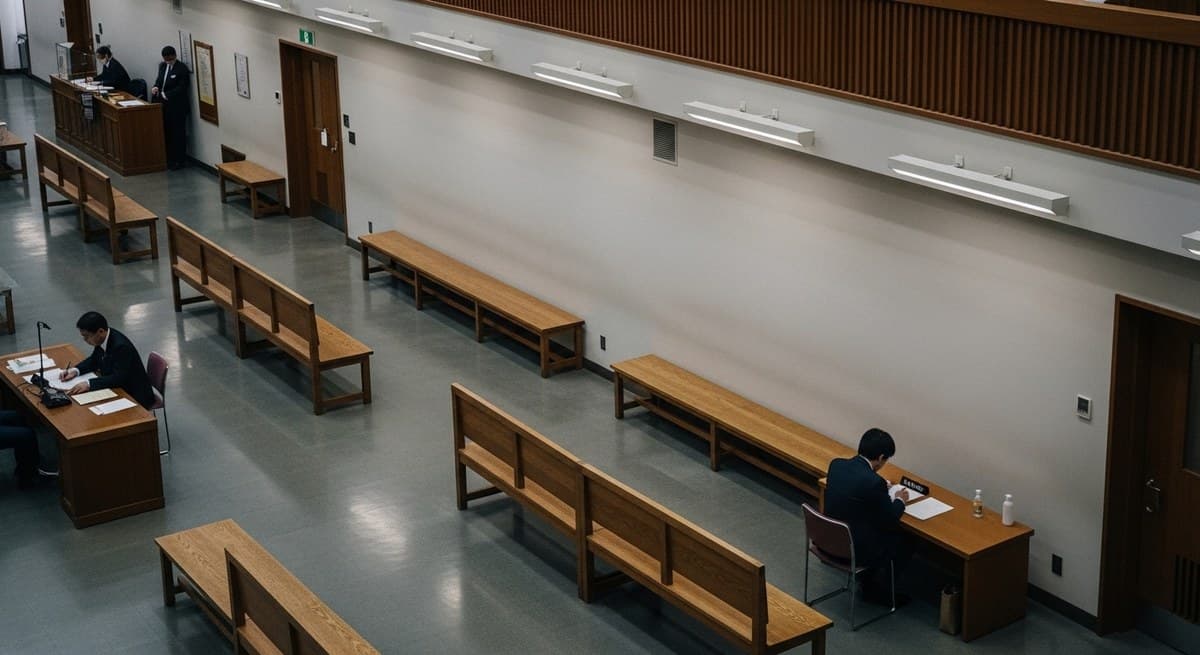
1,218 Retrial Applications Concluded in Five Years and 7 Orders to Reopen — 115 of the 121 Dismissed in 2023 Had No Examination of Facts at All
Kumamoto Prefecture decided on 10 August 2026 not to appeal in the state compensation case arising from the Matsubase incident. Japan's retrial system is under review by the Legislative Council's subcommittee on criminal law (retrial), which met 18 times between April 2025 and February 2026. Supreme Court statistics show 1,218 retrial applications concluded between 2019 and 2023, with 7 orders to reopen. Of the 121 dismissed in 2023 solely for falling outside Article 435, 115 had no examination of facts.
Previous
30 Years of Social Insurance Premiums — How Much Has Take-Home Pay Fallen for a ¥300K Monthly Salary?
Next
Tokunoshima TFR 2.25, Higashiyama 0.76 — Mapping Birth Rates Across 1,741 Municipalities
Get new columns by email
1-2 social structure analysis columns per week. Free to subscribe.
Join ISVD's activities?
Sign up to receive the latest research and activity reports. Feel free to reach out about collaboration or project participation.
Support ISVD’s research and activities
Support ISVD’s research and publications with JPY5,000 per year. There is no automatic renewal.