
After Fill Removal, How Can the Public Verify Cost Recovery?
Historical records from Atami distinguish soil removal from recovery of its cost. Earlier action under a prefectural ordinance must be distinguished from the national law introduced later. The article proposes linking work, order and accounting records for matching cases and reporting dates.
TL;DR
- Historical records from Atami distinguish soil removal from recovery of its cost.
- Earlier action under a prefectural ordinance must be distinguished from the national law introduced later.
- The article proposes linking work, order and accounting records for matching cases and reporting dates.
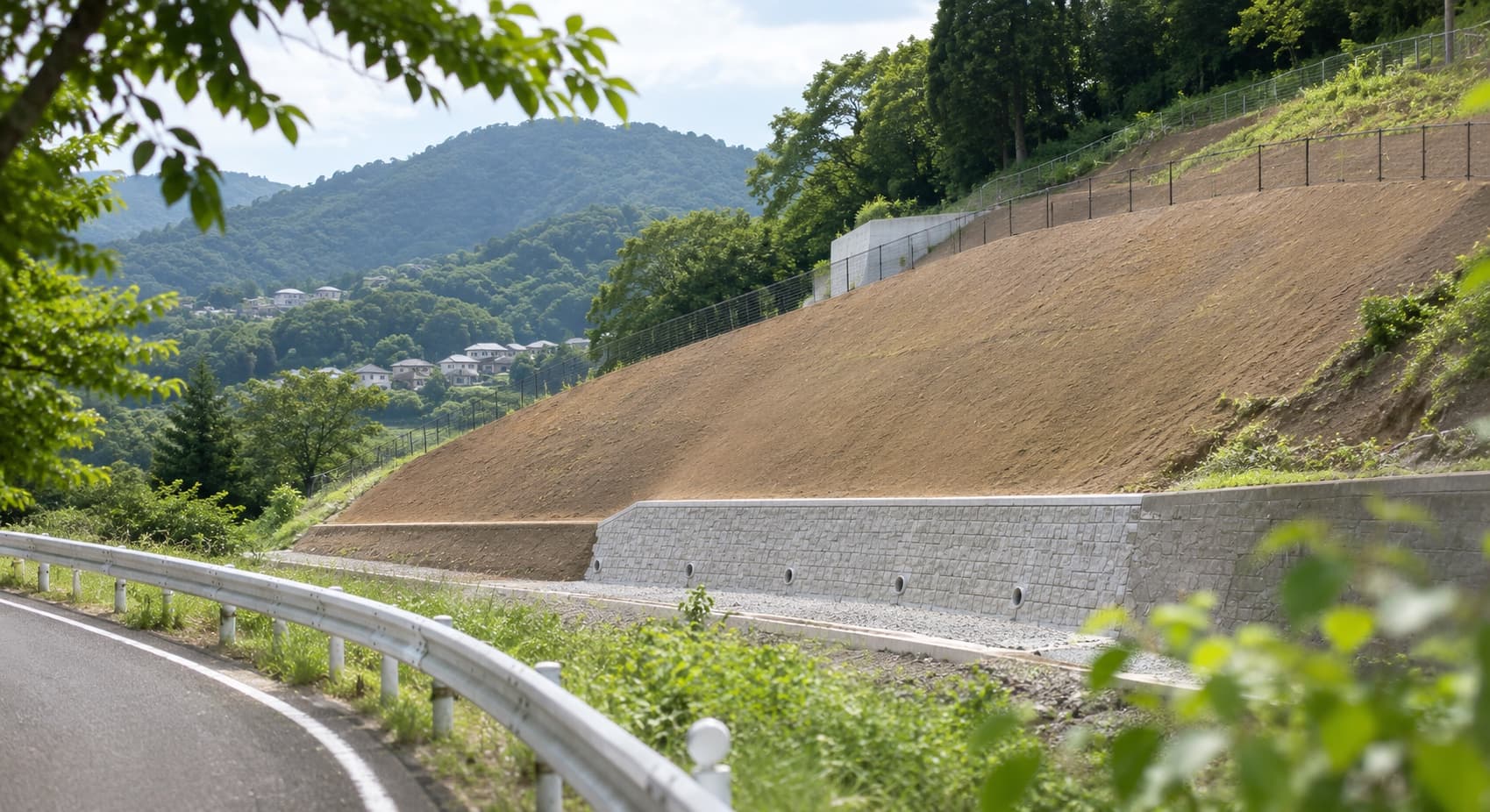
This AI-generated conceptual image does not depict an actual incident site, facility or organization.
This article provides general information from public administrative records, not legal advice on an individual order or case. Consult a qualified legal professional for a specific decision.
What Is Happening
Atami's administrative documents distinguish work performed, financial liability and recovery.
In its explanation to the prefectural assembly in September 2022, Shizuoka Prefecture said it had ordered the former landowner to remove soil remaining at the headwaters of the Aizome River in Atami. After it could not confirm that work had started by the deadline, it decided to undertake the removal through administrative execution: carrying out required measures in place of the person responsible. This was a statement of policy at that time, not a new announcement today.
The prefecture's FY2024 implementation report records an end date of February 8, 2024 for the work including soil treatment. It lists payment orders of ¥462,583,000 and ¥667,623,000 for removal and treatment respectively. Their calculated sum, ¥1,130,206,000, is an amount ordered, not money confirmed as recovered.
A record of work and a record of repayment answer different questions. Completed removal does not establish that the person liable and the amount payable have been finally determined, or that all the money has been recovered. Conversely, an unknown recovery position is no reason to conclude that the work never happened. Residents need to understand both what was done at the site and how the expenditure has been handled.
This article uses public administrative documents checked on October 21, 2026 to consider how those questions can be examined. The related NHK articles' bodies were not read; this is not an account of the latest court proceedings or rulings. Nor does the recorded end of soil treatment establish the present safety of the entire site. Work performed, legal decisions and current hazards require different evidence. Describing all three with a single word such as “resolved” can obscure those requirements.
Background & Context
National guidance and a separate Kanagawa case show why legal bases and documentary stages matter.
Regulating fill involves both where controls apply and who can be required to act. The Ministry of Land, Infrastructure, Transport and Tourism explains that, following the 2021 Atami disaster and other concerns, legislation was revised to regulate hazardous fill comprehensively across land uses. The revised law took effect on May 26, 2023. Its overview identifies designated regulatory areas, permission and inspection arrangements, landholders' maintenance responsibilities and corrective orders directed at those responsible for creating hazards. MLIT's overview of the fill regulation law(外部サイト、新しいタブで開きます)
That national overview cannot simply be applied to earlier action in Atami. The prefecture's assembly explanation cited a prefectural ordinance, and the action preceded the national law's commencement. Even where physical hazards resemble one another, the date, legal basis and reasons for selecting the recipient matter to legal examination. This article does not decide whether the earlier orders were lawful or suggest that subsequent legislation settled earlier disputes.
A separate public announcement illustrates the distinction between carrying out measures and seeking payment. On July 21, 2026, Kanagawa Prefecture announced special emergency administrative execution for fill in Miura. It scheduled measures including protective sheeting and fencing for July 29–September 30 and said it would seek reimbursement from the actor after completion. The announcement alone establishes neither subsequent completion nor receipt of payment. Kanagawa's July 21, 2026 announcement(外部サイト、新しいタブで開きます)
This is not a comparison of which prefecture performed better. Atami's record concerns past implementation; Miura's announcement describes a plan at its publication date. Their evidence is at different stages. Atami's amount cannot be used as an estimate for Miura, and the passage of Miura's scheduled end date is not proof of completion. A useful comparison first identifies what each document records, then specifies what a later document would need to establish.
National administrative guidance also distinguishes execution from collection. The summary of the guidelines on addressing illegal or hazardous fill includes a process diagram running from execution through payment orders and collection to recovery. It describes administrative procedures, not a guarantee that money will arrive automatically. MLIT guideline summary, pp. 48–49(外部サイト、新しいタブで開きます)
Work records
- Can establish
- Measures and area covered
- Limit
- Not receipts or current site safety
Orders and accounting
- Orders
- Amounts demanded
- Receipts
- Check separately for matching cases and dates
Organized from this article, historical Shizuoka records and national guidance. This is not a recovery rate or proof of current claim validity.
Reading the Structure
A proposed record system links work, orders and accounts while preserving scope, dates and changes.
The following is a proposal for evaluating policy, informed by those documents. An examination of fill remediation needs at least three categories of records:
- The scope of work and management remaining afterwards
- Who was required to do or pay what, and on which grounds
- How much was spent and recovered
The reporting arrangements should not assume that a construction department's completion report can establish all three.
Separating these categories need not weaken accountability. Seeking payment from the appropriate person requires an explanation connecting that person and the relevant conduct with the measures needed and the expenditure incurred. Urgent work and a retained explanation are both necessary. Showing why work was needed does not by itself explain the allocation of its cost. Equally, withholding any assessment of completed work until liability is resolved makes it harder to see what measures were actually carried out.
One possible publication approach is to link construction, order and accounting records for each case. Work records would identify the area, measures and date of completion checks. Order records would identify dates, grounds and required measures, distinguishing any matter under dispute. Accounting records would show expenditure, amounts claimed and receipts at the same reporting date. This is a proposal, not a claim that every municipality already has a common legal duty to publish such a record.
Even a recovery rate needs a defined scope before it is calculated. Receipts divided by expenditure measure a different thing from receipts divided by payment orders. The first asks how much spending has been recovered; the second asks how much of the amount demanded has been paid. If those measures differ, their difference needs investigation. The order amounts checked for this article are insufficient to calculate either rate for Atami.
Cases and reporting periods must also match. Dividing receipts from earlier cases by this year's newly issued orders does not measure recovery for a consistent set of cases. Combining removal and subsequent soil treatment also requires an explanation of which costs are included. Before adding figures to a comparison, the reporting method should explain what constitutes one case and which dates the records cover.
Publication should also preserve a traceable history of changes. If a document showing a claim is later replaced because circumstances changed, simply removing the earlier amount can break its connection to budgets and assembly explanations. Keeping the dated record and explaining when and why it changed would help distinguish a correction from a subsequent change in circumstances. This is a proposal, not an allegation that Atami records were replaced without an explanation of the grounds. Residents may need to understand the decisions behind a number as well as its latest value.
These records could also inform budgets intended to prevent delays in remediation. A plan that assumes expenditure and later recoveries will match needs to explain how work would be financed if repayment is delayed. Public funding for an interim period poses budgetary difficulties. Stricter assessment of recoverability requires scrutiny of whether it delays responses to hazards. Choosing between arrangements requires evidence about urgency, available funds and actual recovery.
The national guideline summary includes management of land and structures after execution alongside cost collection. Its structure supports examining management and accounting beyond the removal stage. It does not allow this article to determine the correct manager or engineering measures for any individual site. MLIT guideline summary, p. 45(外部サイト、新しいタブで開きます) The proposed evaluation would explain work performed and financial expectations separately, while keeping both sets of records traceable.
Related Reading
宇那木正寛’s 実証 自治体行政代執行の手法とその効果(外部サイト、新しいタブで開きます) (Dai-Ichi Hoki, 2022) is related reading on administrative execution and cost collection. The publisher-registered public introduction and contents(外部サイト、新しいタブで開きます) address administrative authority, storage of objects and the legal grounds for collecting costs. The full book has not been read; this description is limited to public bibliography, introduction and contents. Evidence about Atami’s orders, court proceedings and actual payments requires the relevant case-specific public primary records.
This section contains Amazon Associate links.
Guide to defining what an indicator measures(このサイトの記事)
Remaining Questions
Unverified legal developments, receipts and site management define the next public-document checks.
The documents checked here do not establish the latest legal position on Atami's payment orders, actual receipts or current site management. A historical implementation report should not be treated as a list of claims necessarily valid on identical terms today. Unverified information does not mean non-payment or absent management. The next step is to distinguish what has been settled, what remains disputed and what is recorded elsewhere.
One option is to secure public funds for timely measures while continuing to examine liability. Its difficulties include finding that funding and sustaining collection work. Publishing case-level progress is another option, but it takes effort to make amounts comparable and requires attention to privacy and litigation. More disclosure alone does not ensure lawful orders or successful recovery.
A possible review would have construction staff verify completed scope and remaining management, legal staff assemble publishable judgments and order records, and accounting staff reconcile spending, claims and receipts at one date. The assembly could examine how those records connect, while editors check what public documents actually establish. Findings could inform future remediation budgets and publication practices. This is a proposed review, not an evaluation already carried out.
References
- Shizuoka Prefecture: September 2022 assembly explanation on fill measures(外部サイト、新しいタブで開きます) — Historical statement from September 2022; webpage updated October 17, 2023.
- Shizuoka Prefecture: FY2024 implementation and budget execution report, Environmental Bureau(外部サイト、新しいタブで開きます) — Printed pp. 110–111. The PDF's publication date was not established in this check.
- MLIT: Overview of the Act on Regulation of Residential Land Development and Specified Embankments(外部サイト、新しいタブで開きます) — Confirms the institutional overview and commencement on May 26, 2023. The webpage's publication or update date was not established.
- MLIT: Summary guidelines on addressing illegal or hazardous fill(外部サイト、新しいタブで開きます) — Pp. 45 and 48–49. The summary document's publication or revision date was not established.
- Kanagawa Prefecture: Administrative execution under the fill regulation law(外部サイト、新しいタブで開きます) — Published and updated July 21, 2026. Construction dates are the schedule announced then.
Sources checked October 21, 2026. Undated documents are not presented as announcements made that day.
September 2022 prefectural assembly explanation: fill measures — Shizuoka Prefecture (2022). Shizuoka Prefecture
Administrative execution under the fill regulation law — Kanagawa Prefecture (2026). Kanagawa Prefecture
Related Content
What Should a Garbage Bag Charge Pay For? Lessons from Nanae
Public documents from Nanae illuminate the difference between bag prices and treatment charges, and the relationship between waste reduction, funding and service continuity.

Must Tenants Leave Immediately After a Condominium Rebuilding Vote?
Japan’s 2025 amendment and main provisions commencing in 2026: voting requirements, lease-termination periods, compensation and housing continuity.

Japan DBS needs more than a criminal-record check
Incumbents have different deadlines: three years from commencement in mandatory settings, one year from certification in certified settings. Advance notice and correction protect the reliability of a conviction check. Check record coverage alongside everyday reporting and protective measures.

Japan's Civil Court Digitalization, May 21, 2026 — mints Mandate and the Problem of the 7% Pro-Se Litigant
Japan's amended Code of Civil Procedure took full effect May 21, 2026, with attorneys now required to use mints for electronic filing. The pro-se rate has already fallen from 20% to 7%; ~90% of plaintiffs are represented. Those digitalization helps least are already a minority — and those who give up on litigation never appear in judicial statistics.
Get new columns by email
1-2 social structure analysis columns per week. Free to subscribe.
Join ISVD's activities?
Sign up to receive the latest research and activity reports. Feel free to reach out about collaboration or project participation.
Support ISVD’s research and activities
Support ISVD’s research and publications with JPY5,000 per year. There is no automatic renewal.