
Zentsuji's electronic voting: how can voters who cannot read the screen check a choice?
About braille and assisted voting, completion audio, candidate confirmation and trial evidence, using the August 30, 2026 election and materials checked through October 6
Examine Zentsuji’s electronic voting through primary sources, distinguishing retained braille and assisted voting, completion audio, candidate confirmation, trial assessments and participation in improvements.
TL;DR
- Paper exceptions and operational or assisted voting remain available
- Completion sound differs from hearing and choosing candidates
- Distinguish consultation from improvements and do not infer usability for all visually impaired voters from general trial findings
The header is an AI-generated concept photograph. It does not depict an actual polling station or an assistive voting device approved for use in an election.
This article provides general information based on public sources and is not legal advice. Confirm election-day procedures with the responsible election commission.
What Is Happening
Confirm the August election and retained conventional methods
Choosing a candidate on a screen can reduce the burden on someone who finds handwriting difficult. But can a person who cannot read that screen compare candidates, change a selection and check the ballot before submitting it? Electronic voting deserves assessment both for counting speed and for the choices that voters can exercise themselves.
For the Kagawa gubernatorial election held on August 30, 2026, using tablets was adopted in polling districts within Zentsuji. describes selecting a candidate on a tablet and recording the vote on storage media. Kagawa’s election notice(外部サイト、新しいタブで開きます) and results publication(外部サイト、新しいタブで開きます) confirm the election date.
According to , braille, absentee and provisional ballots remain outside electronic voting and use conventional procedures. A voter who finds the machine difficult can also receive operational advice or use assisted voting. The change did not abolish every existing support method.
Retaining support, however, does not establish that each person can vote in their preferred way. Someone who uses braille, someone who needs enlarged text and someone who needs spoken information may require different conditions. This article uses public material checked through October 6 to distinguish available options from usability questions still requiring verification.
Background & Context
Distinguish audio stages, braille, assisted voting and operational help
Completion audio and checking the candidate are different
The city’s operating instructions(外部サイト、新しいタブで開きます) describe starting, selecting a candidate and checking the selected name. A mistaken selection can be changed. At the end, an animation and an audible completion message indicate that voting has finished.
That completion message does not by itself establish that someone who cannot see the display can hear candidate names and independently revise a choice. Arrival instructions, candidate comparison, selection confirmation and completion notification are separate stages. Sound at one stage should not be presented as evidence that the entire process works through audio.
A Digital Agency report published on July 15(外部サイト、新しいタブで開きます) described adding audio reading as a future improvement under consideration. This was the explanation at that time. This article has not verified subsequent features or Zentsuji’s settings through October. A claim that a function still does not exist would go beyond saying that its availability has not been established here.
Braille, assisted voting and operational help
Paper remains an option for voters who can use braille. For someone unable to write, involves helpers designated by the voting administrator writing the voter’s choice. Kagawa’s election questions and answers(外部サイト、新しいタブで開きます) describe these methods. This does not authorize a family member to choose a candidate for the voter.
Receiving advice while operating a tablet is also different from having a helper vote on one’s behalf. The desired extent of assistance and the information that must be communicated can differ. Treating a visual impairment as sufficient reason for staff to select the method risks making the available choices harder to exercise.
Checks for proceeding independently
Follow the candidate-selection process
- Learn about candidates
- Can usable written or spoken information be chosen?
- Choose and revise
- Can the voter check actions and changes?
- Confirm the ballot
- Are the selection and completion distinguishable?
Methods retained in current guidance
Use support according to the voter’s wishes
- Braille ballot
- The conventional paper method remains
- Operational help
- Receive advice about operating the machine
- Assisted voting
- Designated helpers confirm the voter’s own choice
Based on Zentsuji’s explanation and Kagawa’s Q&A. The left side proposes checks; it does not certify that the actual tablet meets all of them. A completion message is distinct from reading candidate names.
A polling-station tablet is not voting online from home
This form of electronic voting requires going to a polling station and using the device installed there. Kyocera describes recording votes on directly connected media without routing them through a network. The introduction therefore does not mean that residents can vote online from home.
Electronic voting for local elections also needs to be distinguished from national-election procedures. The city’s May explanation concerned its mayoral and council elections; the prefecture’s July ordinance enabled the gubernatorial-election application. Combining explanations from different dates and election types would falsely suggest that a single method now applies throughout Japan.
Reading the Structure
Examine consultation, trials, venues and improvement with secrecy
Hearing opinions and deciding improvements
In , the Ministry of Internal Affairs and Communications explained that it had heard disability organizations before changing audio-display conditions. It also said election commissions had been asked to ensure access to assisted and braille voting when using machines without that function.
In the same meeting, the minister’s answer(外部サイト、新しいタブで開きます) described disability representation on a research group examining voting environments. These statements do not support a blanket claim that no views were heard. They also do not establish how people with disabilities participated in Zentsuji’s procurement or which local improvements resulted.
After consultation, the next question is how the opinions affected the conditions of use. Can voters check candidate names, revise a selection and choose the extent of assistance through which they disclose their preference? Connecting trial results with adopted changes, and explaining why other changes were deferred, can make participation consequential.
Connecting opinions to improvements could begin with the stage a voter wants to undertake independently. Hearing instructions is different from asking someone else to verify a chosen candidate. A request for help should not be treated as consent to delegate the choice. If staff explaining the equipment differ from those arranging election-day assistance, agree with the voter what needs to pass between them.
Whose usability does a positive trial assessment describe?
Zentsuji held trial sessions, a questionnaire and a public consultation(外部サイト、新しいタブで開きます) before introduction. Its published questionnaire(外部サイト、新しいタブで開きます) shows broadly positive responses and comparisons by age and familiarity with digital devices.
This is evidence about people who tried the system and answered. It is not a random survey of all residents, nor a published breakdown showing whether people with visual impairments or different braille abilities could complete candidate selection. Positive reactions from older people or less experienced device users do not automatically establish how someone unable to read the screen can verify a choice.
The city’s published comments and replies(外部サイト、新しいタブで開きます) recognize benefits for people who find writing difficult. Those benefits can be acknowledged while improving access to the information on screen. Conversely, an issue absent from the published replies does not prove that no other consultation addressed it.
What the published findings show
Respondents’ experiences and opinions
- Operational impressions
- Clarity, time and screen readability
- Group comparisons
- Age and familiarity with digital devices
- Scope
- Not an assessment of every voter or all visually impaired people
Additional proposed checks
Questions raised by this article
- Preferred method
- Can braille, audio or enlargement meet the need?
- Choice and secrecy
- Do revision, confirmation and assistance fit the voter?
- Next improvement
- Can difficulties and reasons for changes be recorded?
Based on the city’s questionnaire and published comments and replies. Findings on the left do not certify the checks on the right. This also does not imply that no disabled person attended a trial.
Preserve choice before and after the tablet
describes braille candidate lists, audio information and measures protecting secrecy in assisted voting. The perspective reaches beyond equipment at the polling station to information needed when deciding whom to support. Published provisions and delivery at every venue still require separate assessment.
Public-service continues through information, travel, reception, operation and confirmation. Obtaining braille information does not resolve a journey to an inaccessible venue. Equally, being guided into the venue does not supply candidate information that the voter needed beforehand.
This article proposes connecting device trials, venue preparation and staff explanations. Confirm the assistance the voter wants and communicate capabilities and limits before election day. When functions change, identify differences from earlier guidance. Recording the stage at which difficulty occurred, without retaining the voter’s political preference, could support improvements while protecting secrecy.
When planning a venue, retain the conditions under which a trial succeeded. Changed lighting, surrounding conversation, furniture or places to wait may require further examination. These are examples for designing a test, not reports of problems at Zentsuji’s actual polling stations. Confirm relevant conditions with the voter rather than extending one result to a different venue without examination.
Separate support evaluation from political preferences
Evaluating usability does not require collecting whom someone voted for. A practice ballot could, for example, include changing a candidate selection, followed by a discussion of where spoken information or explanation was needed. This is a proposal from this article, rather than a claim that Zentsuji conducted such a test. The distinction matters when describing both the evidence and the improvements still to be examined.
A trial could distinguish braille use, the ability to read the display and the assistance the person wants. Sharing a diagnosis does not make requirements identical. Success among experienced users also does not reveal every difficulty encountered by a first-time user. Publishing findings from a small group requires care with combinations of information that might identify individuals.
For people unable to attend a trial, do not assume a single reason. Within what can be established, distinguish lack of notice from an unsuitable journey, schedule or explanation of how to try the system. A missing response should not become evidence of satisfaction. Consider another way to hear views, while keeping questions about desired support separate from questions about political preferences.
At an actual polling station, choosing the candidate belongs to the voter, while adjusting support is a different staff responsibility. Venue preparation, offered methods and stages needing improvement can be assessed without retaining political preferences. Feeding those findings into procurement and training could expand usable options rather than relying on each person to explain the same difficulty repeatedly. This remains an approach to evaluate; the article does not claim nationwide delivery or verified outcomes.
Related Guide and Columns
The outcome indicator design guide(このサイトの記事) explains how to distinguish support activity counts from outcomes reaching the person.
- Digital inequality and access to public services(このサイトの記事)
- Political distrust and democratic participation(このサイトの記事)
Reference Books
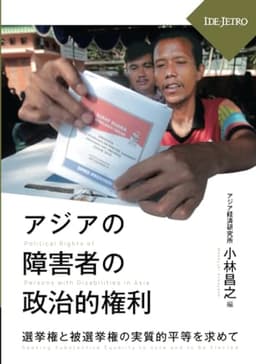
アジアの障害者の政治的権利――選挙権と被選挙権の実質的平等を求めて―― (Political Rights of Persons with Disabilities in Asia: Seeking Substantive Equality in Voting and Candidacy; title translated)(外部サイト、新しいタブで開きます), edited by 小林昌之 and published in 2024, is related reading. IDE’s public introduction(外部サイト、新しいタブで開きます) describes analysis of political participation and legal conditions for exercising political rights. Only the public introduction and bibliography were checked; the book itself is unread here. It does not establish Zentsuji’s actual device capabilities or polling-station performance.
Remaining Questions
Ask about voter choice, election-day support and the next election
Efficiency need not mean that everyone operates a tablet at the same speed. Being able to choose a suitable method and verify the intended ballot matters even when it takes longer. Alongside counting times and staff requirements, evaluation can examine where assistance was needed between learning about candidates and confirming a choice. How could those differences inform the next election while protecting the voter’s wishes and secrecy? Reasons for choosing a different method deserve examination, distinguishing missing support from differences in personal preferences.
Until equipment improves, clear information about currently available braille and assisted voting remains necessary. Who explains machine capabilities and the scope of help to someone wishing to proceed through audio? Advance discussions need to reach election-day staff, with an opportunity to check again if the proposed help differs from what was wanted. The person requesting support should not repeatedly have to rebuild the same explanation from the beginning. If conditions change after an advance discussion, can guidance identify what changed and where to check on election day?
After hearing opinions, organizers should explain what changed and what cannot yet change. Do published trial findings reflect only people who could readily attend? Can people less able to voice a concern try a suitable method and understand the reasons for decisions? Election commissions, suppliers and voters need to make clear which conditions they will examine together before the next election. Retain reasons and a next review for items deferred, and examine whether voters can return questions about that explanation.
References
Kyocera Digi-sen adopted for the Kagawa gubernatorial election in Zentsuji (title translated) — Kyocera (2026). Primary source (accessed October 6, 2026)
About this election (title translated) — Kagawa Prefectural Election Commission (2026). Primary source (accessed October 6, 2026)
Kagawa gubernatorial and prefectural assembly by-election results (title translated) — Kagawa Prefectural Election Commission (2026). Primary source (accessed October 6, 2026)
What is electronic voting? (title translated) — Zentsuji City (2026). Primary source (accessed October 6, 2026)
How to vote electronically (title translated) — Zentsuji City (2026). Primary source (accessed October 6, 2026)
Introducing electronic voting: Shintomi from ordinance to counting (title translated) — Digital Agency (2026). Primary source (accessed October 6, 2026)
Budget Committee proceedings: answer by the MIC Election Department Director (title translated) — House of Councillors Budget Committee; MIC Election Department Director (2026). Primary source (accessed October 6, 2026)
Budget Committee proceedings: answer by the Minister for Internal Affairs and Communications (title translated) — House of Councillors Budget Committee; Minister for Internal Affairs and Communications (2026). Primary source (accessed October 6, 2026)
Election questions and answers (title translated) — Kagawa Prefectural Election Commission (2026). Primary source (accessed October 6, 2026)
Disability White Paper 2026, Chapter5 Section2 Part3 (title translated) — Cabinet Office (2026). Primary source (accessed October 6, 2026)
Public consultation and questionnaire on introducing electronic voting (title translated) — Zentsuji City (2026). Primary source (accessed October 6, 2026)
Electronic voting questionnaire results (December20 2025–January23 2026) (title translated) — Zentsuji City (2026). Primary source (accessed October 6, 2026)
Comments on the ordinance proposal and the city’s replies (title translated) — Zentsuji City (2026). Primary source (accessed October 6, 2026)
Questions to Reflect On
- How does the voter want to revise and verify a candidate selection?
- Are requirements of people who find trials difficult to attend examined?
- Can support improve without recording political preferences?
Key Terms in This Article
- Accessibility
- The ability to use services and information regardless of disability or other circumstances. Shared components and the actual interface and added functions need to be checked.
- Assisted voting
- A designated helper records the choice of a voter who cannot write because of illness, injury or similar circumstances. The helper does not select the candidate for the voter.
- Braille voting
- Voting in braille by an eligible voter with a visual impairment who uses braille. Zentsuji’s electronic-voting guidance retains the conventional paper procedure.
- Electronic voting
- Voting through equipment at a polling station, with the ballot saved to electronic storage media. The method discussed here differs from internet voting at home.
Related Content

Gennai OSS: Is Published Code Enough for Deployment?
The April 2026 partial release, the release planned around February 2027, and the license, data, and maintenance checks for adopting organizations

Does Implementation Under Way Mean a Transport Gap Is Resolved?
Japan’s transport-law amendment scheduled for 16 October, the 15 May district counts, and usable bookings and round trips.

Before Restricting Children's Social Media by Age — How to Establish Age Is Still Sitting in the Open-Questions Column
In a paper issued in April 2026 by Japan's Children and Families Agency, whether to require age verification from social media operators still appears as a question. The methods listed are age data supplied by mobile carriers and estimation by AI, both at the stage of assessing feasibility. A rule that draws a line at an age needs, before the line is drawn, a means of telling which side someone is on. This piece reads the debate through where duties sit and how identity is established.

Fraud Losses in Japan Rose 98% in a Year While Cases Cleared Stood Still — Most Reports From People in Their 30s, Most Money From Those in Their 70s
Confirmed figures published by Japan's National Police Agency in May 2026 put losses from remote-contact fraud in 2025 at 142.31 billion yen, up 98.0% on the previous year, close to double. Cases cleared came to 6,575, down 0.0%. Victims aged 65 and over fell to 51.3% of reported cases, down 14.0 points. This piece reads how the choice between counting cases and counting money changes where effort is sent.
Get new columns by email
1-2 social structure analysis columns per week. Free to subscribe.
Join ISVD's activities?
Sign up to receive the latest research and activity reports. Feel free to reach out about collaboration or project participation.
Support ISVD’s research and activities
Support ISVD’s research and publications with JPY5,000 per year. There is no automatic renewal.