
Japan’s Employment for Skill Development: Who Is Told When Terms Change?
For the April 2027 start, distinguish organisational permission from individual plans, official change procedures and explanations to workers.
Applications for supervising support organisations and individual Employment for Skill Development plans precede the April 2027 start. Official change procedures and proposals for evaluating workers’ understanding need to be assessed separately.
TL;DR
- Distinguish the system’s start from applications accepted before commencement
- Organisational permission and individual plan accreditation have different subjects and submission offices
- Track administrative changes separately from explanations reaching the worker
This article provides general information about the system, rather than legal advice. Individual application decisions require consultation with the relevant official office or a qualified professional.
What Is Happening
Separate commencement, advance applications and expectations about permission dates
Accepting an application, granting an organisation permission, and communicating conditions to a worker each require different evidence. The same distinction matters when reading preparations for Japan’s Employment for Skill Development system. Following only the progress of people preparing documents leaves a further question: how did the person described in those documents receive the conditions?
The publishes a pre-commencement permission application leaflet(外部サイト、新しいタブで開きます) stating that the system starts on April 1, 2027. Applications for permission for supervising support organisations opened earlier, on April 15, 2026. Applications for accreditation of individual Employment for Skill Development plans opened on September 1, 2026, under separate guidance. These are procedures preparing for commencement; information about work taking place after commencement is a different category of evidence.
Does applying early guarantee a permission date?
OTIT’s leaflet strongly recommends applying at least 6 months before the intended start of supervising support operations when an organisation wishes to begin soon after commencement. It gives September 30, 2026 as the example for an intended April 1, 2027 start. At the manuscript’s source recheck on 13 October 2026, that example date had already passed.
The same leaflet explains that incomplete entries or missing documents can change the order of examination and prevent a result arriving by the desired time. Permission certificates are expected to be mailed from April 2027, with some applications submitted by August 31, 2026 potentially having certificates mailed in March 2027. Application timing cannot establish a definite permission date; the guidance needs to be read together with its qualifications and exceptions.
Background & Context
Distinguish organisational permission, plan accreditation and change procedures
Where to submit organisation permission and individual plan applications
An application for permission concerns the organisation’s supervising support business. OTIT directs these applications to its headquarters examination division branch office. Its separate guidance on plan accreditation(外部サイト、新しいタブで開きます) directs applications to the local office or branch responsible for the applicant’s address, using the location of its head office where the applicant is a corporation. Reusing the permission application address for an individual plan would confuse the procedures.
The plan accreditation page lists forms concerning employment conditions, costs paid by the worker in their home country, and explanations of important treatment conditions. The availability of these forms is verifiable, but their titles alone cannot establish that an individual entry is accurate or that the worker understood the explanation. Separating the organisation’s criteria from the individual’s work and costs helps identify what needs additional checking.
When comparing procedures, readers need to identify who is being checked and what the check concerns. Telling a worker only that an application has been submitted leaves unclear whether organisational permission or their individual plan is awaiting examination. Naming the subject and current stage could help participants discuss which office will provide the next response and which documents need checking. This is a proposal about explanations, not a guarantee of the time between acceptance and work starting.
Organisational permission
- Subject
- The organisation’s business
- Submit to
- Headquarters examination
- Check
- Permission criteria
Individual plan accreditation
- Subject
- The individual’s plan
- Submit to
- Responsible local office
- Documents
- Work terms and costs
A comparison of submission offices and subjects. It does not report acceptance, permission or a worker’s understanding.
Information that changes after submission
The leaflet on changes to permission application entries(外部サイト、新しいタブで開きます) explains what to do when entries change following a pre-commencement application. The specified change notification and supporting documents should be submitted promptly to the headquarters examination division branch office.
If the change documents have not arrived by December 28, 2026, examination proceeds using the earlier application content. If permission is granted on that basis, the specified change notification or certificate amendment procedure should take place on or after April 1, 2027 and within 1 month of the permission date. The arrival date concerns which content is examined; it does not say that every subsequent change is prohibited.
OTIT asks applicants to incorporate anticipated changes before applying and explains that additional checks and missing documents can take time. Recording only the original submission makes it harder to follow differences between subsequent circumstances and the content used in examination. Recording what changed, when it was reported and which conditions were examined could help participants check the same situation.
Compliance continues after permission
The change guidance also explains that permission criteria must be met from application through permission and continuously afterwards. Permission may be revoked if an on-site inspection finds that the criteria are no longer met. A record of permission therefore belongs alongside subsequent checks of the organisation’s circumstances.
This warning does not establish the number of actual revocations, the extent of improvements in auditing or the practical difficulty of applying. Keeping published requirements separate from observations of implementation identifies what additional evidence an evaluation needs.
Reading the Structure
Propose checking recorded conditions against explanations reaching workers
How should changed conditions be explained to workers?
The following is a proposal for evaluating implementation. Alongside progress in permission and plan accreditation, an evaluation could check which conditions were explained to a worker and how subsequent changes were communicated. Updating application documents and completing explanations to the individual should each be checked through their own records.
For example, records could distinguish the date conditions changed, the date information was submitted to the administration and the date of an explanation to the worker. They could also identify the language and materials used and questions the worker raised. However, a change to an organisation’s application does not necessarily change every individual’s employment conditions. Changes relevant to a person’s treatment or contact for advice need to be identified before deciding who should explain what. This recording method is the author’s proposal, rather than an account of a universally required OTIT form.
Official guidance
- Report changes
- Submit promptly
- Examination content
- Distinguish versions
- Permission criteria
- Continue compliance
Proposed evaluation
- Explain to the worker
- Record date and language
- Check with the worker
- Questions and understanding
- Access to advice
- Track whether usable
The left summarises OTIT change guidance. The right is an unimplemented evaluation proposal, not a universal obligation or a demonstrated effect.
Checking differences between records
Consider a worker saying that the original employment conditions differ from those explained later. This is a hypothetical example for designing an investigation, not a reported case. Deciding immediately that either the worker or the application is wrong would prevent checking whether explanations happened at different times or used materials with different content. This article proposes identifying the disputed conditions with the worker and comparing the dates and content of the relevant records.
Even where an explanation record contains a signature or confirmation box, the evaluation could separately examine what the worker understood. For example, it could ask the person to describe questions they want answered or anything unclear about the contact for advice. Difficulty explaining something during an interview should not immediately be treated as evidence of non-understanding. The language used and hesitation about the interviewer may also affect responses; the evaluator needs to record methods and limitations together.
These checks should avoid becoming a way to test and select workers. The presence of someone involved in employment and who can read the responses may affect what a person can say. Questions supporting an individual consultation and questions for research should be distinguished, so people can choose participation knowing the purpose and use of information. Extending participation and reducing the burden on participants both deserve consideration.
The proposed investigation would distinguish the original explanation materials, documents recording a change and the documents the worker holds. The same document title can refer to different dates or individuals, so checking the dates and intended subjects of each person’s documents matters before deciding why accounts differ. Where responsibility changes hands, the investigation could also ask whether the next person received the worker’s unanswered questions. Keeping more records is not itself a solution. The proposal is to check necessary information with the worker and identify who will respond to unresolved questions. Decisions about retaining documents or widening access would also need to consider the information actually required, the worker’s burden and the effects of sharing it.
How can changes for workers be evaluated?
Submission and permission counts can show how far administrative procedures have progressed. Different evidence is needed to ask whether a worker understands conditions, can seek advice when something goes wrong and receives the support they need. An evaluation concentrating on easily counted administrative events could overlook experiences that documents alone cannot describe.
An is used to examine changes relevant to the people concerned. An evaluation would need to decide what to check and when, such as which conditions the individual understands or whether they could contact an advice service. Its methods should also explain the burden of answering and how people declining to participate are handled. Improvement in an indicator alone does not prove the system’s causal effect.
The author proposes that industry, universities and government jointly consider methods for evaluating how the system operates. If universities or independent researchers compare organisations’ records with workers’ experiences, consent, information protection and methods preventing employment disadvantage need consideration first. Adding participants is not itself evidence of institutional improvement; their participation needs a clear evaluation question.
Remaining Questions
Consider how to include the experiences of people unable to answer a survey
Before commencement, official sources allow us to check the availability of applications and the handling of changed entries. Workers’ experiences after commencement remain a subject for future investigation. Keeping separate records of application, permission, plan accreditation and explanation could make it easier to investigate when conditions changed and which explanations did not reach someone. Rather than assuming improvement because the system is new, or failure because some arrangements resemble earlier ones, preparations should consider how to accumulate comparable evidence.
Collecting answers only from people able to cooperate could leave out those without time to seek advice or whose language does not match the explanation. People who cannot be contacted, decline participation or stop answering should not be automatically classified as successful cases or people experiencing problems. Those gaps belong in the stated limits of knowledge. An evaluation must also consider where people can speak without fearing disadvantage, who runs that setting and how far information is shared.
If documents and workers’ understanding differ, publishing aggregate findings does not establish that the individual’s difficulty has been addressed. Responsibility for individual advice and responsibility for considering institutional changes need to be assigned, while checking the response the worker wants and following what is changed. How much preparation for learning from workers’ experiences can accompany preparation for counting applications before the system starts? Examining the responsibilities that continue after permission offers a way to connect evaluation with practical improvements.
Related Guide
Designing outcome indicators(このサイトの記事) explains how to distinguish delivered activities from changes experienced by participants.
References
Pre-commencement applications for permission for supervising support organisations (author translation) — Organization for Technical Intern Training (checked in 2026). OTIT
Pre-commencement applications for accreditation of Employment for Skill Development plans (author translation) — Organization for Technical Intern Training (checked in 2026). OTIT
Guidance on pre-commencement permission applications (author translation) — Organization for Technical Intern Training (checked in 2026). OTIT
Changes to permission application entries before commencement (author translation) — Organization for Technical Intern Training (checked in 2026). OTIT
Reference Books
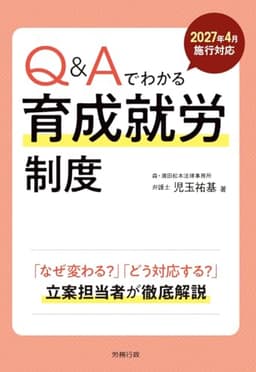
The Japanese-language book 2027年4月施行対応 Q&Aでわかる育成就労制度 (Employment for Skill Development Explained Through Q&A, for April 2027 Implementation; title translated by this article)(外部サイト、新しいタブで開きます) is related reading. The publisher’s product page(外部サイト、新しいタブで開きます) lists chapters covering the system’s basics and the periods before and after employment starts. The book’s text is not used here as evidence for the administrative conditions above.
Statistics cited in this article
- 1OTIT, guidance on pre-commencement permission applications(checked in 2026) Open source
- 2OTIT, changes to permission application entries before commencement(checked in 2026) Open source
Questions to Reflect On
- Do practical records distinguish organisational permission from individual plan accreditation?
- Who checks explanations to workers when conditions change after an application?
- How can an evaluation account for people who cannot answer its questions?
Key Terms in This Article
- Outcome Indicator
- A measure intended to examine changes or benefits relevant to the problem a program seeks to address. Its design distinguishes outcomes from immediate activity outputs; improvement in a measure alone does not establish the program's causal effect.
Related Content

Business Manager Visa Capital Requirement Raised 6x to ¥30 Million — 96% of Current Holders Fall Short
In October 2025, Japan's Business Manager visa capital requirement was raised 6x — from ¥5M to ¥30M — leaving 96% of current holders below the bar. New SSW food-service admissions were suspended simultaneously. The anti-shell-company policy is hitting legitimate small foreign entrepreneurs.

Five Structural Reasons Why "Freedom to Transfer" Won't Work Under Japan's New Training and Employment Program — Is It Just Relabeling the Technical Intern System?
Japan's Training and Employment Program (Ikusei Shuro), effective April 2027, promises "freedom to transfer" between employers. Yet five cumulative requirements — 1-2 years at the same employer, skills exam, JLPT N5, certified host, and Hello Work mediation — create structural barriers. Can the system truly protect workers while securing labor in a country of 3.76 million foreign residents?

Japan’s Customer Harassment and Job-Seeker Sexual Harassment: Who Takes Reports?
Employer duties from October 1, 2026, accommodation requests, and reporting routes for job seekers

Japan's Replacement for the Technical Intern System Starts in April 2027 — In 8 of 17 Sectors, Changing Employer by Choice Takes Two Years
The amending act dissolving Japan's Technical Intern Training programme and creating the Employment for Skill Development system was promulgated on 21 June 2024 and takes effect on 1 April 2027. How long before a worker may change employer of their own accord is set sector by sector: two years in 8 of the 17 sectors, one year in 9. Beyond that come a basic skills test, a Japanese examination at A2.1, staying within the same work category, and requirements on the receiving employer.
Previous
Bear Spray: What Does a Test Result of at Least 10m Tell Us?
Next
What does the EU ban on nonconsensual sexual AI content cover?
Get new columns by email
1-2 social structure analysis columns per week. Free to subscribe.
Join ISVD's activities?
Sign up to receive the latest research and activity reports. Feel free to reach out about collaboration or project participation.
Support ISVD’s research and activities
Support ISVD’s research and publications with JPY5,000 per year. There is no automatic renewal.