Inside Japan's 22.1% Gender Wage Gap — The Structure That 'Equal Pay for Equal Work' Cannot Explain
Japan's gender wage gap is roughly double the OECD average. In the 2024 Wage Census, women earned 75.8% of men's wages — a record low gap, yet still 24.2%. More strikingly, even after controlling for age, education, tenure, occupation, and position, a 24.3% income gap persists. This article deconstructs the structure behind a gap that 'equal pay for equal work' alone cannot resolve.
TL;DR
- The 2024 gender wage gap hit a record low of 75.8 (male=100), yet Japan ranks 3rd worst among 38 OECD nations
- Even after controlling for age, education, tenure, occupation, and position, a ~24.3% income gap remains — beyond the reach of equal pay for equal work
- The root causes lie in gendered differences in employment type, tenure, and management ratios, underpinned by Japanese employment practices that assume career interruption for women
What Is Happening
The current state of Japan's gender wage gap and its international standing.
75.8.
That is women's monthly wage level when men's is set at 100, according to the 2024 Basic Survey on Wage Structure. Men's monthly wages stood at 363,100 yen versus women's 275,300 yen — a gap of 87,800 yen per month, exceeding 1 million yen annually. Since the survey began in 1976, this figure marked a record low.
Smallest ever, and how it compares internationally
The phrase "record low" conveys an impression of progress. But in international terms, this level ranks 3rd worst among the OECD's 38 member nations, behind only South Korea and Israel. Using the OECD's methodology (based on median wages of full-time workers), Japan's gender wage gap stands at approximately 21.3%, compared to the OECD average of approximately 11% — nearly double (the Wage Census average-wage basis yields 24.2%).
Raw Wage Gap vs Unexplained Gap (5-Country Comparison)
* "Unexplained" = gap remaining after controlling for age, education, tenure, occupation, firm size, position, etc.
Factors Composing the Gap
Employment Type (Regular/Non-Regular)
Women: 54% non-regular vs Men: 22%
Tenure
Women avg. 10.0 yrs vs Men 13.8 yrs
Job Level / Management Ratio
Women in management: 14.6% (lowest in G7)
Occupational Segregation
Men dominate high-wage professional/technical roles
Unexplained Gap
~24.3% income gap persists even with same conditions
Monthly Wages by Age & Gender (General Workers, 2024)
Age 20-24
Gap 2%
Age 30-34
Gap 14%
Age 40-44
Gap 26%
Age 50-54
Gap 36%
* Nearly equal in early 20s, gap widens with age, peaking in the 50s
What is even more alarming is the existence of a "gap that persists even when conditions are equalized." According to the Recruit Works Institute's Global Career Survey (2024), even after controlling for age, education, tenure, weekly working hours, employment contract type, occupation, firm size, industry, and position, an approximately 24.3% income gap remains between men and women in Japan. In the same survey, the gap in Germany and the United States shrinks to roughly 2% under the same controls. In Japan, it barely moves.
"If you do the same work, you get the same pay" — this intuitive belief cannot explain Japan's gender wage gap.
Background & Context
Analysis of the structural factors producing the gap.
Three Structural Factors Behind the Gap
The factors producing the gender wage gap can be broadly decomposed into three categories.
Employment status, tenure, management share
First, differences in employment type. Approximately 54% of female workers in Japan are in non-regular employment, compared to about 22% for men. Regular employees earn roughly 1.5 times more than non-regular workers, meaning this disparity in employment type alone generates a substantial wage gap. In 2024, the number of female regular employees exceeded non-regular for the first time in 22 years, yet the gender gap in non-regular employment rates still exceeds 30 percentage points.
Second, differences in tenure. According to MHLW statistics, average tenure for general workers is 13.8 years for men versus 10.0 years for women. Japan's wage system retains strong seniority-based elements, where tenure directly determines pay. Career interruptions for childbirth and childcare shorten women's tenure and consequently widen the wage gap.
Third, differences in management representation. Women hold 13.1% of positions at section chief level and above (including executives), the lowest level among G7 nations. The share falls as the rank rises: 8.7% at department head, 12.3% at section chief, 21.1% at subsection chief. Wages diverge the same way. Department heads earn 636,400 yen a month if male and 549,900 yen if female; section chiefs 522,400 yen and 458,100 yen — gaps of 86,500 yen and 64,300 yen. Whether one reaches management dramatically affects wages, yet the pipeline structurally restricts women's entry.
The Reality of the L-Shaped Curve
Looking at women's employment rate by age, the former "M-shaped curve" — the sharp dip during childbearing years — is fading. Among women aged 25-44 — the childrearing years — the employment rate rose from 64.0% in 2005 to 80.8% in 2023. Men aged 15-64 stood at 84.3% the same year, putting the gap in whether people work at under four points.
But a different problem has surfaced: the L-shaped curve of regular employment rates. Women's regular employment ratio peaks at 59.1% for ages 25-29, then declines steadily afterward. Women return to the labor market, but as non-regular workers. This traces the shape of an L. The resolution of the M-curve means "women are working," but it does not mean "women are working under the same conditions."
The Reproduction of Statistical Discrimination
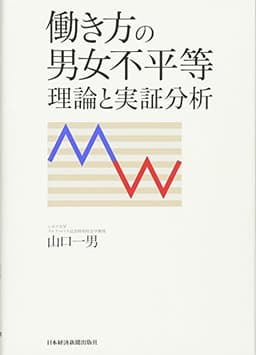
The research of Kazuo Yamaguchi, Ralph Lewis Distinguished Service Professor of Sociology at the University of Chicago, has demonstrated that statistical discrimination lies at the core of Japan's gender wage gap. The group-level tendency that "women are more likely to quit" is applied to individuals, placing men and women on different career tracks from the point of assignment, promotion, and training allocation. This practice entrenches occupational segregation and reproduces the wage gap as a result.
The gender gap in management representation can scarcely be explained by differences in ability. Yamaguchi's analysis shows that gender, age of children, and capacity for long overtime hours are the effective determinants of promotion to management. In other words, a promotion structure that implicitly presupposes "being available for long hours" structurally excludes the parent who shoulders childcare — overwhelmingly, women.
Reading the Structure
Why equal pay for equal work alone cannot close this gap.
There is a statistical method called the Oaxaca-Blinder decomposition. It separates wage gaps into a portion "explained by differences in attributes" and an "unexplained portion."
When applied to Japan, a distinctive result emerges. In Germany and the United States, controlling for attributes (education, tenure, occupation, etc.) eliminates most of the gap. In other words, "differences in attributes" are the primary driver, and discriminatory treatment under identical conditions is small. But in Japan, even after controlling for attributes, a 24.3% income gap remains.
A gap that operates on two levels
What does this mean? Japan's gender wage gap operates through a double mechanism: "visible differences in attributes" and "invisible differences in treatment" acting simultaneously.
The visible layer — gaps in non-regular employment rates, tenure, and management representation — is itself a massive source of inequality. Yet even when these are equalized, an unexplained gap persists. This suggests that even within the same workplace and the same position, different standards of evaluation, pay raises, and bonuses may be applied to men and women.
"Equal pay for equal work" is a necessary condition, but not a sufficient one. The fundamental problem is that the pathway to "equal work" itself diverges by gender. Job rotations, assignment to core functions, investment in training — the branching begins at the very entrance to a career.
The disclosure requirement
In July 2022, a revision of the Act on Promotion of Women's Active Engagement mandated disclosure of gender wage gaps for companies with 301 or more regular employees. From April 2026, this requirement expands to companies with 101 or more employees. The MHLW's guidelines call for factor decomposition of the gap and implementation of improvement actions.
Disclosure is effective as a first step toward making the problem visible. But whether visible numbers translate into organizational behavior change is a separate question. As research from RIETI (Research Institute of Economy, Trade and Industry) shows, Japan's gender wage gap features both a "glass ceiling" (barriers to upper positions) and a "sticky floor" (difficulty escaping lower positions) simultaneously. It is difficult to imagine that disclosure alone can dismantle this structural double bind.
Questions at the level of institutional design
What is needed are answers at the level of institutional design: "Why are women's tenures shorter?" "Why are women concentrated in non-regular employment?" "Why are there so few women in management?" The starting point for dismantling this gap lies not in correcting pay tables, but in questioning the very structure of career paths.
Related Columns
- The Structure of the Women's Empowerment Act Revision — What Numerical Targets Change and What They Don't(このサイトの記事)
- 30 Years of Wage Stagnation — Reading the Structural Mechanism(このサイトの記事)
- Non-Regular Employment Structure and the Treatment Gap(このサイトの記事)
References
Overview of the 2024 Basic Survey on Wage Structure — Ministry of Health, Labour and Welfare (2025). MHLW
Gender Wage Gap Narrowed to Smallest Since 1976 — Japan Institute for Labour Policy and Training (JILPT) (2025). Business Labour Trend, May 2025
The Persistent Gender Income Gap Among Managers: Japan's Invisible Challenge in a Five-Country Comparison — Recruit Works Institute (2024). Recruit Works Institute
Guidelines for Closing the Gender Wage Gap — MHLW Employment Environment and Equal Employment Bureau (2024). MHLW
International Comparison of Gender Wage Gaps and Factor Analysis in Japan — Tsuruoka, S.; Yamamoto, T.; Momota, S. et al. (2022). Policy Research Institute, Ministry of Finance
Explaining the persistence of the gender wage gap in Japan: The 'glass ceiling' and the 'sticky floor' — Kato, Takao; Ogawa, Hiromasa; Owan, Hideo (2016). CEPR / VoxEU
Japan's Gender Gap — Yamaguchi, Kazuo (2019). IMF Finance & Development
Recommended Reading
Statistics cited in this article
- 1MHLW Wage Census(2024) Open source
- 2OECD Gender Wage Gap indicator(2024) Open source
- 3Recruit Works Institute Global Career Survey(2024) Open source
- 4MHLW, "FY2024 Basic Survey of Gender Equality in Employment Management"(FY2024) Open source
- 5Cabinet Office, "FY2024 White Paper on Gender Equality", Figure 2-1(2023) Open source