
Structures Preserved in the Name of 'Women's Empowerment' — What the Revised Act Reveals About Japan's Gender Gap
Japan's revised Act on Promotion of Women's Participation takes effect April 2026, expanding pay gap disclosure to firms with 101+ employees. But the Gender Gap Index stands at 118th/148, wage gap at 75.8, and 42.3% of firms have all-male management. Analyzing the structure between targets and reality.
TL;DR
- Three pillars of the revised Act: expanded pay gap disclosure, mandatory management ratio reporting, and 10-year extension
- Disclosure without penalties remains soft law dependent on ESG investment pressure
- The concept of 'women's empowerment' structurally excludes the social valuation of care work
What Is Happening
Japan's revised Women's Empowerment Act expands mandatory gender pay gap disclosure requirements.
The revised Act on Promotion of Women's Participation and Advancement in the Workplace, passed in June 2025, takes effect on April 1, 2026. The amendment has three main pillars.
First, the scope of mandatory gender pay gap disclosure is expanded. The obligation, previously limited to companies with 301 or more regular employees, now extends to those with 101 or more. Companies must calculate and publish the ratio of women's wages to men's wages across three categories: all workers, regular employees, and non-regular employees.
Second, disclosure of the ratio of women in management positions becomes mandatory. What was previously a voluntary disclosure item now becomes compulsory for companies with 101 or more employees.
Third, the law's expiration date is extended by ten years to March 31, 2036. Originally set to expire at the end of FY2025, the extension is an implicit acknowledgment by the system itself that closing the gap remains a work in progress.
The Ministry of Health, Labour and Welfare expects the revision to advance the "visualization" of gaps in mid-sized companies. But the question remains: what lies beyond "visualization"? The structure demands examination.
Background & Context
Japan's persistent gender gap challenges despite policy efforts and international comparisons.
The Numbers Tell the Story
According to the World Economic Forum's "Global Gender Gap Report 2025," Japan's Gender Gap Index stands at 118th out of 148 countries. It is the only G7 nation ranked outside the top 100.
Particularly alarming is the political participation dimension, with a score of 0.085 (125th place) — a sharp decline from the previous year's 0.118 (113th). The decrease in female cabinet ministers was the direct cause.
According to MHLW's "FY2024 Basic Survey on Wage Structure," the gender wage gap among full-time workers stands at 75.8 for women against 100 for men, with monthly wages of 363,100 yen for men and 275,300 yen for women. While this is the narrowest gap on record, it remains roughly twice the OECD average of approximately 88.
In management positions, Teikoku Databank's 2025 survey found the average ratio of women in management at 11.1% — a record high. Yet simultaneously, companies with entirely male management account for 42.3%. Improvement is underway, but its benefits are concentrated in a subset of firms, while the structure remains unchanged in the majority.
The M-Curve Improves, the L-Curve Persists
Japan's female labor force participation rate has reached 55.6%, and the once-prominent M-shaped curve has significantly improved. The labor force participation rate of married women aged 30-34 stands at 78.6%, with the curve approaching a trapezoidal shape.
However, the "improvement of the M-curve" is a story about quantity; quality tells a different structural story. Regular employment rates peak in the late twenties and decline thereafter — the so-called "L-curve" problem. While labor force participation has improved, the reality is centered on non-regular employment. There is a structural gap between "working" and "empowered."
What Determines Institutional Effectiveness — An International Comparison
Comparing Japan's institutional design with other countries reveals the factors that determine effectiveness.
The sanction Norway attached
Norway enacted legislation in 2003 requiring 40% of corporate board seats to be held by women, with the sanction of corporate deregistration for non-compliance. By 2008, all listed companies had achieved the 40% target. The EU adopted the "Board Gender Balance Directive" in November 2022, requiring listed companies to have 40% of non-executive director positions held by the underrepresented gender, with sanctions including fines and nullification of appointments. The compliance deadline is June 30, 2026.
What about Japan? The ratio of women on boards of Tokyo Stock Exchange Prime-listed companies reached 18.4% and is trending upward, but the government's target of "30% by 2030" is merely a cabinet decision with no legal binding force. While companies are required to formulate and submit action plans, reporting obligations on achievement are weak. Measures for false reporting follow a graduated process — request for report → advice → guidance → recommendation → public naming — but there are no penalty provisions.
As international evidence demonstrates that the strength of sanctions determines institutional effectiveness, there is a structural difference between "public naming only" and "corporate deregistration."
Reading the Structure
Analysis of systemic barriers that maintain gender inequality despite legislative measures.
The Significance and Limits of "Visualization"
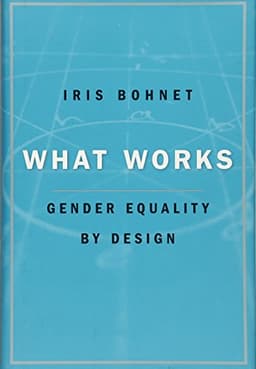
Iris Bohnet argues in What Works: Gender Equality by Design(外部サイト、新しいタブで開きます) that data transparency alone is insufficient — it is behavioral science-informed institutional design that actually narrows gender gaps. The expansion of mandatory disclosure under the revised law carries two forms of significance. First, as pay gap data accumulates, tracking changes over time becomes possible. Second, inter-company comparisons can function as material for ESG investment and ESG rating decisions.
A disclosure duty with no penalty
However, "visualization" does not automatically lead to gap reduction. As research by the Persol Research and Consulting demonstrates, decades of initiatives have accumulated "skepticism" and "resistance" within organizations. There is also the paradox that numerical targets devolve into "box-ticking," and the perception of being assigned to a "women's quota" undermines women's own confidence.
Disclosure obligations without penalties remain a "soft law" dependent on ESG investment pressure and reputational risk in the labor market. Under this structure, a gap in the pace of reform emerges between large listed companies that benefit from ESG evaluation and small and medium enterprises where such external pressure is less effective.
The Dual Structure of Management Promotion
The figure of 11.1% women in management is a record high, but it conceals a dual structure.
The majority of women on listed company boards are outside directors. Women who have risen through internal promotion routes remain few. In other words, while companies are approaching numerical targets by recruiting externally, internal career paths have not changed.
Looking at women's representation by position level — section chief level at 19.5%, division manager level at 12.0%, department head level at 7.9% — the ratio decreases at each higher level. The "glass ceiling" persists, and the improvements in overall averages are driven by a subset of progressive companies.
Toward Reexamining the Concept of "Women's Empowerment"
The more fundamental issue lies in the narrowness of the concept of "women's empowerment" itself. Under the current framework, "empowerment" tends to be limited to management promotion and wage increases, while the social valuation of care work and unpaid domestic labor (housework, childcare, and eldercare) falls outside its scope.
The very fact that the law's expiration was extended by ten years speaks to the depth of the structural problem. The question that should be asked is not "whether information has been disclosed" but the more fundamental question of "how to redesign organizational structures, compensation systems, career paths, and the division of care work based on the disclosed information."
For more on gender and organizational management, see also "Gender Equity in Organizational Design — A Practical Guide to Structural Approaches(このサイトの記事)."
References
女性活躍推進法特集ページ — Ministry of Health, Labour and Welfare (2025)
Global Gender Gap Report 2025 — World Economic Forum (2025)
女性登用に対する企業の意識調査(2025年) — Teikoku Databank (2025)
女性活躍推進(男女間賃金差異の解消等)に関するアンケート調査結果 — Keidanren (2025)
女性役員登用をめぐる動向 — National Diet Library Research and Legislative Reference Bureau No.1322 (2025)
蔓延する女性活躍への「懐疑」と「抵抗」 — Persol Research and Consulting (2023)
Gender balance on corporate boards — EU Council (2022)
Reference Books
Statistics cited in this article
- 1Ministry of Health, Labour and Welfare(2026)
- 2Ministry of Health, Labour and Welfare(Enacted June 2025)
- 3World Economic Forum GGR 2025(Published June 2025)
- 4MHLW 'FY2024 Basic Survey on Wage Structure'(2024) Open source
- 5Teikoku Databank(2025)
- 6Statistics Bureau 'Labour Force Survey'(2024)
- 7EU Council(Adopted November 2022)
- 8Keidanren(2025)
- 9MHLW 'Basic Survey on Equal Employment'(2023)