What Is Social Inclusion? — The Four-Dimensional Mechanism of Exclusion and Japan's Current Position
A structural analysis of social inclusion — its definition, history, and mechanisms — through the EU's AROPE indicator and the UN's four-dimension model. Japan's relative poverty rate of 15.4%, single-parent household poverty of 44.5%, and 58,000 solitary deaths reveal the reality of exclusion, alongside the achievements of the Self-Reliance Support Act and multi-layered support systems.
TL;DR
- Social exclusion is not a 'state' but a 'process' — a dynamic course where economic, political, socio-cultural, and spatial dimensions interconnect and accumulate
- Japan's relative poverty rate of 15.4%, single-parent household poverty of 44.5%, and 58,000 solitary deaths quantify the reality of exclusion
- Reducing 'inclusion = employment' paradoxically excludes those unable to work — the choice of inclusion pathway is itself political
What Is Happening
Introduces Japan's social exclusion statistics including poverty rates and solitary deaths
The term "social inclusion" now appears frequently in policy documents and academic papers. Yet its meaning is often used vaguely. What does inclusion refer to, and what is it a response to? Answering this question requires first understanding the structure of "social exclusion."
The reality of social exclusion in Japan, in numbers: the relative poverty rate stands at 15.4%. The poverty rate for single-parent households (one adult) reaches 44.5%, exceptionally high even among OECD nations. Solitary deaths among elderly living alone total 58,044 per year. The total number of persons with disabilities is 11,646,000 (approximately 9.2% of the population), with persons with mental disabilities surging 56.6% to 6,148,000.
These figures do not represent isolated "social problems." They are outcomes of a structural process in which economic hardship, social isolation, and institutional exclusion interconnect and cascade.
Background & Context
Explores the historical development and theoretical framework of social inclusion policies
From "Exclusion" to "Inclusion" — A Conceptual Genealogy
The concept of social exclusion was proposed in 1974 by René Lenoir, France's Secretary of State for Social Action. Its originality lay in problematizing the existence of people — persons with disabilities, the elderly, the long-term unemployed — who fell through the safety net of social security as "excluded."
Prior to this, poverty research already existed. Peter Townsend established the concept of "relative deprivation" in 1979, framing poverty as a multidimensional deficiency in living standards, not merely income. But what made the social exclusion concept revolutionary was its understanding of poverty not as a state but as a process — the dynamic course through which individuals are progressively severed from society's institutions, relationships, and activities.
In the 1990s, the concept spread rapidly across the EU. In the United Kingdom, the Blair government established the Social Exclusion Unit (SEU) within the Prime Minister's Office in 1997, positioning "inclusion" as a policy objective and promoting welfare-to-work transitions. Then in 2015, the United Nations adopted "Leave No One Behind" as a cross-cutting principle of the SDGs. Over half a century, the exclusion concept evolved from a single nation's social policy terminology into an international development norm.
The Four-Dimension Model of Exclusion
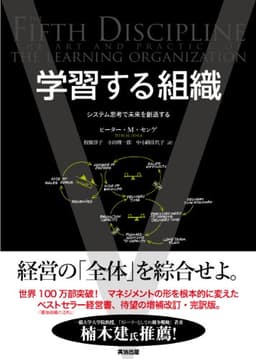
The UN DESA 2016 report organized social exclusion across four dimensions: economic (lack of access to labor markets, credit, and assets), political (denial of civic rights, political participation, and legal protection), socio-cultural (marginalization by dominant norms), and spatial (difficulty participating due to geographic peripherality). The critical point is that these dimensions interconnect and accumulate. Job loss leads to income decline, housing loss triggers health deterioration, severed social relationships generate further employment difficulties. Exclusion progresses not as linear causation but as a spiraling vicious cycle. Peter M. Senge elucidated in The Fifth Discipline(外部サイト、新しいタブで開きます) how such self-reinforcing feedback loops (the "limits to growth" archetype in systems thinking) lock in organizational and social pathologies. The spiral of exclusion is likewise a system structure that continues to strengthen if the intervention point is missed.
Levitas's Three Discourse Model — The Politics of "Inclusion"
Ruth Levitas (University of Bristol) organized policy discourse on social exclusion into three typologies.
First, the Redistributionist Discourse (RED), which locates the cause of exclusion in income and wealth inequality, prescribing redistribution policies and strengthened social security. Second, the Social Integrationist Discourse (SID), which identifies exclusion from paid work as the core problem, positioning employment support and labor market participation as the primary pathway to inclusion. Third, the Moral Underclass Discourse (MUD), which attributes exclusion to individual moral failings, using behavioral modification and conditional welfare as policy instruments.
Under the Blair government, SID became dominant. This discourse, positioning employment as the gateway to inclusion, carries a structure that paradoxically excludes those for whom work is difficult — persons with severe disabilities, chronic illness, or advanced age. "Inclusion" is not a neutral concept. The choice of what constitutes the pathway to inclusion itself determines who gets excluded.
Japan's Policy Development — Toward a Community-Based Inclusive Society
Social inclusion policy in Japan began in earnest in the 2000s. In 2000, the Ministry published a report on "Social Welfare for People Requiring Social Support". The 2008 global financial crisis and the "New Year's Eve Dispatch Workers' Village" made the reality of exclusion visible, and in 2011, a special team for "A Society that Embraces Every Individual" was established within the Cabinet Secretariat.
On the institutional front, the Self-Reliance Support Act for People in Financial Difficulty was enacted in 2013 (effective 2015), establishing a framework integrating self-reliance counseling, housing security benefits, employment preparation support, household financial improvement support, and children's learning and living support. Further, the Multi-Layered Support System Development Project was created in 2020 (effective 2021), institutionalizing "no-refusal counseling support" through three pillars: attribute-agnostic counseling, participation support, and community-building support. The Loneliness and Isolation Countermeasures Promotion Act was enacted in 2023 (effective April 2024), legally positioning isolation as a structural societal issue rather than an individual problem.
However, institutional existence and actual effectiveness differ. Japan's welfare capture rate remains at an estimated 20–30%, meaning the vast majority of eligible individuals never apply. In the Multi-Layered Support System, over 40% of implementing municipalities adopt a model without establishing comprehensive counseling centers, relying on coordination among existing agencies.
Reading the Structure
Analyzes the four-dimensional mechanism of social exclusion and inclusion strategies
Welfare Regimes Shape the Form of Exclusion
The form of social exclusion is shaped by each nation's welfare regime. Drawing on Esping-Andersen's welfare regime theory, the Nordic social democratic model publicly guarantees inclusion through universalist benefits and active labor market policies. The Anglo-Saxon liberal model relies on market mechanisms and means-tested benefits, with employment as the primary inclusion pathway. Japan is classified as a "liberal-conservative hybrid," characterized by a three-layer structure of corporate welfare, familialism, and residual public assistance.
The problem with this three-layer structure is that those who cannot access corporate welfare — non-regular workers, the self-employed, the unemployed — fall through institutional gaps. The system once called the "Japanese-style welfare society" was premised on lifetime employment and single-earner households. Now that this premise has collapsed, inclusion mechanisms independent of corporate welfare are needed.
The EU's AROPE Indicator — The Politics of "What We Measure"
The EU uses the AROPE indicator (At Risk of Poverty or Social Exclusion) to measure social exclusion, comprising three conditions: (1) at-risk-of-poverty (equivalized disposable income below 60% of the median), (2) severe material deprivation (lacking 7 or more of 13 items), and (3) very low work intensity. In 2024, 21.0% of the EU population (approximately 93.3 million people) fell under AROPE. The EU aims to reduce AROPE numbers by at least 15 million by 2030.
Yet what is defined as "exclusion" and what gets measured is itself a political process. The AROPE indicator is constructed around three axes — income, material conditions, and employment — but does not capture the severance of social relationships or exclusion from political participation. The choice of measurement framework defines the scope of policy. Japan lacks even a comprehensive exclusion indicator, with the relative poverty rate functioning as the sole quantitative measure. Building a measurement framework that captures the multidimensionality of exclusion is itself a future policy challenge.
The Pitfalls of Inclusion — "Employment Supremacy" and "The Meritocratic Trap"
The concept of social inclusion harbors structural pitfalls. The dominance of SID discourse, as Levitas identified, means the reduction of "inclusion = employment." A paradox emerges where those unable to work are legitimately excluded as "those who cannot be included."
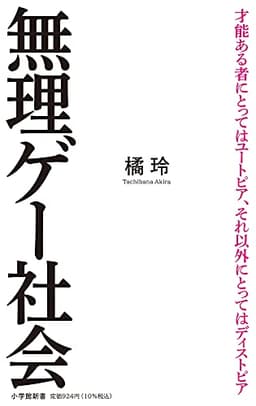
Furthermore, as Michael Sandel argued in The Tyranny of Merit (2020), in a meritocratic society, excluded individuals internalize their situation as "personal responsibility." Akira Tachibana depicted in 『無理ゲー社会』(Murige Shakai (Unwinnable Society))(外部サイト、新しいタブで開きます) the reality of Japanese society where meritocracy transforms into a logic that legitimizes "talent gaps," structurally excluding those not blessed with genetic endowments or favorable home environments. When inclusion converges on the linear model of "skill development → labor market participation → social participation," a structure emerges that legitimizes exclusion of "those who cannot demonstrate ability."
Blame the individual, or the structure
The fundamental question is whether the causes of exclusion are attributed to individuals or to structures. The Science Council of Japan pointed out in its 2014 recommendation the need for cross-institutional responses that recognize the multidimensionality and cumulative nature of exclusion. The philosophy of the Multi-Layered Support System can be seen as the institutionalization of this awareness. However, merely "connecting" individual systems does not change the structures that produce exclusion. Making the structures of exclusion visible and intervening at the level of institutional design — this is the true scope of social inclusion.
For specific policy responses to social exclusion, see also "Why Is Japan's Welfare Capture Rate So Low? — The Structure of Welfare Access Problems(このサイトの記事)."
References
Identifying Social Inclusion and Exclusion — Report on the World Social Situation 2016 — United Nations DESA (2016)
The Inclusive Society? Social Exclusion and New Labour (2nd ed.) — Ruth Levitas (2005)
People at risk of poverty or social exclusion in 2024 — Eurostat (2025)
2022年 国民生活基礎調査の概況 — Ministry of Health, Labour and Welfare (2023)
令和6年版障害者白書 — Cabinet Office (2024)
地域共生社会ポータルサイト — Ministry of Health, Labour and Welfare (2024)
いまこそ「包摂する社会」の基盤づくりを — Science Council of Japan, Joint Committee on Sociology and Economics (2014)
Reference Books
Statistics cited in this article
- 1Ministry of Health, Labour and Welfare, Comprehensive Survey of Living Conditions(2021)
- 2Same survey(2021)
- 3National Police Agency (first compilation)(2024)
- 4Cabinet Office, White Paper on Persons with Disabilities(2022)
- 5Same report(2022)
- 6Lenoir (1974)(1974)
- 7Social Exclusion Unit(1997)
- 8Ministry of Health, Labour and Welfare(2000)
- 9Ministry of Health, Labour and Welfare(2013)
- 10Ministry of Health, Labour and Welfare(2020)
- 11Cabinet Office(2023 enacted, 2024 effective)
- 12Ministry of Health, Labour and Welfare estimate(2018)
- 13Ministry of Health, Labour and Welfare(2024) Open source
- 14Eurostat(2024)
- 15European Pillar of Social Rights Action Plan(2030 target)
Questions to Reflect On
- What role do cultural factors in your country play in shaping approaches to social inclusion, and how do they compare to Japan's four-dimensional framework?
- In what ways have you observed the four dimensions of social exclusion (economic, social, cultural, and political) manifesting in your own community or workplace?
- Consider a time when you experienced or witnessed social exclusion—how might the available support systems have addressed the multiple dimensions of exclusion discussed in the article?
Related Content

Ten Years of Japan's Hardship Support Scheme: 3.456 Million Enquiries, 26.6% Turned Into a Plan — and in FY2024 Enquiries Rose by 9,373 While Plans Fell by 3,790

Vacancies Among Japan's Community Welfare Commissioners Reach 20,091 — The Quota Rose by 424 While 4,476 Fewer People Took the Role
68.8% of Children Who Died From Abuse Were Under One, and 48.5% of Those Died on the Day They Were Born — Of Those 16, an Agency Had Been Involved With One

95.9% of Japanese Care Facilities Require a Signature Other Than the Resident's — What the Law Forbids Is Refusal on the Sole Ground of Absence, Not the Asking
Previous
Personal Space and Urban Density — Physically Close Yet Psychologically Distant: Japan's Paradox of Distance
Next
¥15 Billion Fraud in Type-A Employment Support — Inside Kizuna HD's '36-Month Project' Addition-Cycling
Get new columns by email
1-2 social structure analysis columns per week. Free to subscribe.
Join ISVD's activities?
Sign up to receive the latest research and activity reports. Feel free to reach out about collaboration or project participation.