
Population Decline and the Concentration in Tokyo — Reading the Mechanics of Regional Disappearance Through Structure
Structural analysis of population outflow from regional areas and Tokyo concentration. Using demographic projections to read beyond the extinction city thesis.

TL;DR
- Net inflow to the Greater Tokyo Area exceeds 120,000 annually, predominantly young adults in their 20s–30s, persisting for over half a century
- Tokyo's fertility rate of 0.99 is Japan's lowest — a 'black hole' structure that absorbs population without producing the next generation
- Rather than halting population decline, institutional frameworks premised on contraction are what is now required
What Is Happening
Japan faces municipal extinction risk with 744 cities losing young women by 2050
In April 2024, the (人口戦略会議) published new projections. Of the nation's 1,729 municipalities, 744 were classified as "municipalities at risk of extinction" (消滅可能性自治体) — defined as those where the female population aged 20 to 39 is projected to decline by more than 50% by 2050.
This figure alone, however, does not make the structure visible.
The crux of the problem lies not in the fact that the population is declining, but in where people are leaving, where they are going, and who is moving. According to the ' Report on Internal Migration Based on the Basic Resident Registration, the net inflow into the Greater Tokyo Area (Tokyo and the three surrounding prefectures) was 126,515, a widening of 26,996 on the previous year in 2023. The overwhelming majority of those moving in are young adults in their twenties and thirties, with the movement of women being particularly pronounced. People flow from regional areas to Tokyo in pursuit of employment and education. This current has persisted for more than half a century as a structural tide.
Regional areas (43 prefectures)
Young female population projected to decline 50%+ by 2050
744 municipalities at risk of 'extinction'
Greater Tokyo (1 metro + 3 prefectures)
~37M people (29% of total population)
TFR 1.08 (lowest nationwide)
Black Hole Structure
Absorbs population but has extremely low fertility → accelerates nationwide decline
Structural Consequences
- 1Regions: Tax base shrinks → services decline → more outflow
- 2Tokyo: Overcrowding → high housing costs → low fertility
- 3Overall: Population 63M by 2100 (median estimate)
The magnet region is not sustaining the population
A critical observation is that Tokyo — the side that absorbs population — does not contribute to maintaining Japan's overall population. Tokyo's total fertility rate stood at 0.99 in 2024, falling below the national average of 1.15 and ranking at the very bottom among all 47 prefectures. It draws young people from the regions yet fails to produce the next generation. The Japan Policy Council's characterization of this structure as a "black hole" type is, as metaphor, strikingly precise.
According to projections by the (IPSS) published in 2023, Japan's total population falls below 100 million in 2056, to 99.65 million and reaches 87 million by 2070. The long-range reference projection puts 2100 at 62.779 million (medium fertility, medium mortality) — roughly half the 126.15 million recorded in 2020. This projection assumes that the fertility rate continues at approximately current levels; should it decline further, the population could fall below 50 million.
Background & Context
Historical demographic patterns and policy responses to regional population decline
Why the Concentration in Tokyo Persists
The movement of population from regional areas to Tokyo arises as an aggregation of individually rational choices. The Greater Tokyo Area contains 52% of the nation's universities and houses the headquarters of approximately half of all publicly listed companies. Wage levels run 20 to 30 percent higher than in regional areas. The density of cultural facilities, medical institutions, and childcare centers is also greater. For a young person to choose Tokyo is, at the individual level, an entirely rational decision.
When micro-level rationality accumulates, however, the result at the macro level is a serious irrationality. Municipal tax revenues decline, and the maintenance of public services becomes untenable. Schools are consolidated or closed, hospitals shut down, public transportation is curtailed. The deterioration of essential infrastructure triggers further outmigration. A vicious cycle of contraction.
This structure has a historical context. Postwar Japan's industrial policy took concentrated investment in the Pacific Belt zone centered on Tokyo as its foundational strategy. The Comprehensive National Development Plans (全国総合開発計画) of the high-growth era nominally espoused balanced development, but in substance they accelerated industrial agglomeration in major metropolitan areas. The Technopolis initiative of the 1980s, the Special Structural Reform Zones of the 2000s — numerous regional revitalization measures have been attempted, but none has succeeded in reversing the mechanics of concentration.
The Limits of the "Municipalities at Risk of Extinction" Framework
The concept of "municipalities at risk of extinction" (消滅可能性都市), introduced by the 2014 Masuda Report, made a significant contribution to rendering the problem visible. A decade on, however, its limitations have also become apparent.
Overstated wording, one indicator, no prescription
First, the force of the term "extinction" serves to distort the problem. Municipalities do not vanish overnight. What actually occurs is the gradual contraction of administrative functions and the incremental decline of residents' quality of life. The reality is not dramatic "extinction" but quiet "decline."
Second, there is an overdependence on a single indicator: the young female population. The fertility rate is not solely a matter for women, nor can the sustainability of a municipality be measured by population alone. Fiscal capacity, industrial base, community cohesion, frameworks for integrating foreign residents — assessment must be multidimensional.
Third, prescriptions are absent. The "diagnosis" of extinction risk is made, but no concrete path to "treatment" is laid out. Voices calling for the correction of Tokyo-centric concentration are numerous, but the question of what specific actions would alter the flow of people remains unanswered. The Digital Garden City Nation Concept (デジタル田園都市国家構想), regional revitalization grants, migration support measures — policies proliferate, but the net inflow figures have not moved.
The Fiscal Tipping Point — Where Does the Limit Lie?
The impact of population decline on municipal finances is nonlinear. A 10% population loss does not necessarily produce a 10% revenue decline, but once a certain threshold is crossed, deterioration accelerates sharply.
According to the Ministry of Internal Affairs and Communications' White Paper on Local Public Finance, per-capita administrative costs surge in municipalities with fewer than 50,000 residents. The fixed costs of infrastructure — roads, water systems, schools — require a baseline level of expenditure regardless of population size, and as the number of users falls, the per-capita burden rises. This is the "cost of retreat."
By 2040, the population aged 65 and over is projected to exceed 40% in approximately half of all municipalities. Rising social security expenditures and declining tax revenues will proceed simultaneously. The number of municipalities with fiscal structures capable of withstanding this dual pressure is far from large.
Reading the Structure
Structural analysis of migration flows and concentration mechanisms in Tokyo
Redesigning Concentration and Dispersal
It is correct to regard the concentration in Tokyo as a "problem." A simplistic prescription of "send people back to the regions," however, will not alter the structure.
What is needed is a perspective that redesigns the very mechanisms of concentration and dispersal. The COVID-19 pandemic provided an experiment. The spread of remote work led to a substantial reduction in Tokyo's net inflow during 2020–2021. As behavioral restrictions were lifted, however, net inflows returned to their upward trajectory. The lesson: technology alone cannot reverse the mechanics of concentration.
Structural transformation requires at least three elements.
Functions, incentives, municipal restructuring
First, the dispersal of functions. Government agencies, universities, and corporate headquarters should be physically relocated. The relocation of the Agency for Cultural Affairs to Kyoto (2023) is one example, though still modest in scale.
Second, the redesign of incentives. Tax advantages for business activity and residence in regional areas; cost burdens on concentration in the Greater Tokyo Area (mechanisms analogous to congestion pricing). Unless economic signals are changed, human behavior will not change.
Third, the reorganization of municipalities. It is already becoming unrealistic for basic municipalities with fewer than 50,000 residents to maintain the full range of administrative functions independently. A reconsideration of municipal governance — including broader regional cooperation and mergers — is unavoidable.
Designing on the assumption of decline
Halting population decline itself is, in the short term, virtually impossible. The question is what kind of society to design under conditions of a shrinking population. Not fearing "extinction" but building institutional frameworks premised on "contraction" — that is the structural thinking now required.
Related Columns
Related Guides
- Structural Analysis of Social Issues — Using Systems Thinking to Visualize Why Problems Persist(このサイトの記事)
- Wellbeing Policy Design Guide — Embedding Subjective Well-Being in Public Policy(このサイトの記事)
References
Population Projections for Japan (2023 Projections) — National Institute of Population and Social Security Research (2023). IPSS
Report on Internal Migration Based on the Basic Resident Registration, 2023 Results — Statistics Bureau of Japan (2024). Ministry of Internal Affairs and Communications
FY2024 Local Municipality Sustainability Analysis Report — Population Strategy Council (2024). Population Strategy Council
Vital Statistics Monthly Report Annual Summary (2023) — Ministry of Health, Labour and Welfare (2024). Ministry of Health, Labour and Welfare
Recommended Reading

Statistics cited in this article
- 1Population Strategy Council — FY2024 Local Municipality Sustainability Analysis Report(2024) Open source
- 2MIC, Report on Internal Migration Based on the Basic Resident Registration(2023) Open source
- 3Ministry of Health, Labour and Welfare — Vital Statistics 2024(2024) Open source
- 4IPSS, Population Projections for Japan (2023) — Summary of Results(2023) Open source
- 5IPSS, Population Projections for Japan (2023) — Reference Table 1-1 (long-range projection)(2023) Open source
Questions to Reflect On
- What patterns of urban concentration have you observed in your own country or region?
- In what ways might technology and remote work reshape these migration trends?
- Consider how demographic shifts could transform your local community's future — what changes do you anticipate?
Related Content
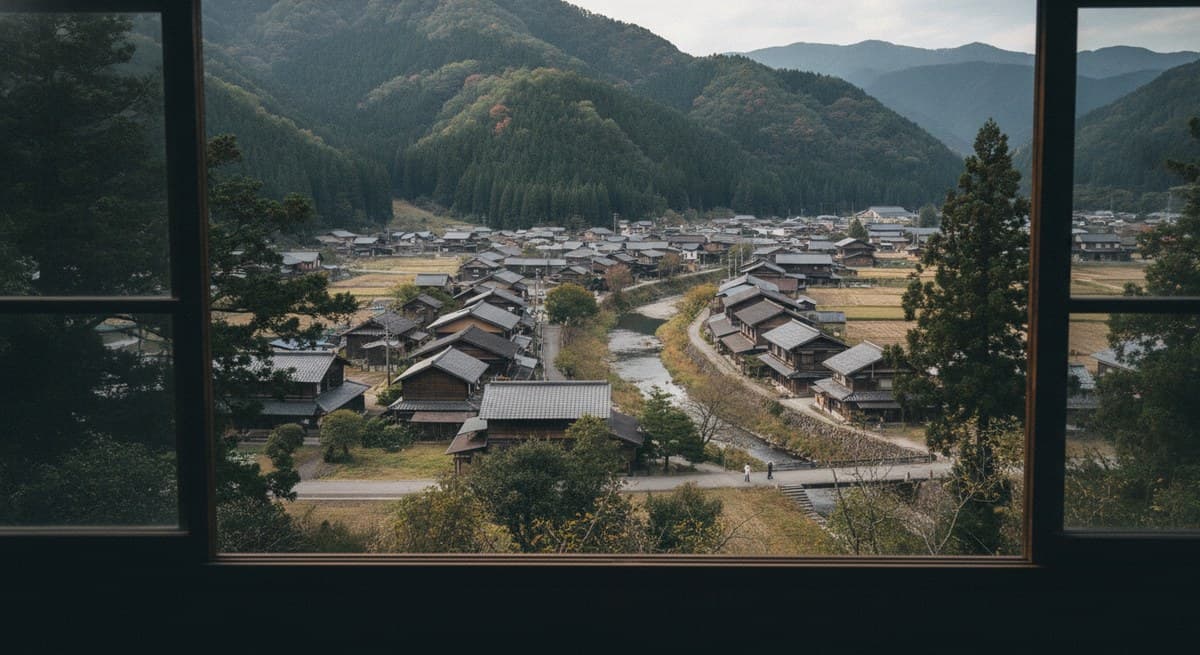
Bear Injuries Hit a Record 216 in Japan — Depopulation Has Emptied the Hands That Tended the Boundary
By Japan's Environment Ministry, bear-inflicted injuries hit a record 216, with 13 deaths, in FY2025, and sightings reached 50,801, 2.1 times FY2023. But a poor nut crop is only the trigger. Depopulation has drained the hands that tended the satoyama; abandoned farmland is turning, in quality, back into forest; and the buffer between people and the wild is dissolving from within. This reads not culling versus coexistence, but the vacancy of who manages the boundary.
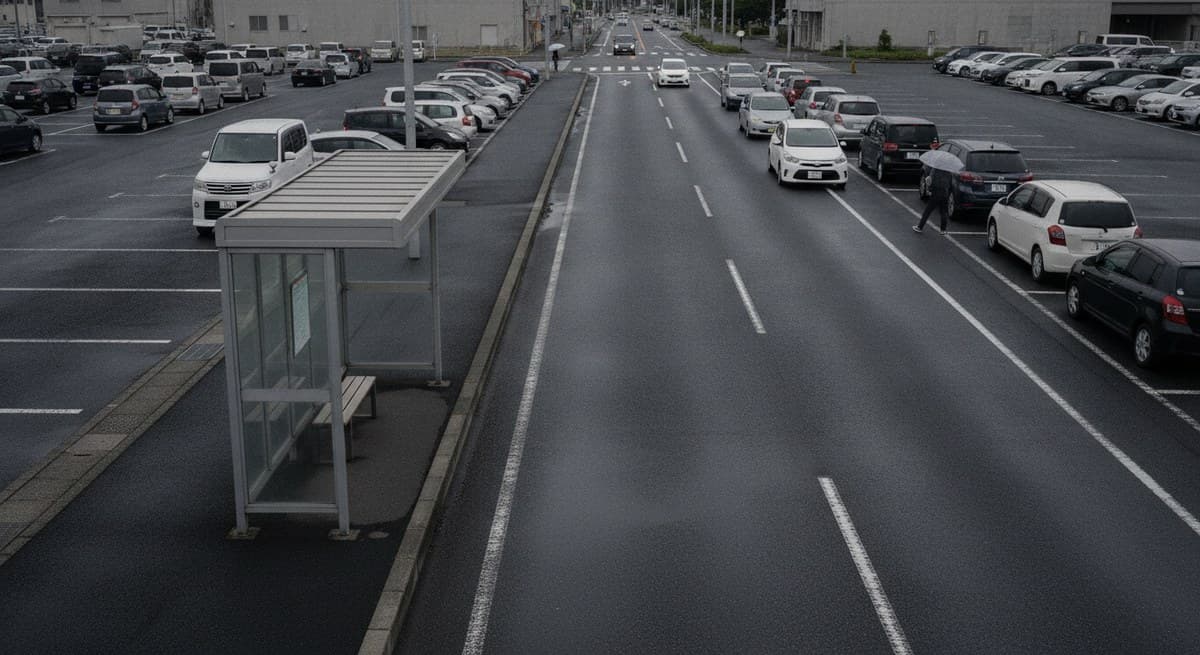
Kumamoto's Car Society Cannot Be Solved by Roads — Transit's Downward Spiral and Planning Backward from Where People Live
Congestion is worsening in the Kumamoto urban area, where semiconductor industry is concentrating. The Kumamoto Urban Area Person Trip Survey shows the car's mode share rising from 59.3% in 1997 to 67.3% in 2023, while the transit share fell to 5.2%. Yet total travel has fallen to 0.85 times its 2012 level, so congestion cannot be explained by the volume of traffic across the urban area. Adding roads does not clear congestion; in an expressway toll-free trial, traffic rose about 79%. This reads the downward spiral in which driver shortage leads to cuts, fewer riders, unprofitability, and withdrawal, and points to reconnecting where people live with transit by working backward, rather than widening roads.
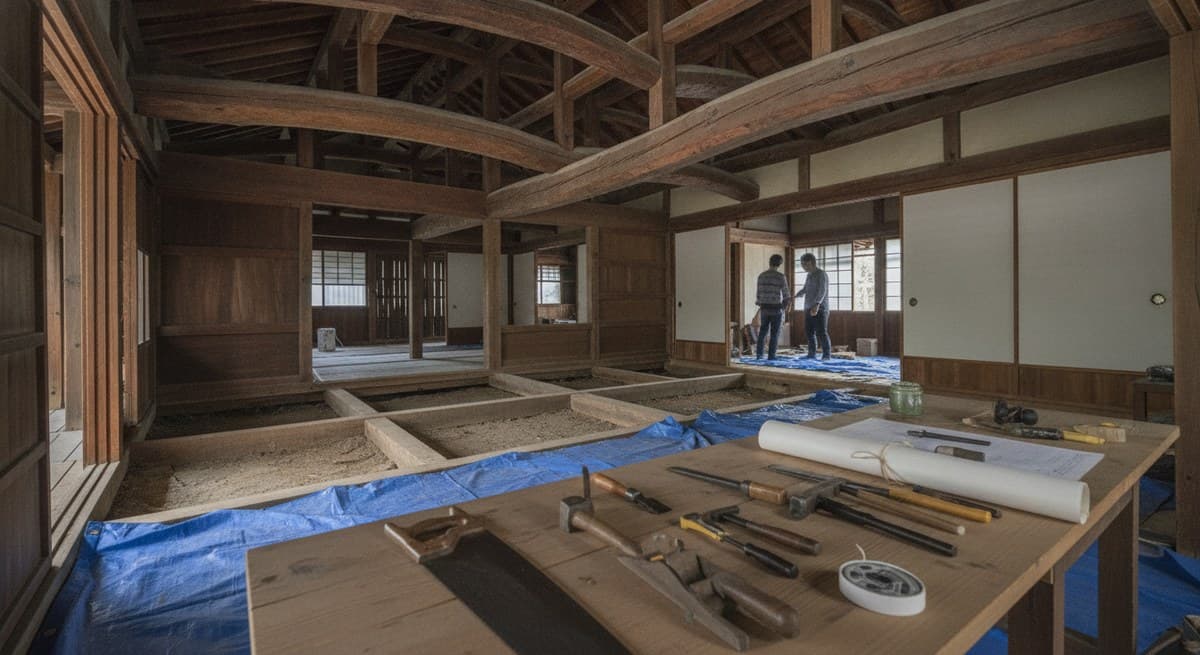
Repairs Keep Surfacing After You Buy a Kominka — The Information Gap Born of Inheritance and Aging
A newcomer who bought an old house in the mountains of Nara found, only after moving in, a well that ran dry for two months, mold, and drainage failures. Japan holds 9.002 million vacant homes at a 13.8% vacancy rate, 80.9% of vacant detached houses are the neglected kind, and more than seven in ten inherited vacant homes already carry decay or damage. Repairs surfacing after purchase are the consequence of a three-layer information gap: disclosure that stops at the state of provision of facilities, sellers who do not know the condition amid inheritance and aging, and vacant-house banks that only 3.3% of households registered with even among those that resolved a vacant home.

Inherited Forest Land Without Clear Boundaries — Negative Assets and the Making of Owner-Unknown Land
A family in Imari, Saga inherited about 4,300 square meters of forest whose boundary survives only by word of mouth; timber is worth less than surveying, yet disaster liability stays with the owner. Owner-unknown land reached about 4.1 million hectares in 2016 (exceeding Kyushu's main island) and a projected 7.2 million by 2040, while the cadastral survey sits near 53%. This reads how the four faces of one piece of land—ownership, boundary, benefit, and liability—split apart while registration, cadastral survey, forest management, the environment tax, and treasury absorption each pursue them separately, and points to redesigning ownership.
Previous
The Economic Rationality of Preventive Medicine: Social Design in the Era of 48 Trillion Yen Healthcare Costs
Next
Pension Intergenerational Inequality — A ¥60 Million Structural Fault Line
Get new columns by email
1-2 social structure analysis columns per week. Free to subscribe.
Join ISVD's activities?
Sign up to receive the latest research and activity reports. Feel free to reach out about collaboration or project participation.
Support ISVD’s research and activities
Support ISVD’s research and publications with JPY5,000 per year. There is no automatic renewal.