Public Assistance 'Capture Rate' 20% — The Invisible Gaps in Japan's Safety Net
Only an estimated 20% of eligible people actually receive public assistance in Japan. Psychological, procedural, and informational barriers explain the gap.
TL;DR
- Japan's public assistance capture rate is estimated at 15-20%, meaning approximately 80% of eligible people do not utilize the system
- Three barriers suppress applications: 'waterfront operations,' family support inquiries, and social norms of self-responsibility
- At 15-20%, Japan's capture rate is exceptionally low compared to Germany's 64% and the US SNAP program's 82%
What Is Happening
Japan's public assistance capture rate is only 15-20%, meaning most eligible people don't receive benefits.

In March 2024 there were 1,650,379 households on public assistance, 3,052 more than a year earlier (up 0.2%), covering 2,018,671 people, 9,180 fewer (down 0.5%) (). This increase is attributed to rising prices since the COVID-19 pandemic and the growing number of elderly households.
What is larger than 1.65 million households
However, there is another way to view this figure. The fact that "there are far more households entitled to protection but not receiving it" is more significant than the fact that "1.65 million households are receiving protection."
The "capture rate (Take-up rate)" of public assistance—the proportion of people who actually receive benefits among those who meet the eligibility requirements—is estimated by researchers at around 15–20% (—Yamada Atsuhiro et al., 2015). Approximately 80% of people who could theoretically receive protection are not actually utilizing the system.
Seen against other countries
International comparisons highlight this exceptional situation. Germany's Grundsicherung (public assistance for those unable to work) has a capture rate of 64%, the UK's Pension Credit is estimated at around 60-65% ( estimate), and the US food assistance program SNAP is estimated to have a capture rate of 82%. Japan's 15-20% figure is exceptionally low among developed countries.
Background & Context
Historical and structural factors explaining why Japan's welfare system has low utilization rates.

The Practice of "Waterfront Operations"
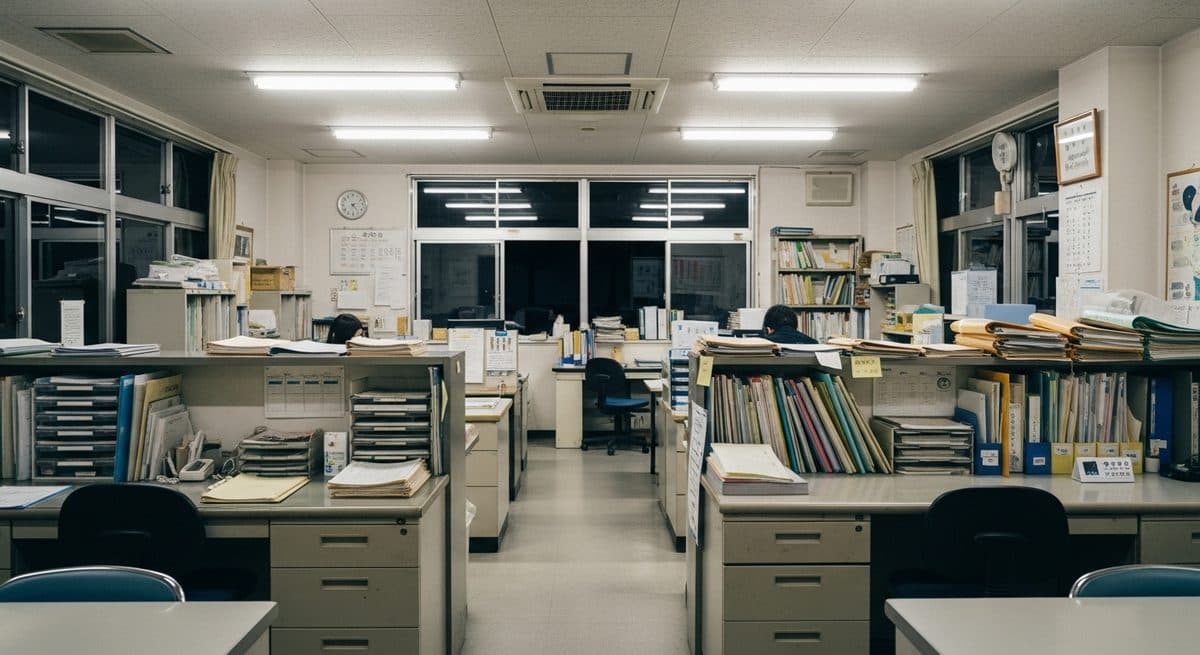
A factor that reduces application rates is the practice known as "waterfront operations" in welfare administration. This involves telling applicants at the counter verbally that "you don't meet the eligibility requirements," "rely on your relatives first," or "continue job hunting," refusing to provide application forms, or persuading them to withdraw their intention to apply—essentially preventing the legally mandated acceptance of applications.
The notices exist, but
The procedures for applying were written into the law itself by the amended Public Assistance Act, which took effect in July 2014. The ministry restated the point in its March 2023 materials for the meeting of prefectural division chiefs: an application form is to be issued promptly to anyone whose intention to apply has been confirmed, and refusing to accept an application because the papers are incomplete, or any other act that infringes the right to apply, is to be strictly avoided. However, practices at the local level have not been completely improved, and the reality continues where NPOs provide "accompaniment support" to assist with applications.
Family Support Inquiries as a Psychological Barrier
Another factor making applications difficult is the "family support inquiry" system. When a public assistance application is made, welfare offices have a mechanism to inquire with the applicant's family members with support obligations (relatives within the third degree) about whether they can provide support.
"I don't want my relatives to know," "I feel sorry," "I'm embarrassed"—the existence of family support inquiries discourages applications. Family support inquiries are not a legal obligation but remain only a "best effort obligation" for welfare offices (Supreme Court precedent). Since 2021, notifications have changed to allow omitting inquiries in cases of abuse or domestic violence history, or estrangement related to public assistance. However, the inquiry system as an institution remains, and psychological barriers for applicants remain high.
Social Norms of "Self-Responsibility"
- Stigma ('shame', 'being a burden')
- Mandatory family support inquiries
- 'Self-responsibility' social norm
- Counter-level application obstruction ('waterfront operations')
- Complex paperwork and asset investigations
- Lengthy review periods
- Lack of awareness of the system's existence
- Inability to self-determine eligibility
- Difficulty accessing consultation desks
The three barriers do not exist independently — they reinforce one another, forming a compound structure.
Low capture rates are not just a problem of system design. Social norms that "public assistance should be avoided as much as possible" and "when in trouble, you should rely on family or community" suppress applications themselves.
The feeling that "there is resistance to using public assistance" easily connects with misconceptions that "users are putting pressure on finances" and "there is a lot of fraudulent receipt." In reality, fraudulent claims in FY2020 numbered 32,090 cases worth about ¥12.6 billion (Ministry of Health, Labour and Welfare, 2023). The gap between numbers and social perception further increases the psychological costs for applicants.
Reading the Structure
Analysis of systemic barriers and procedural challenges that prevent eligible individuals from accessing assistance.
There is a view that the public assistance capture rate reflects not a "hole" in the system, but the functioning "mechanism" of the system.
Suppressing applications to control fiscal expenditure. Maximizing family roles through family support inquiries. Making "shame culture" function as an implicit cost-control resource—while these cannot be said to be intentionally designed, they function as a structure that suppresses applications.
Those left outside the system
The cost is the existence of people left outside the system. Lives supported by NPOs without outreach, repeatedly borrowing emergency small loans, middle-aged and elderly people who "can't apply because it's embarrassing" and fall ill—people outside the system exist as the flip side of the capture rate.
The purpose set out in Article 1
Article 1 of the Public Assistance Act states that its purpose is to "guarantee the minimum standard of living and promote self-reliance." The figure of 20% capture rate becomes a lens for questioning how much this law's purpose is being realized. "Having a system" and "the system reaching people" are not the same thing.
Related Columns
- The "Depth" of Child Poverty(このサイトの記事)
- Loneliness and Isolation Countermeasures Promotion Act, Two Years Since Implementation(このサイトの記事)
- Questions Posed by US Welfare Reduction(このサイトの記事)
Related Guides
- Introduction to Social Impact Evaluation Design — Practical Steps Nonprofits Can Take Today(このサイトの記事)
- Wellbeing Policy Design Guide — Embedding Subjective Well-Being in Public Policy(このサイトの記事)
References
Survey of Welfare Recipients (March 2024 Provisional Figures) — Ministry of Health, Labour and Welfare (2024). Ministry of Health, Labour and Welfare
Research on Public Assistance Capture Rates — Yamada Atsuhiro et al. (2015). Keio University
Prevention of Infringement of Public Assistance Application Rights, etc. (Notification) — Ministry of Health, Labour and Welfare, Social and Welfare Bureau, Protection Division (2023). Ministry of Health, Labour and Welfare
Status of Fraudulent Receipt — Ministry of Health, Labour and Welfare (2024). Ministry of Health, Labour and Welfare
Recommended Reading
Statistics cited in this article
- 1MHLW, Survey of Public Assistance Recipients, provisional figures for March 2024(published June 2024) Open source
- 2Atsuhiro Yamada et al., Keio University(2015) Open source
- 3MHLW, materials for the meeting of division chiefs on Social Welfare and War Victims' Relief Bureau matters (Public Assistance Division)(March 2023) Open source
- 4MHLW, "Current State of the Public Assistance System" (Social Security Council, 14th meeting)(June 2022) Open source
Questions to Reflect On
- What barriers might prevent eligible individuals from accessing the public assistance they need in your community?
- In what ways does social stigma create invisible obstacles that discourage people from seeking government support programs?
- Consider the gap between written policies and actual implementation — what examples have you witnessed where assistance programs failed to reach those in need?
Related Content

When Sick-Child Care Fails on the Day of Fever: Japan's Social-Security Gap
Only 60.4% of Japanese municipalities host a sick-child or post-illness care facility, and the national sick-child care association lists about 823 member sites. Set against roughly 12.78 million dual-income households, the access ratio is about 1 to 15,500. Katsushika Ward's design (¥2,000/day fee, 30-minute pre-registration, cancellation cap of three consecutive monthly cancellations) keeps the institution far from the day-of-fever reality. Contrasted with Germany's 15 sick-child leave days per child and Sweden's 120 days at 77.6% wage replacement, Japan's "social-security gap" appears as a design choice rather than an oversight.
Japan's April 2026 Welfare Reform: What Changed, and What Didn't
In April 2026, Japan revised its Public Assistance Act implementation guidelines. Housing support was strengthened, self-sufficiency programs were codified in law, a ¥1,500 monthly supplement was extended, and a landmark Supreme Court ruling triggered a ¥200 billion retroactive benefit correction. Changes happened. Yet the structural problems (a take-up rate of just 15–20%, 70% of applicants deterred before they can file, and a 14-fold regional gap in family inquiry rates) were left untouched.

The Emergency Revision of Long-Term Care Reimbursement Rates and Its Structural Limits: The Government's Own Confession That the Ordinary System Can No Longer Keep Up
In June 2026, the government will revise long-term care reimbursement rates one year ahead of the normal three-year cycle — at +2.03% and 51.8 billion yen in national spending. But this "mid-cycle emergency revision" is itself an admission that the ordinary system can no longer keep pace with the crisis. The backdrop is a collapsing labor market: 176 care provider bankruptcies, a +45% surge in staffing-shortage-driven insolvencies, and an effective job-offer ratio of 14 to 1 for home-care workers. Even more striking, a monthly wage increase of 13,960 yen through the FY2024 treatment improvement allowance left care workers at 338,200 yen — still below the nurses (384,620 yen) and therapists (362,800 yen) working in the same facilities. The indirect route of "regulated reimbursement → provider → wages" cannot keep pace with free-market wage competition in other sectors. A monthly add-on of 10,000 yen is symptomatic treatment, not structural reform. Germany's sector-specific minimum wage model and full-scale foreign worker mobilization both have their limits. The emergency revision is a starting point, not a destination.
Japan's Refundable Tax Credit Starts in FY2029 — the Registration Rate for the Public Benefit Account It Rests On Is About 50%, and the Rest Still Need Their Consent Confirmed
On 5 August 2026 the cabinet adopted a basic policy on introducing a refundable tax credit. Full introduction comes in FY2029, with a two-year bridge measure cutting the consumption tax on food and drink to 1%. Delivery is split between national and local government, but the registration rate for the public benefit account the machinery rests on stands at around 50%. The benefit targets people with earned income, and the government says it will settle by full introduction what happens to those who fall outside.
Previous
Financial Reality of Japan's NPO Sector — Structural Vulnerabilities Hidden Within a 'Donation Powerhouse'
Next
Behind Japan's 11.5% Child Poverty Rate: The 44.5% Single-Parent Reality
Get new columns by email
1-2 social structure analysis columns per week. Free to subscribe.
Join ISVD's activities?
Sign up to receive the latest research and activity reports. Feel free to reach out about collaboration or project participation.
Support ISVD’s research and activities
Support ISVD’s research and publications with JPY5,000 per year. There is no automatic renewal.