
Single-Parent Poverty at 44.5%: The Structure Behind 'Working but Still Poor'
Japan's single-parent household relative poverty rate stands at 44.5%. Despite having the highest employment rate in the OECD at 86%, single parents face poverty rates that are among the worst in the developed world. Behind the failure of the 'work hard and you'll be rewarded' premise lies the wage gap in non-regular employment, unpaid child support, and structural limits of the social security system. This article uses data to examine the mechanisms that perpetuate 'working poverty.'

TL;DR
- The relative poverty rate for single-parent households is 44.5% (2021 Comprehensive Survey of Living Conditions) — roughly 1 in 2 children live below the poverty line
- An 86% employment rate (highest in the OECD) combined with ~48% non-regular employment and a 56.6% wage ratio creates a structural 'working poor' trap
- The child support receipt rate stands at just 28.1%, and child-rearing allowances alone cannot lift families above the poverty line
What Is Happening
The reality of a 44.5% poverty rate and the paradox with an 86% employment rate
The for single-parent households in Japan is 44.5%. Roughly one in every two children in these households lives on an equivalised disposable income below half the median — ¥1.27 million per year in the 2021 survey.
This figure alone is alarming, but international comparison makes the anomaly even starker. According to the , very few countries see single-parent poverty rates exceeding 40%. Compared with Sweden (8%), Germany (30%), and the OECD average (22%), Japan's 44.5% points to a structural problem.
Yet what is truly distinctive is not the poverty rate alone. Japan's single-parent employment rate is 86% — the highest among OECD member states.
An 86% employment rate and a 44.5% poverty rate — when these two figures are placed side by side, the failure of the premise that "hard work pays off" becomes undeniable.
Japan's single-parent employment rate (86%) is the highest in the OECD, yet its poverty rate (44.5%) is also the highest — a structural paradox of 'working but cannot escape poverty.'
As the analysis by points out, Japan exhibits an extremely rare structural anomaly among developed nations: high employment rates do not translate into lower poverty rates.
Background & Context
How non-regular employment wage gaps, unpaid child support, and institutional design limits create 'working poverty'
The double wage gap in non-regular employment
The foremost structural driver of "working poverty" is the employment-type gap that entrenches the condition.
According to the (FY2021), the employment composition of single mothers is 48.8% regular employees, with approximately 38.8% in non-regular employment such as part-time or temporary work. Even those in regular employment earn an average of only ¥3.05 million per year.
The crux of the problem is that Japan's part-time workers earn only 56.6% of what full-time regular workers receive. This ratio is the lowest among OECD member countries — European nations range from 66% to 87%.
In other words, the moment a single mother chooses non-regular employment to balance childcare with work, her income is structurally capped at just over half that of regular workers. This arises from a double structural gap — the gender pay gap and the regular/non-regular wage gap.
Structural non-payment of child support
Another structural factor is the unchecked non-payment of child support.
According to the National Survey on Single-Parent Households, the proportion of single-mother households "currently receiving child support" is just 28.1%. Approximately 70% of single-mother households receive no child support from the absent father.
Moreover, 46.7% of single-mother households have not even made child support agreements. The most common reason for not doing so is "not wanting to have contact with the other party" (34.5%), suggesting backgrounds involving domestic violence, followed by "believing the other party has no willingness or ability to pay" (15.3%).
Japan lacks robust public mechanisms for enforcing child support payments. Unlike European countries and Australia, which have systems where the state advances child support and then collects from the non-paying parent, Japan treats child support as a private matter, effectively tolerating non-payment.
CSLC (2021)
Including co-residing relatives
~50% in non-regular employment
Receipt rate only 28.1%
The limits of the child-rearing allowance
The (jidou fuyou teate), the main pillar of public support, provides ¥45,500 per month for the first child (FY2024) at full payment. An income cap applies, with amounts progressively reduced above a certain threshold.
Even if the child-rearing allowance is added to a mother's employment income of ¥2.36 million, the total reaches only approximately ¥2.9 million per year. For a household with two children, this rises to roughly ¥3.4 million — still far short of the ¥8.13 million average income for households with children.
The system provides only a "minimum floor" and is structurally limited in its ability to lift families above the poverty line.
Reading the Structure
Japan's structural anomaly in international comparison and directions for systemic redesign
Japan's structural anomaly in international comparison
As the analysis by demonstrates, OECD countries' approaches to single-parent support fall broadly into two models.
How the Nordic model combines its parts
Nordic model (high welfare, high employment): In Sweden and Denmark, publicly guaranteed childcare, employment support, and generous income transfers combine to achieve both high employment and low poverty rates for single parents. Employment is high and poverty is low.
Anglo-American model (low welfare, employment incentives): The US and UK shifted toward restricting welfare benefits while promoting employment. This raised employment rates to some degree, but with many low-wage jobs, improvements in poverty rates were limited.
Japan belongs to neither model. Its employment rate rivals the Nordic countries, but its income transfers are thinner than even the Anglo-American model. It has effectively fallen into a triple trap of "high employment, low welfare, low wages."
| Country | Employment rate | Poverty rate | Family social spending (% of GDP) |
|---|---|---|---|
| Sweden | 79% | 8% | 3.4% |
| France | 67% | 20% | 3.6% |
| Germany | 72% | 30% | 3.7% |
| United States | 75% | 28% | 1.0% |
| Japan | 86% | 44.5% | 2.0% |
As data from the shows, Japan's family-related social spending stands at 2.0% of GDP — below the OECD average of 2.4% and barely more than half of France (3.6%) or Germany (3.7%). Income support does not match the high employment rate.
The 'lock-in' mechanism of poverty
Single-parent poverty is not a temporary condition but one that becomes structurally entrenched.
Employment, education, generations
Employment lock-in: Choosing non-regular employment to balance childcare makes the transition to regular employment extremely difficult. In Japan's labor market, once a worker enters the non-regular track, the "bridge to regular employment" is structurally blocked.
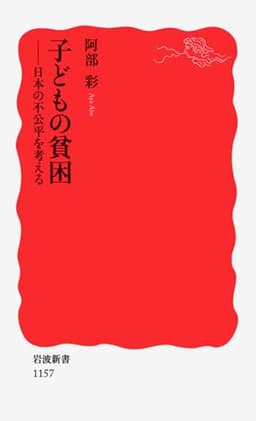
Constrained educational investment: Parental poverty restricts children's educational opportunities. As demonstrated in 子どもの貧困 (Child Poverty — Reconsidering Inequality in Japan)(外部サイト、新しいタブで開きます), economic hardship narrows not just access to tutoring and extracurricular activities, but the range of educational institutions available to children.
Intergenerational transmission: Children who grow up in poverty face higher risks of low income in adulthood, meaning single-parent poverty carries a structure of intergenerational transmission.
Work that does not lift them out of poverty
The 44.5% poverty rate for single-parent households does not reflect "poverty because they don't work" but rather a structure where "work does not lift families out of poverty." The 86% employment rate testifies to single parents' effort — but simultaneously to the reality that this effort goes unrewarded.
The problem lies not in a lack of individual effort but in the structure itself: the non-regular employment wage gap, institutional failures around child support, and thin income transfers. Dismissing this as "personal responsibility" is tantamount to preserving the structure.
For an overview of the social security system, see "The ¥130 Trillion Social Security Budget: A Breakdown(このサイトの記事)." For the welfare capture rate problem, see "Welfare Capture Rates and the 12-Fold Prefectural Gap(このサイトの記事)." For a practitioner's guide on institutional access gaps, "Common Structures Behind Policy Non-Take-Up(このサイトの記事)" provides further detail.
References
2022 Comprehensive Survey of Living Conditions — Overview — Ministry of Health, Labour and Welfare (2022)
FY2021 National Survey on Single-Parent Households — Results Report — Ministry of Health, Labour and Welfare (2023)
OECD Family Database — CO2.2 Child Poverty — OECD (2024)
Poverty Mitigation for Single-Parent Households: Capturing Features Through OECD Comparison — Shotaro Hatakeyama (2017)
International Comparison of Single-Parent Poverty Rates — Cabinet Office Gender Equality Bureau (2022)
Reference Books

Statistics cited in this article
- 1Ministry of Health, Labour and Welfare — Comprehensive Survey of Living Conditions(2022 (2021 data)) Open source
- 2OECD Family Database(2023) Open source
- 3Ministry of Health, Labour and Welfare — National Survey on Single-Parent Households(FY2021) Open source
- 4OECD Employment Outlook(2023)
- 5Ministry of Health, Labour and Welfare — National Survey on Single-Parent Households(FY2021) Open source
Questions to Reflect On
- What changes are needed to break the structure where high employment coexists with high poverty?
- What institutional interventions could address the 28.1% child support receipt rate?
- How should society confront structural poverty that cannot be dismissed as 'personal responsibility'?
Key Terms in This Article
- Working Poor
- Workers whose income falls below the poverty line despite being employed. In Japan, single-parent households epitomise this structural problem: their employment rate is the highest in the OECD (86%) while their poverty rate is also among the highest (44.5%).
- Relative Poverty
- A condition where equivalised disposable income falls below 50% of the median (the poverty line). In the 2021 survey, the poverty line was ¥1.27 million/year. Unlike absolute poverty, it measures the gap from a society's standard of living.
Related Content

Pension Intergenerational Inequality — A ¥60 Million Structural Fault Line
The benefit-contribution gap between those born in 1940 and 2010 reaches ¥40 million. Analyzing intergenerational inequality in Japan's pension system.

Behind Japan's 11.5% Child Poverty Rate: The 44.5% Single-Parent Reality
Japan's child poverty rate improved to 11.5%, but single-parent household poverty remains at 44.5% — among the worst in the OECD. The paradox of high employment and high poverty, and what 9,000 children's cafeterias reveal.

Ten Years of Japan's Hardship Support Scheme: 3.456 Million Enquiries, 26.6% Turned Into a Plan — and in FY2024 Enquiries Rose by 9,373 While Plans Fell by 3,790
In ten years since Japan's Act on Self-Reliance Support for the Needy took effect, 3,455,905 new enquiries were received and 919,459 became continuing support plans, or 26.6%. Some 327,967 people moved into work or higher earnings, 9.5% of enquiries. In FY2024 enquiries rose by 9,373 while plans drawn up fell by 3,790. This piece reads the distance between the government's benchmarks and the outturn.

Vacancies Among Japan's Community Welfare Commissioners Reach 20,091 — The Quota Rose by 424 While 4,476 Fewer People Took the Role
At the nationwide renewal of December 2025, 220,880 community welfare commissioners were appointed against a quota of 240,971. Vacancies came to 20,091 and the fill rate fell two points to 91.7%. The quota was 424 higher than at the previous renewal; what fell was the number of people willing to serve. Vacancies have gone from 11,476 in 2019 to 15,191 in 2022 to 20,091 in 2025, up 8,615 across two rounds. The fill rate ranges from 72.0% in Okinawa to 99.2% in Toyama.
Previous
Is a 14.3% Turnover Rate 'Low'? — The Triple Burden of Wages, Working Conditions, and Social Standing in Care Work
Next
The Polypharmacy Problem in Japan's Elderly — Why 40% Take 5 or More Medications
Get new columns by email
1-2 social structure analysis columns per week. Free to subscribe.
Join ISVD's activities?
Sign up to receive the latest research and activity reports. Feel free to reach out about collaboration or project participation.
Support ISVD’s research and activities
Support ISVD’s research and publications with JPY5,000 per year. There is no automatic renewal.