FY2025 Student Community Activity Report in Bunkyo-ku: Event Report
On March 10, 2026, ISVD attended the Student Community Activity Report by Bunkyo-ku Council of Social Welfare. 16 student groups presented their work.
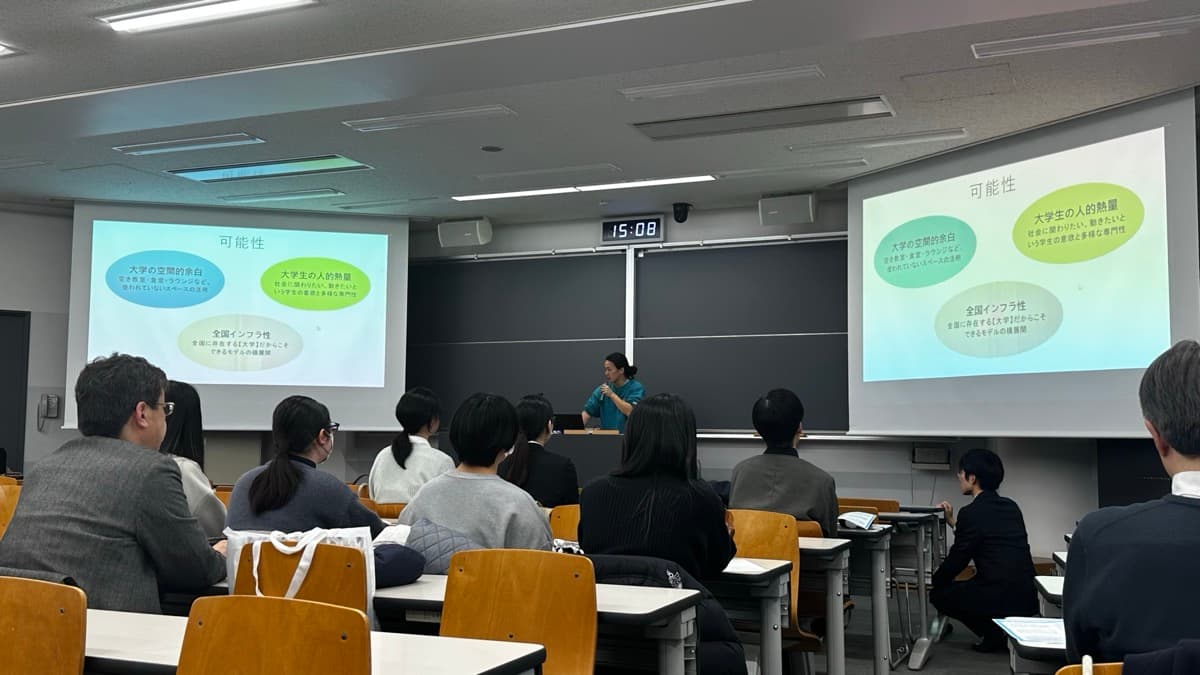
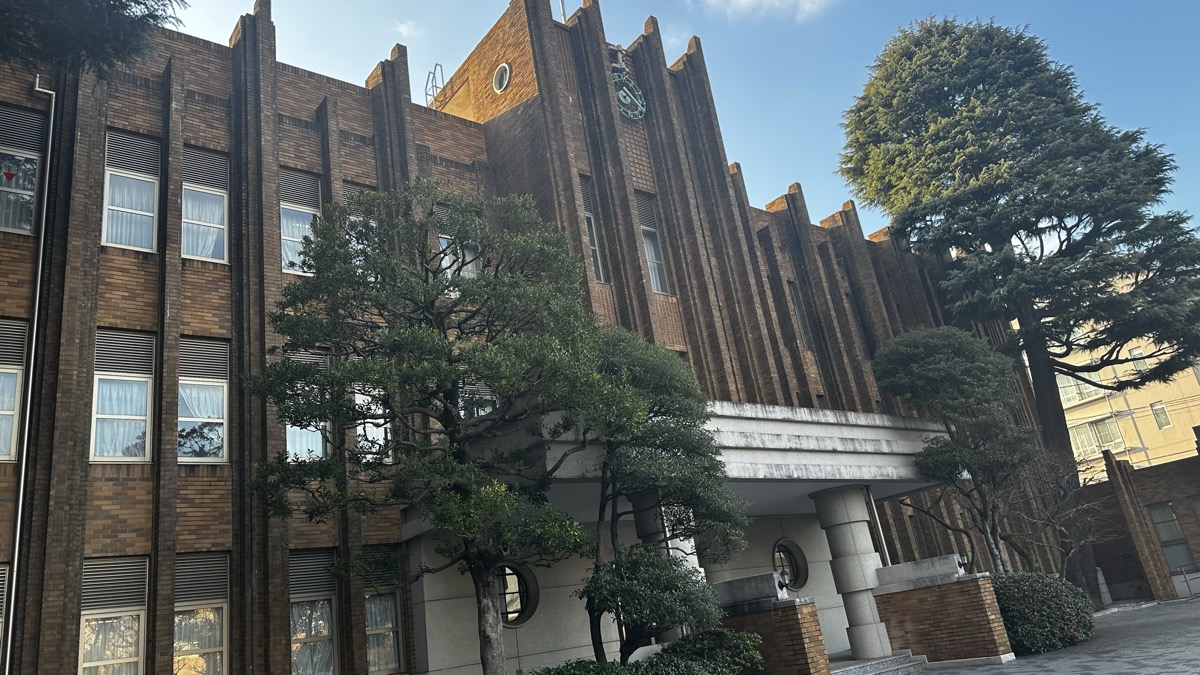
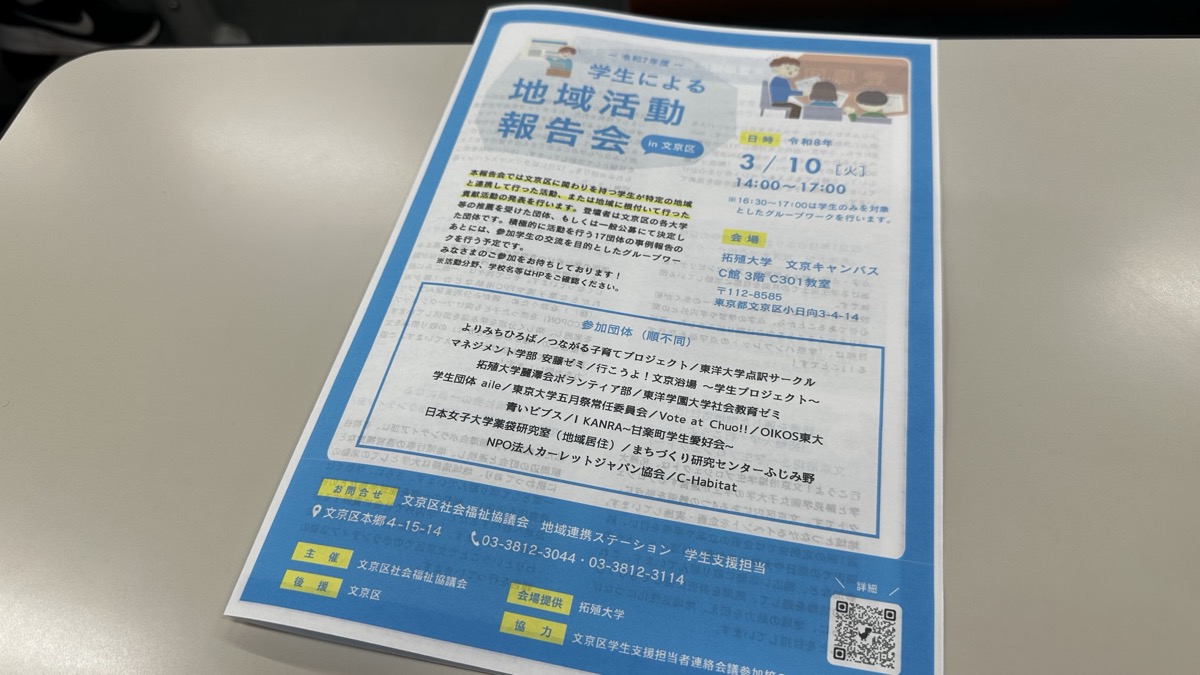
On March 10, 2026, the "FY2025 Student Community Activity Report in Bunkyo-ku" was held at Takushoku University's Bunkyo Campus. Hosted by the Bunkyo-ku Council of Social Welfare, the event brought together student organizations from 19 universities in the ward to share their community engagement activities. ISVD attended as a participant.
The event flyer is available here (PDF).
Event Overview
The report session is organized in collaboration with universities and vocational schools participating in the council's Student Support Coordinators' Meeting. This year, 16 organizations took the stage, each given five minutes to present their activities. The first half focused on groups active primarily within Bunkyo-ku, while the second half featured organizations working across broader areas.
A group workshop for participating students was held after the presentations, serving as an opportunity for cross-university exchange.
Opening Remarks
Hideki Okawa, Secretary General of the Bunkyo-ku Council of Social Welfare, noted that participation grew from 12 organizations last year to 16 this year, stating, "I feel that the activities of students are becoming a significant wave." He also introduced multiple initiatives connecting students, community organizations, and businesses—including the "Fumikomu Festa" and the "Corporate-Community Partnership Network"—highlighting the potential for student activities to expand into broader social networks.
Vice Director Nagao of Takushoku University then took the stage, opening with the provocative question: "How old do you expect to live?" Citing data suggesting today's young generation in Japan may live to 107, he spoke about the implications of a super-aging society and the evolving meaning of contributing one's abilities and ideas to society over a potentially 90-year working life.
First Half: Groups Based in Bunkyo-ku (8 Organizations)
1. Yorimichi Hiroba (Chuo University)
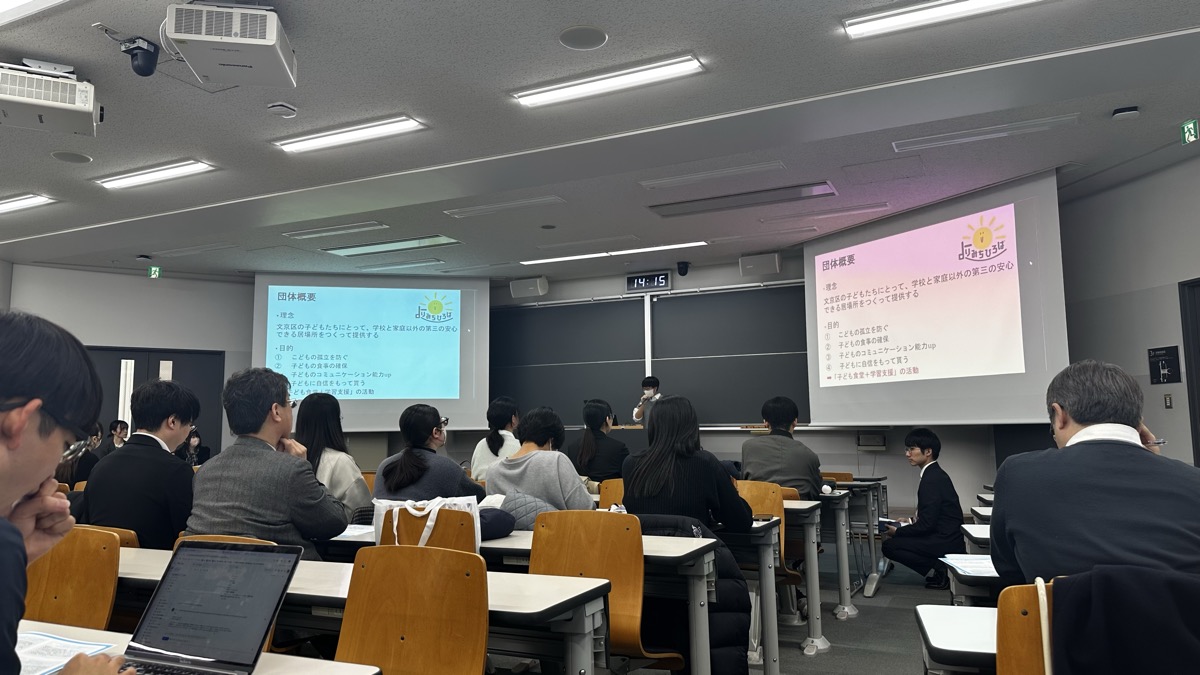
A student circle founded in December 2024, operating a combined children's cafeteria and learning support program at the Otsuka Community Activity Center. With approximately 105 members, they host monthly learning events for elementary students and free study rooms for middle school students, aiming to create "a safe third place for children beyond school and home."
2. Tsunagaru Kosodate Project (Japan Women's University)
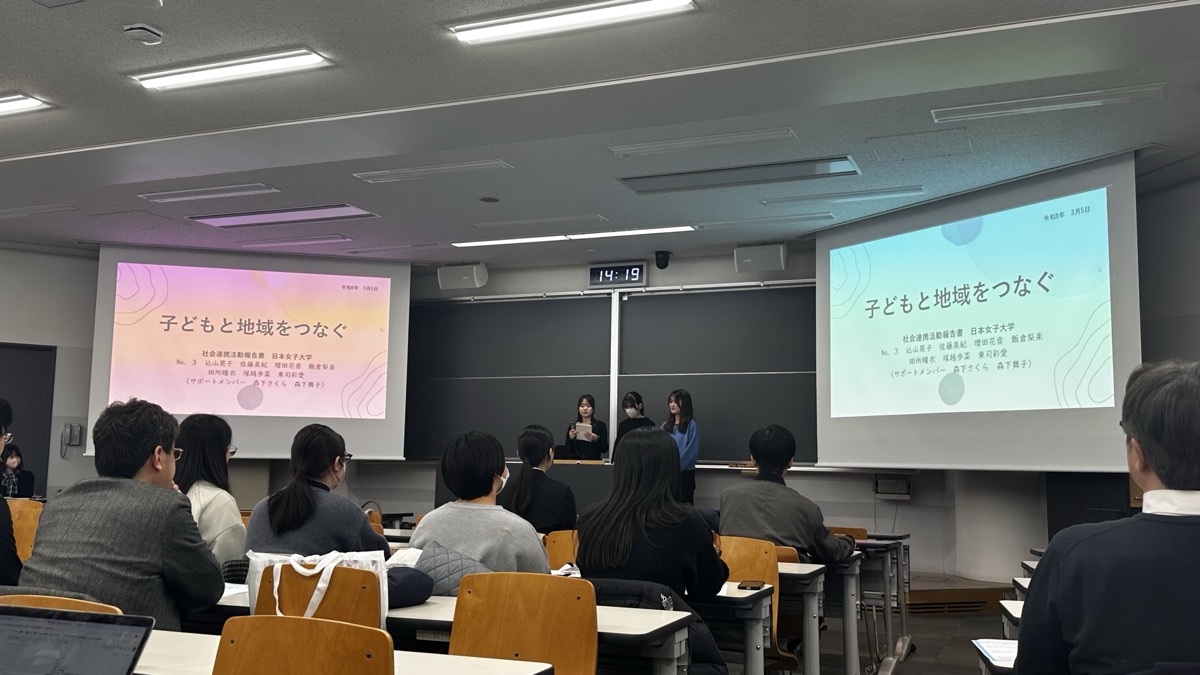
A team of seven students from the Department of Child Studies organizing family events. They held Christmas workshops with 55 participants across 24 family groups, implementing improvements such as pre-registration systems and indoor venues after an outdoor autumn event was cancelled due to rain.
3. Toyo University Braille Transcription Circle
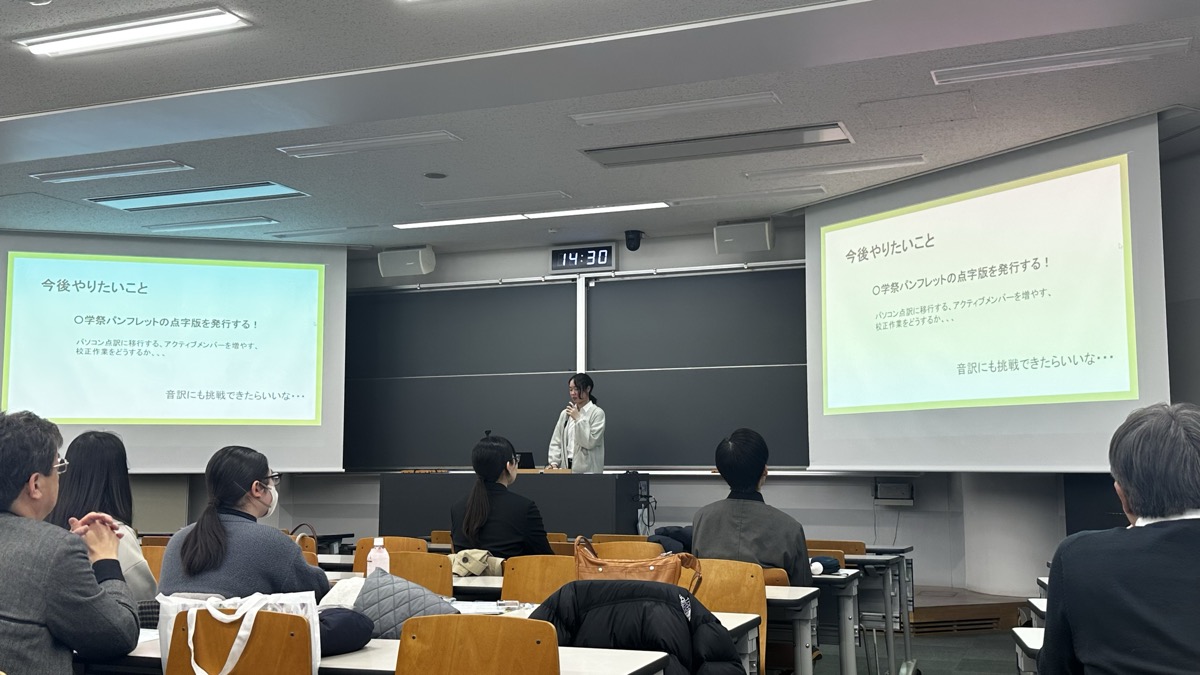
Founded in April 2025 to promote braille literacy and accessibility. Starting from learning the basics, members progressed to selling braille bookmarks at their university festival within months. Their ultimate goal is to publish a braille version of the festival pamphlet. In a field where volunteers are aging, their entry as young participants carries significant meaning.
4. Ando Seminar, Atomi University — AI Recycling App "Ecopon"
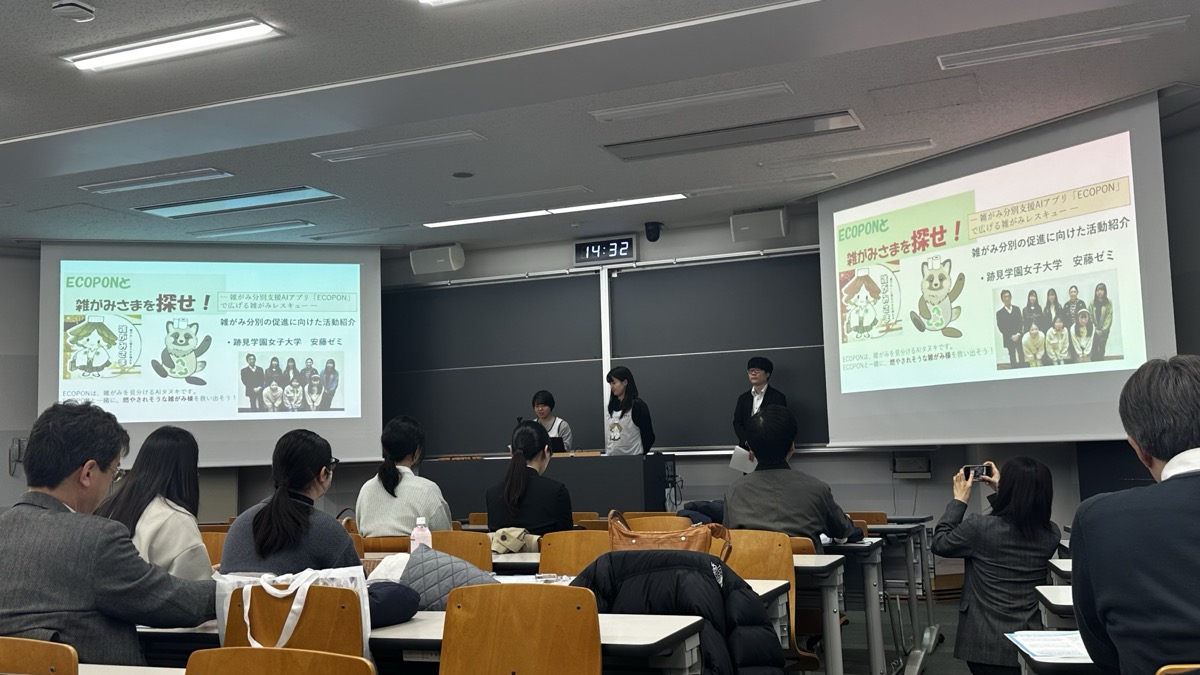
An AI-powered app helping children learn to sort "miscellaneous paper" waste. Children photograph items like snack boxes and teach the AI correct sorting, improving its accuracy while learning recycling habits through a game-like experience. Partnered with the Paper Recycling Promotion Center, they conducted workshops at Bunkyo-ku's Cool Earth event and elementary schools in Kawasaki City.
5. "Ikoyo! Bunkyo Yokujyo" Student Project (Takushoku / Atomi Universities)
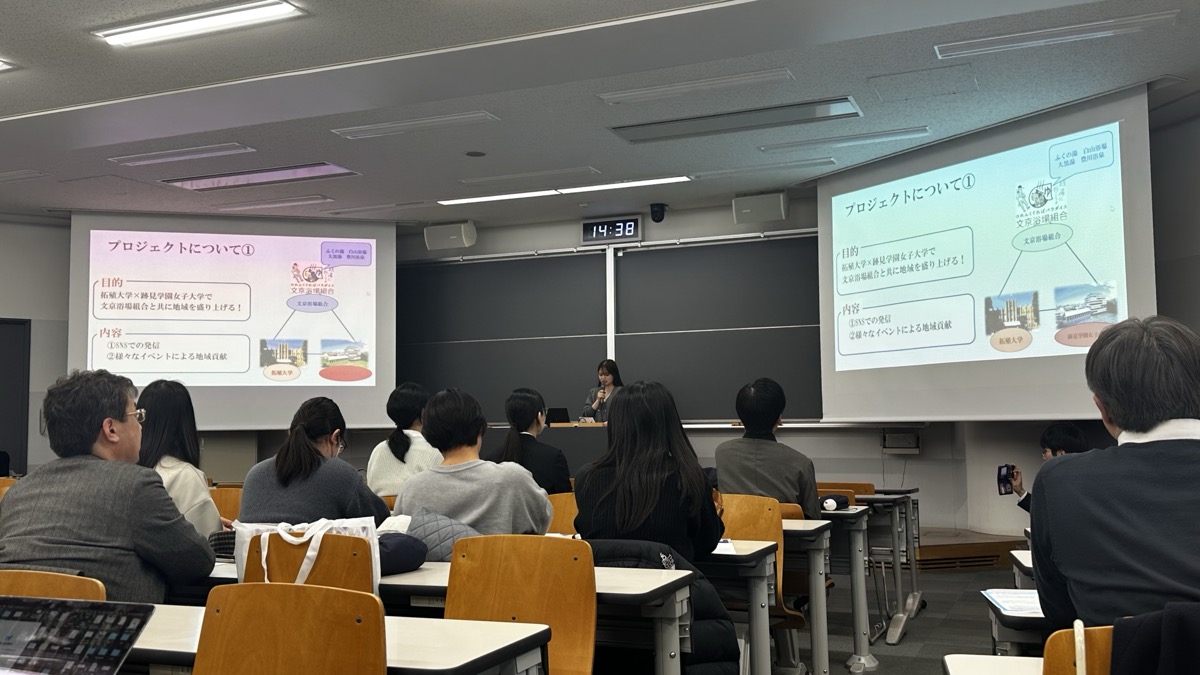
A project activating four public bathhouses in Bunkyo-ku through community events. With 22 student members organized into planning, PR, and liaison divisions, they organized events attracting over 1,300 visitors total, including spring and autumn festivals (307 and 455 visitors respectively) and the Takushoku University Orange Festa (approximately 620 participants).
6. Takushoku University Reitakukai Volunteer Club
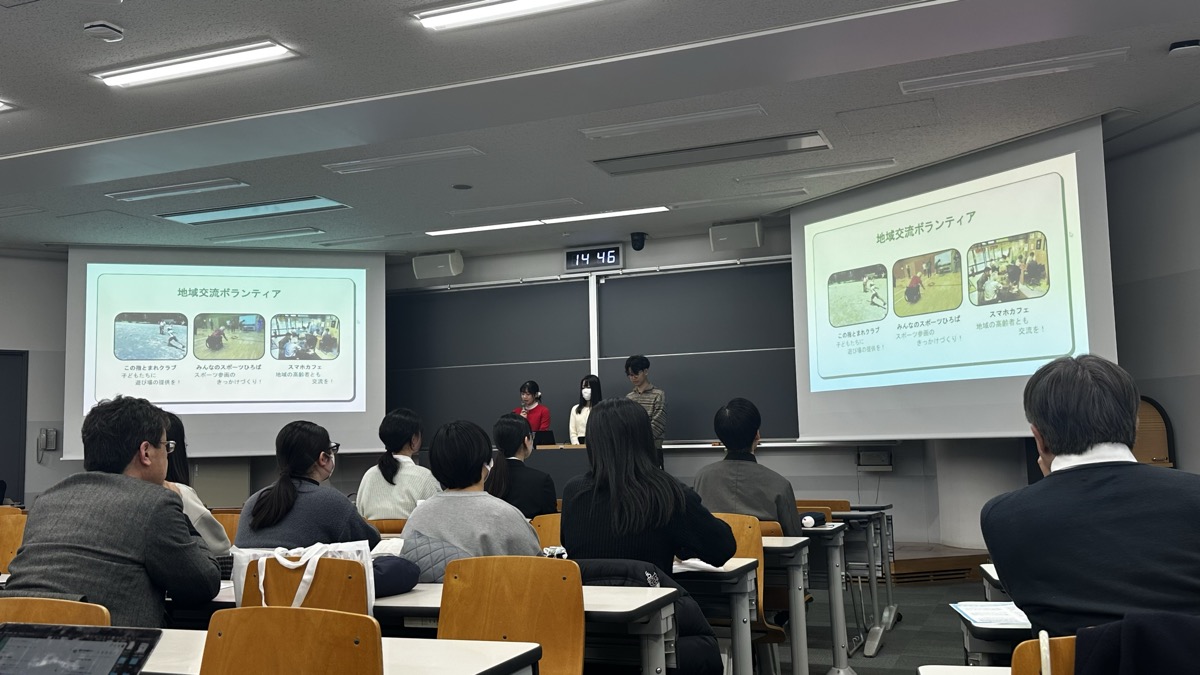
Collaborates with neighborhood associations around the Myogadani Campus for community events and cleanup activities, donating festival proceeds to disaster-affected areas including the Noto Peninsula. Data from the Nippon Foundation Volunteer Center puts the share of students who volunteer at least once a year at about 25%; with the theme of raising participation at Takushoku University, they run diverse community exchange programs including children's clubs, sports events, and smartphone cafés for seniors.
7. Toyo Gakuen University Social Education Seminar
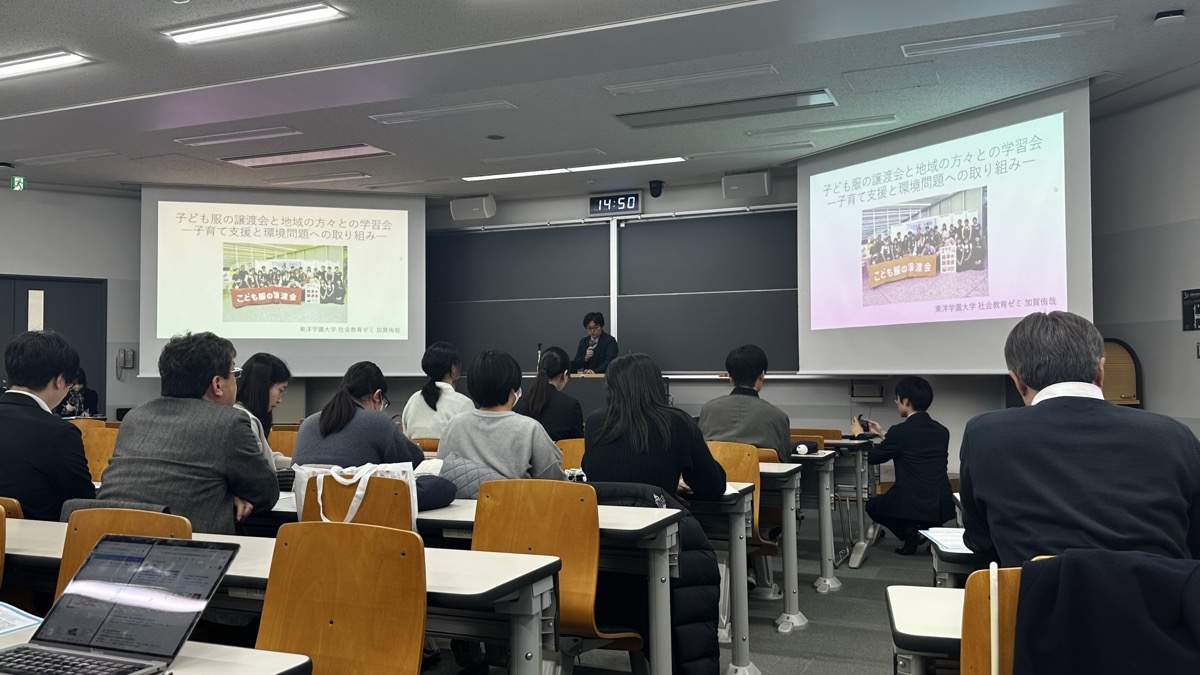
Organizes children's clothing exchange events combined with community learning sessions, approaching local issues through the dual lens of childcare support and environmental sustainability.
8. Student Organization aile (Institute of Science Tokyo)
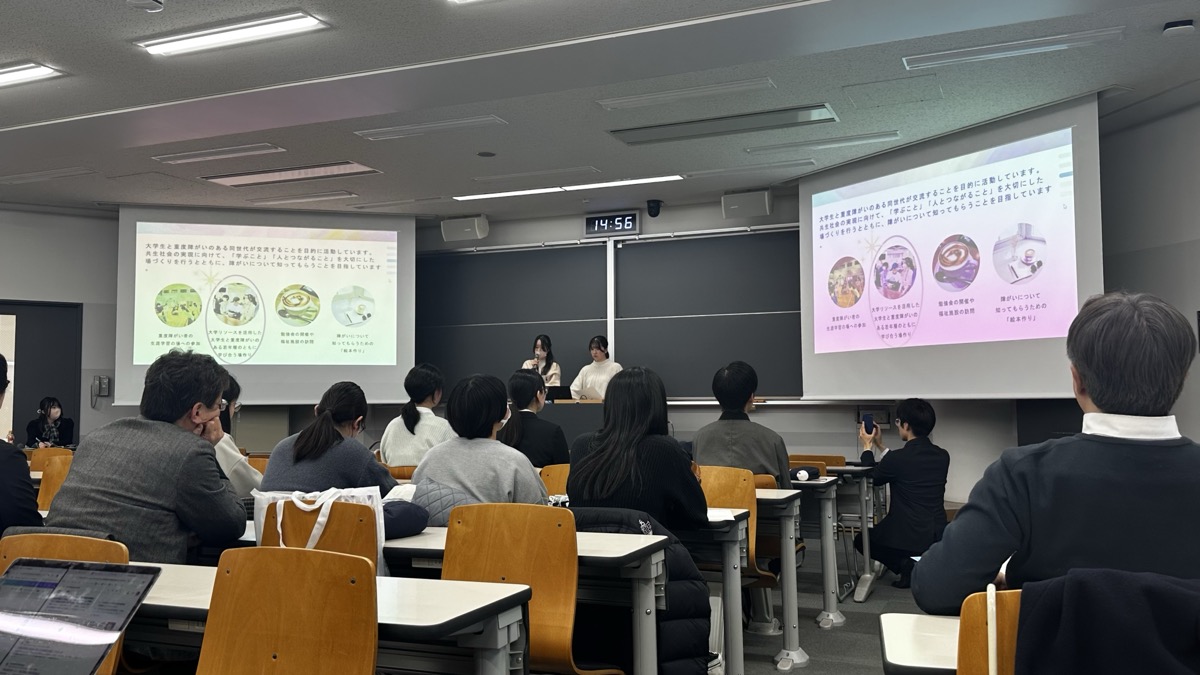
Provides inclusive educational support for youth with disabilities. Their activities center on facilitating proactive exchange between university students and people with severe disabilities, valuing "learning" and "connecting with others."
Second Half: Organizations with Broader Geographic Reach (8 Organizations)
9. University of Tokyo May Festival Standing Committee
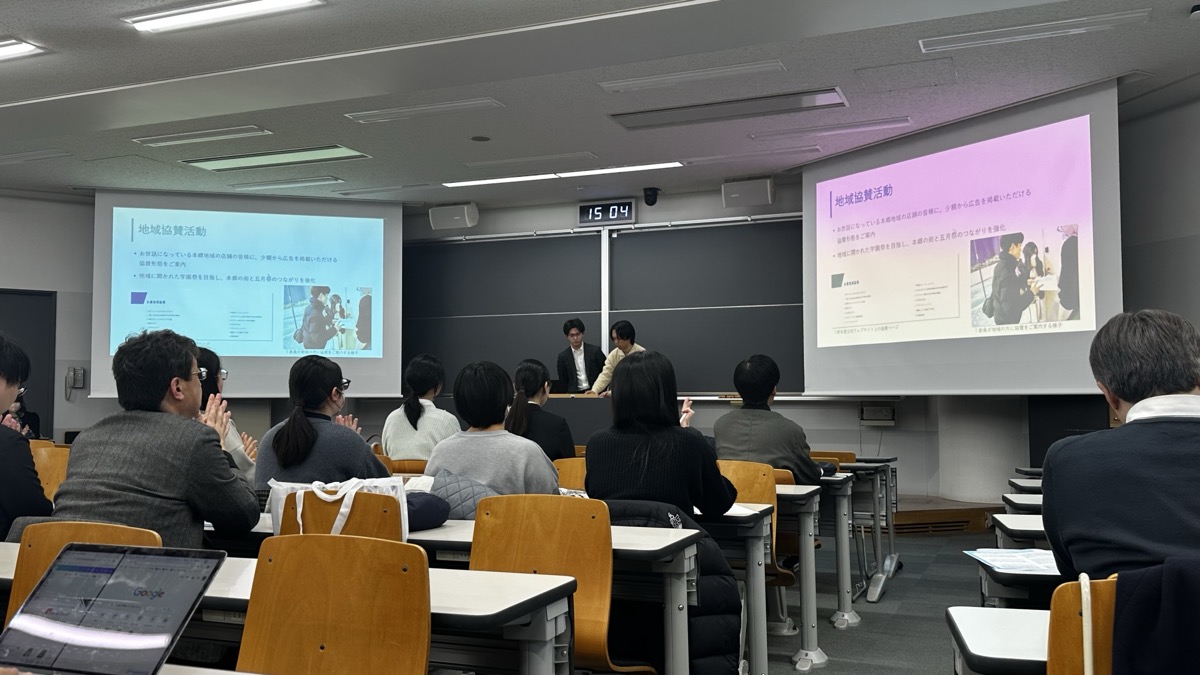
Manages operations for one of Japan's largest university festivals, with a focus on community sponsorship activities. Their presentation highlighted three unique assets: "the spatial surplus of universities," "the human energy of students," and "nationwide infrastructure potential."
- Instagram: @gogatsusai(外部サイト、新しいタブで開きます)
- X: @gogatsusai(外部サイト、新しいタブで開きます)
- Web: gogatsusai.jp(外部サイト、新しいタブで開きます)
10. OIKOS Todai
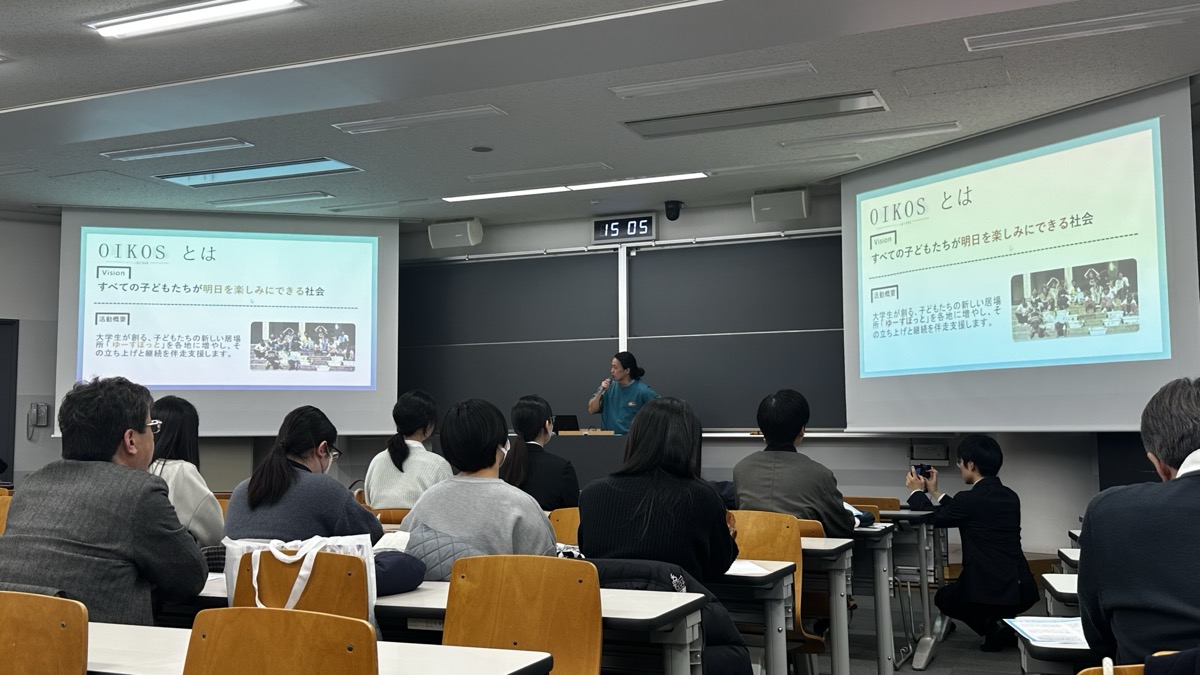
Establishes children's and youth cafeterias ("U-SPOT") within university spaces. Their vision: "A society where all children can look forward to tomorrow." They leverage university spaces as community resources to provide meals and safe spaces for local children.
- Instagram: @oikos_todai(外部サイト、新しいタブで開きます)
- X: @oikosproject(外部サイト、新しいタブで開きます)
- Note: note.com/oikos_todai(外部サイト、新しいタブで開きます)
11. Vote at Chuo!! (Chuo University)
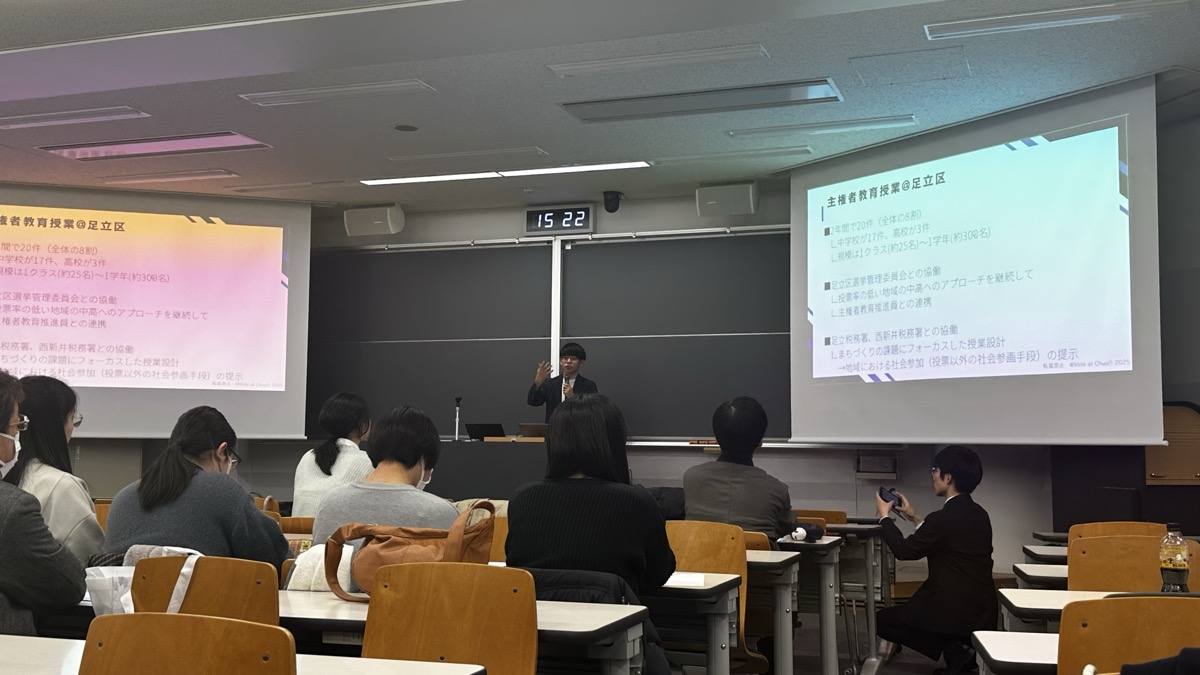
A civic education circle founded in 2015, conducting dialogue-based citizenship classes in junior and senior high schools. They have delivered 20 sessions over two years, with 80% in Adachi-ku—which has had the lowest voter turnout among Tokyo's 23 wards for 30 years. They work in partnership with Adachi-ku's dedicated Civic Education Promotion Officer.
What stood out was their awareness of "breaking out of homogeneity." Although centered on Chuo University's Faculty of Law, they actively recruit local volunteers from Adachi-ku, including young people who entered the workforce after high school—providing role models for the students they teach.
- Instagram: @vote.at.chuo(外部サイト、新しいタブで開きます)
12. NPO Curlet Japan Association (Tokyo Gakugei University)
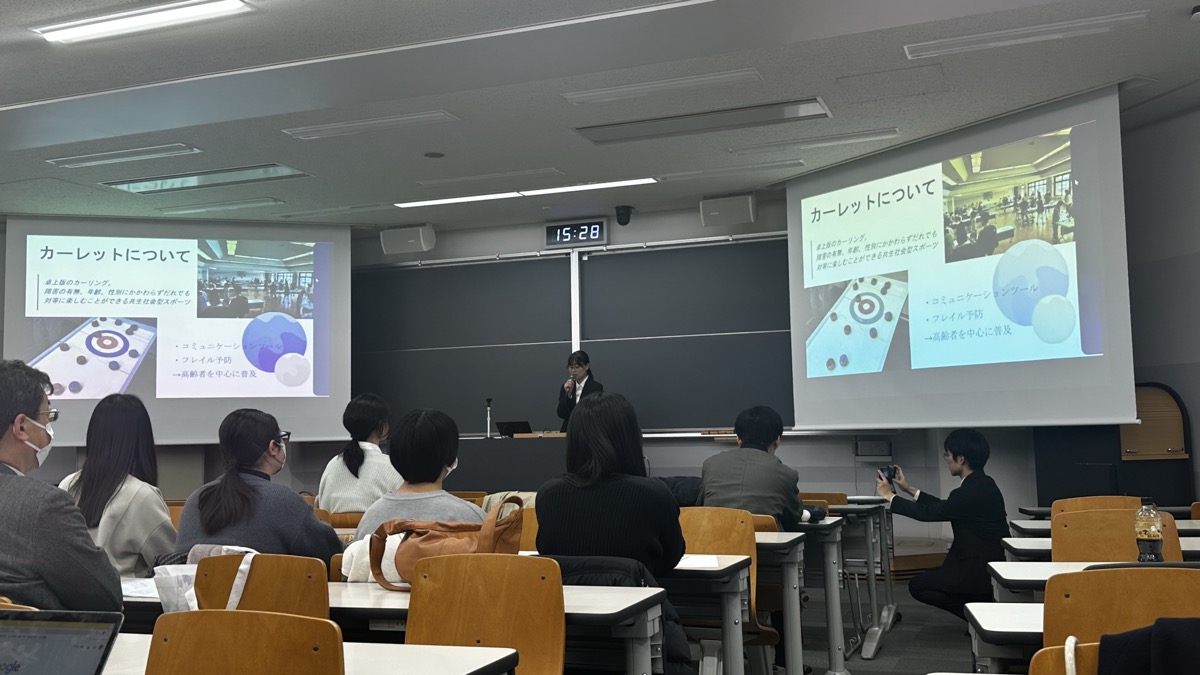
Promotes curlet, a tabletop version of curling born in Bunkyo-ku in 2012. As an inclusive sport playable regardless of gender, age, or disability, they are working to extend its reach to younger generations through student exchange events, children's festivals, and school PTA welfare workshops. An inter-university curlet circle has also been established at Tokyo Gakugei University.
- Facebook: @curlet.japan(外部サイト、新しいタブで開きます)
- Web: curlet.jp(外部サイト、新しいタブで開きます)
13. Japan Women's University Minai Lab — Kamaishi Cultural Preservation (薬袋研究室)
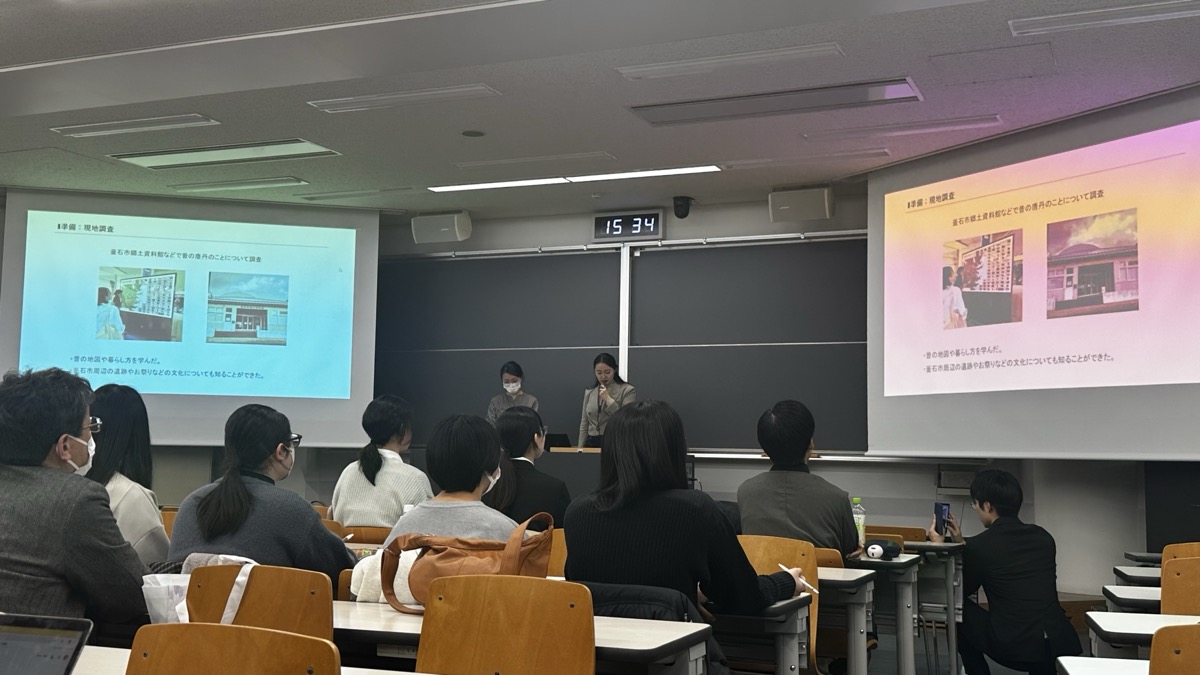
Works in Toni-cho, Kamaishi City (Iwate) to preserve traditional culture through intergenerational exchange. They created a "Three-Generation Play Map" workshop with approximately 50 participants, revealing how play spaces shifted between generations and after the 2011 earthquake—elders played at shrine grounds and rivers, while today's children play at parks built after the tsunami.
The traditional gun corps of the Kamaishi Cherry Blossom Festival was unable to participate in 2024 due to population decline in the Yamaya district after the earthquake. The lab is working to revive interest through university poster exhibitions.
- Facebook: 薬袋研究室(日本女子大学)(外部サイト、新しいタブで開きます)
14. Machizukuri Research Center Fujimino (Bunkyo Gakuin University)
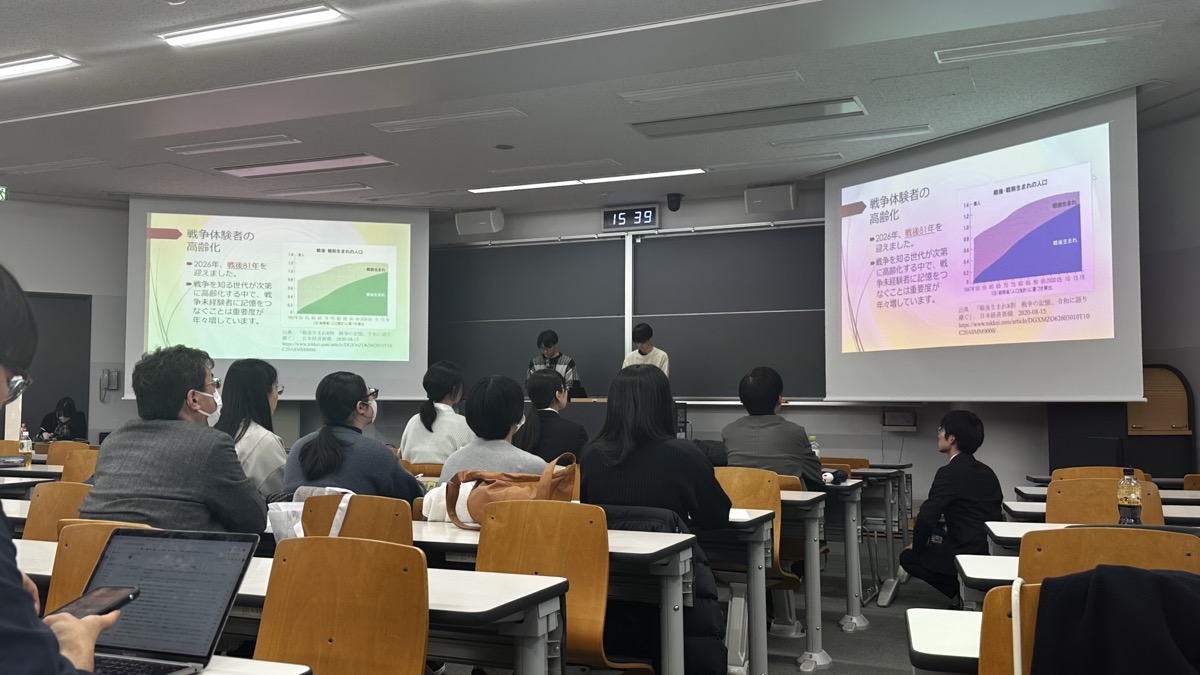
Documents the history of a former Imperial Army ammunition factory (火工廠, kakōshō) in Fujimino City, Saitama. Presenting on March 10—the anniversary of the Tokyo air raids—they emphasized that "preserving war memories is an urgent task as survivors age." They organized exhibitions featuring wooden rifles and ceramic grenades, walking tours of factory sites (now covered by city halls and apartments), and school lectures. A field survey at Kamanuma River uncovered ceramic grenades dumped at war's end, still intact after 80 years.
15. I KANRA ~ Kanra-machi Student Association ~ (Toyo University)
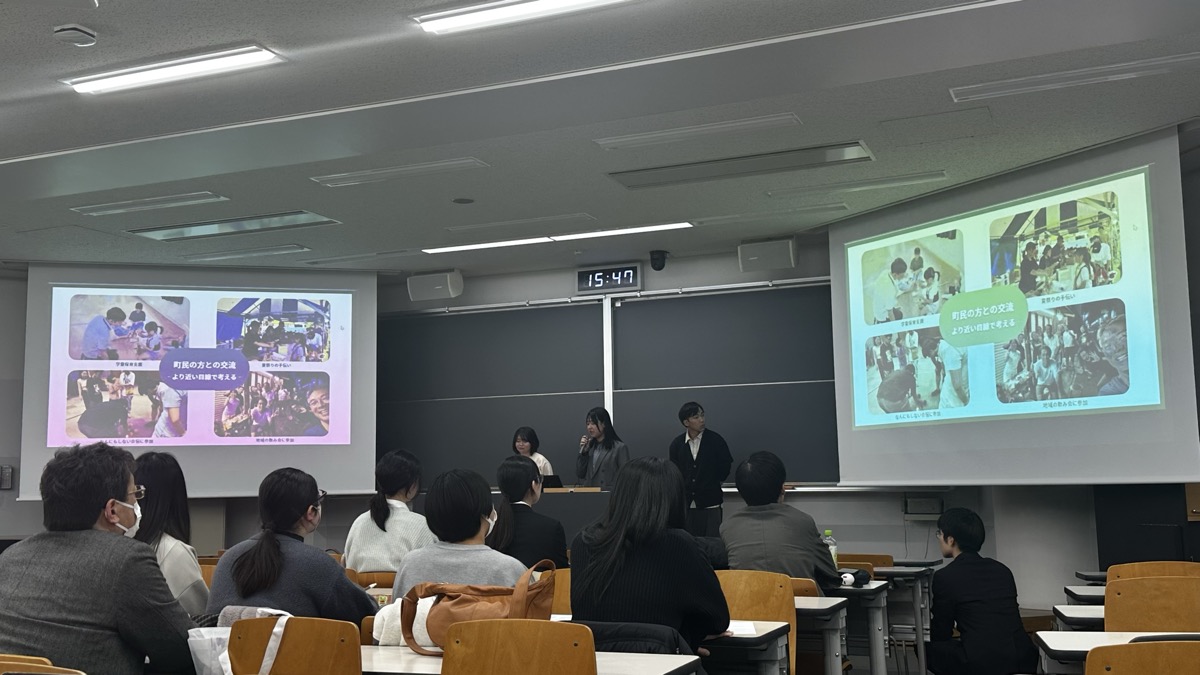
Five students who met during community development internships in rural Kanra-machi, Gunma, formed this group in 2025. "It would be a waste to let our internship experience end there—we want to give back by sharing Kanra's appeal." During their two-week internship, they learned about aging farmer shortages and deepened community ties through childcare support and festival assistance. Future plans include kiwi harvesting experiences and selling local products at Bunkyo-ku events.
16. Aoi Bibs (Toyo University) — Noto Peninsula Recovery Support
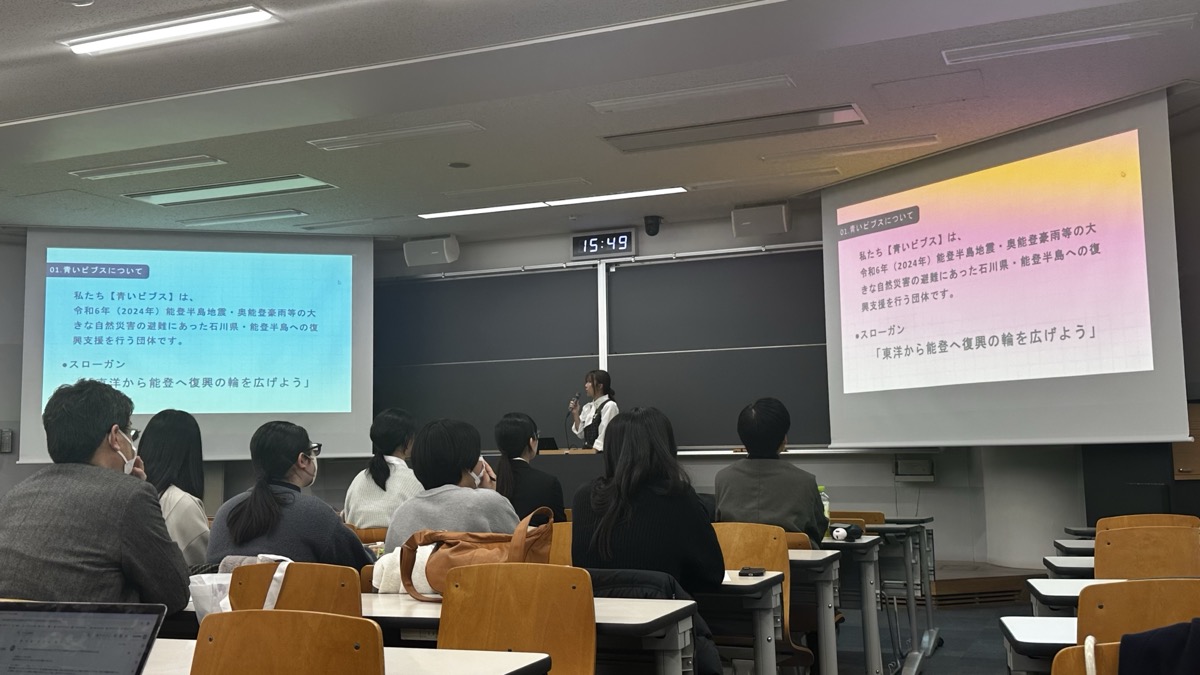
Founded January 1, 2025, to support recovery from the Noto Peninsula earthquake. Their slogan: "Spreading the circle of recovery from Toyo to Noto." They emphasize "kankeijinko" (relationship population)—a connection deeper than tourism but short of relocation. Their representative stated: "A relationship where you regularly visit the land, interact with local people, and think about that community from your own home. We and the people of Noto are neighbors."
Activities include debris removal, exchange events at temporary housing, children's support at after-school programs, and publication of a newsletter "ToNote" in January 2026.
Networking Time
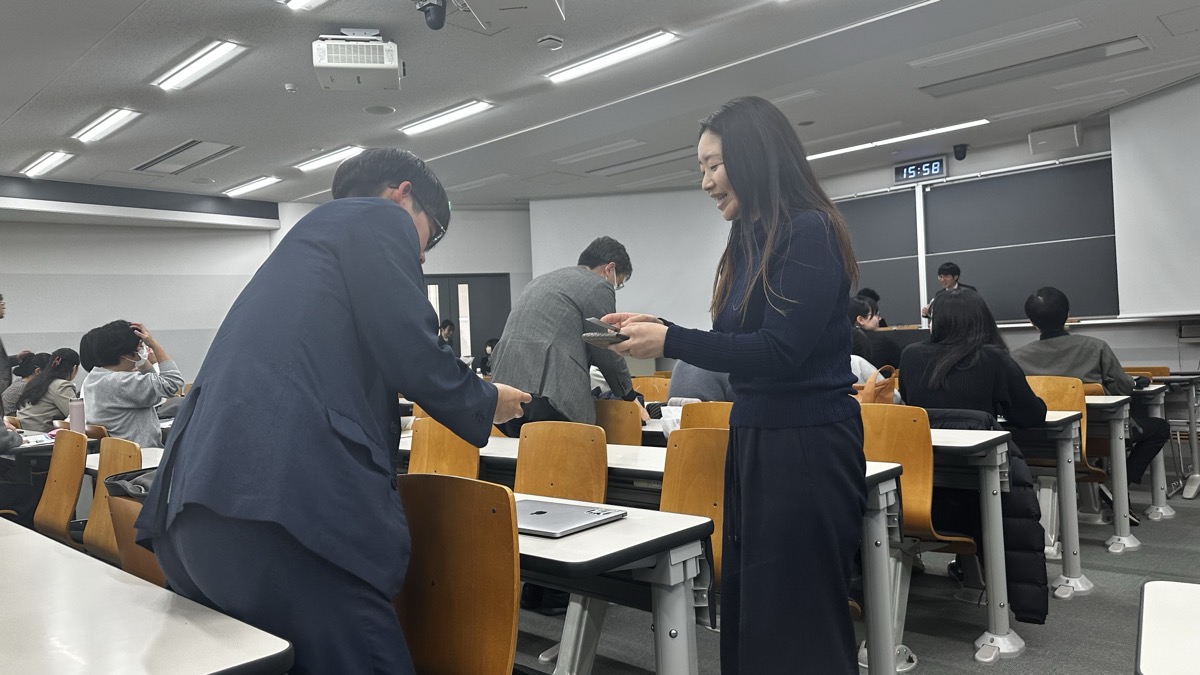
After all presentations concluded ahead of schedule, an impromptu networking session was arranged. Participants exchanged business cards and shared information with organizations that caught their interest.
Cross-Cutting Themes
Several themes emerged across the 16 presentations:
Aging Society and Student Engagement
Vice Director Nagao's opening question about living to 107 set the tone. Many organizations are grappling with how students can bridge generational gaps in aging communities. The braille transcription circle faces an aging volunteer base; Kanra-machi's farmers lack young successors; Kamaishi's traditional gun corps can no longer participate in festivals due to population decline. In each case, students are not just providing volunteer labor—they are building mechanisms for intergenerational knowledge transfer.
"Relationship Population" — A New Form of Connection
Aoi Bibs introduced the concept of "kankeijinko" (relationship population)—a connection deeper than tourism but short of permanent relocation. I KANRA similarly maintained their ties to Kanra-machi long after their internship ended by forming a student association. The question of how to sustain "more than one-time" relationships with communities is a shared challenge across organizations working in areas beyond their home base.
Inclusive Activity Design
Curlet's founding principle of "participation regardless of gender, age, or disability," aile's inclusive education for youth with disabilities, and Vote at Chuo!!'s deliberate effort to break out of elite university homogeneity—each takes a different form but shares a commitment to creating spaces where diverse participants can engage as equals.
Sustainability in Practice
From Ecopon's AI-powered recycling education to the May Festival's sustainable operations and the Bunkyo Bathhouse Project's cultural revitalization, practical approaches to sustainability were woven throughout the presentations—spanning technology, event management, and community heritage preservation.
Closing
Each organization's five-minute presentation captured the essence of their work. The diversity of approaches—children's cafeterias, civic education, braille transcription, bathhouse activation, disaster recovery—reflects the breadth of community challenges and student responses. Bunkyo-ku's concentration of 19 universities creates a unique environment for these activities to flourish and for knowledge to be shared across institutions.
ISVD will continue to follow and support these community engagement initiatives as part of our mission to provide structural support for social contribution activities.
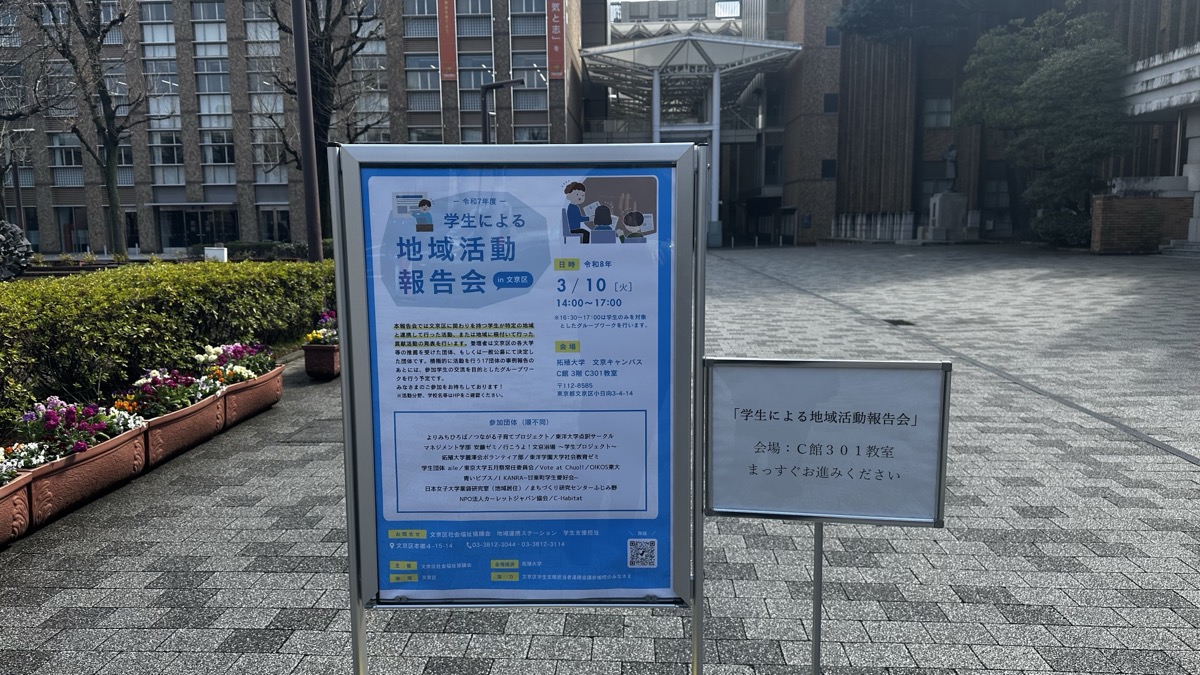
Event Information
| Item | Details |
|---|---|
| Name | FY2025 Student Community Activity Report in Bunkyo-ku |
| Date | March 10, 2026, 14:00–17:00 |
| Venue | Takushoku University, Bunkyo Campus, Building C |
| Organizer | Bunkyo-ku Council of Social Welfare |
| Cooperation | Member schools of the Student Support Coordinators' Meeting |
| Reference | Bunkyo-ku Council of Social Welfare Event Page(外部サイト、新しいタブで開きます) |
| Flyer | Event Flyer (PDF) |
Related Articles
- Relationship Population and Student Community Sustainability(このサイトの記事) — Analyzes the concept of "kankeijinko" (relationship population) and the structural background of student community participation, a key theme at this event.
- Youth Volunteer Disengagement: Structure and Design(このサイトの記事) — Explores the sustainability challenges facing student organizations and design principles for sustained engagement.