
This is the fifth installment in the structural analysis series from the Public Asset Utilization Research Lab (ISVD-LAB-005). It examines the structural dynamics of public service "softification" — the paradigm shift from facilities to services — analyzing both its potential and risks.
What Is Happening
Japan's public infrastructure is entering an era where maintenance is no longer sustainable. According to the Ministry of Land, Infrastructure, Transport and Tourism (MLIT), infrastructure maintenance and renewal costs will reach approximately ¥190 trillion over the next 30 years (under preventive maintenance). Left to reactive maintenance, the annual bill reaches ¥12.3 trillion in FY2048 — about 2.4 times the ¥5.2 trillion of FY2018. Preventive maintenance holds it to ¥6.5 trillion.
The scale of aging is stark. The proportion of facilities exceeding 50 years since construction stands at approximately 42% for road bridges as of March 2025, projected to reach approximately 75% by 2040. Tunnels will rise from approximately 28% to 52%, river management facilities from approximately 26% to 64%. An era where the majority of infrastructure exceeds 50 years is imminent.
Against this backdrop, the Ministry of Internal Affairs and Communications (MIC) required all municipalities to formulate comprehensive public facility management plans, achieving a 100% formulation rate. However, actual facility volume reduction has not progressed. Only 936 municipalities (54.3%) have set numerical targets, revealing a persistent structure where plans exist but execution does not follow.
The essential issue is not "how to reduce facilities." What residents need is not "a library building" but "access to knowledge and information" — not "a gymnasium" but "opportunities for sports and health promotion." Facilities are means, not ends. This cognitive shift is the essence of the "softification" paradigm.
Background and Context
"Softification" Already Underway
The transition from facilities to services is already progressing across multiple domains.
Library softification is the most prominent example. According to the Association for E-publishing Business Solution, as of January 2026, 611 municipalities operate e-book services through 491 e-libraries. This provides 24-hour service access to elderly residents unable to visit, parents with young children, and those in remote areas. Libraries are transforming from "buildings" to services providing "access to knowledge."
Administrative service digitization is also accelerating. The number of municipalities offering convenience store certificate issuance reached 1,378 as of 15 April 2025, covering a population of about 122.1 million, with 17.13 million resident certificate copies issued in FY2024. My Number Card ownership reached approximately 97 million cards (about 78.0% of the population), establishing the foundation for receiving administrative services without visiting government offices.
School athletic facility sharing represents a model for "expanding function without building new facilities." The opening rate for public elementary and junior high school athletic facilities nationwide has reached approximately 96% (outdoor grounds at approximately 80%, gymnasiums at approximately 90%). In 2024, a Cabinet Decision clarified that commercial use of school facilities is permissible. In Kurume City, delegating facility opening operations to a community sports club increased annual users from approximately 10,000 to approximately 70,000 over 11 years.
Community center digitization is progressing as well. Saitama City's "e-Kominkan" program provides free online streaming of citizen course videos created by 60 community centers, enabling access to lifelong learning content without visiting facilities. The Ministry of Education has also established a portal to promote public-private partnerships and digitization in social education facilities.
International Precedents
Denmark leads the world in "facility-less government." In 2024, the United Nations rated Denmark as the world's most digitally advanced government. Nearly all administrative and tax procedures can be completed online, with government notifications delivered digitally to the electronic mailbox system e-Boks. The citizen portal borger.dk recorded over 111 million visitors in 2024, with 92% of users reporting satisfaction.
Denmark's success results from the gradual development of digital infrastructure beginning with the CPR social security number in 1968, followed by digital signatures in 2003, mandatory electronic accounts (NemKonto) in 2004, the borger.dk citizen portal in 2007, and the NemID national digital identity in 2010. The current third-generation "MitID" (introduced 2022) enables fully online tax, healthcare, and benefit applications. Approximately half a century of incremental institutional design has produced administrative services independent of physical facilities.
In the UK, "place-based service delivery" has become the policy mainstream. In Scotland, institutional devolution to communities has advanced systematically. According to a Scottish Government report, under the Community Empowerment Act 2015, the number of community groups managing public assets increased from 86 in 2000 to 533 in 2023. Rather than government directly operating facilities, communities themselves manage and operate assets. While distinct from "softification," this model shares the direction of moving away from public monopoly over facilities.
The PFS/SIB "Pay for Outcomes" Model
Pay-for-Success (PFS) contracts and Social Impact Bonds (SIB) — new methods within PPP/PFI — function as fiscal mechanisms supporting "softification." While traditional public works are based on "subsidies for facilities," PFS/SIB enable "payment for outcomes," making fiscal expenditure possible for private service providers that do not own facilities.
Mima City in Tokushima Prefecture implemented a five-year "Beauty and Health" program from 2019 to 2024, setting exercise habit improvement and health checklist scores as outcome indicators. Rather than constructing new facilities, the structure pays private providers for the "outcomes" of health promotion programs.
The Cabinet Office PPP/PFI Action Plan (FY2025 revision) has shifted from cost-reduction-only evaluation to assessing diverse effects including employment creation, business opportunities, decarbonization, and digitization, targeting ¥30 trillion in PPP/PFI projects over ten years from FY2022 to FY2031.
Reading the Structure
Reversing the Design Principle
The essence of "softification" lies in reversing the design sequence of public services.
The conventional sequence was: "build a facility → provide services at that facility." Under this logic, facility maintenance becomes self-referential, and facilities persist even as users decline. The new design sequence proposed by the concept of Public Service Transformation (PX) is: "define the service outcomes residents need → select the optimal means to achieve those outcomes." Whether to use facility-based or facility-free approaches becomes a variable considered only after outcome definition.
Under this design principle, the question "should we build a library?" becomes "how do we ensure knowledge and information access for residents in this area?" The answer might be an e-library, a mobile library vehicle, or a partnership with convenience stores. Building a facility becomes one option among many, not the only answer.
Three Structural Risks
However, "softification" is not a panacea. Three structurally irreplaceable risks exist.
First, the digital divide. The digital divide is not solely an elderly issue — economic, geographic, and physical disparities overlap and compound. A population that cannot exercise rights without the physical guarantee of "visit a facility to receive services" definitively exists. Tokyo Metropolitan Government has positioned digital divide correction as a policy pillar, and Shibuya Ward has conducted pilot programs lending devices to over 1,700 elderly residents without smartphones. Municipalities advancing digitization must simultaneously design maintenance of physical channels so that "no one is left behind."
Second, loss of the "gathering place" function. Community centers, libraries, and sports centers serve as "gathering places" for isolated elderly, children, and persons with disabilities, and as "nodes" for community networks. The economic safety net function of providing free or low-cost spaces for extended stays cannot be replicated by digital services. The deepening of social isolation from losing "facilities as reasons to go outside" is a structural challenge that service digitization alone cannot resolve.
Third, disaster evacuation sites. Approximately 60% of public facilities are school buildings, serving irreplaceable functions as large-scale disaster evacuation sites and material staging areas. The dual function where the same facility serves both "peacetime service demand" and "emergency disaster demand" is extremely difficult to replace with private services. When reducing total facility volume, reconciliation with reduced evacuation capacity risk is essential.
The Structural Challenge of "Government-Created Working Poor"
Most "softification" involves private outsourcing. However, outsourcing carries structural risks of "loss of public character" and "deterioration of working conditions." Public policy research points to the normalization of "isolation" and "fragmentation" among public service providers under neoliberal administrative reform — fragmentation between direct and outsourced operations, between regular and non-regular employees, and isolation of municipalities during unexpected events.
Under the designated manager system, municipal drives to reduce personnel costs have structurally produced low-wage workers known as "government-created working poor." The proposition of maintaining service quality while cutting costs is, in most cases, "resolved" through deterioration of worker conditions. To prevent "softification" from degenerating into a mere cost-cutting tool, creating an environment where private operators can secure appropriate profits is indispensable.
Remaining Questions
The "hardware problem" cannot be solved by reducing hardware alone. What is being questioned is the fundamental design philosophy of what government provides. Rather than whether to own facilities or not, the key is first defining "what service outcomes to deliver to residents" and then selecting facility-based, facility-free, or hybrid approaches as implementation methods. This reversal of design sequence holds the key to maintaining residents' quality of life under the unavoidable constraint of ¥190 trillion in maintenance costs.
However, "softification" is not omnipotent. Three structural risks — the digital divide, gathering place functions, and disaster evacuation sites — cannot be eliminated through digital technology alone. Balancing "reducing facilities" with "maintaining services" is a sophisticated policy judgment that each municipality must design according to local conditions.
Related Research Notes
- PFS Adoption at 9%(このサイトの記事) — Why municipalities cannot embrace Pay-for-Success despite complete institutional infrastructure
- Priority Review Regulation Structural Gap(このサイトの記事) — The reality behind 82% adoption rates
- Abandoned School Small Concessions(このサイトの記事) — The institutional-execution gap behind 1,951 unused schools
Related Columns
- Water Pipe Aging Rate at 20%(このサイトの記事) — Data on Japan's invisible infrastructure crisis
References
Current Status and Future of Social Capital Aging — Ministry of Land, Infrastructure, Transport and Tourism (2025). MLIT
Public Facility Comprehensive Management Plans — Ministry of Internal Affairs and Communications (2024). MIC
PPP/PFI Action Plan (FY2025 Revised) — Cabinet Office (2025). Cabinet Office
Social Challenges in Public Service Delivery Over the Next Decade — Japan Public Policy Studies Association (2023). Japan Public Policy Studies Association Annual Review
Public Service Transformation (PX): Paradigm Shift in Policy-Making — OGN (2024). OGN
Reference Books
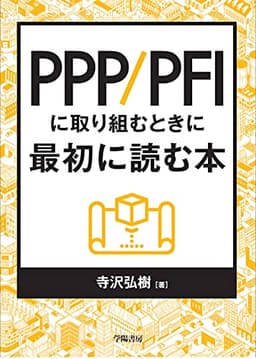
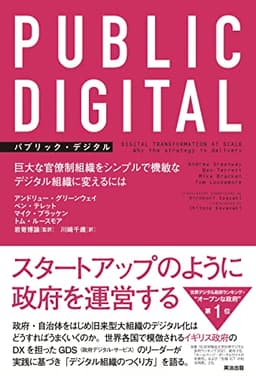
Statistics cited in this article
- 1MLIT, "Current State of Infrastructure Ageing Measures"(September 2025) Open source
- 2MLIT, "Share of Infrastructure Over 50 Years Old"(as of March 2025) Open source
- 3MIC Public Facility Management Plans(March 2024)
- 4MIC(March 2024)
- 5Association for E-publishing Business Solution(January 2026) Open source
- 6MIC Interim Report of the Working Group on Efficient and Effective Basic Resident Registration Administration Using Digital Technology(as of 15 April 2025) Open source
- 7MIC(February 2025)
- 8Japan Sports Agency(FY2017) Open source
- 9UN E-Government Survey(2024)
- 10Queue-it Denmark Digital Government Report(2024) Open source