
'Fund Museums with Public Money' — What's at Stake in a Country Spending 0.02% of GDP on Culture
'Use our taxes properly for museums.' A single Threads post exposes the structural thinness of Japan's cultural budget at 0.02% of GDP — one-fifth of France's, one-third of South Korea's. From the casualization of curators under the designated manager system to the consolidation of regional museums and rising admission fees, this article examines what it takes for museums to remain a public good.
TL;DR
- Japan's cultural budget at 0.02% of GDP is remarkably low among developed nations, forcing museums toward greater self-revenue dependence
- The 6th Medium-Term Target demands national museums achieve 65% self-generated revenue, with closure as the consequence of failure
- A fundamental philosophical gap separates Europe's framing of cultural access as a right from Japan's treatment of culture as residual budget
What Is Happening
Japan's cultural budget is extraordinarily low at 0.02% of GDP compared to other developed nations.
A single post appeared on Threads.
"Fund museums with public money. Use our taxes properly for museums."
It is brief. Yet this one sentence strikes at the core of a structural problem in Japan's cultural policy.
The scale of the cultural affairs budget
The Agency for Cultural Affairs' budget came to ¥106.3 billion in FY2025 and ¥107.3 billion in FY2026, up ¥900 million or 0.9%. This represents about 0.1% of the national budget and roughly 0.02% of GDP — about one-fifth of France's and one-third of South Korea's. Among developed nations, Japan's cultural budget is remarkably low.
* Definitions and scope of cultural budgets vary by country. Japan figure is based on the Agency for Cultural Affairs budget.
What does this figure mean in practice? The operating grants for the National Museum of Art have been declining year by year, pushing each museum toward greater dependence on self-generated revenue — namely admission fees and corporate sponsorships. In regional areas, municipal budget constraints have led to an increase in museum consolidations and closures.
The rise in admission fees
In April 2025, the Tokyo National Museum raised its permanent collection admission from ¥620 to ¥1,000 — a 61% increase. Over the past 30 years, the price has roughly tripled. Special exhibitions reach ¥1,600–2,000. The public function of museums as places where people can "casually encounter culture" is being increasingly constrained by the economic barrier of admission fees.
The sixth medium-term plan
The situation is set to transform further with the "Sixth Medium-Term Target" starting FY2026. The Agency for Cultural Affairs is requiring national museums to achieve a self-generated revenue ratio of 65% or higher by the final year. If a museum's self-generated revenue ratio falls below 40% by FY2029, it will be deemed "unable to fulfill its social role" and subject to reorganization including potential closure. The ultimate goal is 100% self-generated revenue — effectively zero operating grants.
In 2023, the National Museum of Nature and Science found itself unable to properly maintain its specimens due to declining grants and soaring utility costs, and launched a crowdfunding campaign that raised approximately ¥920 million from 56,584 supporters — the largest crowdfunding in Japanese history. That a national institution had to rely on citizen donations for basic operations is itself a symbol of the structural underfunding of culture.
Background & Context
Explores the historical and systemic factors behind Japan's underfunding of cultural institutions.
What the Designated Manager System Wrought
The designated manager system, introduced in 2003, is a framework for outsourcing the management and operation of public facilities to private operators. When this system was widely applied to museums, what followed?
Cost reduction became the overriding evaluation criterion, and the casualization of curators accelerated. The professionals who sustain museum expertise — curators — became predominantly non-regular employees cycling through three-to-five-year contract renewals. Curators in their 20s typically earn ¥2.5–3 million annually, remarkably low for a profession that generally requires a graduate degree. Surveys indicate that approximately 70% of curators report excessive workloads. Accumulation of research, relationship building with local communities, long-term collection development — work that cannot be measured by short-term performance metrics was systematically devalued.
The designated manager system itself is not inherently flawed. The problem lies in imposing an evaluation framework that prioritizes short-term efficiency onto institutions whose mission is the accumulation of knowledge. Like libraries, museums are public institutions whose value cannot be fully captured by visitor counts or balance sheets measured over a few years.
Cultural Policies Abroad — What Is Different
France's cultural budget amounts to approximately 0.1% of GDP — roughly five times Japan's. But more important than the monetary difference is the philosophical foundation underlying policy design: that access to culture is a right.
In France, national museums are free for those under 18. On the first Sunday of each month, approximately 50 national museums and over 100 national monuments under the French Ministry of Culture open their doors free of charge. The Louvre raised its admission price from €22 to €30 in 2024 (the percentage is not stated here, as it could not be confirmed on the museum's own site), yet the principle of free admission for EU residents under 26 was maintained.
In the United Kingdom, permanent collections at major national museums and galleries — including the British Museum and the National Gallery — are free. The principle that "cultural institutions are funded by taxes and open to all citizens" has been consistent since the free admission policy of 2001.
In Germany, many museums offer free admission for those under 18, and Berlin's national museum cluster provides regular free-admission days.
What these countries share is a philosophical foundation that positions access to culture not as "a service for which consumers pay" but as "a right that citizens enjoy."
The Perspective of Cultural Rights
Article 27 of the Universal Declaration of Human Rights, promoted by UNESCO, states: "Everyone has the right freely to participate in the cultural life of the community, to enjoy the arts and to share in scientific advancement and its benefits." Access to culture is internationally recognized not as luxury consumption but as part of fundamental human rights.
In Japan as well, the Basic Act on Culture and the Arts, revised in 2017, explicitly states that culture and the arts contribute to "social inclusion." As a legal principle, it recognizes that culture is not the preserve of a select group of enthusiasts but a public good for society as a whole.
Yet between principle and reality lies a deep chasm. A budget amounting to 0.02% of GDP poses the question: is there genuine intent to realize this principle?
Reading the Structure
Analyzes how budget constraints affect museum operations, staffing, and accessibility to the public.
The Threads post at the outset — "Fund museums with public money" — is not merely demanding a budget increase. It calls for a fundamental shift in how public responsibility for culture is conceived.
Residual budgeting, self-generated revenue, expertise
The first structural problem is the "residual" nature of the cultural budget. In Japan's fiscal system, the cultural budget has consistently been treated as "the residual allocated after everything else is done." Amid high-priority spending items — social security, defense, public works — culture is positioned as "desirable if available, but not essential." The figure of 0.02% of GDP is nothing other than the consequence of this structural positioning.
The second problem is the erosion of publicness through "self-revenue" demands. The Sixth Medium-Term Target's mandate of "65% or higher self-generated revenue, or face closure" effectively pressures museums to transform into revenue-generating enterprises. Raising museum admission fees and increasing the self-generated revenue ratio may appear to be sound management. But it simultaneously functions as a mechanism that excludes economically disadvantaged groups — low-income households, students, the elderly, people with disabilities — from culture. A ¥2,000 special exhibition is "a modest indulgence" for some, and "an unreachable world" for others.
The third problem is the sustainability of expertise. The casualization of curators under the designated manager system contributes to cost reduction in the short term. But over the medium to long term, it erodes the "invisible assets" that museums have accumulated — research capacity, conservation and restoration skills, and the recording and transmission of regional culture. A museum's value lies not in today's visitor count but in decades of accumulated and transmitted knowledge. The consequences of continuing to sustain the personnel who build this accumulation through non-regular employment have yet to be fully made visible.
The premise in France and Britain
France invests 0.1% of GDP in cultural spending because there exists a consensus that culture is "social infrastructure," not a luxury. The United Kingdom makes national museums free because there exists a principle that "access to culture should not vary by income."
What Japan lacks is not merely funding. The social consensus that positions culture as a public good — that consensus itself remains in the process of formation.
"Fund museums with public money." This voice marks the starting point for building that consensus.
Related Columns
- Climate Change and Social Inequality at the Intersection(このサイトの記事)
- Japan's Welfare Capture Rate — The Safety Net That Doesn't Reach(このサイトの記事)
- The Structural Risk of Zero Food Tax(このサイトの記事)
References
FY2024 Budget Overview of the Agency for Cultural Affairs — Agency for Cultural Affairs (2024). Agency for Cultural Affairs
Universal Declaration of Human Rights — United Nations (1948). UNESCO
Basic Act on Culture and the Arts (Revised 2017) — Agency for Cultural Affairs (2017). Agency for Cultural Affairs
Visiting the Louvre — Tickets and Prices — Musée du Louvre (2024). Musée du Louvre
The Shock of the 6th Medium-Term Target for National Museums — Bijutsu Techo Editorial Team (2026). Bijutsu Techo
Recommended Reading
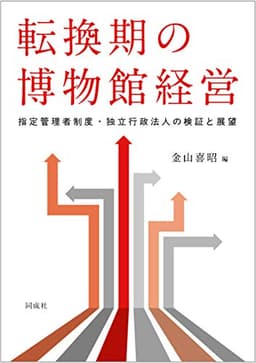
Statistics cited in this article
- 1Agency for Cultural Affairs, FY2026 budget overview(2026) Open source
- 2Bijutsu Techo(2025) Open source
- 3Nikkei(November 2023) Open source