
Japan's Bicycle 'Blue Ticket' — The Contradiction of Enforcement Without Infrastructure
On April 1, 2026, Japan introduces traffic fines for cyclists: ¥6,000 for sidewalk riding, ¥12,000 for smartphone use. But without dedicated cycling infrastructure, parents carrying children on bikes are being told to ride alongside trucks. A structural analysis of Japan's new bicycle traffic law.
TL;DR
- Japan introduces the 'blue ticket' fine system for bicycles from April 2026, but dedicated cycling infrastructure remains woefully inadequate
- Voices from parents with child-carrying bikes and drivers reveal how the reform is disconnected from everyday realities
- Enforcement without infrastructure merely transfers risk from pedestrians to cyclists
What Is Happening
Japan introduces bicycle traffic fines in 2026 with new blue ticket system for 113 violation types.
On April 1, 2026, Japan's revised Road Traffic Act takes effect. The most significant change is the introduction of the "blue ticket" system — formally known as the traffic violation notification system — for bicycles, as announced by the National Police Agency.
Until now, bicycle traffic violations could only be addressed through "red tickets" (criminal procedure), and minor violations were effectively overlooked in practice. Under the new system, fines are established for 113 violation types targeting riders aged 16 and over. Sidewalk riding and running red lights each carry a ¥6,000 fine, failure to stop is ¥5,000, and distracted riding (smartphone use) costs ¥12,000. Riding side by side or carrying a passenger costs ¥3,000.
* Applies to riders aged 16+. Serious violations (e.g. drunk cycling) remain subject to red tickets (criminal procedure).
Another important reform has been introduced: motorists must now maintain at least 1.5 meters of lateral clearance when overtaking cyclists. While this provision aims to protect cyclist safety, given the reality of Japanese road widths, there are many situations where the simultaneous demands of "ride on the road" and "cars must give 1.5 meters" simply cannot coexist.
Behind this reform lies the severity of bicycle-related accidents. Bicycle-related accidents numbered approximately 70,000 in 2024, accounting for roughly 20% of all traffic accidents. Bicycle-versus-pedestrian accidents in particular reached 3,043 cases, with the majority occurring on sidewalks. While the absolute number of bicycle accidents has plateaued, their proportion of total accidents is trending upward — as car accidents decrease, the bicycle problem has emerged in relative terms.
Background & Context
Historical context and reasons behind Japan's decision to formalize bicycle traffic enforcement through penalties.
Why Introduce the "Blue Ticket"?
The direct reason the National Police Agency moved to introduce the fine system was to ensure enforcement effectiveness.
The traditional red ticket required criminal procedures — referral to prosecutors and prosecution decisions. As a result, there was a high psychological barrier for officers on the ground to issue red tickets for minor bicycle violations, and the practice of "letting it go with a warning" became the norm. The National Police Agency's expert review committee report (2023) noted that this enforcement gap was threatening pedestrian safety.
With blue tickets, violators can avoid criminal proceedings by paying the fine. The system is also "easier to issue" for police officers, dramatically improving enforcement effectiveness. In terms of decriminalizing traffic violations and shifting to administrative processing, there is a logic in aligning bicycle treatment with that of motor vehicles.
The Reality of Cycling Infrastructure
The problem is that this legal reform is not proceeding in tandem with "securing places to ride."
Since sidewalk riding becomes a violation, bicycles must in principle ride on the road. But what are Japan's road conditions like? According to the Ministry of Land, Infrastructure, Transport and Tourism, the total length of dedicated bicycle lanes nationwide remains limited. While more municipalities have formulated bicycle network plans, there is a time lag of several years to over a decade between planning and actual completion.
The gap with the Netherlands
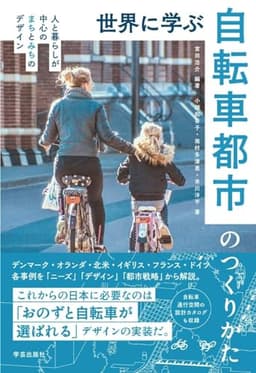
The contrast with the Netherlands makes the structural gap starkly clear. According to data from CROW-Fietsberaad, the Netherlands has approximately 35,000 km of dedicated cycling paths. In a country of 17 million people, infrastructure is designed with the premise that bicycles have spaces completely separated from motor vehicles. Copenhagen, Denmark similarly makes dedicated bicycle signal systems and separated lanes the backbone of urban transportation.
Japan's principle of "bicycles belong on the road" risks becoming synonymous with "bicycles must ride in dangerous places" as long as infrastructure cannot keep pace.
The Voices of Those Affected
On social media, particularly Threads, voices from those directly affected have been pouring out ahead of the law's implementation. The most common are from parents who use child-carrying bicycles for nursery school drop-offs and pick-ups.
"Apparently from April, riding bicycles on sidewalks will be banned with a ¥6,000 fine. I carry my kid on the back every day — isn't riding on the road scarier?"
"I get the sidewalk ban for bikes, but I can't bring myself to tell the moms doing nursery and kindergarten drop-offs to ride on roads with trucks and large vehicles while carrying their kids."
"The people making these rules have probably never done school drop-offs..."
The bicycle as everyday transport
Structurally, these voices expose a fault line in institutional design — between the "bicycle as daily transport" and the "bicycle as vehicle." The legal framework that treats bicycles as vehicles and mandates road riding was designed with sports cycles and commuter cross bikes in mind, not for situations where a power-assisted bicycle carrying two small children rides alongside heavy trucks.
"I'll say it knowing I might get criticized — the bicycle traffic rules starting in April are honestly tough. I know following rules is important. But nursery drop-offs, shopping, work — it's all by bicycle."
Drivers have mixed feelings too
Meanwhile, complex voices are emerging from the driver side as well.
"I know I really shouldn't say this, but please, I want bicycles to ride on the sidewalks."
This voice suggests that the policy of moving bicycles onto the road for pedestrian protection creates a different risk — the mixing of bicycles and motor vehicles. The newly established 1.5-meter lateral clearance obligation exists precisely because of this structural contradiction.
"If cycling on the road is going to be inconvenient and dangerous, wouldn't a moped actually be safer?"
Such voices may seem extreme at first glance, but the perception that "if you're riding on the road, a moped is safer than a bicycle due to the smaller speed differential" is grounded in an intuitive understanding of the risks posed by the speed gap between bicycles and motor vehicles.
The Half-Measure of Helmet "Effort Obligation"
Since April 2023, all bicycle users have been subject to an "effort obligation" to wear helmets. But there are no penalties. The wearing rate remains low.
The legal category of "effort obligation" is a uniquely Japanese intermediate form that sends the message "recommended but not mandatory." The coexistence of the blue ticket system — which carries enforcement power — with the non-compulsory helmet effort obligation reveals a distortion in the prioritization of safety policy.
Reading the Structure
Analysis of the systemic contradictions between enforcement policies and existing cycling infrastructure in Japan.
What this legal reform reveals is a structural contradiction: "enforcement intensification without infrastructure development."
Order, everyday users, shifted risk
The first problem is an inversion of sequence. If bicycles are to be moved onto the road, the logical order is to first secure safe riding space on the road. The Netherlands, starting from the 1970s citizen movement demanding "stop the traffic deaths of children," spent half a century developing infrastructure. In Japan, enforcement is proceeding ahead of infrastructure development.
The second problem is the absence of the everyday user's perspective. The reform debate was conducted around the axis of "bicycles as vehicles," but the reality of bicycle use in Japan is largely characterized by its role as "daily transport." Shopping, hospital visits, nursery drop-offs — bicycles are indispensable for these trips, and the majority of their riders are not "vehicle operators" versed in traffic law but ordinary citizens going about their daily lives.
The third problem is the transfer of risk. The goal of pedestrian protection is legitimate in itself, but the means of moving bicycles onto the road merely transfers risk from pedestrians to cyclists. Particularly for vehicles like child-carrying bicycles — which have high tipping risk and low speed — road riding can become a more dangerous option than sidewalk riding.
This three-layer structure is a pattern that repeatedly appears in Japanese transportation policy. Strengthening regulation is politically easy, but infrastructure development requires budget and time. The result is a state where "rules advance ahead, and the environment cannot keep up."
April 1, 2026. What cyclists will confront is not a ¥6,000 fine, but the question itself — "there is nowhere safe to ride."
How to read this structural contradiction further
A system enforced with regulation and infrastructure sequenced in reverse. The next step depends on your position as a reader.
Follow the post-enforcement reality
How did the actual enforcement unfold after April 1? See the follow-up analysis of what happened on the ground.
The structural infrastructure gap
Why does Japan repeatedly fall into the 'regulate first, build infrastructure later' pattern? A three-layer analysis.
For policy designers
A practical guide for municipalities and policy makers on citizen-participatory consensus-building processes.
Related Guides
- Introduction to EBPM — What Evidence-Based Policymaking Asks of Nonprofits(このサイトの記事)
- Wellbeing Policy Design Guide — Embedding Subjective Well-Being in Public Policy(このサイトの記事)
Related Columns
- Climate Change and Social Inequality Intersection(このサイトの記事)
- Digital Divide and the DX Paradox(このサイトの記事)
- Structural Risks of Zero Food Tax(このサイトの記事)
References
Bicycle Traffic Rules Are Changing (Effective April 1, 2026) — National Police Agency, Traffic Bureau (2025). National Police Agency
Development of Bicycle Riding Spaces — Ministry of Land, Infrastructure, Transport and Tourism, Road Bureau (2025). Ministry of Land, Infrastructure, Transport and Tourism
Traffic Accident Statistics Annual Report (2024 Edition) — National Police Agency, Traffic Bureau (2025). National Police Agency
Dutch Cycling Figures 2024 — CROW-Fietsberaad (2024). CROW-Fietsberaad
Recommended Reading
Statistics cited in this article
- 1National Police Agency Traffic Accident Statistics(2024) Open source
- 2National Police Agency Traffic Accident Statistics(2024)
- 3CROW-Fietsberaad, Dutch Cycling Figures 2024(2024) Open source