
A 'Unification' That Isn't Unified — What the My Number Insurance Card Reveals About Japan's Digital Governance
In December 2024, Japan abolished traditional health insurance cards, mandating My Number Card use. Card ownership: 81.2%. Usage: 63.2%. But ~90% of healthcare facilities report troubles, and usage among those 85+ is just ~24%. Analyzing the structure behind 'unification.'
TL;DR
- Behind the 81.2% ownership and 63.2% usage rates, approximately 90% of healthcare facilities have experienced troubles, with 27.68 million digital certificate renewals pending in FY2025
- A usage rate of just 24% among those 85+ reveals a digital divide that was foreseeable at the design stage, while the coexistence of qualification documents exposes the self-contradiction of 'unification'
- Analyzed as choice architecture, the abolition of old insurance cards is closer to coercion than a nudge, making the question 'default for whom?' essential
What Is Happening
Japan's transition from traditional health insurance cards to mandatory My Number Cards
On December 2, 2024, Japan ceased issuing new conventional health insurance cards, beginning the transition to online qualification verification via My Number Cards — the so-called "My Number Insurance Card" unification.
This was enacted under the revised My Number Act passed in June 2023. As a transitional measure, old insurance cards issued before December 1, 2024 remained valid until December 1, 2025 at the latest. From December 2, 2025, either a My Number Insurance Card or a qualification confirmation document became required for medical visits.
According to the Digital Agency, the number of My Number Cards held as of late January 2026 reached approximately 101.74 million (ownership rate 81.2%). The My Number Insurance Card usage rate reached 63.24% in December 2025 — a jump of 13.76 percentage points from the previous month as old insurance cards expired.
The numbers suggest progress. However, the reality of "unification" is more complex than these figures indicate.
Background & Context
Historical development and rationale behind Japan's digital ID card implementation
What Is Happening in Healthcare Facilities
A survey conducted by Hodanren in 2025 across approximately 49,775 healthcare facilities nationwide (9,741 responses) found that approximately 90% of facilities experienced some form of trouble. Around 60% reported increased burden at reception desks.
The troubles are diverse. Cases where names and addresses display as "●" occurred at 64.2% of facilities. Qualification shown as "invalid" due to address changes accounted for 37.9%, and expired digital certificates for 30.6%. Cases where patients were asked to pay the full 100% out-of-pocket due to My Number Insurance Card errors reached 1,894 (12.7%).
Even more concerning is that the number of My Number Cards requiring digital certificate renewal in FY2025 reaches 27.68 million. A massive wave of troubles due to forgotten renewals is anticipated.
Usage at 24% for Those 85+ — The Digital Divide Made Visible
A striking generational gap exists in My Number Insurance Card usage. Usage among those aged 85 and above stands at 24%, rising to 33% at 80-84, 37% at 75-79 and 48% at 70-74. Despite card ownership rates exceeding 80% for those over 50 and above 90% for ages 75-79, significant barriers exist to actual online use.
Card loss risk for facility residents, difficulty entering PINs for dementia patients, and the sheer physical barrier of operating card readers — these were foreseeable problems at the system design stage.
MHLW has established a system providing free qualification confirmation documents upon request for "persons requiring special consideration" who have difficulty using My Number Insurance Cards. However, the structure of issuing a separate document while proclaiming "unification" reveals the system's self-contradiction.
Nine Types of "Documents" Coexist in a "Unified" System
According to reporting by Akahata (August 2025), nine types of insurance-related "documents" now coexist after the My Number unification — including the My Number Insurance Card, qualification confirmation documents, qualification information notices, and high-cost medical expense certificates. Despite the name "unification," on-the-ground paperwork has arguably become more complex.
International Comparison — Digital ID × Healthcare Precedents
| Country | Pop. | Coverage | Feature | Challenge |
|---|---|---|---|---|
| Estonia | 1.3M | ~100% | PKI + X-Road 25 years incremental | Small-country model scalability |
| South Korea | 52M | ~100% | Resident ID number No physical card needed | 35M records leaked (2011) |
| Taiwan | 24M | ~99% | IC card + cloud Insurance # printed | Over-reliance on digitization |
| Japan | 125M | ~81% | My Number Card + Online qualification | Digital divide Frequent troubles |
Estonia launched its National Health Information System in 2008, achieving nearly 100% digitization. However, this success was built on over 20 years of incremental digital ID infrastructure development starting in 2002, in a small country of approximately 1.3 million people.
South Korea verifies health insurance qualification through resident registration numbers, eliminating the need for physical insurance cards. However, in 2011 it experienced a serious security incident with approximately 35 million resident registration numbers leaked. Since numbers cannot be changed in principle, the damage was prolonged.
Taiwan's National Health Insurance Card stores information on an IC chip while also printing the insurance number on the card, providing fallback options during trouble. Japan's My Number Insurance Card does not print insurance data, meaning fallback options during trouble are limited — a stark contrast.
Reading the Structure
Analysis of systemic issues and governance challenges in the unification process
Under the Name of "Efficiency" — Trading Cost Savings for Vulnerability
The government estimates that unification to My Number Insurance Cards can reduce insurance card issuance costs by approximately ¥10 billion annually. However, the total cost including card reader installation, facility reception response costs, human costs for trouble resolution, and qualification confirmation document issuance costs has not been sufficiently verified.
Efficiency gains and single-point-of-failure creation are two sides of the same coin. When card loss, malfunction, expiration, or system failures occur, the risk that access to insured healthcare is cut off wholesale did not exist in the era of paper insurance cards.
My Number Unification as Choice Architecture — The Problem of Opt-Out Design
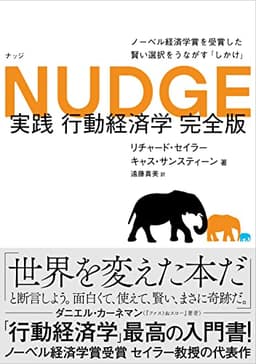
In 『NUDGE 実践 行動経済学 完全版』(Nudge: The Final Edition)(外部サイト、新しいタブで開きます), Richard Thaler and Cass Sunstein demonstrated the power of "defaults" in institutional design. Automatic pension enrollment is a classic example: simply changing the default from opt-in (actively enrolling) to opt-out (remaining enrolled unless actively withdrawing) dramatically increases participation rates.
The unification to My Number Insurance Cards is effectively an opt-out system. By abolishing conventional insurance cards, the My Number Insurance Card became the default. Those who do not hold or cannot use the card have access to "qualification confirmation documents" as an alternative, but this is merely an opt-in relief measure — available only to those who actively apply.
What nudge theory reveals is that default design powerfully steers people's behavior. However, Thaler and Sunstein also emphasize that for nudges to function properly, "freedom of choice must be guaranteed" and "transparency must exist." In the case of the My Number Insurance Card, the abolition of old insurance cards narrows choice itself, making the structure closer to coercion than a pure nudge.
What may be a rational transition for working-age adults with high digital literacy can function as exclusion for elderly persons with declining cognitive function or individuals who face barriers accessing administrative procedures. The design of choice architecture demands asking: "Default for whom?"
"Unification" for Whom?
The introduction of the My Number Insurance Card holds long-term significance as infrastructure for healthcare DX. Sharing prescription history and specific health checkup information through online qualification verification can contribute to improved healthcare quality.
The pace and process of the transition
However, what should be questioned at this point is the design of the transition process and pace. Approximately 20% card non-holders, a usage rate of 24% among those 85+, and troubles at 90% of healthcare facilities — these are problem sets that were foreseeable at the system design stage, structural burdens created by a policy of "unification first."
The benefits of digitization concentrate among those who can master it, while manifesting as burdens for those who cannot. The question that should be asked is not "whether unification has been achieved" but "how to design digitization that leaves no one behind."
For more on the digital divide and social inclusion, see also "Japan's Digital Divide — The Structure of Information Gaps Created by Generation, Region, and Income(このサイトの記事)."
References
マイナンバーカードの普及に関するダッシュボード — Digital Agency (2026)
マイナ保険証についてのお知らせ — Ministry of Health, Labour and Welfare (2025)
マイナ保険証によるトラブル調査結果 — Hodanren (Japan Federation of Insurance Medical Associations) (2025)
Estonia's e-Health System — e-Estonia (2024)
改正マイナンバー法の概要 — Digital Agency (2023)
マイナ保険証 9種類もの書類が混在 — Akahata (2025)
Reference Books
Statistics cited in this article
- 1Ministry of Health, Labour and Welfare(December 2023 cabinet decision)
- 2Digital Agency(End of January 2026)
- 3Ministry of Health, Labour and Welfare(December 2025)
- 4Hodanren survey(2025)
- 5Digital Agency(FY2025)
- 6MHLW Health Insurance Bureau, "Promoting Use of the My Number Insurance Card" (Social Security Council, Medical Insurance Committee, 208th meeting, Document 2)(as of October 2025) Open source
- 7Akahata(August 2025 report)
- 8Various media(2011)