From 'Sexy Tanaka-san' to 'Manga One' — The Structural Governance Failures Shogakukan Reveals About Japan's Publishing Industry
In January 2024, manga creator Hinako Ashihara died. In 2026, Shogakukan's Manga One was found to have re-hired a convicted manga artist under a pseudonym. Analyzing recurring governance failures through moral rights waivers, 'telephone game' structures, and the Freelance Protection Act.
TL;DR
- Recurring governance failures at Shogakukan — two years after the 'Sexy Tanaka-san' incident, the structure remains unchanged
- Moral rights non-exercise clauses, 'telephone game' structures, and verbal agreement culture hollow out creator rights
- Without industry-wide institutional design, prevention measures by individual companies cannot resolve structural problems
What Is Happening
Overview of Hinako Ashihara's death and subsequent Shogakukan governance failures involving convicted artist rehiring.
On January 29, 2024, Hinako Ashihara, the creator of the manga "Sexy Tanaka-san," was found dead in Nikko City, Tochigi Prefecture. This came three days after she publicly disclosed on social media how her condition that the drama remain "faithful to the original" had been disregarded and the script significantly altered during its adaptation by Nippon Television.
Following the incident, Nippon Television published a 97-page investigation report, while Shogakukan released a 90-page investigation report (published version). Prevention guidelines were also formulated.
Yet in February 2026, it was revealed that Shogakukan's manga app "Manga One" had re-hired a manga artist convicted under the Act on Punishment of Child Prostitution and Child Pornography under a pseudonym. Suspicions also emerged that the assigned editor had been involved in settlement negotiations and attempted to silence the matter. Prominent manga artists including ONE and Rumiko Takahashi announced they would withdraw their works from Manga One.
Two years after "Sexy Tanaka-san," the same governance failures persist — this is not an individual problem, but a manifestation of deep structural issues in the publishing industry.
Background & Context
Historical context and industry practices leading to structural problems in Japanese publishing.
The "Telephone Game" — How the Creator's Voice Disappears
At the heart of the drama adaptation controversy lies a "telephone game" structure in which the original creator and the screenwriter cannot communicate directly. As conditions pass through layers — creator → assigned editor → editor-in-chief → publisher sales → TV producer → screenwriter — the requirement to be "faithful to the original" becomes distorted and diluted.
Where the two reports disagree
Shogakukan's investigation report states that the publisher conveyed the condition of "faithfulness to the original" to Nippon Television from the start of the drama adaptation. However, Nippon Television's report indicates fundamental misunderstanding between the creator/publisher and the TV station/screenwriter regarding the interpretation of "faithful to the original."
Diamond Online pointed out the harmful effects of euphemistic expressions and indirect feedback — "cushion words" and "secondhand criticism" — that fail to convey the severity of the issue. BPO (Broadcasting Ethics & Program Improvement Organization) also noted that the "adaptation-assumed" production culture was problematic.
The Hollowing Out of Moral Rights
Article 20 of Japan's Copyright Act establishes the "right to integrity," prohibiting alterations against the author's will. Moral rights are inalienable — they remain with the creator even when economic rights are transferred.
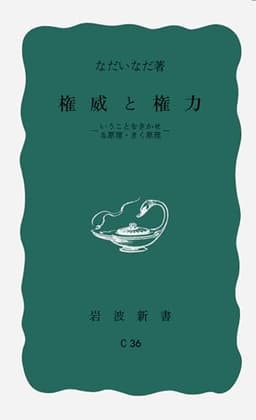
In practice, however, "moral rights non-exercise clauses" are commonly included in adaptation contracts as an industry convention. Legal protections exist yet are effectively hollowed out through contractual arrangements. Nadainada analyzed in 『権威と権力: いうことをきかせる原理・きく原理』 (Kenni to Kenryoku (Authority and Power))(外部サイト、新しいタブで開きます) how authority compels obedience through mechanisms beyond legal or institutional legitimacy — the power of "convention" in the publishing industry is precisely an example of this authority structure. Furthermore, conditions for drama adaptations are routinely shared verbally and production proceeds without written documentation.
The Freelance Protection Act — Progress and Remaining Challenges
The Freelance Protection Act (Act on Ensuring Proper Transactions for Specified Entrusted Business Operators), which took effect on November 1, 2024, includes manga artists and writers in its scope of freelance protection. Commissioning parties (publishers) face administrative guidance and fines for violations.
As a precedent, KADOKAWA received a corrective order for violations of the Subcontract Act. This represents a step forward in demonstrating the effectiveness of freelance protections, but the issue of original work alteration in media adaptations contains much that cannot be resolved by "transaction fairness" alone.
International Comparison of Creator Rights Protection
| Aspect | Japan | United States | South Korea |
|---|---|---|---|
| Collective bargaining | Weak (individual) | Strong (WGA etc.) | Moderate |
| Contract culture | Verbal agreements | Written contracts | Platform standard |
| Fidelity to original | Goodwill-based | Contractually specified | IP pipeline design |
| Dispute resolution | Individual vs org imbalance | Union negotiation | Platform mediation |
In the United States, powerful labor unions such as the WGA (Writers Guild of America) institutionally protect screenwriters' rights. The 2023 strike secured comprehensive agreements including AI usage restrictions. South Korea has developed studio-based division of labor in the webtoon industry and platform-standard contracts.
In Japan, individual negotiation remains the norm, with no industry-wide collective bargaining mechanisms. Manga artists are in an overwhelmingly weak position relative to large publishing corporations, and the fear of being blacklisted from the industry makes it difficult to speak up. NPO LEGIKA enacted and enforced rules in March 2026 prohibiting manga editors from involvement in authors' legal disputes within their own organization.
Reading the Structure
Analysis of systemic governance issues and legal frameworks affecting creator-publisher relationships.
How the Production Committee System Excludes Original Creators
Alteration of original works in media mix is also a structural consequence of the production committee system. In a structure where multiple investors — TV stations, advertising agencies, publishers — provide production funding, the original creator is not an investor and therefore has institutionally weak voice in the production process. Multi-platform IP development takes priority, with commercial optimization for each medium pursued over the integrity of the original work.
TV drama production processes, bound by broadcast schedules, have extremely short script revision cycles. In a context where there is no temporal room to reflect the creator's opinions, an "adaptation-assumed" production culture is reproduced.
Why Organizations Fail to Learn
Shogakukan's governance problems show the same type of issue repeating from the 2024 "Sexy Tanaka-san" incident to the 2026 "Manga One" incident. In crisis management as well, during the Manga One incident the company initially issued statements only on the app itself and then deleted a previously issued statement, displaying consistently reactive responses.
The question that should be asked is "why organizations do not learn from past incidents." In 『権威と権力: いうことをきかせる原理・きく原理』 (Authority and Power)(外部サイト、新しいタブで開きます), Nadainada argued that once authority becomes internalized, structures of compliance are automatically reproduced. Investigation reports were published and prevention guidelines were formulated, yet reform at the organizational culture level — specifically, institutional design to correct the structural power asymmetry between editors and creators — has not progressed.
No framework that spans the industry
Industry-wide governance rules — an institutional framework for protecting original creators across TV stations, publishers, and anime studios — still do not exist. Prevention measures by individual companies alone cannot resolve structural problems.
For more on creator rights and labor conditions, see also "The Dual Structure Called Non-Regular Employment — A Cross-Section of Inequality Born from Japanese-Style Employment(このサイトの記事)."
References
「セクシー田中さん」調査報告書(公表版) — Shogakukan Special Investigation Committee (2024)
セクシー田中さん報告書に批判殺到の根本原因 — Toyo Keizai Online (2024)
セクシー田中さん報告書に見る仕事のすれ違い — Diamond Online (2024)
後手に回り続ける小学館のガバナンス──フジテレビ問題と重なる「マンガワン」問題 — Soichiro Matsutani (Yahoo! News) (2026)
フリーランス新法と出版業界 — Mystery Writers of Japan (2024)
セクシー田中さん問題が何度でも起きるシンプルな理由 — Bunshun Online (2024)
マンガワンにおける新たな原作者起用問題と第三者委員会設置について — Shogakukan (2026)
Reference Books
Statistics cited in this article
- 1Various media(January 2024)
- 2Nippon TV Special Investigation Team(May 31, 2024)
- 3Shogakukan Special Investigation Committee(June 3, 2024)
- 4Japan Fair Trade Commission(November 2024)