Why They Keep Gathering Despite Exclusion — The Structural 'Place to Belong' Crisis Revealed by Guri-shita and Tō-yoko
A 2.4-meter wall at Osaka's Guri-shita, fences at Shinjuku's Tō-yoko. Yet youth simply relocate. Child abuse cases: 225,509 (record high). Kimimamo users: 8,858 (over 2x expected). Analyzing the structure of 'gathering spots' from both exclusion and inclusion perspectives.
TL;DR
- Fences and walls at Guri-shita and To-yoko merely displace youth while making outreach by support organizations more difficult
- With 225,509 child abuse cases (record high), youth falling through institutional gaps seek belonging in entertainment districts
- The essential question is not how to exclude youth, but how to repair the structural deficiency in inclusive functions of families, schools, and communities
What Is Happening
Physical barriers fail to disperse youth gatherings as they simply relocate to new areas
In March 2025, Osaka City installed a utility wall approximately 2.4 meters high and 33 meters wide in total beneath the Glico sign in Dotonbori, commonly known as "Guri-shita." Additional surveillance cameras were also deployed, and a replacement with triangular panels is planned after the Expo. The intent to physically seal off a youth gathering spot was unmistakable.
The result, however, was predictable. Youth who found the space uncomfortable simply moved elsewhere, and support organizations reported that "making contact has become more difficult."
A similar dynamic plays out at Tō-yoko in Shinjuku's Kabukicho. In December 2023, the area around the Toho Building was enclosed with fences, yet gatherings continued just meters away. The youth themselves say, "There are plenty of places to gather in Shinjuku."
The same pattern spreading nationwide
This pattern of "they gather again no matter how many times you push them out" has spread nationwide — to Nagoya's "Don-yoko," Hiroshima's "P-yoko," Gifu's "Rō-yoko," and Sendai's "Bī-yoko." Intensified patrols at the original Tō-yoko have, in some respects, accelerated dispersion to regional cities.
Background & Context
Explores the underlying social conditions driving youth to seek gathering spaces
Why Youth Gather in Entertainment Districts
The backgrounds of youth gathering at Guri-shita and Tō-yoko are far from simple. Family dysfunction, school maladjustment, and information dissemination through social media — these three factors overlap and reinforce each other.
According to the Ministry of Health, Labour and Welfare, the number of child abuse consultation responses in FY2023 reached 225,509 — a record high. Psychological abuse was the most common at 134,948 cases. Since statistics began in FY1990, numbers have increased almost continuously, growing over 200-fold in approximately 30 years.
Abuse, neglect, witnessing domestic violence, overly controlling "educational abuse" — for youth whose homes are no longer safe, if school also fails to provide a sense of belonging, the only remaining option is the anonymous space of entertainment districts. Ray Oldenburg's concept of the "Third Place" — a place of belonging that is neither home nor work/school — manifests in the distorted form of urban streets.
The Current State of Support
In May 2024, the Tokyo Metropolitan Government opened "Kimimamo @ Kabukicho," a comprehensive consultation center for youth. By the end of March 2025, cumulative users reached 8,858 (averaging 42 per day) — over twice the initially projected 20. Those aged 18-24 accounted for approximately half, with users also coming from as far as Hyogo and Osaka prefectures.
In Osaka, Certified NPO D×P opened a youth center in June 2023, a 5-minute walk from Guri-shita. Cumulative users reached 7,739, with 6,171 meals provided. The center offers a space where youth can relax on sofas or cook and eat meals together in the kitchen.
However, on February 14, 2025, a stabbing incident at Guri-shita left three 17-year-old boys injured, and Ryunosuke Kamata (age 17) died. The suspect was a 21-year-old unemployed man who had been frequenting Guri-shita for several years. Reports have also emerged of sexual violence incidents at support facilities and organizations.
The Spread of Overdose — How OTC Drugs Become a "Place to Belong"
Inseparable from the gathering spot problem is the rampant misuse of over-the-counter (OTC) drugs through overdose. Approximately 1 in 60 high school students has experience misusing OTC drugs, and among middle school students, approximately 1 in 55 (1.8%) had used them for misuse purposes within the past year. OTC drugs account for 65.2% of drug dependence among teenagers — the highest category — surging from 0% in 2014.
In March 2026, a case emerged of someone being referred to prosecutors for selling sleeping pills at Tō-yoko. During coordinated patrols, a female middle school student was found possessing approximately 600 sleeping pills. MHLW has strengthened sales regulations and introduced a "Designated Abuse Prevention Pharmaceutical" system, but these measures remain symptomatic at best.
Reading the Structure
Analyzes the systemic factors creating the cycle of exclusion and relocation
The Limits of Exclusionary Architecture
Fences, walls, surveillance cameras, triangular panels — these are techniques known as "hostile architecture," a design philosophy based on physically preventing lingering, including bench dividers and mosquito tone devices.
However, hostile architecture has structural limitations. First, it merely displaces youth to other locations without resolving the problem. Second, it makes outreach by support organizations more difficult, severing contact points with the youth who need help most. Third, because these are public spaces, permanent closure is impossible.
That "they gather again no matter how many times you push them out" repeats nationwide is simply because the root causes of gathering have not been addressed.
Youth Falling Through Institutional Gaps
Compulsory education ends at age 15, removing youth from the child welfare system. At 18, they become "adults," yet lack preparation for social independence — youth exist who fall through these institutional gaps.
Many of the youth who gather at Guri-shita and To-yoko carry not a single difficulty but a compound of factors. In 『最貧困女子』(The Poorest Women)(外部サイト、新しいタブで開きます), journalist Daisuke Suzuki identified the "three disconnections" — from family, from community, and from institutions — that cause young people to fall through every existing safety net when poverty, abuse history, and intellectual disability or mental illness overlap. This structure applies directly to the youth gathering in entertainment districts.
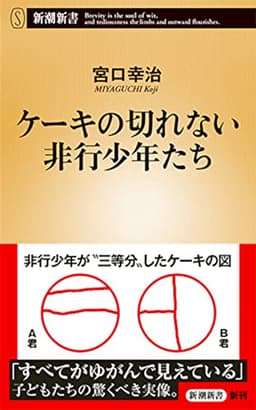
Furthermore, in 『ケーキの切れない非行少年たち』(The Delinquent Boys Who Couldn't Cut a Cake)(外部サイト、新しいタブで開きます), Koji Miyaguchi revealed that many juvenile offenders in detention facilities possess borderline intellectual functioning (IQ 70-84) and, due to cognitive weaknesses, drop out of school education and drift into delinquency without receiving appropriate support. Borderline intellectual functioning does not meet the criteria for intellectual disability certification, placing these individuals outside disability welfare — yet standard education and employment support cannot address their needs. This "institutional gap" overlaps precisely with some of the youth gathering at Guri-shita and To-yoko.
A chain, not a choice
Youth with abuse histories repeatedly run away from home, unable to connect with school or welfare systems, and find "companions" in entertainment districts through social media — this chain is not a matter of personal choice but the consequence of a structural failure in which family, education, and welfare systems cannot coordinate.
The April 2024 revision of the Child Welfare Act shifted the criteria for leaving child welfare facilities from "age limits" to "readiness for independence," but implementation has only just begun. The university enrollment rate for facility leavers (care leavers) stands at 40.5%, with 33.6% reporting difficulties with "living expenses and tuition."
The Science Council of Japan noted in its 2017 recommendations that Japan's deeply rooted "personal responsibility" and "family responsibility" narratives obstruct the expansion of youth support policies. Existing support systems are designed on the premise that individuals "come to seek help on their own," while youth lingering in entertainment districts are positioned in a demographic that cannot — or does not — access these systems.
Why the street becomes the only place left
What should be questioned is not "how to exclude youth" but rather "why urban streets become their only place to belong" — that is, how to repair the structural deficiency in the inclusive functions that families, schools, and local communities should fulfill.
For more on youth mental health crises and social support, see also "Structural Analysis of School Non-Attendance and Youth Suicide — Reading the Social Context Behind 'Mental Health Issues'(このサイトの記事)."
References
児童虐待防止対策 — Ministry of Health, Labour and Welfare (2024)
「きみまも@歌舞伎町」の取組について — Tokyo Metropolitan Government (2024)
D×P Youth Center Activity Report — Certified NPO D×P (2025)
Why Do Youth Gather at Tō-yoko and Guri-shita? — Well-being Matrix (2024)
Announcement of the 11th Guri-shita Council (prefecture-city and public-private cooperation) — Osaka City, Chuo Ward Office (2026)
Recommendations on Social Exclusion and Inclusion of Youth — Science Council of Japan (2017)
Reference Books

Statistics cited in this article
- 1Ministry of Health, Labour and Welfare(FY2023)
- 2Tokyo Metropolitan Government(End of March 2025)
- 3D×P(As of April 2025)
- 4Various media(February 2025)
- 5MHLW research team(2025)
- 6National Center of Neurology and Psychiatry(2022)
- 7Ministry of Health, Labour and Welfare(FY2022)