
The Blind Spots of 'Free' Private High School Tuition: How Removing the Income Cap Widens Inequality
The April 2026 removal of the income cap on high school enrollment support grants was celebrated as making private high school tuition 'completely free.' But hidden costs beyond tuition, regional disparities among prefectures, and a regressive structure ensure that the deep inequalities the policy claims to address remain largely intact.
TL;DR
- From April 2026, the income cap on enrollment support grants was removed and the private high school tuition-support ceiling raised to ¥457,200 per year
- Although branded "completely free," roughly ¥320,000 of the average first-year total of ¥780,000 is not covered: fees beyond tuition remain
- 70% of economists oppose the policy as "regressive," noting that higher-income households benefit more than low-income ones
What Is Happening
Apr 2026 income cap removal billed as "completely free" private HS tuition, but ~¥320,000 in non-tuition costs remain; "free in name only"
In April 2026, the income cap on Japan's High School Enrollment Support Grant was lifted. The tuition-support ceiling for full-time private high schools was raised from ¥396,000 to ¥457,200 per year, making all high school students eligible regardless of household income. Media coverage widely described this as "making private high school tuition completely free."
But the phrase "completely free" does not accurately reflect how the policy works.
The national average first-year total payment at full-time private high schools is ¥780,460. The support grant covers only the tuition component (¥457,200); enrollment fees (¥165,898 on average), facility charges (¥157,232 on average), uniforms, and textbooks are excluded. Even in the first year alone, out-of-pocket expenses exceed ¥320,000.
"Zero tuition" and "zero education costs" are two different things. Removing the income cap is a genuine expansion of the program, and that is progress. Whether this change actually reduces inequality, however, requires a closer look than the headlines suggest.
Background & Context
Hidden non-tuition costs, inter-prefectural gaps, regressive design (70% of economists oppose), and public HS shortfall form key blind spots
A History of Income-Cap Removal
High school tuition subsidies began under the Democratic Party government in 2010. Public high schools became tuition-free, and a ¥118,800/year support grant was introduced for private schools. An income cap (annual household income below ¥910,000) was added in 2014. In 2020 the private high school ceiling was raised to ¥396,000/year (for households below ¥590,000 income). In FY2025 the income cap shared by public and private schools was lifted, and in April 2026 the private school ceiling was raised again alongside the full removal of all income caps.
A program expanded incrementally over 16 years reached its current endpoint in 2026: no income cap and a grant equal to average private-school tuition. The revised law passed the House of Councillors on March 31, 2026 and took effect the following day.
Blind Spot 1: Hidden Costs Beyond Tuition
The "tuition" covered by the enrollment support grant represents only a portion of what families actually pay to attend a private high school. The total annual learning costs at private high schools are ¥1,179,261 (FY2023). The ¥457,200 support ceiling covers only 39% of that total.
The remaining 61% consists of "hidden costs" such as:
- Enrollment fees (national average ¥165,898)
- Facility and equipment charges (national average ¥157,232)
- Uniforms and required goods (¥50,000–¥100,000 at enrollment)
- Tablet devices and textbooks
- School trips and club activities
- Tutoring and prep-school fees (approximately ¥264,000/year for private high school students)
These are expenses that depend on household economic capacity. For lower-income families, even "free tuition" may not remove the barriers to private high school enrollment. The households positioned to benefit most fully from the "free tuition" policy are precisely those that can already afford to cover the remaining costs.
Blind Spot 2: Regional Disparities Among Prefectures
The national program applies uniformly, but supplemental programs run by individual prefectures create substantial differences in effective support levels.
| Prefecture | Annual Support Ceiling | Note |
|---|---|---|
| Osaka Prefecture | Up to ¥630,000 | Unique scheme where schools absorb the excess |
| Tokyo | Approx. ¥490,000 | National grant + metropolitan tuition-reduction subsidy |
| Kanagawa | ¥468,000 | For households with annual income below ¥7.5 million |
| National baseline only | ¥457,000 | Most prefectures without a supplemental program |
Even under the same "no income cap" banner, a gap of over ¥170,000 separates Osaka and prefectures without supplemental programs. In regions where average private high school tuition far exceeds the national average, for example Nagano Prefecture's average of ¥648,000, the gap between the national ceiling of ¥457,200 and actual tuition is nearly ¥190,000, creating a heavy burden for families in prefectures without supplemental support.
A structure in which out-of-pocket education costs depend on which prefecture a family lives in contradicts the "universal free tuition" framing.
Blind Spot 3: The Regressivity Problem
The most debated aspect of this revision is the regressive nature of removing the income cap.
In a survey of economists conducted in February 2025, 70% opposed raising the private high school support ceiling — 57% answering "disagree" plus those answering "strongly disagree" — according to the Japan Center for Economic Research. Three concerns dominated the opposition.
First, subsidizing all households including affluent ones is "regressive": higher-income households gain more. Households with annual income above ¥9.1 million, previously excluded from any support, now receive the full ¥457,200. By contrast, lower-income households already in the program gained only ¥61,200.
Second, limited public funds should be concentrated on lower- and middle-income families. Distributing grants uniformly to all households is an inefficient instrument for reducing educational inequality.
Third, the policy creates an incentive for private schools to raise tuition. Private high school tuition rose 4.9% year-on-year when tuition-free policy launched in FY2010, and 7.2% when the program was expanded in FY2020. The risk of "capitalization of subsidies," where public support is absorbed through tuition increases, is not small.
Blind Spot 4: The Risk of Public High School Decline
Expanding support for private schooling places structural pressure on public high schools.
90% of high school stakeholders predict a decline in applications to public schools, and early signs are already visible. One in four metropolitan Tokyo public high schools is below enrollment capacity, while in Osaka Prefecture roughly 70 of 145 full-time public high schools (about half) are below capacity, and the share of students exclusively applying to private schools exceeded 30% for the first time in FY2024.
Declining applications to public schools translate directly into budget cuts, faculty reductions, and pressure to consolidate schools. In regional areas, if public high schools contract, students who have no private school within commuting distance lose access to education. Public high schools also serve as a safety net, absorbing students with academic challenges or those requiring special support, and the loss of that function carries real risk.
The paradox in which "making private schools free" leads to "weakening public schools" is one of the most significant blind spots of this reform.
Reading the Structure
Free tuition ≠ equal opportunity; removing an income cap does not close the gap in which schools families can actually access
The Limits of "Free Tuition"
The core issue is that "free tuition" and "equal educational opportunity" are not the same thing.
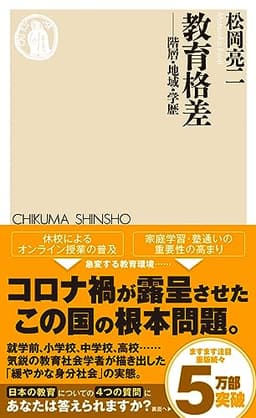
As Ryoji Matsuoka demonstrated in 教育格差 階層・地域・学歴 (Educational Inequality: Class, Region, and Academic Credentials)(外部サイト、新しいタブで開きます), disparities rooted in family background and geography are reproduced through the school system. Which high school a student can attend depends on household income, access to information, and place of residence, none of which the removal of a tuition cap changes.
International evidence points in the same direction. Nordic countries offer free high school education regardless of sector, yet educational attainment remains correlated with parental socioeconomic status. In the United Kingdom, free public grammar schools coexist with severe class stratification driven by independent schools.
450,000 more students became eligible
This reform brings approximately 450,000 additional high school students (those from households above ¥9.1 million) into the support system. That is genuine progress. But the benefits are skewed toward higher-income households and concentrated among those who can afford the costs beyond tuition. That is closer to "a layer of paint applied over existing inequality" than to "inequality reduction."
How far beyond tuition the support should reach
What is needed is structural reform that goes beyond "free in name only." That means expanding support to cover total education costs including enrollment fees and facility charges, creating mechanisms to equalize inter-prefectural disparities, maintaining investment in public high school quality, and addressing the information gap: the disparity in which schools families even know they can choose.
Approximately 1.01 million students (roughly 35% of all high school students) attend private high schools and are the intended beneficiaries of this reform. Calling the policy "completely free" is a choice. But if that phrase obscures what the policy leaves unaddressed, the evaluation of the reform will be distorted.
Related Columns
- The Regional Gap in High School Tuition Support(このサイトの記事) (The Osaka ¥630,000 / Tokyo ¥490,000 / regional ¥457,000 structure)
- Why a 5%+ Wage Hike Still Leaves Workers Poorer(このサイトの記事) (A similar structure where nominal improvement conceals real stagnation)
Related Guides
Reference Books
- 教育格差 階層・地域・学歴 (Educational Inequality: Class, Region, and Academic Credentials)(外部サイト、新しいタブで開きます) (Ryoji Matsuoka, Chikuma Shinsho, 2019)
- 「学力」の経済学 (The Economics of Academic Achievement)(外部サイト、新しいタブで開きます) (Makiko Nakamuro, Discover 21, 2015)
- The Economics of Educational Inequality: What Determines a Child's Future?(外部サイト、新しいタブで開きます) (Toshiaki Tachibanaki, NHK Publishing Shinsho, 2020)
References
Notice on Revision of the High School Enrollment Support Grant System (April 7, 2026) — Ministry of Education, Culture, Sports, Science and Technology (MEXT) (2026). MEXT
Survey on First-Year Tuition and Fees at Private High Schools, FY2024 — Ministry of Education, Culture, Sports, Science and Technology (MEXT) (2024). MEXT
令和5年度子供の学習費調査 結果の概要(令和8年1月16日 数値訂正版)(Survey on Children's Learning Costs, FY2023 — Summary of Results, revised 16 January 2026) — Ministry of Education, Culture, Sports, Science and Technology (MEXT) (2026). MEXT
70% of Economists Oppose Raising Private High School Support Ceiling — Economist Survey — Japan Center for Economic Research (2025). Japan Center for Economic Research
Will Applications to Public High Schools Decline? Expectations and Concerns About High School Tuition-Free Policy — Kyoiku Shinbun (2025). Kyoiku Shinbun
Statistics cited in this article
- 1MEXT — Notice on Revision of the Enrollment Support Grant System(April 2026) Open source
- 2MEXT — Survey on First-Year Tuition and Fees at Private High Schools, FY2024(December 2024) Open source
- 3House of Councillors — Parliamentary Debates on High School Tuition-Free Policy(2025) Open source
- 4MEXT — Survey on Children's Learning Costs, FY2023 (revised 16 January 2026)(Revised January 2026) Open source
- 5Osaka Prefecture — Private High School Tuition-Free Program(FY2024) Open source
- 6Tokyo Private School Foundation(FY2026) Open source
- 7MEXT — FY2024 Private High School First-Year Survey(December 2024) Open source
- 8Japan Center for Economic Research — Economist Survey, 'Seven in ten oppose raising the high school tuition support ceiling'(20 February 2025) Open source
- 9MEXT — Issues in High School Tuition-Free Policy Based on Tripartite Agreement(July 2025) Open source
- 10Kyoiku Shinbun(March 2025) Open source
- 11Diamond Education Lab(2024) Open source
- 12Diamond Online(2024) Open source
- 13MEXT — Basic School Survey FY2024(December 2024) Open source
Corrections
— Removed "15% were in favor" from the economist survey. The figure does not appear in the cited source.
- Before
- 70% opposed raising the private high school support ceiling (15% were in favor).
- After
- 70% opposed raising the private high school support ceiling — 57% answering "disagree" plus those answering "strongly disagree".
Why we got it wrong On checking the source (the Japan Center for Economic Research economist survey), the breakdown of the 70% opposition is published, but the share in favour is not stated anywhere on the page. We removed the unsupported figure and replaced it with the breakdown we could verify.
— Corrected the annual private high school learning cost and the share covered by the tuition support grant.
- Before
- Private high school annual learning cost ¥1,030,283 / the ¥457,200 ceiling covers 44% of the total
- After
- Private high school annual learning cost ¥1,179,261 / the ¥457,200 ceiling covers 39% of the total
Why we got it wrong MEXT revised the figures in its "FY2023 Survey on Children's Learning Costs" on 16 January 2026 (the document is marked "replaced 16 January 2026 due to numerical correction"). The private high school annual total changed from ¥1,030,283 to ¥1,179,261. Because we used the superseded figure, the coverage share was overstated as well.
Reported by Found while auditing every article citing this statistic, prompted by a reader's report on a related article.
Questions to Reflect On
- When you saw headlines about "completely free" tuition, did you think about costs beyond tuition?
- How do you evaluate the fact that educational support differs depending on which prefecture you live in?
- Which is more equitable: distributing limited public funds equally across all households, or concentrating them on lower-income households?
Key Terms in This Article
- Regressive Tax
- A tax where the burden as a share of income falls more heavily on lower-income groups. Consumption taxes are considered regressive because lower-income households spend a larger share of income on consumption, though some argue they are proportional over a lifetime.
Related Content
Of 84,759 Pupils in Japan Needing Japanese Language Support, 9,699 Receive None — Both the Number and the Share Are Up on the Last Survey
Young Carers Fall to 4.1% by Year 11 and Return to 6.2% in Their Third University Year — The Person Cared For Shifts From a Sibling to a Parent With Mental Illness
The Opinion Is There, the Reason Is Not — 28.4% Correct on Japan's National English Item, With 43.6% Giving the View and No Reason

Japan's Education Gift-Tax Exemption Is Gone: Reading the Structure Behind Educational Inequality
Previous
Four Furusato Tax Reforms: Who Is the Redistribution Engine Really For?
Next
Japan's Civil Court Digitalization, May 21, 2026 — mints Mandate and the Problem of the 7% Pro-Se Litigant
Get new columns by email
1-2 social structure analysis columns per week. Free to subscribe.
Join ISVD's activities?
Sign up to receive the latest research and activity reports. Feel free to reach out about collaboration or project participation.