Who Decides 'Fitness'? — Japan's Security Clearance System and the Tension Between Economic Security and Civil Liberties
Japan's Economic Security Information Act took effect in May 2025. Background checks cover 7 areas including family nationality, mental health, and financial status. 74% see it as necessary — but structural discrimination risks lurk beneath the surface.
TL;DR
- Japan's 2025 economic security clearance system extends 7-category background checks to private sector employees
- 74% understand the necessity, but investigations into family nationality, mental health, and finances carry structural discrimination risks
- Technical necessity and civil liberties protection are not mutually exclusive — the answer lies in institutional design
What Is Happening
Japan's first security clearance system for private sector employees became effective May 2025
On May 16, 2025, the Act on Protection and Utilization of Important Economic Security Information took effect. This is Japan's first full-scale security clearance system, legally institutionalizing "fitness evaluations" — government background investigations — that extend to private sector employees.
The law was legislated in response to a supplementary resolution from the 2022 Economic Security Promotion Act. It was passed by the Diet on May 10, 2024, with operational standards approved by Cabinet decision on January 31, 2025. Penalties for leaks are set at up to 5 years imprisonment or a fine of up to ¥5 million (both may be imposed; attempts and negligence are also punishable).
A 10,000-person survey by DCER (conducted December 2024) found that 74% understood the necessity of the system. However, support for the system and awareness of the structural problems posed by fitness evaluations operate on different planes.
Background & Context
Historical development and legislative process leading to the Economic Security Information Act
The Dual-Layer Structure of Secrecy Protection Law
| Aspect | State Secrets Act (2013) | Economic Security Info Act (2024) |
|---|---|---|
| Scope | Defense, diplomacy, espionage, terrorism | Economic security (infra, supply chain) |
| Target | Mainly gov't officials | Private sector broadly included |
| Classification | Top Secret–Secret equiv. | Secret–Confidential equiv. |
| Penalty | Up to 10 years imprisonment | Up to 5 years / ¥5M fine |
| Effective | Dec 2014 | May 2025 |
With the enactment of this law, Japan's classified information protection system has evolved into a dual-layer structure. The State Secrets Protection Act, enacted in 2013, covers traditional security in areas such as defense and diplomacy, while the 2024 Act covers the economic security domain.
While the State Secrets Act primarily targeted government officials, the new law extends fitness evaluations to private sector employees regardless of industry. Companies involved in critical infrastructure (electricity, water, gas, logistics, telecommunications) and critical material supply chains (semiconductors, rare earths, pharmaceuticals, etc.) fall within scope.
Fitness Evaluation — What the "Seven Windows" Reveal
The fitness evaluation covers 7 categories investigated by the government. The validity period is up to 10 years.
While the law stipulates "consent as a prerequisite," the reality is that declining a company's instruction carries the risk of career disadvantage. A structural gap exists between formal consent and genuine voluntariness.
Investigation items include "names, dates of birth, nationalities, and addresses of family members and cohabitants," extending the investigation to personal information of people other than the subject. Discriminatory application against people with foreign roots, exclusion based on mental health history, exclusion of economically disadvantaged people through financial status checks — these structural risks cannot be resolved by the legal text's assurance of "due consideration for privacy" alone.
International Comparison — Japan's "Delay" and "Absence"
The United States security clearance system has decades of operational experience dating from the 1950s. Beyond three classification levels (Confidential / Secret / Top Secret), there are additional SCI/SAP compartments, processed by DCSA. Processing targets stand at 40 days for Secret, 80 days for Top Secret, with "Continuous Vetting" providing automated daily-to-monthly checks.
The United Kingdom has a five-level classification system (BPSS / CTC / SC / DV / eDV), with vetting conducted by UKSV.
What joining Five Eyes would require
For Japan to participate in international intelligence-sharing frameworks — the so-called "Five Eyes" — common classification standards and aligned cyber hygiene standards are required. CSIS assesses that building "Japan-specific approximations" is realistic, while noting concerns about the consistency of data management regimes.
Reading the Structure
Analysis of the law's framework and implementation mechanisms
The Tension Between "Protection" and "Utilization"
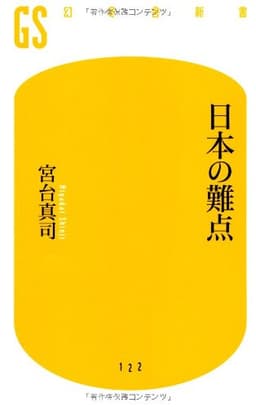
The fact that the law's official name refers to both "protection and utilization" itself reflects its essential tension. Shinji Miyadai argued in 『日本の難点』 (Nihon no Nanten (Japan's Difficulties))(外部サイト、新しいタブで開きます) that Japanese society has a structural tendency to lose sight of the balance with civil liberties in its excessive pursuit of "safety and security." "Protection" pushes toward closure; "utilization" pushes toward openness. The design where only those vetted through fitness evaluation can access information is rational from a security logic. Yet the question of what criteria define those "not trusted" conceals structures of social exclusion.
The chilling effect of the screening items
The mental health investigation item carries a chilling effect that may exclude even recovered patients or those under treatment. The financial status investigation can connect to a logic that treats people structurally placed in poverty as "security risks."
The Question Should Be "Who Gets Excluded"
The technical necessity of the system is difficult to deny. If Japan cannot participate in international information-sharing venues, the economic security disadvantages are significant. However, what must be questioned in the system's design is where to draw the line between "investigations necessary for national security" and "reproduction of structural discrimination."
Exclusion in the name of safety
As 『日本の難点』 (Japan's Difficulties)(外部サイト、新しいタブで開きます) argues, the risk that conformity pressure — "it can't be helped for the sake of safety" — transforms into justification for exclusion is ever-present. While the law prohibits use of fitness evaluation results for purposes other than intended, effective monitoring and remediation mechanisms are still under development. Institutional safeguards ensuring the system does not become an apparatus that structurally excludes people with certain attributes in the name of "national security" will be tested precisely in the operational phase.
For more on economic security and technology governance, see also "Military AI Use and Governance — Structural Analysis of the Anthropic-DoD Contract(このサイトの記事)."
References
重要経済安保情報保護活用法 公式ページ — Cabinet Office (2025)
セキュリティ・クリアランス制度の概要を重要経済安保情報保護活用法に基づき解説 — BUSINESS LAWYERS (2024)
How Might Japan Join the Five Eyes? — CSIS (2020)
DCER経済安保1万人サーベイ セキュリティ・クリアランス法施行 — DCER (Dentsu Institute Economic Security Research Center) (2025)
経済安全保障分野におけるセキュリティ・クリアランス制度等に関する提言 — Keidanren (2024)
National security vetting: clearance levels — GOV.UK (2024)
政府は民間人にも身辺調査を行う…経済安保情報保護法が成立 — Tokyo Shimbun (2024)
Reference Books
Statistics cited in this article
- 1Cabinet Office(May 2024)
- 2Cabinet Office(January 2025)
- 3Act on Protection and Utilization of Important Economic Security Information(2024)
- 4DCER 10,000-person survey(December 2024)
- 5DCSA(2025)