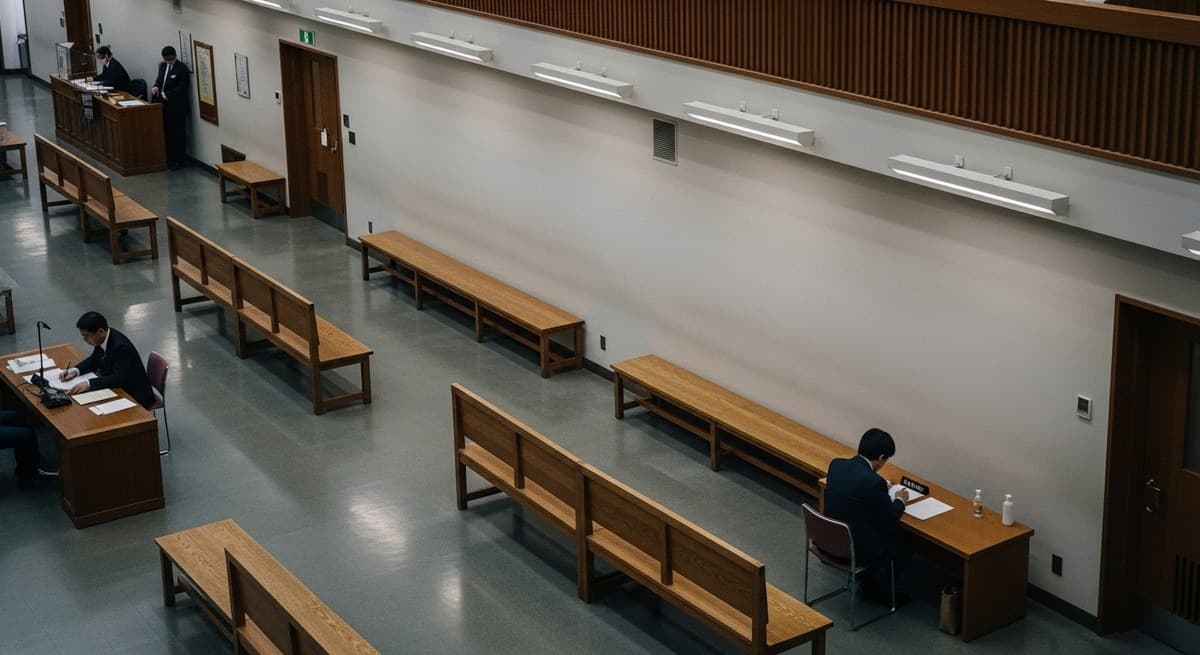
Dissolution Ordered, Yet Nothing Truly 'Dissolved' — The Structural Incompleteness of Japan's Unification Church Case
In March 2026, the Tokyo High Court upheld the dissolution order against the former Unification Church — the first in Japanese history based on civil tort liability. But stripping legal personhood does not stop religious activities. Will ¥104 billion in assets reach victims? A structural analysis of the legal system's limits.
TL;DR
- The first-ever dissolution order of a religious corporation based on civil tort liability has been upheld
- Stripping legal personhood does not stop religious activities, and the liquidator lacks compulsory investigation powers
- The 27-year non-exercise of the questioning authority exposes the structural entanglement of politics and religion
What Is Happening
Tokyo High Court upholds historic dissolution order against Unification Church based on civil liability
On March 4, 2026, the Tokyo High Court upheld the dissolution order against the former Unification Church (Family Federation for World Peace and Unification). The court dismissed the church's appeal, affirming the March 2025 Tokyo District Court decision. The dissolution order took effect immediately, stripping the church of its legal personhood.
This dissolution order, based on Article 81 of the Religious Corporations Act, is only the third of its kind in Japanese history — following Aum Shinrikyo (1995) and Myokakuji (2002). Crucially, while the previous two cases were based on criminal offenses, this is the first dissolution order in history based on civil tort liability — specifically, organized and systematic fraudulent donation solicitation.
The Tokyo District Court found that, with the approval of church leadership, illegal donation solicitation practices continued from 1973 to 2016, causing damages to at least 506 people totaling approximately ¥7.4 billion. Including settlements, the total number of victims reaches approximately 1,550 people, with total settlement amounts of approximately ¥20.4 billion.
The court appointed attorney Takashi Ito as liquidator, and liquidation proceedings have commenced. The church filed a special appeal to the Supreme Court on March 9, but special appeals do not suspend execution, and the liquidation continues.
Background & Context
Historical context of religious corporation dissolutions and the Unification Church's controversial practices
Three and a Half Years from the Abe Assassination to Dissolution
The immediate catalyst for this dissolution order was the assassination of former Prime Minister Shinzo Abe on July 8, 2022. The assailant stated he targeted Abe because of the former prime minister's ties to the Unification Church, which the gunman blamed for his family's financial ruin. The incident thrust the church's activities back into the national spotlight.
The government subsequently established the legal interpretation that "civil tort liability, if demonstrating organizational, malicious, and continuous character, can constitute grounds for a dissolution order." The Agency for Cultural Affairs exercised its "right to question" religious corporations 7 times. This questioning authority, created by a 1995 amendment, had gone unused for 27 years.
On October 13, 2023, the Minister of Education filed for a dissolution order with the Tokyo District Court. Approximately 5,000 pieces of evidence were submitted, and interviews with over 170 victims were conducted. The district court issued the dissolution order on March 25, 2025, and the high court upheld it on March 4, 2026.
Legal Effects and Structural Limits of the Dissolution Order
The legal effects of the dissolution order are clear — as are its limitations. The loss of legal personhood means the church no longer qualifies for tax-exempt status. However, because the constitution guarantees freedom of religion, religious activities themselves are not prohibited. The church can continue operating as an unincorporated association.
The precedent of Aum Shinrikyo vividly illustrates this limitation. After receiving a dissolution order in 1995, Aum continued through successor organizations such as Aleph and Hikari no Wa.
Will ¥104 Billion in Assets Reach the Victims?
The church's total assets stood at approximately ¥104 billion as of the end of fiscal year 2024. This is down from approximately ¥120 billion at the end of fiscal year 2022 — a decrease of approximately ¥16 billion. Shortly before the high court decision, the church decided to offer early retirement to approximately 340 "full-time employees," with total severance payments reportedly reaching several billion yen.
No investigative power, a pre-named heir, thirteen years
The liquidation process faces serious structural challenges. First, the Religious Corporations Act's provisions on liquidation are extremely sparse, and the liquidator lacks the compulsory investigation powers available to bankruptcy trustees. The Japan Federation of Bar Associations published an opinion paper in February 2025 calling for legislative measures to strengthen the liquidator's authority.
Second, there is the question of residual asset allocation. Under current law, the dissolving entity can designate where residual assets go. The church has already designated a religious corporation called "Tenchi Seikyo" in Obihiro, Hokkaido as the recipient, raising concerns about de facto asset transfers to affiliated organizations.
Third, the liquidation is expected to be protracted. Given that Aum Shinrikyo's liquidation took approximately 13 years to complete, substantive compensation to victims is likely to take a very long time.
Reading the Structure
Analysis of structural limitations in Japan's legal framework for addressing religious organization misconduct
The Victim Relief Law's "Effectiveness Without Effect"
The Improper Donation Solicitation Prevention Act, enacted in December 2022 in response to the crisis, reveals the structural limits of the system through its operating record.
In fiscal year 2023 after its implementation, 1,701 reports were received, but only 97 cases were investigated, and the number of recommendations or orders issued was zero. In fiscal year 2024, no illegal acts were identified either. The Consumer Affairs Agency concluded in September 2025 that "no legal amendments are necessary" — but the question remains: what does "effectiveness" mean for a law under which not a single recommendation has been issued?
What the "30-Year Blank" Tells Us
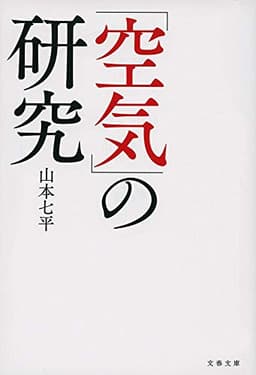
Shichihei Yamamoto analyzed in 『「空気」の研究』(The Study of "Air")(外部サイト、新しいタブで開きます) (『「空気」の研究』) how "air" — the unspoken atmosphere of consensus — dominates rational judgment in Japanese society and sustains institutional inaction. The 30-year neglect of the Unification Church problem can be understood as one manifestation of this "air" dynamic. There was a period in which, despite the social problems caused by spiritual sales and excessive donation demands being well known since the 1980s and 1990s, neither the government nor the media took effective action. The right to question, created in 1995, went unexercised for 27 years, during which harm continued to expand.
Behind this "30-year blank" lies the relationship between the church and politics. The church established the International Federation for Victory over Communism in 1968 with the backing of former Prime Minister Nobusuke Kishi, and built ties with the Liberal Democratic Party over more than half a century. The use of church members as secretaries and election volunteers, the practice of seeking signatures on "policy agreements" — these patterns of religious-political entanglement are seen as having sustained institutional inaction.
Dissolution Is a Beginning, Not an End
The finalization of the dissolution order is the starting point of justice, not the finish line. The questions going forward converge on four points.
Four items left after dissolution
First, legislative measures to grant the liquidator effective authority. The current Religious Corporations Act does not give liquidators investigative powers comparable to bankruptcy trustees, leaving limited tools to counter asset concealment.
Second, legal reforms to ensure that residual assets are distributed to victims as a priority. Institutional safeguards against diversion to affiliated organizations are needed.
Third, a review of financial transparency and supervisory frameworks for religious corporations generally. The current system, which generally exempts religious corporations from taxation except for "revenue-generating activities," preserves a structure of financial opacity.
Fourth, a reexamination of the relationship between politics and religion that produced the "30-year blank." Institutions that exist but are not used do not function. The fact that the questioning authority went unused for 27 years reveals how the effectiveness of law depends on political will.
For more on legal frameworks and organizational governance, see also "Guide to Building Resilient Organizations(このサイトの記事)."
References
宗教法人世界平和統一家庭連合への解散命令及び清算手続の開始について — Agency for Cultural Affairs (2026)
旧統一教会に対する解散命令確定に当たっての会長談話 — Japan Federation of Bar Associations (2026)
旧統一教会に高裁も解散命令、清算手続き開始 民法上の不法行為で初 — Nikkei (2026)
解散命令の旧統一教会、資産1000億円超 清算手続きは長期化不可避 — Nikkei (2026)
解散命令後の清算に関する立法措置を求める意見書 — Japan Federation of Bar Associations (2025)
旧統一教会、宗教法人でなくなってもカネ集めは止まらない? — Tokyo Shimbun (2026)
指定宗教法人・清算指針を決定 旧統一教会の被害者救済念頭 — Jiji Press (2025)
Reference Books
Statistics cited in this article
- 1Tokyo High Court decision(March 4, 2026)
- 2Tokyo District Court decision(March 25, 2025)
- 3Agency for Cultural Affairs(2022-2023)
- 4Nikkei(February 2026)
- 5Various media(2026)
- 6Consumer Affairs Agency(FY2023)