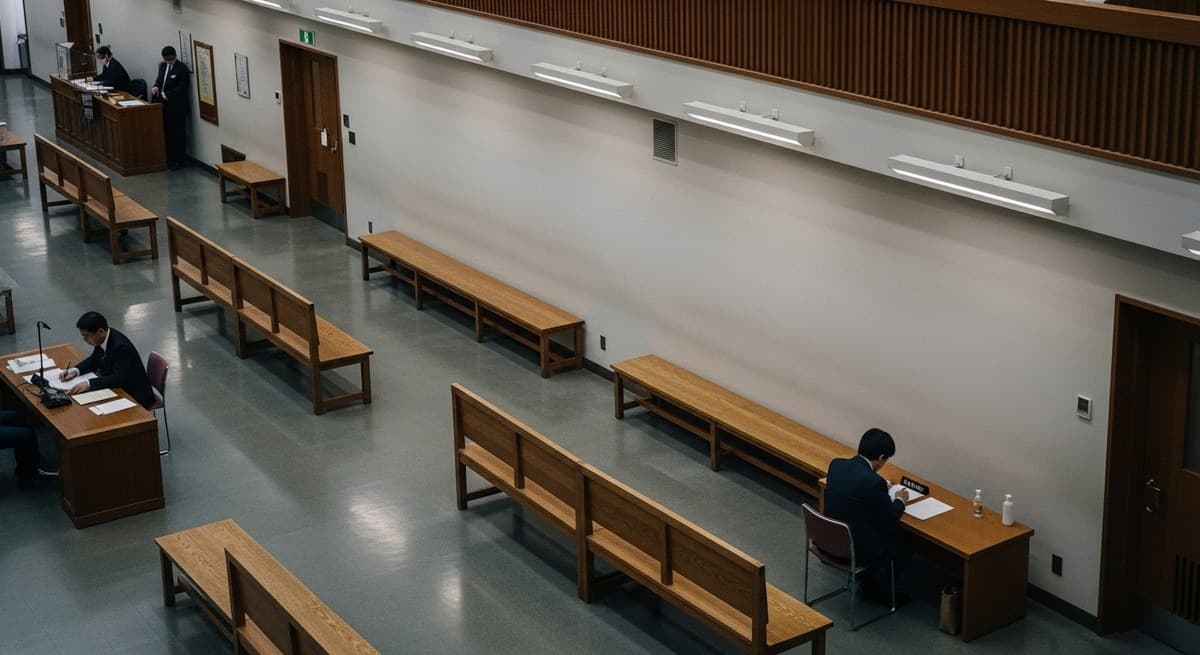
Proving Innocence in a Country with a 99.9% Conviction Rate — A Structural Analysis of Japan's 'Hostage Justice'
Japan's criminal conviction rate exceeds 99.9%. Arrest warrants approved at 98.6%. Pre-trial bail for those denying charges: 12.3%. From the Hakamada case's 58-year ordeal to the Okawara detention death — a structural reading of 'hostage justice.'
TL;DR
- Japan's 99.9% conviction rate reflects not system accuracy but the collapse of judicial oversight — courts rubber-stamping prosecutorial decisions
- The 12.3% bail rate for those denying charges encodes 'confess or stay locked up' into the statistical structure of hostage justice
- The absence of counsel during interrogation and the substitute prison system create Japan's stark deviation from international standards
What Is Happening
Recent landmark cases exposing structural problems in Japan's criminal justice system through wrongful convictions.
Between 2024 and 2026, structural problems in Japan's criminal justice system became visible through a series of landmark cases.
On September 26, 2024, the Shizuoka District Court delivered a not-guilty verdict in the retrial of the Hakamada case. It had taken 58 years and 2 months since the original arrest. The court found that "evidence was fabricated by investigative authorities" and ruled that the confession was "obtained through inhumane interrogation methods."
In May 2025, the Tokyo High Court ruled in the Okawara Chemical Engineering case that "the investigation was illegal," ordering the national and Tokyo metropolitan governments to pay approximately ¥166 million in damages. Of the three defendants, Shizuo Aijima developed stomach cancer during approximately one year of detention and died before his innocence was established.
On March 24, 2025, four victims of hostage justice filed a state compensation lawsuit with the Tokyo District Court, arguing that provisions of the Code of Criminal Procedure permitting prolonged detention and bail denial are unconstitutional — the first case in which multiple victims have directly challenged the constitutionality of these provisions.
Background & Context
Statistical and historical context of Japan's exceptionally high conviction rates and detention practices.
The Numbers Tell the Story
"Hostage justice" (hitojichi shiho) refers to the structural practice in Japan's criminal justice system of prolonging the detention of suspects and defendants who deny charges or exercise their right to silence, effectively coercing confessions. While individual statistics may not seem alarming, overlaying multiple data points reveals a stark pattern.
98.6 percent, 99.9 percent, 12.3 percent
The arrest warrant approval rate stands at 98.6%. Judges reject warrant requests a mere 0.1% of the time. Judicial oversight has been functionally hollowed out.
The post-indictment conviction rate exceeds 99.9%. In 2023, only 77 people were acquitted in ordinary first-instance trials. This figure is produced by prosecutors' practice of only indicting cases they are certain to win — the non-indictment rate of approximately 68% reflects their broad discretionary power.
The pre-trial bail rate for cases where charges are denied is 12.3% — roughly half the 25.9% for cases with confessions. The message is written into the statistics: "confess or stay locked up."
Substitute Prisons and Interrogation Without Counsel
The core structural problem lies in the post-arrest detention environment.
In Japan, suspects can be detained in police holding facilities — so-called "substitute prisons" (daiyo kangoku) — rather than detention centers, even after indictment. This structure, where the same police conducting interrogations also control the suspect's physical custody, functions as a mechanism to amplify interrogation pressure. Amnesty International recommended abolishing substitute prisons in 2006, but no reforms have been implemented.
Moreover, the right to have counsel present during interrogation is not recognized. Defense attorneys can meet with suspects only before and after interrogation — there is no institutional safeguard protecting suspects during the interrogation itself.
The Gap from International Standards
| Country | Conviction | Lawyer Present | Pre-charge Bail | Max Detention |
|---|---|---|---|---|
| Japan | 99.9% | ✗ No | ✗ No | 23d + re-arrest |
| USA | ~90% | ✓ Yes | ✓ Within 48h | 48h → hearing |
| UK | ~80-85% | ✓ Yes | ✓ Yes | Within 96h |
| Germany | ~80% | ✓ Yes | ✓ Yes | 48h → hearing |
International comparison makes Japan's outlier status visible. In the United States, the Miranda rights guarantee the right to counsel during interrogation, and suspects have the right to a bail hearing within 48 hours of arrest. In the UK, suspects must generally be charged or released within 96 hours. EU member states guarantee the right to counsel during interrogation through EU directives.
In Japan, pre-indictment bail is simply not available. Beyond the maximum 23-day detention period, "re-arrest" on different charges allows repeated detention cycles. In the Carlos Ghosn case, detention lasted 130 days; in the Okawara case, approximately one year.
Human Rights Watch published a report titled "Japan: 'Hostage Justice' System Violates Rights" in 2023 and continued its criticism in the 2026 World Report. The UN Human Rights Committee has also repeatedly raised concerns about the substitute prison system and prolonged detention.
Reading the Structure
Systematic analysis of the institutional mechanisms that enable 'hostage justice' in Japan.
Why Structural Reform Stalls
The 2016 amendment to the Code of Criminal Procedure mandated recording of interrogations, but only for cases eligible for lay judge trials and similar categories — a mere approximately 3% of all criminal cases. Neither full evidence disclosure nor the right to counsel during interrogation was achieved. The Japan Federation of Bar Associations itself stated in July 2025 that "the objectives of the amendment have not been achieved."
What the criminal digital law left untouched
The Criminal Digital Act enacted in May 2025 introduced electronic warrants and remote court appearances, but did not grant suspects the right to online consultations with counsel, leaving the fundamental problems of hostage justice untouched.
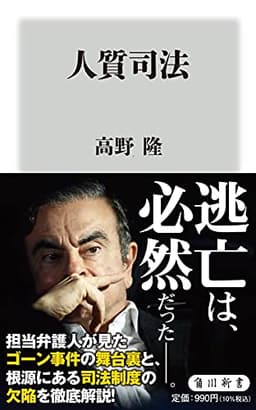
Attorney Takashi Takano systematically documents and analyzes this structure from a defense lawyer's perspective in 『人質司法』 (Hostage Justice)(外部サイト、新しいタブで開きます) (『人質司法』, Kadokawa Shinsho). The reasons structural reform stalls are clear. First, the powerful political influence of police and prosecution. Second, the practice whereby judges effectively defer bail and detention decisions to prosecutors — the 98.6% warrant approval rate is evidence of this. Third, a judicial culture that prioritizes confessions over physical evidence. Fourth, the structural difficulty of generating public sympathy for "arrested persons" as victims.
What "99.9%" Really Means
A 99.9% conviction rate does not mean the system is highly accurate. It means the courts have become institutions that rubber-stamp prosecutorial decisions — that is, it signals the collapse of the check function.
Fifty-eight years in the Hakamada case
The Hakamada case took 58 years to prove wrongful conviction. Had the death sentence been carried out, there would have been no remedy. In the Okawara case, Shizuo Aijima died without ever knowing his innocence was established. These are not exceptional cases — they are the visible worst outcomes of what the system is structurally capable of producing.
Innocence Project Japan has published a draft bill to end hostage justice, and the 2025 constitutional lawsuit and Diet hearings represent the beginning of reform efforts. But the structural barriers remain high. The fundamental question is whether a society views 99.9% as a source of pride or a source of shame.
For more on human rights and institutional design, see also "Guide to Mapping Social Vulnerability in Disaster Response(このサイトの記事)."
References
日本:「人質司法」による人権侵害 — Human Rights Watch (2023)
Survivors Bring Case to End Japan's 'Hostage Justice' — Human Rights Watch (2025)
統計から見える日本の刑事司法 — Japan Federation of Bar Associations (2024)
改正刑訴法に関する会長声明 — Japan Federation of Bar Associations (2025)
大川原化工機の冤罪事件、二審も「捜査は違法」 — Bengo4.com (2025)
Order in the Court: Explaining Japan's 99.9% Conviction Rate — nippon.com (2023)
What is 'hostage justice' — Innocence Project Japan (2025)
Reference Books
Statistics cited in this article
- 1Various media(October 2024)
- 2Tokyo High Court judgment(May 28, 2025)
- 3Ministry of Justice Crime White Paper(2023)
- 4Ministry of Justice prosecution statistics(2023)
- 5JFBA data(2020)
- 6Various media(2019)
- 7JFBA estimate(2024)