Why Did the Henoko Boat Capsize Kill Two? Okinawa's Base Burden and Structural Violence
On March 16, 2026, two boats carrying high school students capsized off Henoko, killing two. With 70% of U.S. military bases concentrated on 0.6% of Japan's land, we examine the structural context behind the accident.
TL;DR
- Two protest boats carrying 18 students capsized under a wave advisory, killing a 17-year-old student and the 71-year-old captain
- Henoko base construction has reached only 17% progress in 30 years, continuing despite 71.7% opposition in a 2019 referendum
- The asymmetric concentration of 70% of US bases on 0.6% of Japan's land creates conditions where normal safety frameworks struggle to function
What Is Happening
Two boats carrying high school peace education students capsized near Henoko military base, killing two
At approximately 10:10 AM on March 16, 2026, two small vessels capsized in succession off Henoko, Nago City, Okinawa. The boats — named "Heiwa-maru" (Peace) and "Fukutsu" (Indomitable) — had been used by civic groups for maritime protest activities against the Henoko military base construction. The second boat capsized roughly two minutes after the first.
On board were 21 people: 18 second-year students from Doshisha International High School (Kyotanabe, Kyoto Prefecture) and 3 crew members. All were thrown into the sea but rescued by the 11th Regional Coast Guard Headquarters. Of the four who were hospitalized, two died.
The victims were a 17-year-old female student and Captain Hajime Kanai (age 71), who had served as captain since 2007 and was described as "the most experienced captain."
The Coast Guard's reading and the sea that day
The 11th Regional Coast Guard Headquarters indicated that "the boats likely capsized after being struck by large waves." The Okinawa Meteorological Observatory had issued a wave advisory for northern Okinawa Main Island that day. Notably, a Japan Coast Guard patrol boat investigating the accident scene also capsized at 5:05 PM the same day, underscoring the dangerous conditions of the waters.
The Japan Coast Guard has launched an investigation into potential charges of professional negligence causing a transportation hazard and professional negligence resulting in death and injury.
Background & Context
Historical overview of Okinawa's military burden and decades of citizen resistance to base construction
The Intersection of "Peace Education" and "Protest Boats"
Doshisha International High School has maintained a "peace education" program with Okinawa as a study trip destination since its founding in 1980. The Henoko course was designed so "students could see for themselves what this place, so frequently covered in the news, actually looks like" (school statement). The school has consistently stated that "we did not choose them because they are a protest group" and that "there was no intention to have students participate in protest activities."
However, both "Heiwa-maru" and "Fukutsu" are boats ordinarily used for maritime protests against the Henoko base construction. They have served as operational bases for monitoring construction progress and confronting Japan Coast Guard vessels. The fact that high school students with no connection to the movement boarded these boats exposed, for the first time as a social issue, the ambiguous safety standards under which maritime protest activities had been conducted for years.
If the operation constituted a business of transporting people in response to external demand using small vessels, registration with the regional transport bureau may have been required — a point likely to become a focus of investigation.
30 Years of Henoko Base Construction
The Henoko base construction project originated in the 1996 SACO agreement. The plan involves reclaiming land at Henoko Point and Oura Bay in Nago City as a replacement facility for Marine Corps Air Station Futenma, but nearly 30 years have passed since the project began.
A prefectural referendum in 2019 saw 71.7% of voters oppose the landfill. Nevertheless, in 2024, the Supreme Court finalized Okinawa Prefecture's defeat. Pile driving for soft ground improvement began in January 2025, but after approximately one year, progress stands at just 6.6%.
The government projects overall construction completion around April 2033, but US military officials estimate 2037 or later. Okinawa Prefecture's independent estimate suggests 13+ years to completion at a total cost of ¥2.65 trillion. Some observers note that "at this pace, ground improvement alone will take 20 years."
The Structural Asymmetry of Okinawa's Base Burden
This accident is more than a maritime incident because it occurred along the extension of a 30-year structural problem.
Concentrated on 0.6 percent of the land
Okinawa Prefecture accounts for only approximately 0.6% of Japan's total land area. Yet approximately 70% of all US military exclusive-use facilities in Japan are concentrated there. On the main island of Okinawa alone, roughly 15% of the land area is occupied by US military bases.
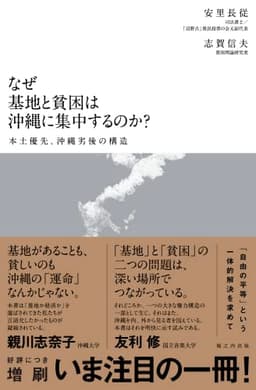
Nagatomo Asato and Nobuo Shiga analyze the structural mechanisms concentrating both military bases and economic hardship in Okinawa in 『なぜ基地と貧困は沖縄に集中するのか?』 (Why Are Bases and Poverty Concentrated in Okinawa?)(外部サイト、新しいタブで開きます) (『なぜ基地と貧困は沖縄に集中するのか?』). In per capita terms, Okinawa residents bear 203 times the US military facility area burden compared to the mainland. When Okinawa reverted to Japanese sovereignty in 1972, the concentration rate was 58.7%; it has since increased to over 70% as mainland base reductions proceeded while Okinawa's remained. "Reducing the base burden" has been discussed for half a century, but the numbers tell the opposite story.
Reading the Structure
Analysis of how structural violence manifested in the intersection of protest zones and educational activities
Social Reactions Reveal Fault Lines
The social response to the accident starkly illuminated Japan's societal fault lines.
Governor Denny Tamaki called it "an extremely tragic accident that pains my heart" and told the prefectural assembly the following day that "as a prefecture that actively promotes school trips, we must take this situation very seriously." Daily protest activities at the Henoko gate were suspended the next day.
Conservative media, by contrast, focused on holding the school accountable for putting students on "leftist protest boats." Okinawa-based media (Okinawa Times, Ryukyu Shimpo) published editorials prioritizing investigation of the cause and psychological care for survivors, while also referencing the anti-base construction context.
International media covered the story extensively through AP. CBS, Stars and Stripes (the US military's quasi-official newspaper), and others reported "2 dead as protest boats capsize near new US military base construction site," drawing international attention.
The Structure of a "Never-Ending Problem"
The Henoko base construction exhibits a dual character: the "irreversibility of the decision" and the "perpetuity of execution."
Even when 71.7% voted against it in a 2019 referendum, even when the prefecture lost its case at the Supreme Court in 2024, construction does not stop. Yet the construction itself has progressed only 17% in 30 years. In other words, a structure has taken hold where "it can neither be stopped nor be finished."
Within this structure, citizen resistance has also become perpetual. Maritime activities involving confrontations with Coast Guard vessels and attempts to block soil dumping have continued for nearly 30 years. "Heiwa-maru" and "Fukutsu" were symbolic embodiments of that struggle.
This accident occurred at the very intersection of "learning about peace" (the educational context) and "resisting the base" (the political context) within that perpetual structure. The answer to "Why did they come to Henoko?" — "To learn what peace means" — directly points to the structural backdrop of the accident itself. Therein lies the paradox.
The Real Question: Whose Safety Has Been Deprioritized?
Pointing out failures in safety management is straightforward. The decision to set sail under a wave advisory, the passenger transport standards for protest vessels, the school's risk assessment — all are legitimate points for examination.
But there is a more fundamental question. Has the very structure that concentrates 70% of bases on 0.6% of the land — while talking about "burden reduction" for half a century even as the numbers worsened — normalized this kind of accident as "within expectations"?
The fact that Henoko's waters have remained "waters of protest" for 30 years has itself created conditions where normal safety management frameworks struggle to function. To ask "Why were protest boats the only option?" is inseparable from asking "Why do bases continue to concentrate in Okinawa?"
For more on structural vulnerability and asymmetric burden, see also "Practical Guide to Disaster Social Vulnerability Mapping(このサイトの記事)."
References
辺野古沖で船2隻転覆 高校2年生と船長が死亡 — Okinawa Times (2026)
【続報2】修学旅行中の女子高生と男性船長、2人死亡 辺野古沖で抗議船が転覆 — Ryukyu Shimpo (2026)
辺野古沖で船2隻転覆 高校生と船長死亡 大波受けて転覆か — NHK News (2026)
沖縄・辺野古沖で船2隻が転覆、同志社国際高校の女子生徒ら2人死亡 — Nikkei (2026)
在日米軍基地の70%が沖縄に集中―復帰50年でも変わらぬ負担 — nippon.com (2022)
辺野古新基地建設問題Q&A — Okinawa Prefecture (2026)
辺野古 進まぬ工事/くい打ちペース半減/地盤改良だけで20年も — Shimbun Akahata (2026)
2 dead, including teen girl, after boats carrying students capsize near site of new U.S. military base in Japan — CBS News (2026)
Reference Books
Statistics cited in this article
- 1Various media reports(March 2026)
- 2Okinawa Times(March 17, 2026) Open source
- 3Okinawa Times(March 16, 2026) Open source
- 4Sankei Shimbun(March 2026)
- 5Various media(recent years)
- 6nippon.com(2019) Open source
- 7Shimbun Akahata(February 14, 2026) Open source
- 8QAB(2023)
- 9Okinawa Prefecture(estimate)
- 10Okinawa Prefectural Government(recent years)
- 11nippon.com / Okinawa Prefecture(recent years) Open source
- 12Okinawa Prefecture(recent years)