The Beginning of the End for 'This Is Not Immigration Policy' — What the Ikusei Shuro System Reveals About Japan's Foreign Worker Structure
Foreign workers: 2.57 million. Technical intern disappearances: 9,753 (record high). The US rates Japan Tier 2 for human trafficking. The Ikusei Shuro system (2027) drops the 'international contribution' pretense. But what does expanding acceptance without integration policies really mean?
TL;DR
- The Ikusei Shuro system drops the 'international contribution' pretense of Technical Intern Training, explicitly targeting workforce security from 2027
- Job transfers become conditionally permitted, but the fundamental problem of absent integration policies remains unresolved
- The contradiction between 2.57 million foreign workers / 3.96 million foreign residents and the 'this is not immigration policy' pretense has reached its limit
What Is Happening
Foreign worker numbers surge while technical intern disappearances hit record highs
The number of foreign workers in Japan continues to surge. According to MHLW, the figure stood at 2.303 million as of October 2024 and reached 2.571 million as of October 2025, surpassing 2.5 million for the first time. The record has been broken consecutively since the notification system became mandatory.
What the disappearance figures show
Against this backdrop, structural problems in the Technical Intern Training Program have also become apparent. In 2023, the number of technical intern trainees who disappeared reached 9,753 — a record high. By nationality, Vietnamese accounted for 5,481 or 56.2% of the total. 67% cited "low wages" as the motivation for disappearance, with large fees paid to sending organizations (Vietnamese trainees often arrive carrying debts exceeding one million yen) identified as a structural factor.
In response, the revised Immigration Control and Refugee Recognition Act was promulgated in June 2024, creating the "Ikusei Shuro" (Development and Employment) system to replace Technical Intern Training. The effective date has been officially set at April 1, 2027.
Background & Context
Historical development and systemic issues in Japan's foreign worker programs
Structural Problems of the Technical Intern Training Program
| Item | Technical Intern | Ikusei Shuro |
|---|---|---|
| Purpose | Skills transfer 'International contribution' | HR development for labor shortage sectors |
| Job Transfer | Generally prohibited | Possible after 1-2 years |
| Sanctions | Criticized as ineffective | External auditors required |
| Career Path | Difficult to transition | Training→Specified Skilled 1→2 |
Since its creation in 1993, the Technical Intern Training Program has professed the goal of "international contribution through skills transfer." In practice, however, it has functioned as a labor supply mechanism for sectors facing worker shortages. This gap between stated purpose and actual function lies at the root of the structural problems.
Labor standards inspections in 2022 found legal violations at 73.3% of workplaces employing technical intern trainees. Violations ranged from improper overtime to unpaid overtime wages and minimum wage violations. Serious human rights abuses including violence, confiscation of passports, and forced repatriation have also been reported.
The US State Department's Trafficking in Persons Report has continuously placed Japan at Tier 2 since 2020, stating that Japan "does not fully meet the minimum standards for the elimination of trafficking" and pointing to the technical intern system as being "exploited for trafficking."
The Ikusei Shuro System — What Changes and What Doesn't
The Ikusei Shuro system differs decisively from its predecessor in two respects.
First, a transformation of purpose. From "international contribution" to "human resource development and securing for labor-shortage sectors" — the very raison d'etre of the system has been rewritten. In resolving the gap between pretense and reality, the institutional design has at least gained in honesty.
Second, the recognition of job transfers. Under the previous Technical Intern Training, job changes were generally prohibited. Under Ikusei Shuro, after a restriction period defined by sector (1-2 years), transfers based on the worker's own wishes become possible.
However, some structural elements remain unchanged. Job transfers require attainment of certain skill and Japanese language levels, meaning de facto binding continues during the restriction period. While licensing requirements for supervisory support organizations (formerly supervising organizations) are tightened, the extent to which "mandatory external auditors" will prove effective remains unknown.
The Contradiction of "This Is Not Immigration Policy"
The Japanese government consistently states that it "will not adopt so-called immigration policies." Yet the reality shows 2.57 million foreign workers, approximately 3.96 million foreign residents (approximately 3.2% of the total population). Under Specified Skilled Worker Category 2, family accompaniment is permitted and there is no upper limit on residence period renewals, making de facto permanent residency possible.
Keidanren published "Foreign Policy at a Turning Point" in December 2025, proposing comprehensive policies to accept foreign nationals not only as "labor" but as "community members."
Criticism that Japan avoids formulating comprehensive integration policies by narrowly interpreting the definition of "immigrant" comes from both the international community and domestically.
Reading the Structure
Analysis of underlying policy framework and institutional mechanisms
The Absence of Integration Policy — What Lies Beyond Expanded Acceptance
What are the consequences of expanding acceptance of foreign workers while failing to develop integration policies?
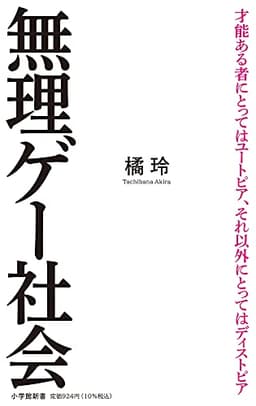
In 『無理ゲー社会』(An Unwinnable Game: Society)(外部サイト、新しいタブで開きます), Akira Tachibana analyzed how the thorough penetration of meritocracy throughout society results in a structure where the logic of "personal responsibility" systematically excludes the vulnerable. This structure applies to the foreign worker issue as well. Attributing Japanese language ability and cultural adaptation to "individual effort" while expanding acceptance without building institutional foundations for integration is a form of exclusion through meritocracy.
Where Japan sits on the integration index
Japan ranks in the lower group of surveyed countries on the MIPEX (Migrant Integration Policy Index), and is assessed as "critically behind" particularly in anti-discrimination policy. The Act on Promotion of Japanese Language Education (2019) remains a declaratory law, and systematic Japanese language education is left to local governments. While health insurance and pension systems are formally equal for nationals and non-nationals, issues of non-enrollment and non-payment persist in practice.
The gap in Japanese-language education
The language education problem is severe. The Ikusei Shuro system requires approximately JLPT N4 level (basic Japanese comprehension) as a condition for job transfers, but opportunities for systematic Japanese language education before and after arrival are limited. Most technical intern trainees receive only a few months of basic training at sending organizations in their home countries, and after arriving in Japan must rely on on-the-job learning. The venues for learning Japanese needed in daily life — visiting healthcare facilities, administrative procedures, handling children's school matters — depend on volunteer-based Japanese language classes and municipal international exchange associations, with significant regional variation in both quality and availability.
By 2035, a labor shortage of 3.84 million is projected, with foreign workers expected to increase from 2.05 million to 3.77 million. In some manufacturing regions of northern Kanto and Tokai, foreign workers already account for 40-50% of the workforce. The care sector saw the fastest growth at +28.1% year-on-year.
What a Depopulating Society Must Confront
Japan's native population has declined for 16 consecutive years, with the population aged 65 and over reaching 29.58% of the total. The rapid decline of the working-age population is proceeding irreversibly.
Under these demographic conditions, maintaining society without foreign workers is unrealistic. The question is no longer "whether to accept" but "how to accept" — that is, whether to utilize foreign nationals solely as labor or to include them as members of society. This is a fundamental choice.
The April 2027 implementation of the Ikusei Shuro system partially corrects the institutional deception of Technical Intern Training. However, continuing to expand acceptance without integration policies while maintaining the pretense that "this is not immigration policy" amounts to nothing more than postponing structural problems.
For the history of Japan's foreign worker acceptance systems, see also "The Evolution and Structure of Japan's Foreign Worker Systems(このサイトの記事)."
References
外国人雇用状況の届出状況まとめ(令和6年10月末時点) — Ministry of Health, Labour and Welfare (2025)
育成就労制度Q&A — Immigration Services Agency (2025)
2024 Trafficking in Persons Report: Japan — US Embassy in Japan (2024)
転換期における外国人政策のあり方 — Keidanren (2025)
外国人材の育成就労制度、27年4月から — Nikkei (2025)
Japan's Governors Speak Out on Need for a Better Foreign Resident Policy — nippon.com (2025)
Reference Books
Statistics cited in this article
- 1MHLW 'Summary of Foreign Employment Status Notifications'(October 2024)
- 2Nikkei(January 2026 report)
- 3Immigration Services Agency(2023)
- 4Ministry of Justice survey(2018)
- 5Cabinet decision(September 2025)
- 6Labour Standards Inspection Office(2022)
- 7US State Department TIP Report(2024 edition)
- 8Immigration Services Agency(End of June 2025)
- 9Persol Research Institute / Chuo University estimate(Projection)
- 10Ministry of Health, Labour and Welfare(2024)
- 11Basic Resident Register(January 2025)