Overview — A Reception That Took Three Years
In Japan, "agnotology" is beginning to be recognized as an independent academic discipline. Between 2022 and 2025, three consecutive milestones occurred.
The first milestone was the special issue "Agnotology" in Volume 61, No. 303 of the Journal of History of Science, published in 2022. This was the first time agnotology was featured prominently in the official journal of the Japanese Society for the History of Science. This special issue signified that agnotology gained academic recognition within the research community of historians and philosophers of science.
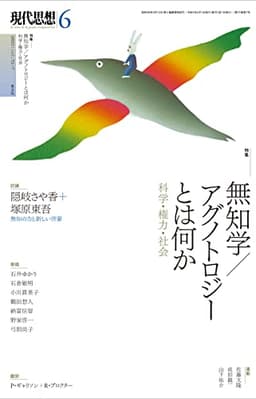
The second milestone was the agnotology special issue in the June 2023 edition of Contemporary Thought (Gendai Shisō). Published by Seidosha, Contemporary Thought is widely read by general audiences in the humanities and social sciences, and its coverage meant that agnotology transcended the specialized framework of history of science and became positioned within a broader intellectual context.
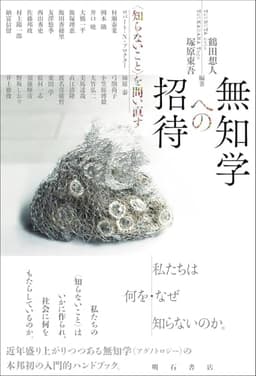
The third milestone was the publication of "Invitation to Agnotology: How 'Not Knowing' Is Made," edited by Tsuruta Masato and Tsukahara Togo, published by Akashi Shoten in 2025. This was the first systematic introduction to agnotology in Japanese, indicating that the field finally acquired its own "textbook."
In just three years, the field progressed through the stages of academic journal special issues, popularization in intellectual magazines, and publication of introductory texts. This represents an extremely rapid development for the reception of an academic discipline.
A Timeline of the Reception
The references, together with the events the text gives a year for.
| Year | Work / Event | Where |
|---|---|---|
| 2007 | Fricker, Epistemic Injustice | Anglophone original |
| 2008 | Proctor & Schiebinger (eds.), Agnotology (no Japanese translation) | Anglophone original |
| 2010 | Oreskes & Conway, Merchants of Doubt | Anglophone original |
| 2022 | Journal of History of Science, vol. 61 no. 303, special issue on agnotology | Japan — academic journal |
| 2023 | Contemporary Thought, June 2023, feature on agnotology | Japan — general intellectual press |
| 2025 | Tsuruta & Tsukahara (eds.), Invitation to Agnotology (Akashi Shoten) | Japan — textbook |
Laid out by year, the field moves in Japan in two distinct gears. Fourteen years passed between the originals and the first Japanese special issue; only three passed from there to a textbook. Slow to arrive, quick once it had.
The Three Stages of Reception
From Proctor's Original Work to Reception in Japan
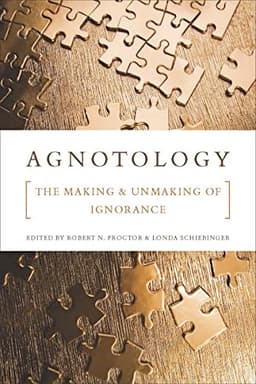
The origins of agnotology trace back to the work of science historian Robert N. Proctor. From the 1990s, Proctor researched information manipulation by the tobacco industry, analyzing mechanisms by which corporations intentionally concealed and obfuscated scientific knowledge. The 2008 publication Agnotology: The Making and Unmaking of Ignorance(外部サイト、新しいタブで開きます), edited by Proctor & Schiebinger, was a groundbreaking work that systematically examined "how ignorance is made," and it was here that the academic name agnotology was established.
However, this work was never translated into Japanese. There was a fourteen-year gap from its 2008 publication to the 2022 Journal of History of Science special issue: 2022 minus 2008. During this period, agnotology rapidly developed in the English-speaking world, spreading to epistemology, science and technology studies (STS), political science, and media studies, but it was hardly introduced in the Japanese-speaking world.
This gap itself is an agnotologically interesting phenomenon. Japan's history and philosophy of science community was not unaware of Proctor's work. However, for it to establish itself as an independent research program in the Japanese-speaking world required conscious introduction and translation efforts by specific researchers.
Journal of History of Science Vol. 61, No. 303 (2022) — Academic Recognition
This special issue is positioned as the "starting point" of agnotology in the Japanese-speaking world. The published papers not only introduced Proctor's framework but also analyzed how "what was not known" was structurally produced in Japanese-specific contexts—Minamata disease, nuclear accidents, pollution problems, and others.
What was important was that this special issue was not merely a translation and introduction, but attempted to independently expand the scope of agnotology through Japanese historical cases. By being published in the rigorously peer-reviewed Journal of History of Science, agnotology acquired the status of a "legitimate" research subject in Japanese academia.
Contemporary Thought June 2023 Issue — Penetration to General Intellectual Circles
The Contemporary Thought special issue served to liberate agnotology from the specialized science history community and deliver it to researchers in adjacent fields such as philosophy, sociology, political science, and media studies, as well as general intellectuals. Seidosha's readership extends beyond university researchers to journalists, editors, educators, and civic activists.
In this issue, agnotology was connected to contemporary themes such as post-truth politics, the social function of conspiracy theories, the information environment in the SNS era, and epistemic injustice. Readers learned that agnotology was not an ivory tower concept but a tool for analyzing everyday information environments.
"Invitation to Agnotology" (2025) — Birth of a Textbook
"Invitation to Agnotology: How 'Not Knowing' Is Made," edited by Tsuruta Masato and Tsukahara Togo (Akashi Shoten, 2025), is the first Japanese single-volume work that comprehensively covers agnotology's theory, history, and applications through multiple chapters.
This book builds on Proctor's framework while including numerous original analyses by Japanese researchers. A distinctive feature is its composition that is accessible not only to researchers specializing in history and philosophy of science but also to NPO practitioners, journalists, and policy makers.
The publication of a "textbook" is an important indicator of an academic field's maturation. This made it possible to systematically teach agnotology in university lectures for the first time.
Reception of Miranda Fricker — Connection with Epistemic Injustice
Parallel to the reception of agnotology in the Japanese-speaking world, introduction of Miranda Fricker's (2007) theory of "epistemic injustice" also progressed. Philosophers including Sato Kunimasa discussed Fricker's theory in Japanese, and the concepts of testimonial injustice and interpretive injustice gradually permeated.
While Proctor's agnotology asks "how knowledge is obstructed," Fricker's epistemic injustice theory asks "whose knowledge is not legitimately valued." These two questions are complementary, and since both were introduced almost simultaneously in the Japanese-speaking world, the foundation was formed for discussing "structurally created ignorance" and "structurally excluded knowledge" in an integrated manner.
Key Concepts — Who, and in Which Words
Map of Researcher Networks
Researchers leading agnotology research in the Japanese-speaking world are currently concentrated in a relatively small group.
At the center are Tsuruta Masato and Tsukahara Togo. Tsukahara specializes in history of science and science and technology studies at Kobe University, having long researched the relationship between science and society. Tsuruta started from Tsukahara's research laboratory and has continuously worked to apply Proctor's agnotology to Japanese contexts. Their role as co-editors of "Invitation to Agnotology" shows that these two researchers established the institutional foundation of agnotology in the Japanese-speaking world.
Iida Kaori (The Graduate University for Advanced Studies) and Iguchi Akira are researchers who approached agnotology from the context of history of science research. Their work is characterized by structural analysis of "what was not known" in historical cases—pollution problems, drug-induced suffering, nuclear accidents.
In the context of epistemic injustice, Sato Kunimasa has contributed to introducing Fricker's theory and its application to the Japanese-speaking world. As a specialist in philosophy and epistemology, his work of reconstructing Fricker's precise arguments in Japanese serves to bridge agnotology and epistemic injustice.
Evolution of Key Terms
From 2022 to 2025, the keywords centrally used in Japanese agnotology research have evolved.
In 2022, keywords directly derived from Proctor's framework—"agnotology," "production of ignorance," "tobacco industry"—were central. Research interest was in introducing and understanding the classical cases Proctor analyzed—concealment of scientific knowledge by the tobacco industry—in Japanese.
By 2023, keywords related to more contemporary contexts increased—"post-truth," "information manipulation," "epistemic injustice," "conspiracy theories." The influence of the Contemporary Thought special issue was significant. This was the period when agnotology transformed from a tool for historical research to a tool for analyzing ongoing social phenomena.
From 2025 onward, following "Invitation to Agnotology," analytical concepts specific to agnotology—"structural ignorance," "structuring of silence," "marginalization of knowledge"—began to establish themselves in Japanese. This suggests entry into a stage of "doing" agnotology in Japanese—conducting original analysis rather than merely introducing it.
Connection Points with Overseas Research
How is agnotology in the Japanese-speaking world connected to English-language research? There are three main connection points.
The first connection point is the Proctor → Tsuruta・Tsukahara line. This is the path of directly receiving Proctor's agnotology concept and developing it in Japanese. This connection is the most robust and forms the foundation of agnotology in the Japanese-speaking world.
The second connection point is the Fricker → Sato Kunimasa line. This is the path introducing epistemic injustice theory to the Japanese-speaking world, opening the dimension of "whose knowledge is excluded" in agnotology.
The third connection point is the Oreskes & Conway (2010) → STS research line. The strategies of tobacco and fossil fuel industries analyzed in Merchants of Doubt(外部サイト、新しいタブで開きます) directly resonate with Japanese pollution research. Through this path, Japanese pollution history research connects with English-language agnotology.
Limits — Where This Map Stops
On the side of the prior research. As of August 2026 no Japanese translation of Proctor's original exists. A textbook has appeared, but the founding book itself cannot be read in Japanese. The Japanese side of this timeline holds three entries, and we have not checked whether anything in Japanese engaged agnotology before 2022; "scarcely introduced" describes what we looked at. On the reception of Fricker we name Sato Kunimasa without naming a single piece of his work. A name without a work is a weak reference.
On ISVD's side. We estimate the number of researchers in Japan at "somewhere over ten," without saying how that was counted. And this map follows the reception into Japanese and never places ISVD itself anywhere on the timeline. The three points below sit in front of that gap.
While agnotology in the Japanese-speaking world is developing rapidly, several structural challenges remain.
First is the thinness of the researcher base. Currently, researchers who make agnotology their primary research theme are estimated at only about ten across all of Japan. Sustainable development of an academic field requires nurturing the next generation of researchers.
Second is the shortage of empirical research. Japanese agnotology research so far has centered on theoretical introduction and analysis of historical cases. Developing methodologies to empirically detect and measure ongoing "production of ignorance" is an important future challenge.
Third is bridging to practice. How to utilize agnotology insights in journalism, education, and policy-making settings. The path from academic analysis to social implementation has not yet been sufficiently opened.
Our laboratory's work on "detection of structural ignorance and counter-design" is positioned to address this third challenge—bridging to practice.
References
科学史研究 第61巻303号 特集: アグノトロジー — 日本科学史学会 (2022). History of Science Society of Japan (日本科学史学会)